Artwork
A View of Rome Seen from the Artist's Dwelling
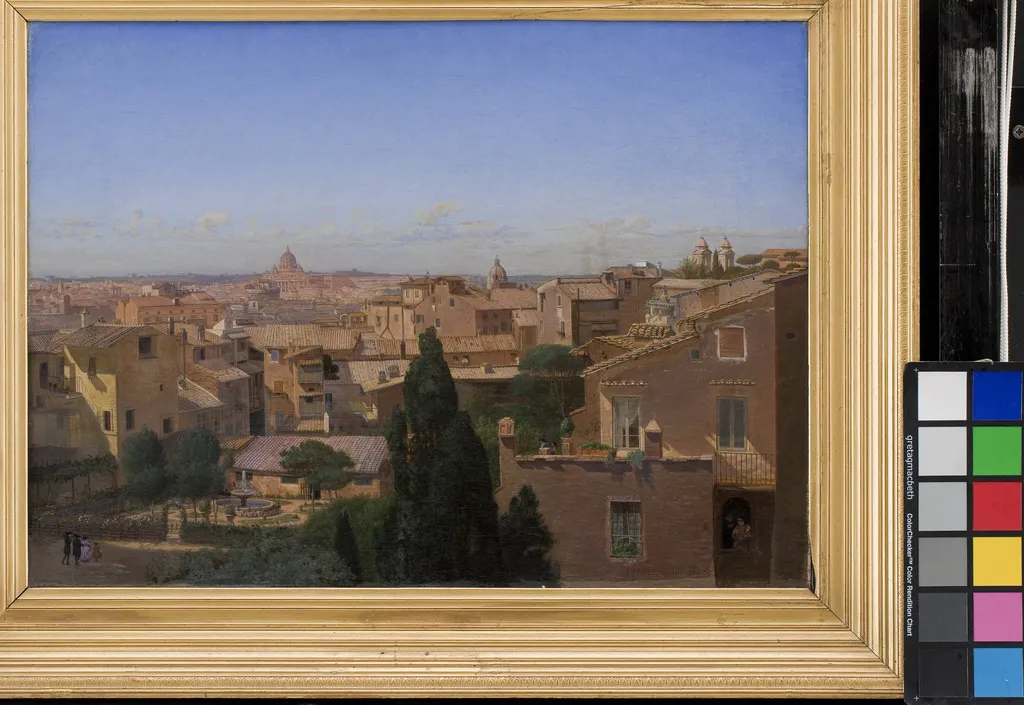
A View of Rome Seen from the Artist's Dwelling is a photography by the Impressionist artist Unknown. It dates from 1858 and is held in the collection of the Statens Museum for Kunst. Painted in 1858, this cityscape depicts Rome as seen from the artist’s residence.
About this work
Overview
The composition captures a quiet, elevated perspective of the urban landscape, with clustered buildings, tiled roofs, and scattered trees.
Painted in 1858, this cityscape depicts Rome as seen from the artist’s residence. The composition captures a quiet, elevated perspective of the urban landscape, with clustered buildings, tiled roofs, and scattered trees. A prominent dome rises in the distance, likely representing a major religious structure. Rendered with careful observation, the work reflects a commitment to topographical accuracy and atmospheric detail.
Subject & Meaning
The painting presents an intimate, everyday view of Rome—not a grand public monument or tourist site, but the city as experienced from private space. This perspective suggests a personal connection to the environment, emphasizing domestic life amid historical architecture. The inclusion of natural elements like trees and shifting light implies a contemplative engagement with the urban setting, rather than a purely documentary intent.
Technique & Style
The artist employs a realistic approach, with precise rendering of architectural forms and subtle gradations of light. Colors are muted yet varied, used to convey the time of day through soft shadows and warm highlights. Brushwork is controlled, favoring clarity over expressive gesture. While the style aligns with 19th-century topographical painting, it avoids the loose brushwork or color experimentation characteristic of later Impressionist works.
History & Provenance
The painting was created in 1858 and has been held since at least the early 20th century by the Museum of Ethnography. Its presence in an institution focused on cultural artifacts rather than fine art suggests it may have been collected for its ethnographic value—offering insight into daily life and urban conditions in mid-19th-century Rome. No record of prior ownership or exhibition history is widely documented.
Context
In the mid-1800s, Rome was undergoing political and urban transformation as Italy moved toward unification. Artists increasingly turned to everyday views of the city, moving beyond classical ruins to depict lived environments. This work fits within a broader trend of domestic cityscapes, where the familiar and the historical coexisted in the frame, reflecting a shift in artistic focus from idealized grandeur to observed reality.
Legacy
Though not widely exhibited or reproduced, the painting remains a quiet example of 19th-century observational painting in Rome. It contributes to a lesser-known corpus of works that document urban life from personal vantage points. Its preservation in an ethnographic museum underscores its value as a cultural record, offering a glimpse into how residents experienced their city during a period of change.
Artist & collection

 Domestic Scene
 Giacomo and Cardinal Marco, investing Andrea, Abbot of San Zeno, with his Benefice
 The Nymph of Fontainebleau
 Portrait of a Woman
 Madonna and Child with Saints in the Enclosed Garden
 Venus and Minerva
 Family Group of Four on Sofa
 Wall painting from Room H of the Villa of P. Fannius Synistor at Boscoreale
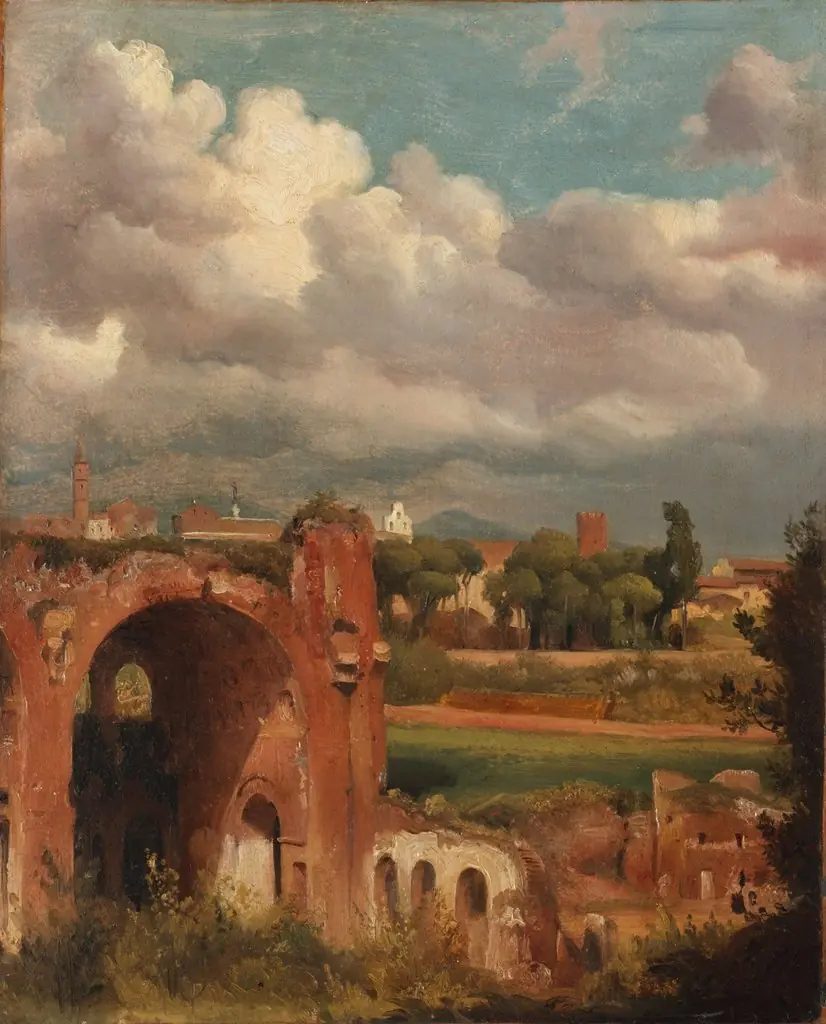 View of the Basilica of Constantine from the Palatine, Rome
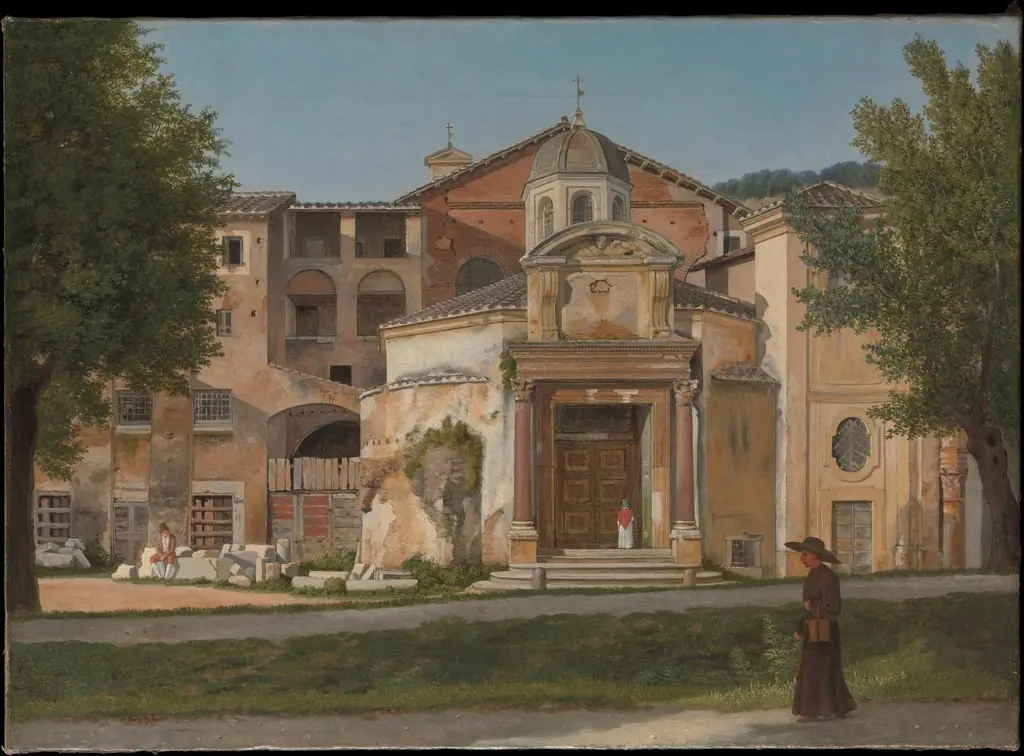 A Section of the Via Sacra, Rome (The Church of Saints Cosmas and Damian)
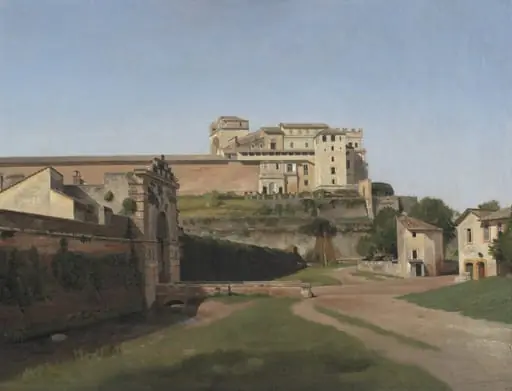 Porta Angelica and Part of the Vatican
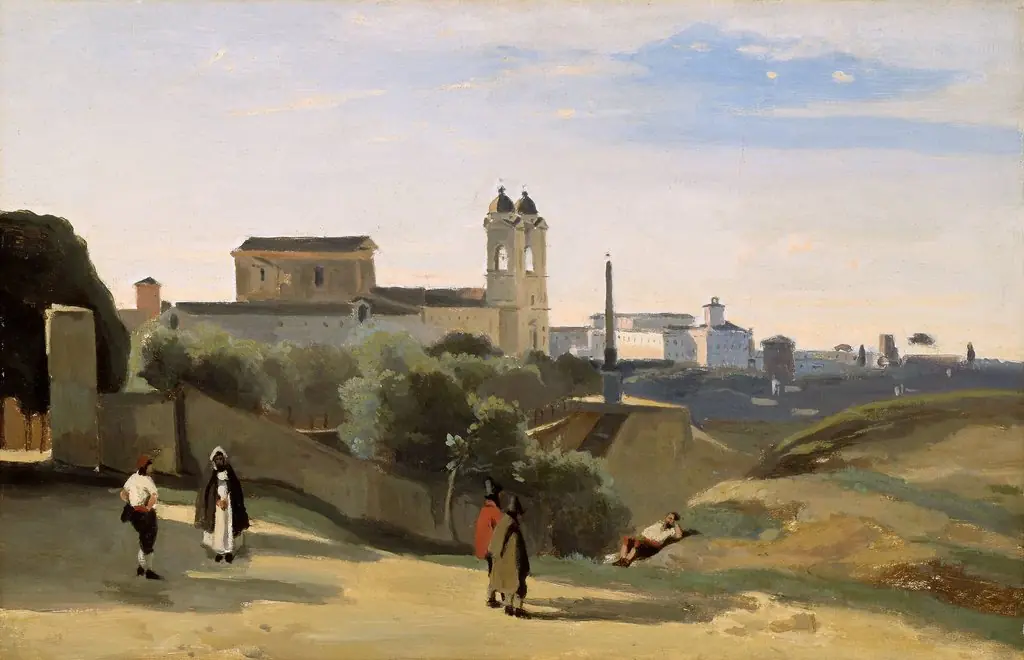 Monte Pincio, Rome
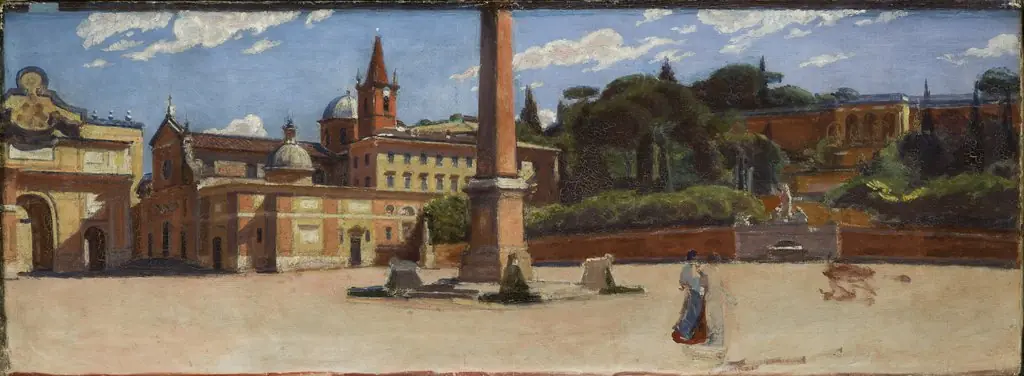 Piazza del Popolo in Rome
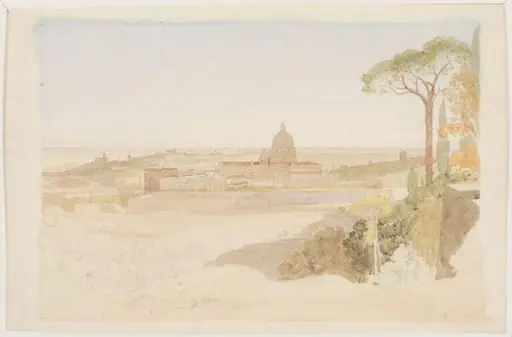 Untitled
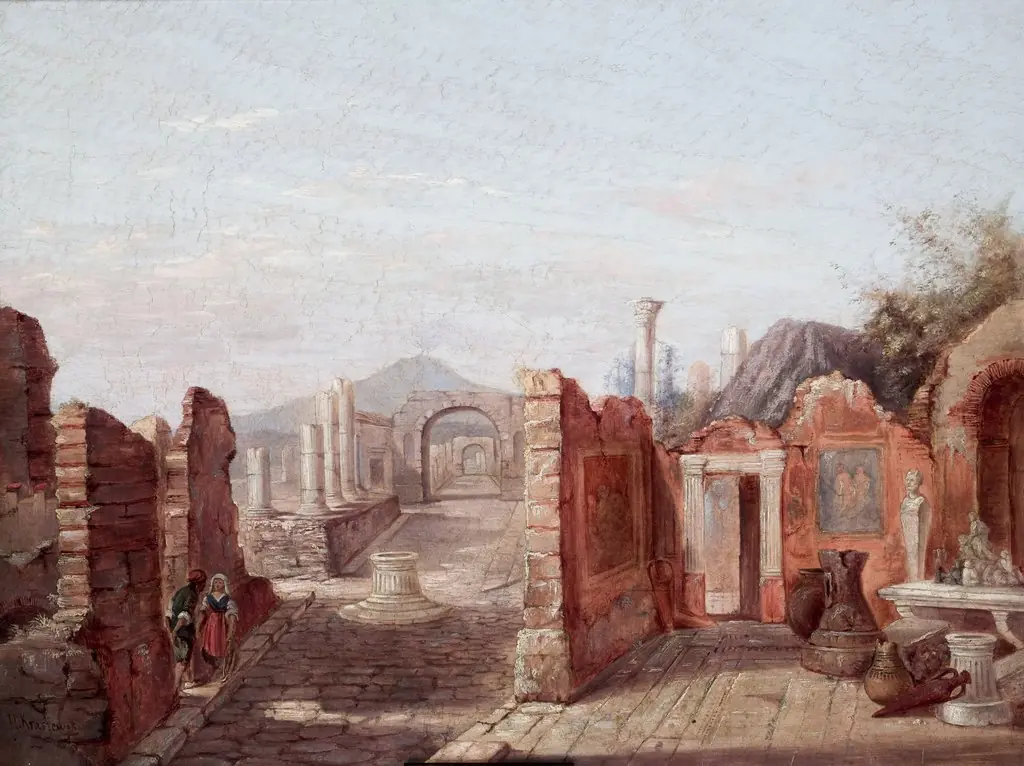 Ruins of Pompeii
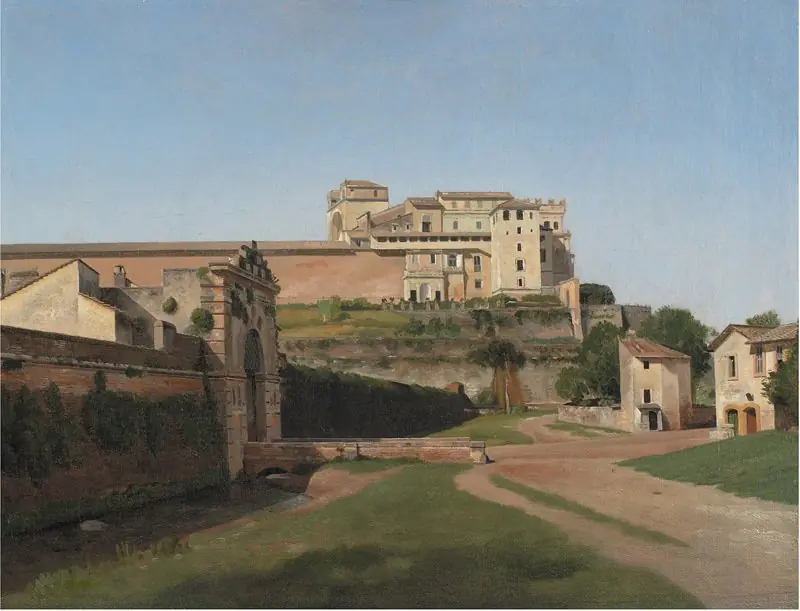 Porta Angelica and Part of the Vatican
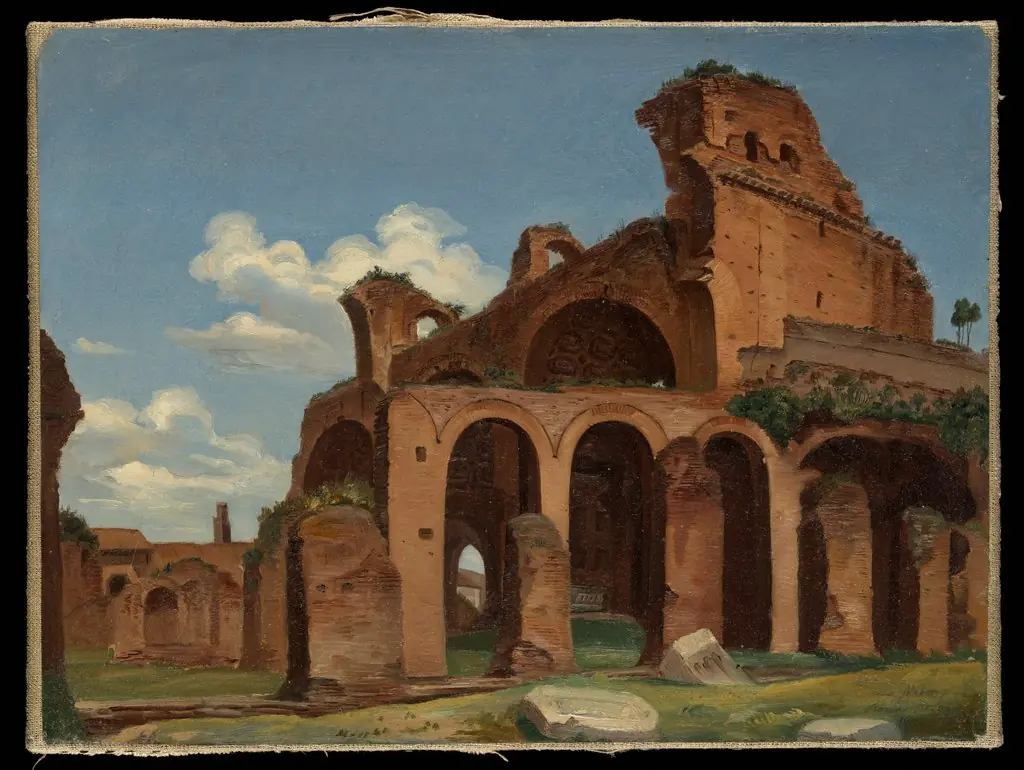 The Basilica of Constantine, Rome