Artwork
Untitled
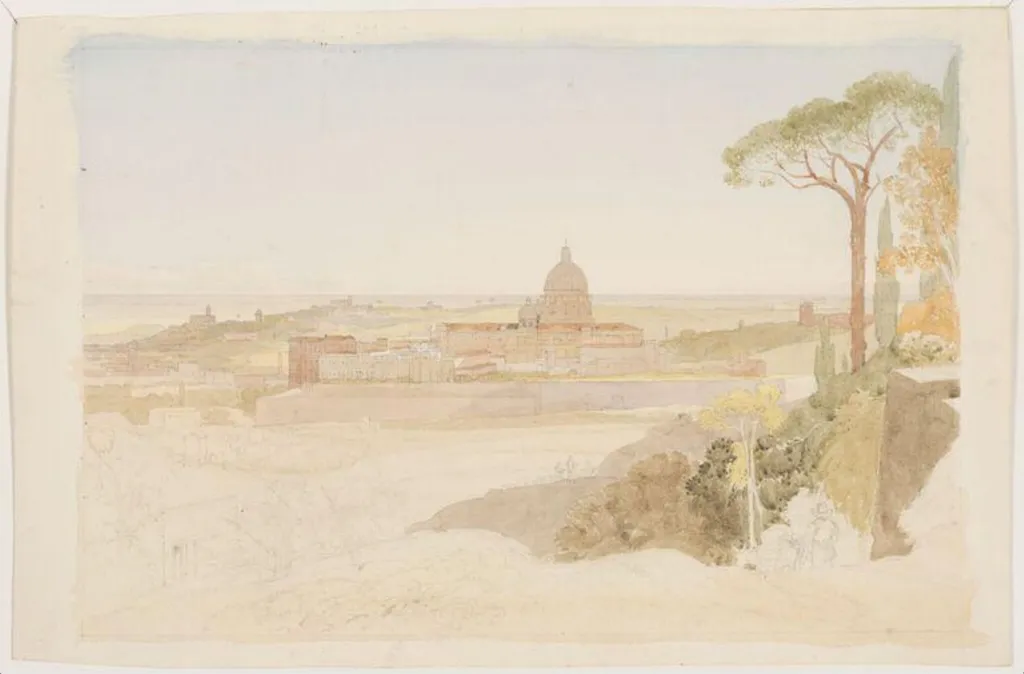
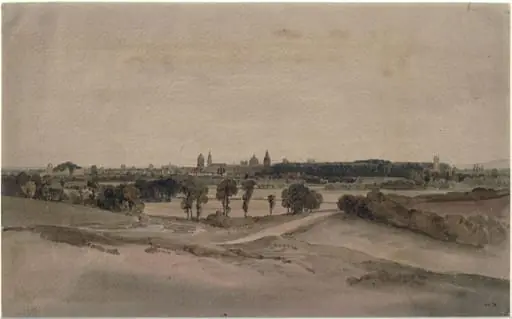
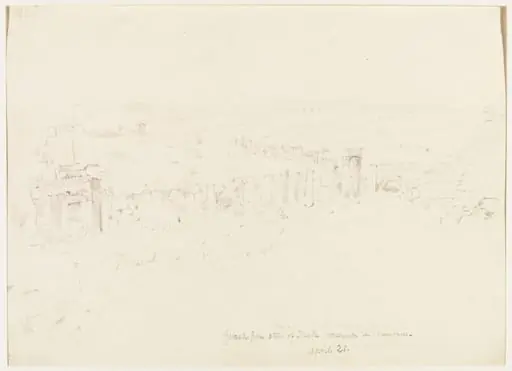
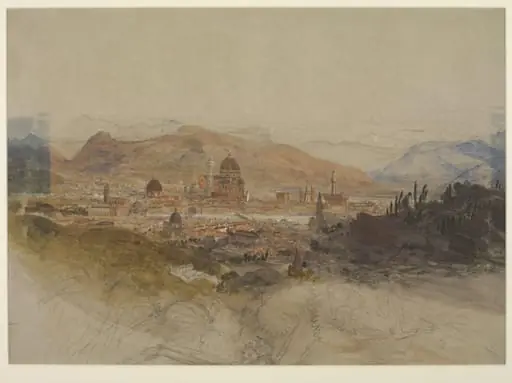
Untitled is a watercolor work on paper by the Romanticist artist Andrew Wilson. It dates from 1800 and is held in the collection of the Victoria and Albert Museum. This watercolour, dated 1800, presents a distant view of Rome centered on St.
About this work
Overview
Executed in soft, translucent washes, the work captures the city’s skyline with minimal detail, emphasizing atmosphere over precision.
This watercolour, dated 1800, presents a distant view of Rome centered on St. Peter’s Basilica. Executed in soft, translucent washes, the work captures the city’s skyline with minimal detail, emphasizing atmosphere over precision. The composition remains partially sketchlike, with areas left lightly rendered, suggesting an impressionistic approach to landscape rather than a finished topographical record.
Subject & Meaning
The central focus is St. Peter’s Basilica, its dome rising above the surrounding hills as a quiet symbol of religious and civic presence. The surrounding terrain is sparse, with scattered vegetation and undulating landforms, evoking the arid Roman countryside. The absence of figures or activity lends the scene a contemplative stillness, reflecting a personal, observational moment rather than a grand historical narrative.
Technique & Style
The artist employed loose, fluid watercolour brushwork to suggest form through tone rather than line. Light washes of pale hues define the sky and distant architecture, while subtle gradations create depth and soft shadows. Pencil underdrawings remain visible in places, revealing the work’s preparatory nature. The technique prioritizes mood and light over architectural detail, aligning with early 19th-century sketching traditions.
History & Provenance
Attributed to Andrew Wilson, a Scottish artist active in Rome during the early 1800s, the piece likely originated from his studies of the city’s landmarks. Its unfinished state suggests it was a field sketch, possibly made en plein air. The work entered the Victoria and Albert Museum’s collection as part of a broader acquisition of British watercolours from the period.
Context
During this era, British artists frequently traveled to Italy to study classical and Renaissance sites, producing watercolours as personal records or preparatory studies. Wilson’s work reflects this tradition, capturing Rome not as a monumental destination but as a quiet, lived-in landscape. Such sketches were often shared among artists or used as references for larger studio works.
Legacy
This watercolour exemplifies the quiet, observational mode of topographical art in the early 19th century. Its unfinished character preserves the immediacy of the artist’s gaze, offering insight into how artists engaged with Rome beyond grand narratives. It remains a representative example of the British watercolour tradition’s emphasis on light, atmosphere, and personal response to place.
Artist & collection
Artist
This British watercolor artist worked around 1805–1848, painting detailed views of landscapes and castles across England and Wales.

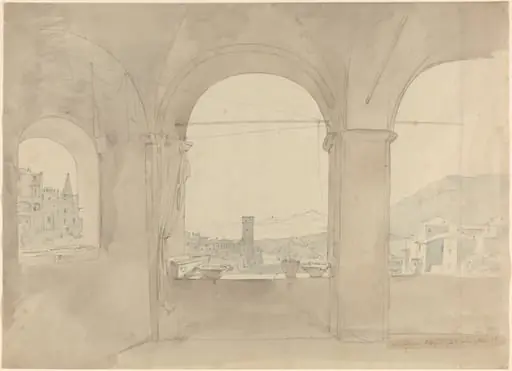 Panorama of Tivoli from a Loggia
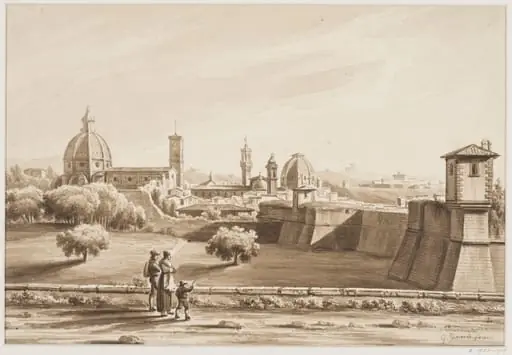 Untitled
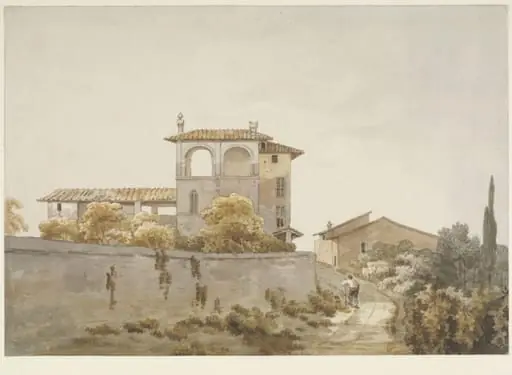 Italian villa
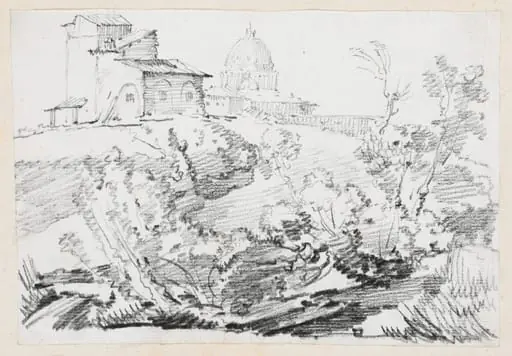 A Building on a Hill with Saint Peter's in the Distance
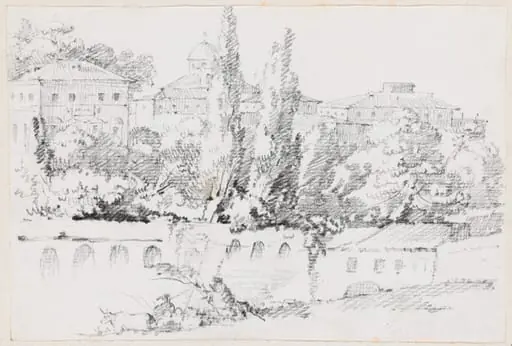 Walls of Rome with Santa Maria del Popolo in the Distance
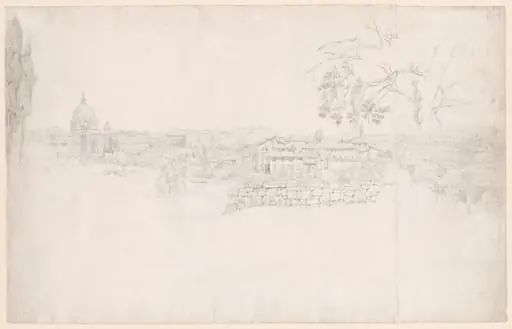 Fantasy Panorama of Rome from St. Peter's to the Castel San Angelo
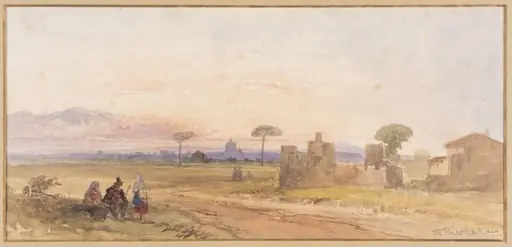 Rome, From the Campagna
 Gerash from Theatre, including Proscenium
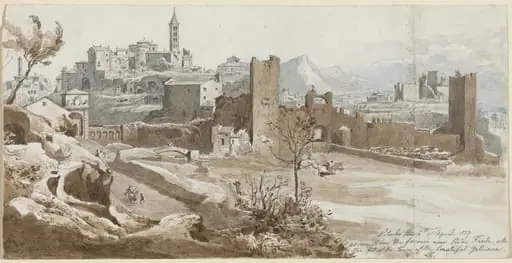 Viterbo
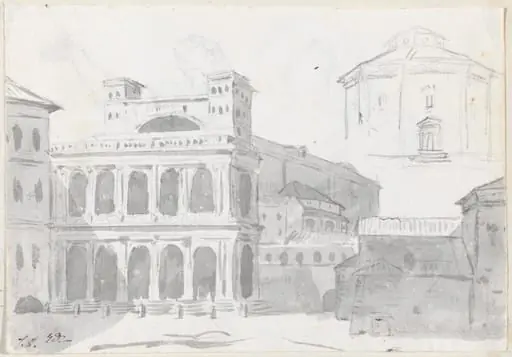 San Giovanni Laterano and a Baptistry
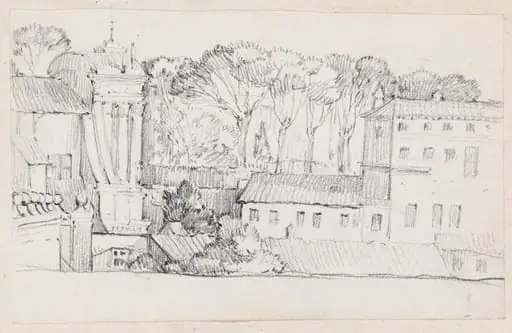 Roman Rooftops
 Florence