Artwork
A Little Boy being Presented to a Priest
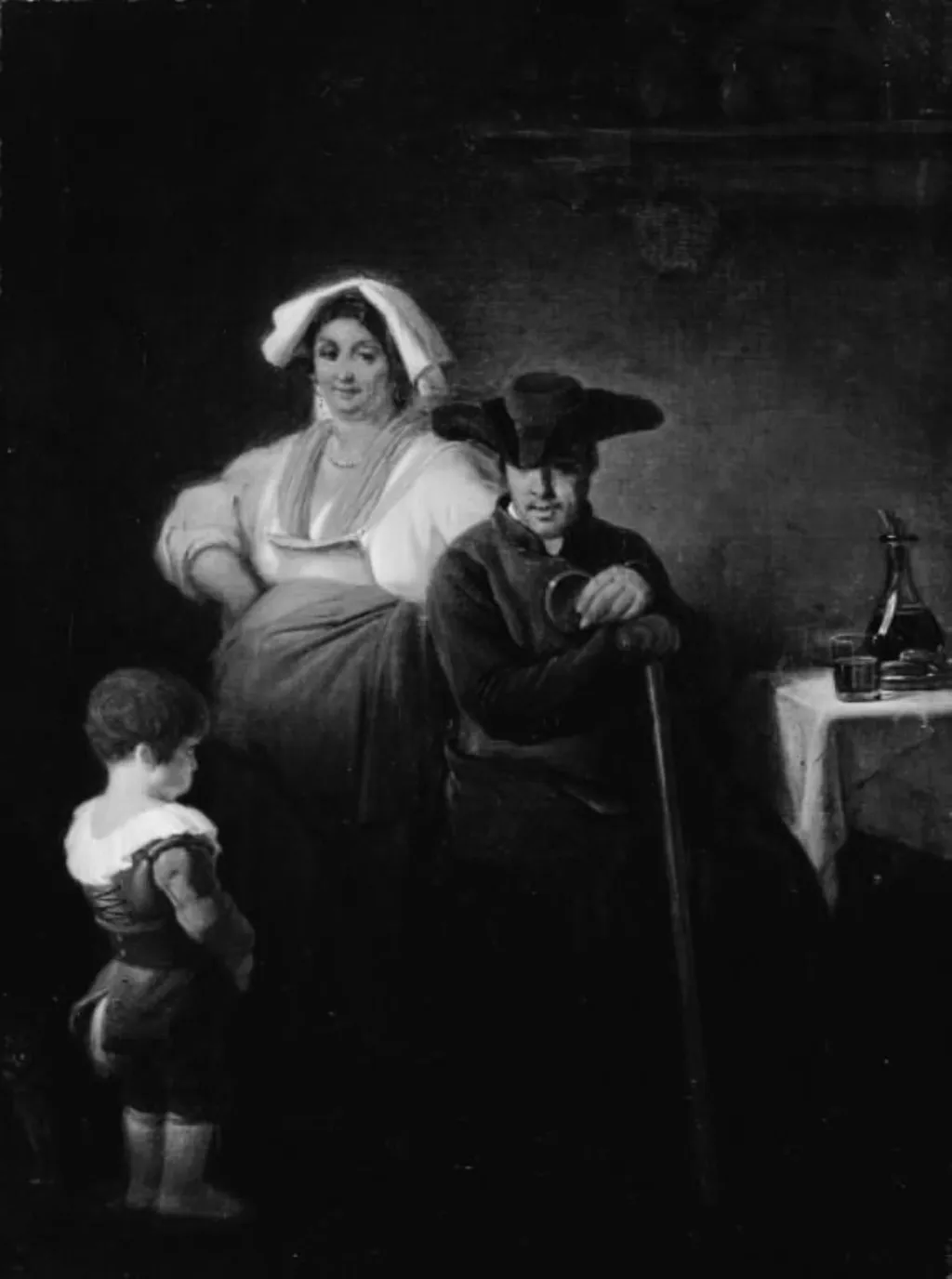
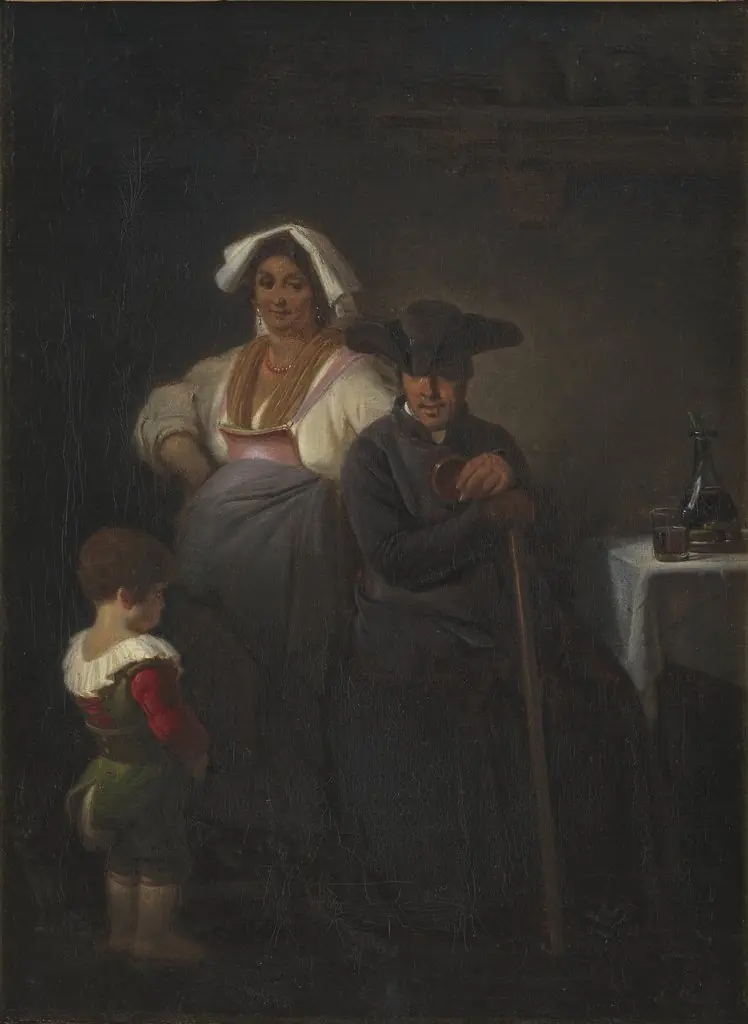
A Little Boy being Presented to a Priest is a photography by the Romanticist artist Unknown. It dates from 1846 and is held in the collection of the Statens Museum for Kunst. Created in 1846 by 555_person, this image captures a quiet ritual moment: a child being presented to a priest.
About this work
Overview
Created in 1846 by 555_person, this image captures a quiet ritual moment: a child being presented to a priest. The work is part of the Museum of Ethnography’s collection and reflects a formal, possibly religious or cultural ceremony. Its subdued palette and controlled composition suggest a focus on tradition rather than individual expression.
Subject & Meaning
The scene portrays a woman, likely the child’s mother, offering her son to a seated priest. The child’s small stature and the woman’s protective gesture imply a rite of passage—perhaps baptism, naming, or initiation. The priest’s passive posture and the absence of overt emotion convey solemnity, emphasizing institutional authority over personal sentiment.
Technique & Style
The artist employs chiaroscuro to model the figures against a dim interior, heightening the three-dimensionality of the forms. Light falls selectively on the faces and hands, guiding the viewer’s focus to the interaction between child and priest. The dark, unadorned room and minimal props reinforce the gravity of the moment, avoiding decorative distraction.
History & Provenance
The work entered the Museum of Ethnography’s holdings after its creation in 1846, though its original commission or context remains undocumented. It was likely produced for private or local use before being acquired by the institution, possibly as an ethnographic record of regional customs in the mid-nineteenth century.
Context
In mid-1800s Europe, such scenes often documented religious rites within rural or lower-class communities. The attire—white head covering, dark garments—suggests a specific regional or confessional tradition. The presence of a bottle and glass on the table may indicate sacramental wine or a local custom tied to the ceremony.
Legacy
Though not widely exhibited or reproduced, the image serves as a quiet record of everyday ritual life in its time. Its preservation in an ethnographic collection underscores its value as a visual artifact of social practice, offering insight into how religious and familial roles were visually negotiated in domestic settings.
Artist & collection

 Domestic Scene
 Giacomo and Cardinal Marco, investing Andrea, Abbot of San Zeno, with his Benefice
 The Nymph of Fontainebleau
 Portrait of a Woman
 Madonna and Child with Saints in the Enclosed Garden
 Venus and Minerva
 Family Group of Four on Sofa
 Wall painting from Room H of the Villa of P. Fannius Synistor at Boscoreale
 Mother and Two Children with Still Life
 En gammel kone på vej til kirke
 The Moreuil market
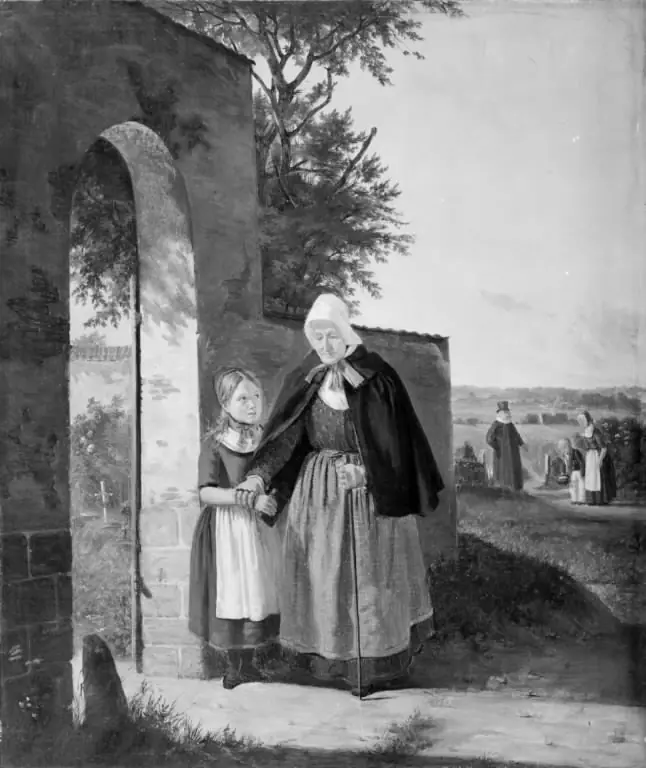 En gammel kone på vej til kirke
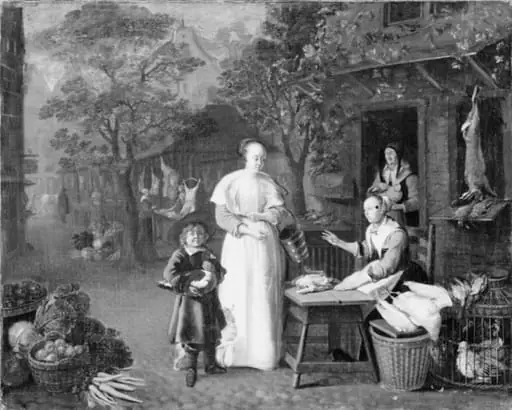 A Market Scene
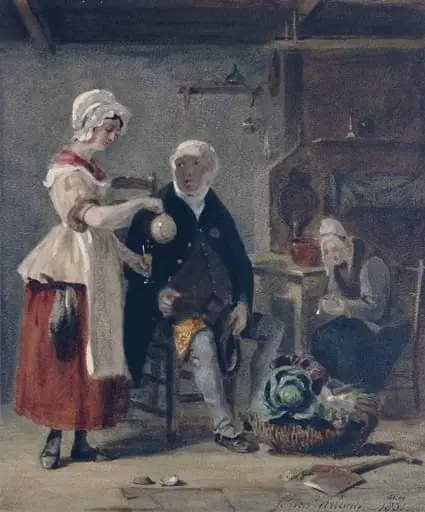 Rustic interior: figures of an old man and woman and a girl
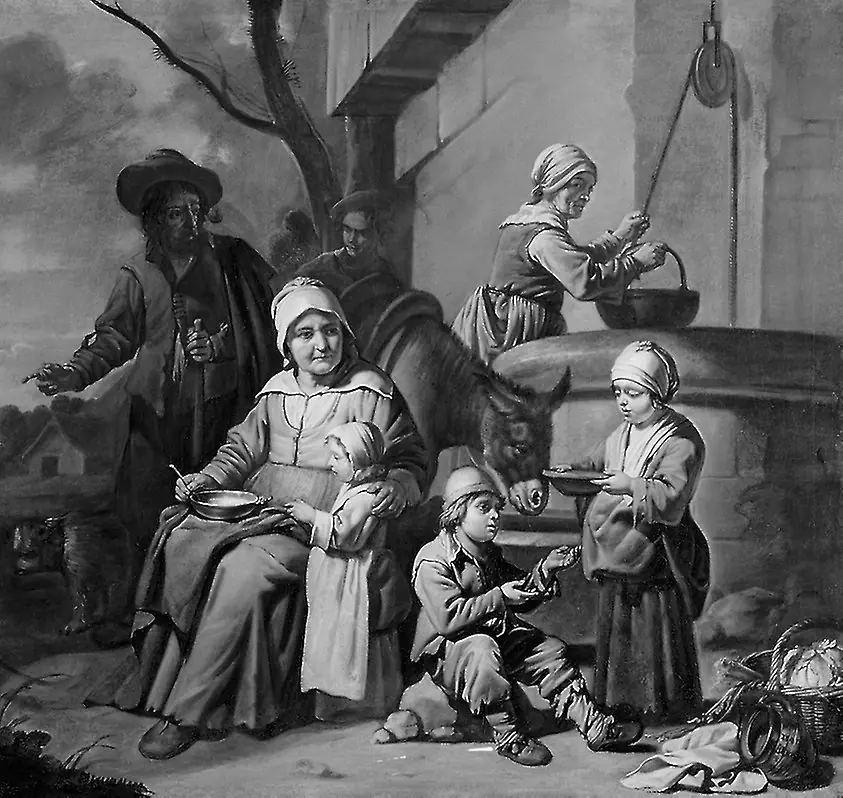 Peasant Family at a Well
 Family of peasants before a house
 Interior țărănesc cu băutori (în registrul inventar: Oameni băuți într-o cârciumă de țară)
 Tanz in der Campagna
 A Little Boy being Presented to a Priest
 A Camp