Artwork
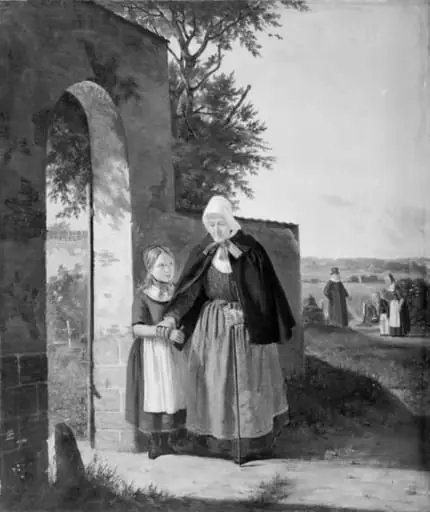
En gammel kone på vej til kirke
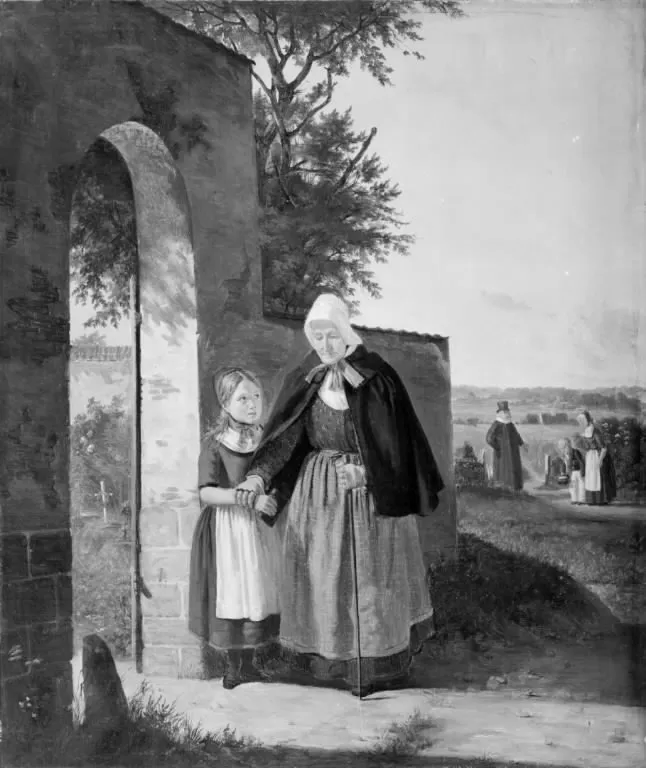
En gammel kone på vej til kirke is an oil painting by the Biedermeier artist Moritz Unna. It dates from 1838 and is held in the collection of the Statens Museum for Kunst.
About this work
Overview
Painted in 1838 by Moritz Unna, this oil on canvas depicts an elderly woman and a young girl walking toward a church. The scene is set in a quiet rural landscape, with a stone archway framing their path and a tree rising behind them. Distant figures also move toward the church, suggesting a communal religious routine. The work is part of the collection at Statens Museum for Kunst in Copenhagen.
Subject & Meaning
The painting captures a moment of quiet devotion, portraying two generations engaged in a daily act of faith. The older woman, wrapped in a headscarf and long dress, leads the child, whose simpler attire contrasts with the elder’s modest formality. Their progression toward the church implies continuity—tradition passed from one age to the next—without overt symbolism or narrative drama.
Technique & Style
Unna employed oil paint to render subtle shifts in light and texture, particularly in the fabric of the figures’ clothing and the stone archway. The composition uses restrained chiaroscuro to define form and depth, avoiding dramatic contrasts in favor of naturalistic illumination. Brushwork is deliberate but unobtrusive, supporting the painting’s calm, observational tone.
History & Provenance
Created in 1838, the painting entered the collection of Statens Museum for Kunst in Denmark, where it remains today. While little is documented about its early ownership, its inclusion in the national collection suggests early recognition of Unna’s skill in capturing everyday Danish life with sensitivity and restraint.
Context
In the early 19th century, Danish art increasingly turned to scenes of ordinary life, moving away from grand historical or mythological themes. Unna’s work reflects this shift, aligning with a broader Nordic interest in quiet, dignified portrayals of rural piety and domestic routine, often infused with a sense of moral steadiness.
Legacy
Though not widely known outside Denmark, Unna’s painting contributes to a quiet tradition of Nordic realism that valued understated emotion and truthful observation. Its preservation in a national museum underscores its role as a representative example of 19th-century Danish genre painting, valued for its sincerity rather than spectacle.
Artist & collection

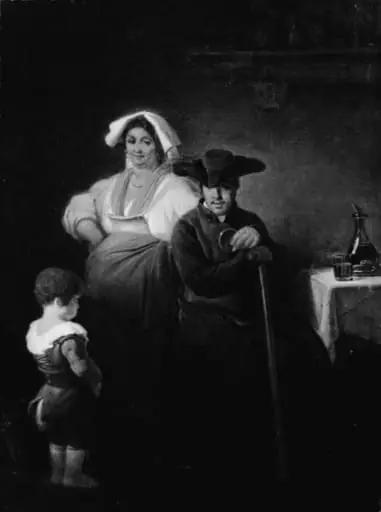 A Little Boy being Presented to a Priest
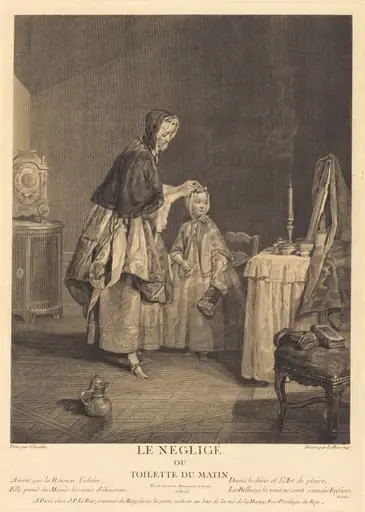 Le neglige, ou la toilette du matin
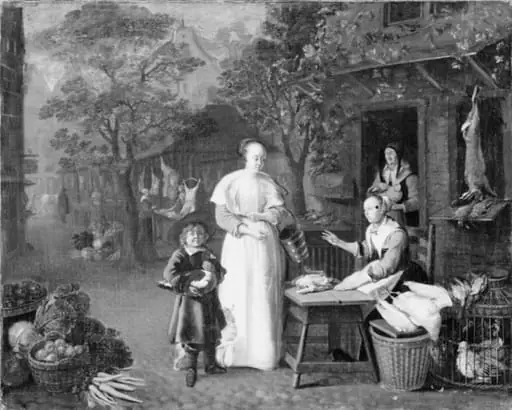 A Market Scene
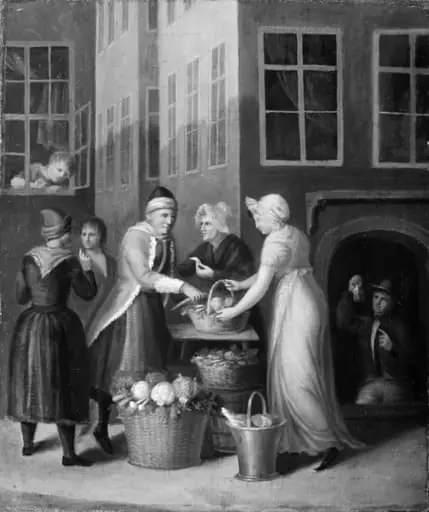 Gadescene i København ved år 1800. En pige gør indkøb af grøntsager hos Amagerkonen
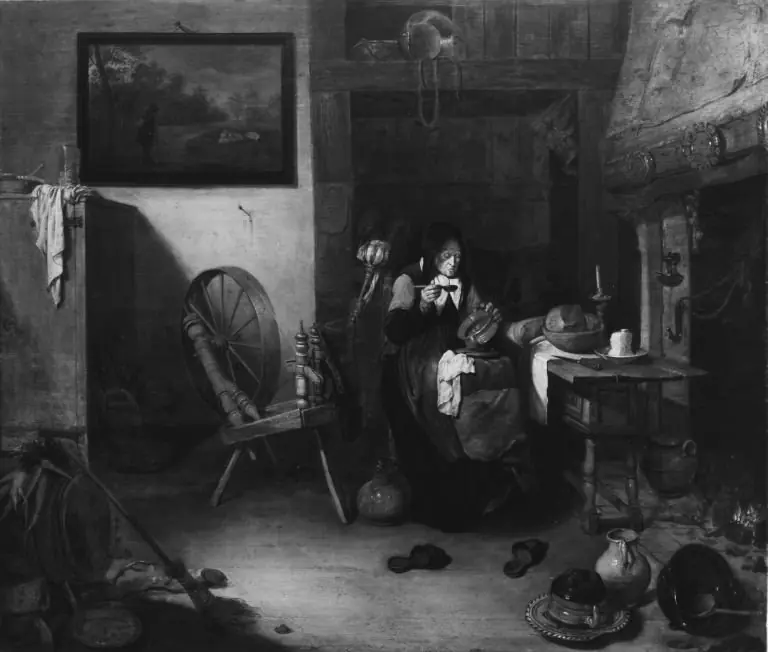 Old Woman eating Porridge by a Spinning Wheel
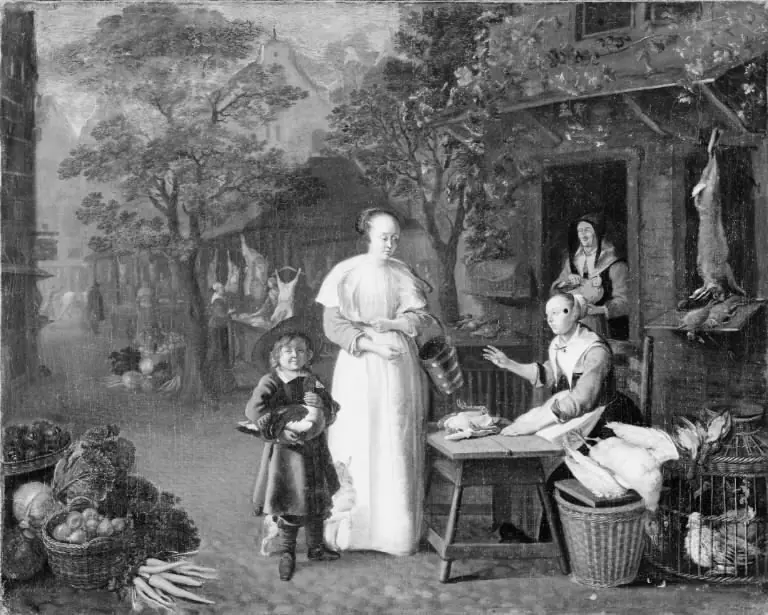 A Market Scene
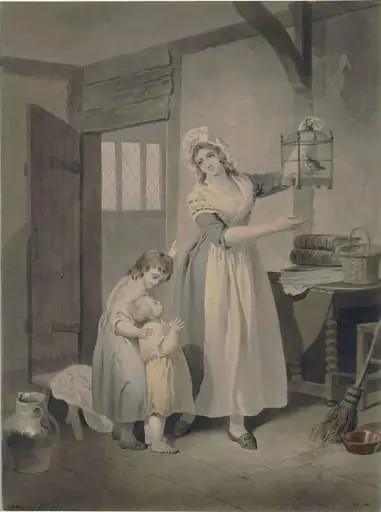 Interior with a woman showing a bird cage to two children
 En gammel tigger ved døren får almisse af husets børn
 Cattle by a Watering Place
 A Corner of the Yard
 A Betrothal Scene. Interior with Dutch peasants
 En gammel kone på vej til kirke