Artwork
En gammel kone på vej til kirke
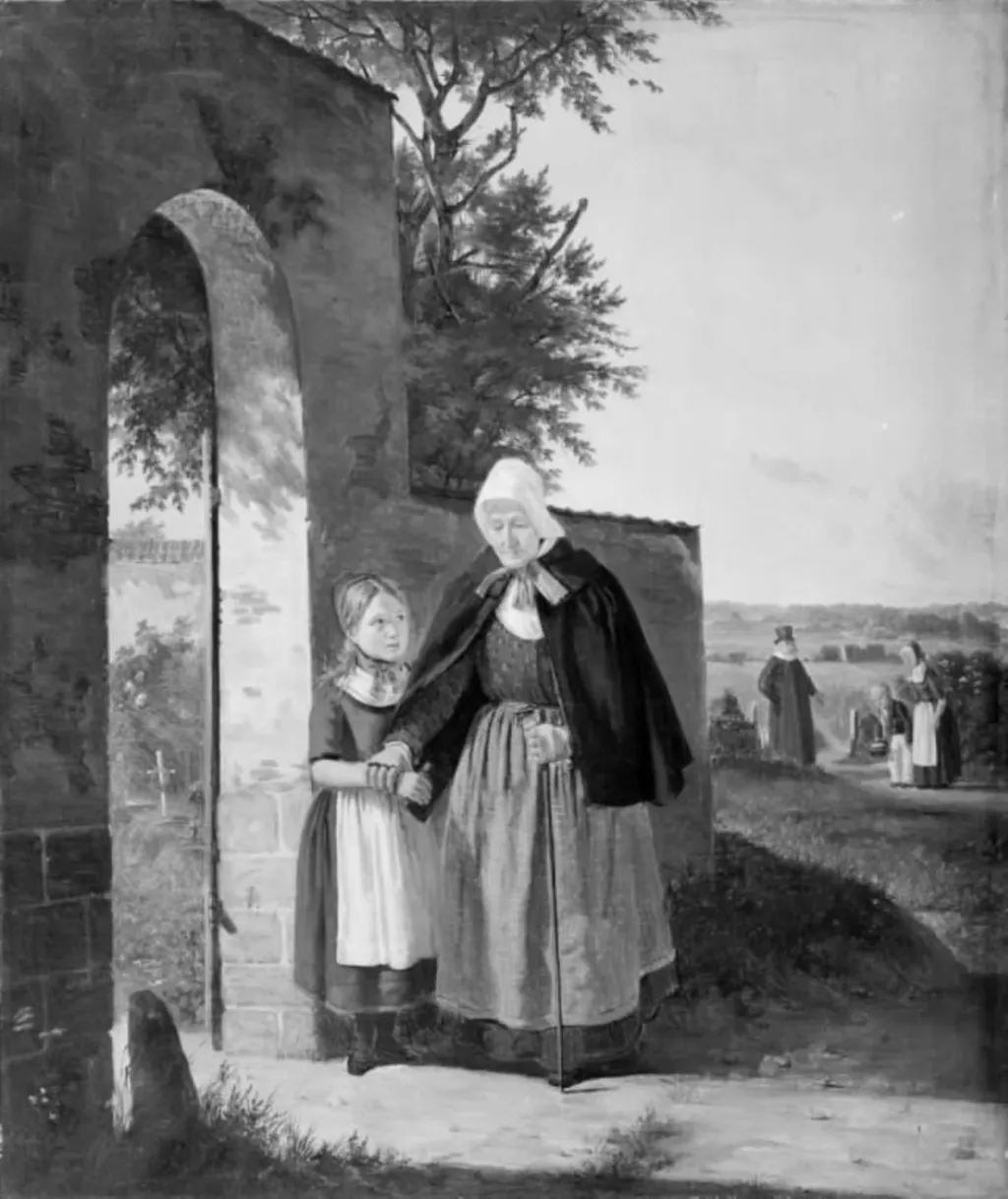
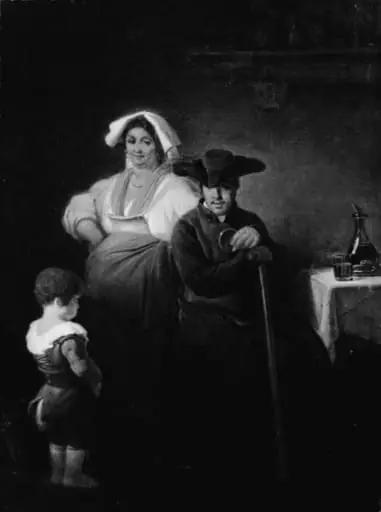
En gammel kone på vej til kirke is a photography by the Romanticist artist Unknown. It dates from 1838 and is held in the collection of the Statens Museum for Kunst. This black-and-white photograph, dated 1838, depicts an elderly woman walking with a young girl toward a church.
About this work
Overview
The image is held in the collection of the Museum of Ethnography, where it serves as a record of 19th-century domestic and religious customs.
This black-and-white photograph, dated 1838, depicts an elderly woman walking with a young girl toward a church. Taken by an early photographer, it captures a quiet moment of daily life in rural Denmark. The image is held in the collection of the Museum of Ethnography, where it serves as a record of 19th-century domestic and religious customs. Its composition emphasizes stillness and intimacy rather than dramatic action.
Subject & Meaning
The figures—a mature woman and a child—suggest a generational bond, possibly caregiver and dependent, en route to worship. Their modest attire and the presence of a grave marker imply a connection to local burial traditions and the rhythm of rural life. The path leading to distant figures hints at community rituals, while the quiet tone invites reflection on the ordinary moments that anchor social continuity.
Technique & Style
The photograph employs natural lighting to create soft contrasts between light and shadow, enhancing its contemplative mood. Though not painted, the image achieves a chiaroscuro effect through careful exposure, giving depth to the stone wall and figures. The sharpness of the foreground contrasts with the hazy background, guiding the viewer’s focus to the two central figures without artificial staging.
History & Provenance
Created in 1838, this image is among the earliest surviving photographs from Denmark. It was acquired by the Museum of Ethnography in the late 19th or early 20th century as part of a broader effort to document folk life. Its origin as a daguerreotype or calotype remains unconfirmed, but its preservation suggests early recognition of photography’s value as ethnographic evidence.
Context
In 1830s Denmark, photography was a nascent technology, rarely used for everyday scenes. This image stands out for its unposed, intimate subject matter—unlike formal portraits of the era. The rural setting, simple clothing, and church-bound journey reflect the religious and agrarian rhythms of Danish village life before industrialization reshaped social structures.
Legacy
The photograph endures as a rare visual document of early Danish domestic life, offering insight into gender roles, intergenerational care, and the role of religion in rural communities. It has influenced later ethnographic photography by demonstrating how quiet, unremarkable moments can carry cultural weight. Its preservation underscores the value of early photographic records in understanding everyday history.
Artist & collection

 Domestic Scene
 Giacomo and Cardinal Marco, investing Andrea, Abbot of San Zeno, with his Benefice
 The Nymph of Fontainebleau
 Portrait of a Woman
 Madonna and Child with Saints in the Enclosed Garden
 Venus and Minerva
 Family Group of Four on Sofa
 Wall painting from Room H of the Villa of P. Fannius Synistor at Boscoreale