Artwork
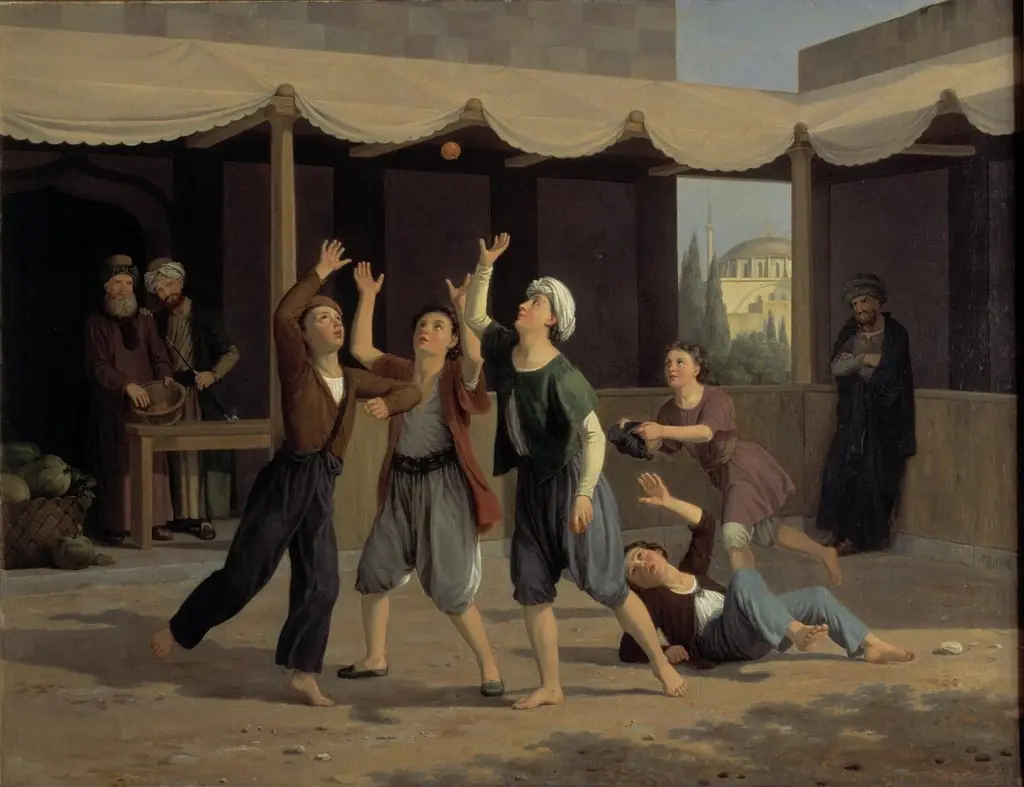
Aladdin griber imellem andre drenge efter de nedkastede pommeranser
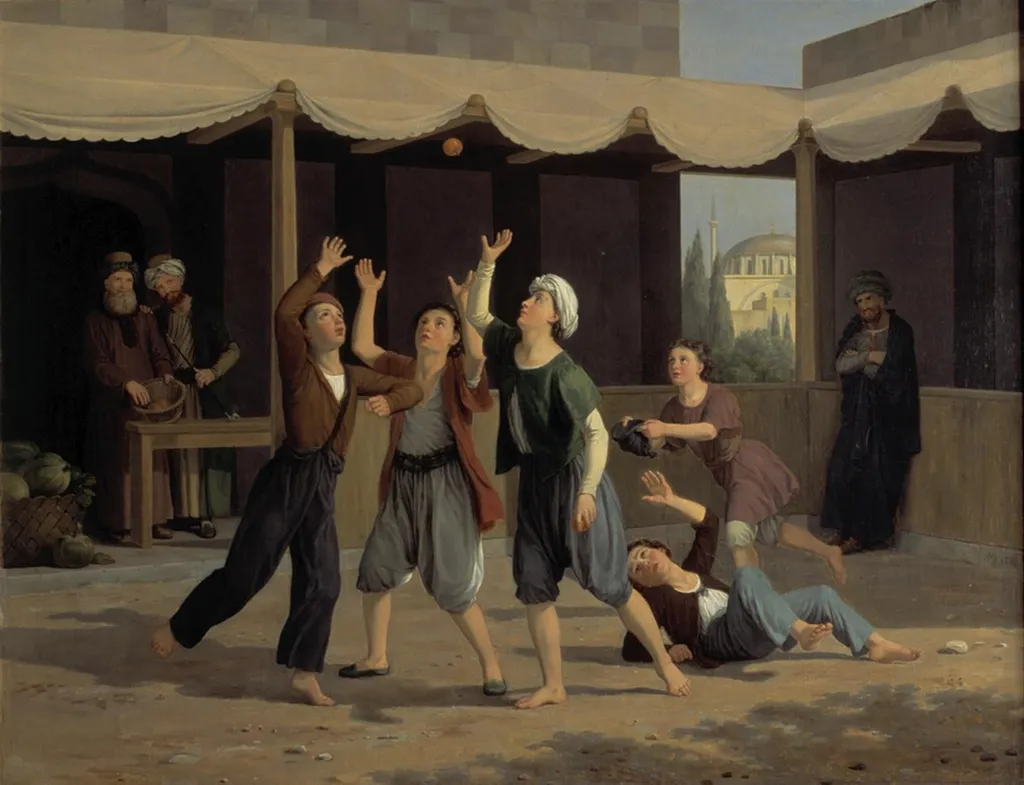
Aladdin griber imellem andre drenge efter de nedkastede pommeranser is a photography by the Romanticist artist Unknown. It dates from 1831 and is held in the collection of the Statens Museum for Kunst. Painted in 1831 by 557_person, this work captures a spontaneous moment of childhood play.
About this work
Overview
The painting resides in the Museum of Ethnography, where it is valued for its depiction of everyday life in early 19th-century Denmark.
Painted in 1831 by 557_person, this work captures a spontaneous moment of childhood play. It depicts a group of boys competing to catch oranges thrown into the air, set against a simple courtyard backdrop. The scene is rendered with lively brushwork and warm hues, conveying motion and immediacy. The painting resides in the Museum of Ethnography, where it is valued for its depiction of everyday life in early 19th-century Denmark.
Subject & Meaning
The painting portrays a common street game among boys, where the pursuit of falling fruit becomes a shared ritual of joy and competition. No mythological or historical narrative is present; instead, the focus is on unscripted, physical engagement. The children’s expressions and postures suggest pure, unguarded delight, reflecting a Romantic interest in authentic human experience over idealized subjects.
Technique & Style
The artist employs loose, energetic brushstrokes to animate the boys’ movements, emphasizing dynamism over precision. Warm earth tones dominate the palette, enhancing the sense of sunlight and warmth in the outdoor setting. Facial features are suggested rather than finely detailed, prioritizing emotional expression over individual likeness. The background is simplified, directing attention to the central action.
History & Provenance
Created in 1831, the painting entered the collection of the Museum of Ethnography early in its history, likely as part of a broader effort to document domestic and folk life. Its attribution to 557_person is documented in museum records, though little is known about the artist’s broader career. The work has remained in the museum’s custody since acquisition, with no known public exhibitions beyond institutional displays.
Context
In early 19th-century Denmark, urban childhood was marked by informal play in courtyards and streets, often without structured toys. This scene aligns with emerging cultural interest in the lives of ordinary people, a trend influenced by Romanticism’s shift toward the everyday. While not overtly political, the painting quietly affirms the dignity of common moments, contrasting with the grand historical themes favored by academic art at the time.
Legacy
The painting remains a modest but significant record of childhood in pre-industrial Denmark. It contributes to the Museum of Ethnography’s mission of preserving social history through visual culture. Though not widely reproduced or studied outside institutional circles, it continues to serve as a reference for scholars examining the representation of youth and play in Nordic art of the period.
Artist & collection

 Domestic Scene
 Giacomo and Cardinal Marco, investing Andrea, Abbot of San Zeno, with his Benefice
 The Nymph of Fontainebleau
 Portrait of a Woman
 Madonna and Child with Saints in the Enclosed Garden
 Venus and Minerva
 Family Group of Four on Sofa
 Wall painting from Room H of the Villa of P. Fannius Synistor at Boscoreale
 A Sheikh and his son entering Cairo on their return from a pilgrimage to Mecca
 Ein griechischer Krieger nimmt Abschied
 Tobias and his wife say goodbye to his in-laws in order to return to his father
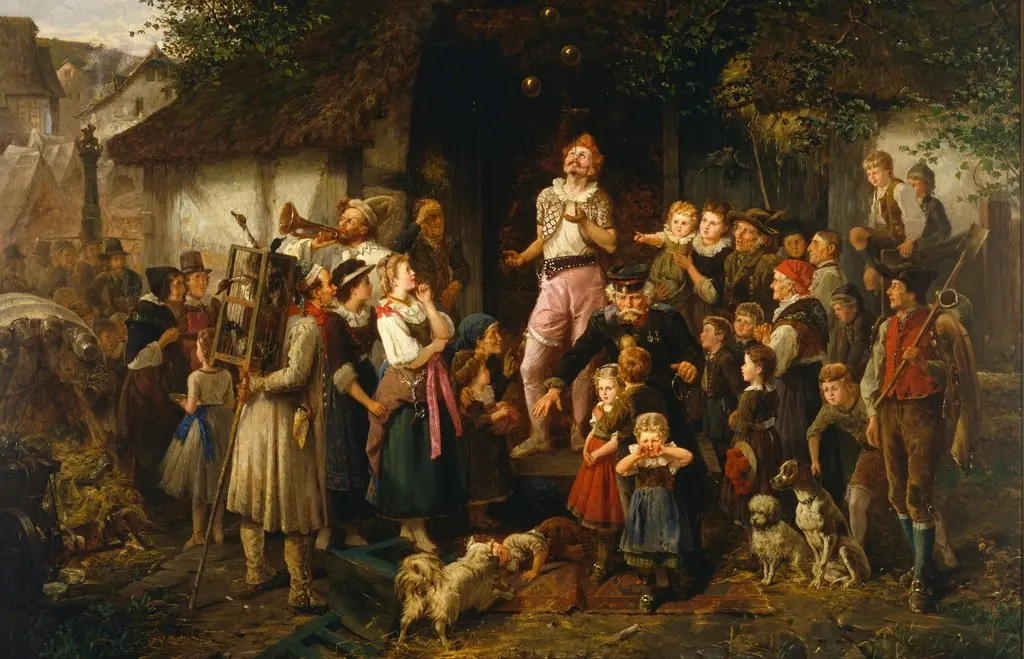 The juggler: a village fair
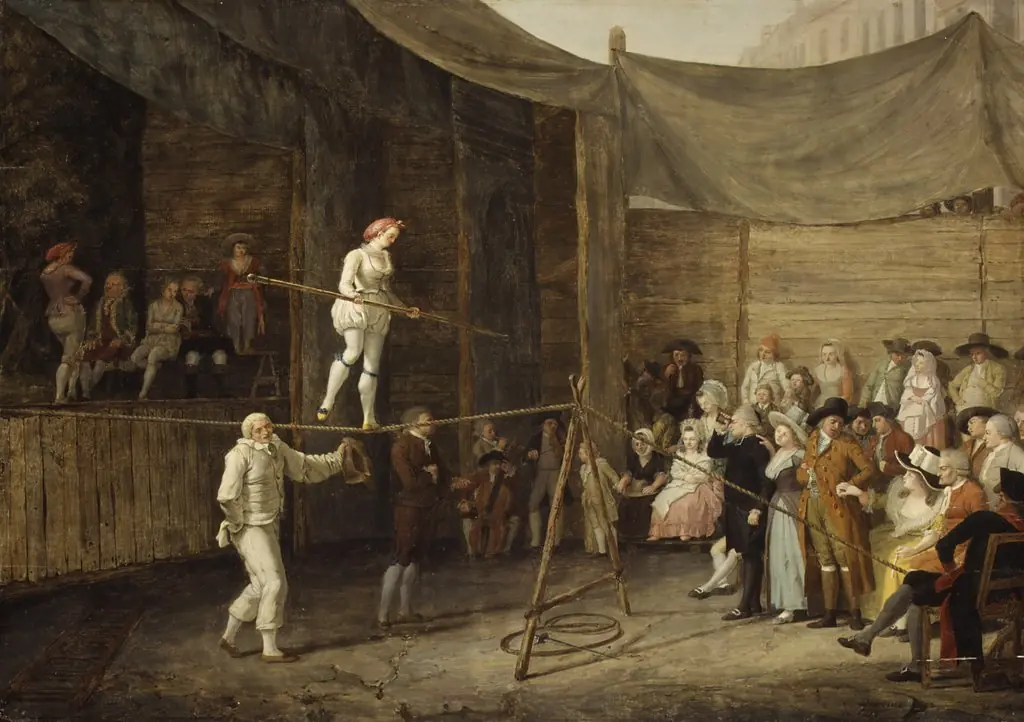 The Rope Dance
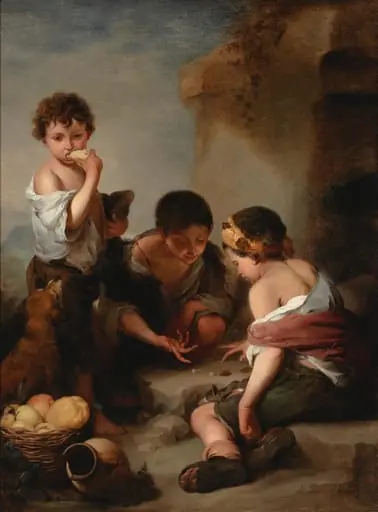 Kerjäläispojat pelaavat nopilla, kopio Murillon mukaan
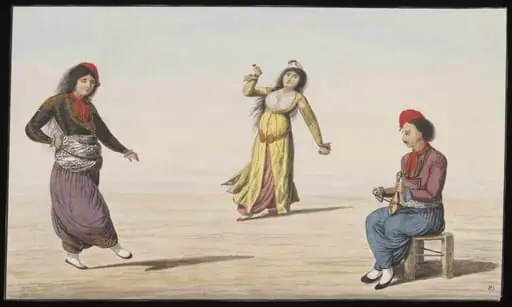 A scene of Gypsies dancing
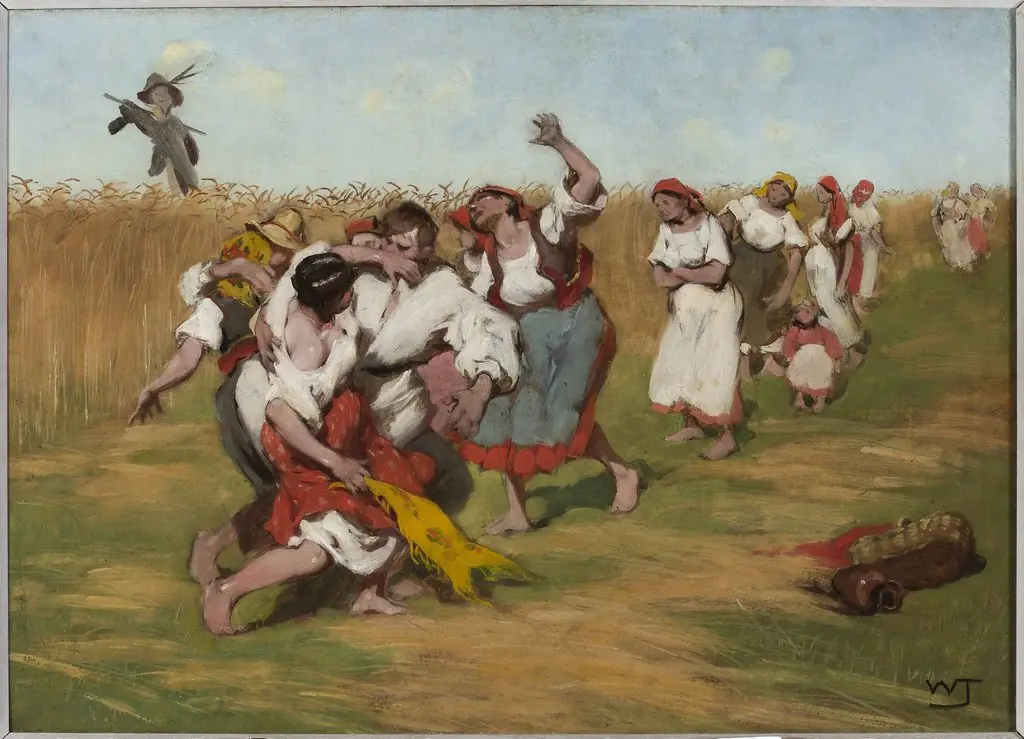 Harvest
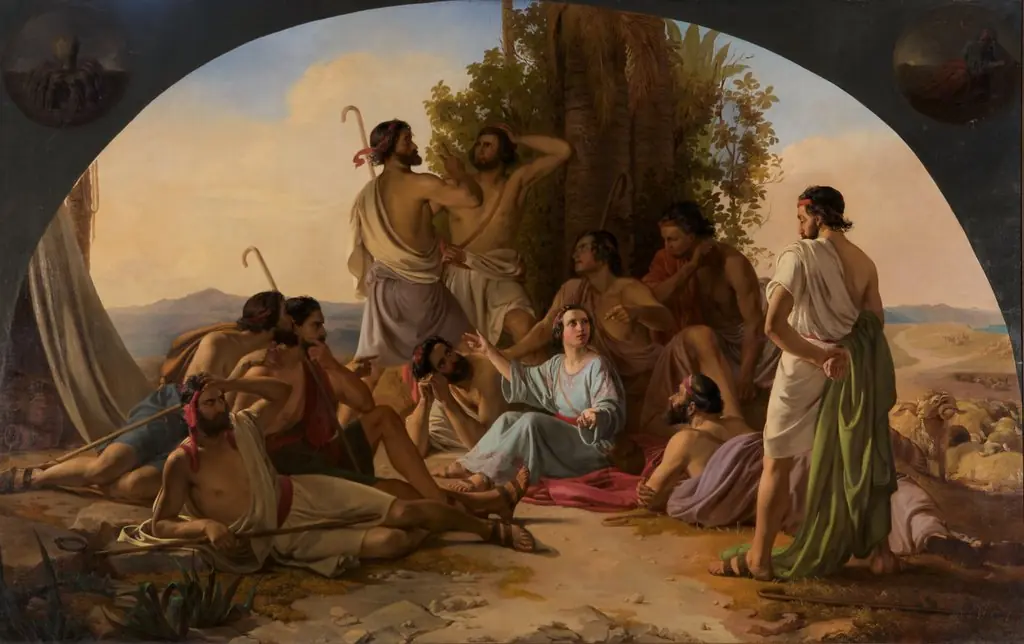 Joseph tells his dream
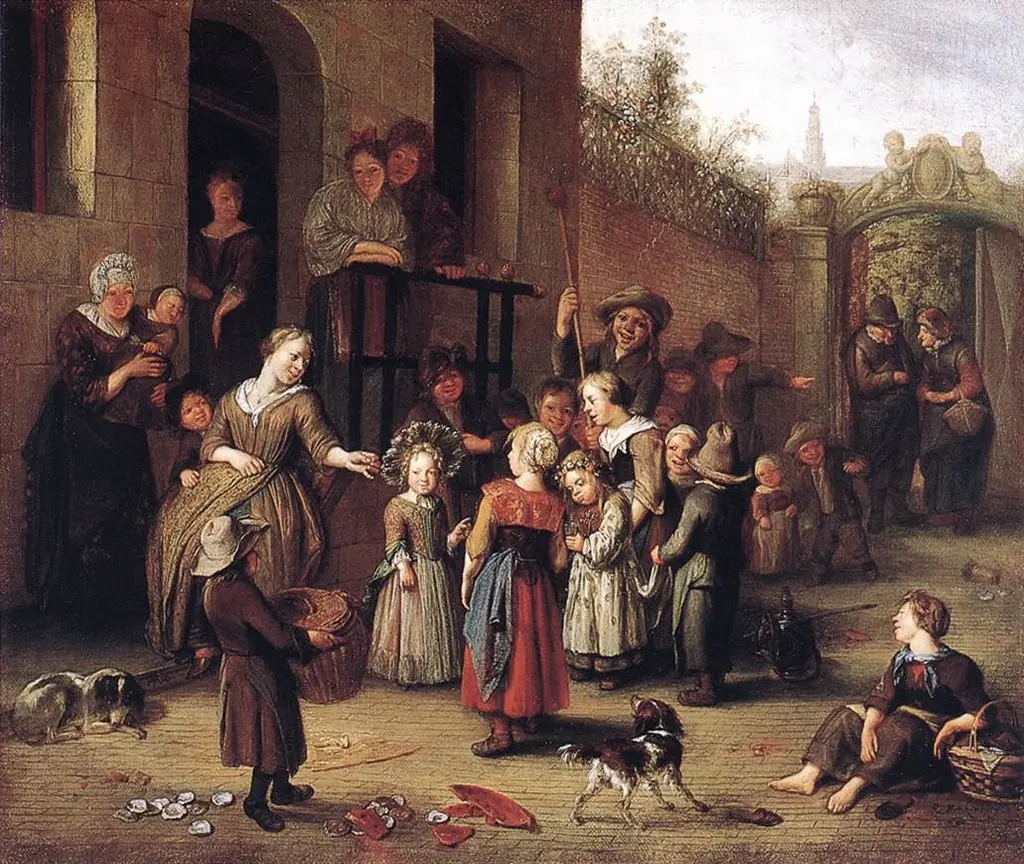 May Queen Festival (or The Flower-Feast of Whitesuntide, or Pentecost)
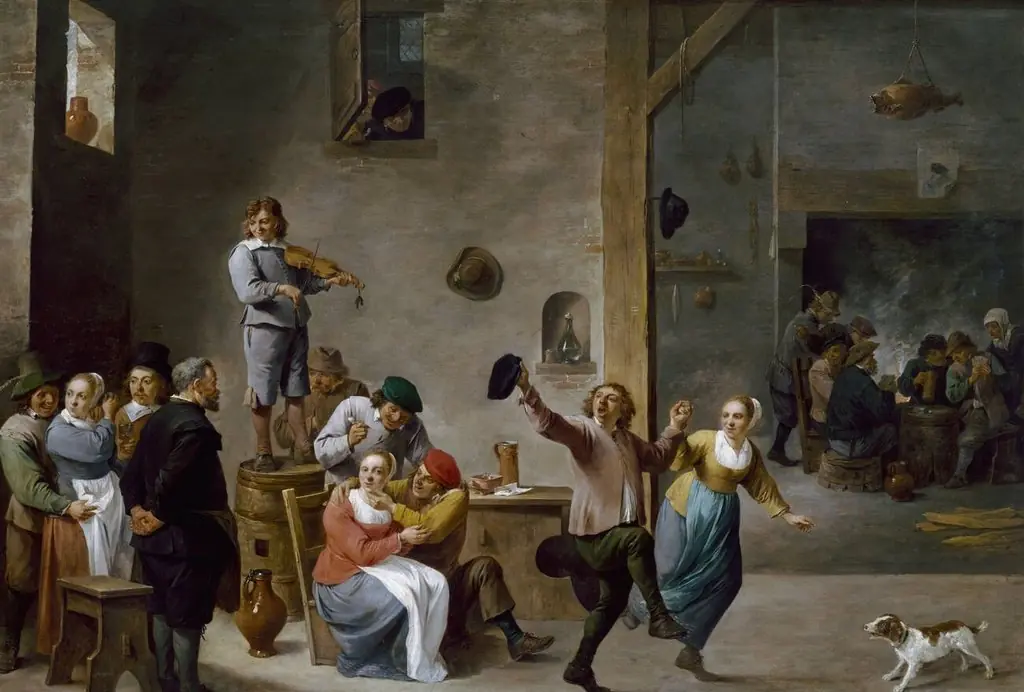 Interior of an inn with dancing peasants
 Aladdin griber imellem andre drenge efter de nedkastede pommeranser