Artwork
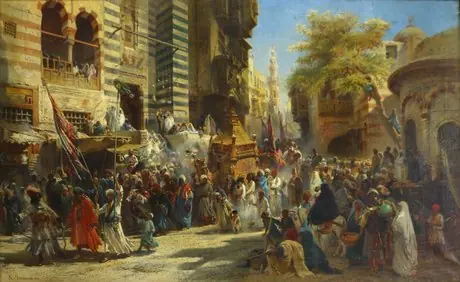
A Sheikh and his son entering Cairo on their return from a pilgrimage to Mecca
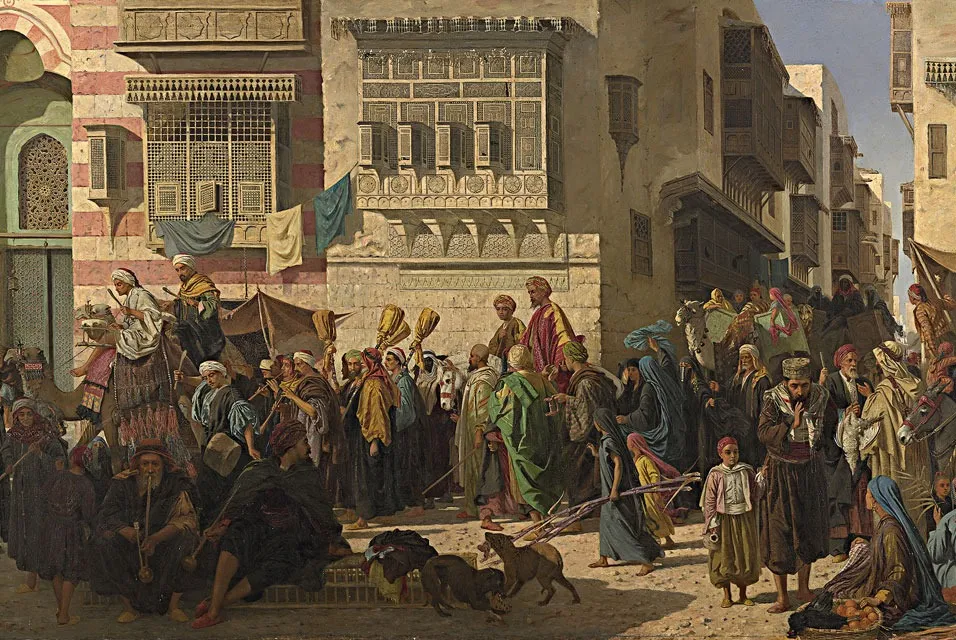
A Sheikh and his son entering Cairo on their return from a pilgrimage to Mecca is an oil painting by the Orientalist artist Robert Hawker Dowling. It dates from 1874 and is held in the collection of the National Gallery of Victoria.
About this work
Overview
Robert Hawker Dowling’s 1874 oil on canvas, titled *A Sheikh and his son entering Cairo on their return from a pilgrimage to Mecca*, portrays a father and his child arriving on horseback at the gates of Cairo. The work is part of the collection of the National Gallery of Victoria, where it remains on display as a representative example of 19th‑century Orientalist painting.
Subject & Meaning
The surrounding figures and architecture hint at everyday life in the city, underscoring the continuity between sacred journey and ordinary society.
The composition captures the moment of a pilgrim’s homecoming after the Hajj, emphasizing familial bonds and communal reception. The sheikh, dressed in traditional robes and a headscarf, leads his son, while a staff in his hand suggests authority and guidance. The surrounding figures and architecture hint at everyday life in the city, underscoring the continuity between sacred journey and ordinary society.
Technique & Style
Dowling employs a strong chiaroscuro, using contrasts of light and shadow to model the figures and give depth to the urban backdrop. The palette is muted, with earthy tones that evoke the desert environment, while careful brushwork renders the textures of clothing, horsehair, and stone. The overall effect balances realistic detail with a romanticized view of the exotic locale.
History & Provenance
Created in 1874, the painting entered the public domain through acquisition by the National Gallery of Victoria. Its provenance reflects the 19th‑century European fascination with Middle‑Eastern subjects, a trend that informed many of Dowling’s works. The piece has been referenced in scholarly discussions of colonial-era representations of Islamic culture.
Artist & collection

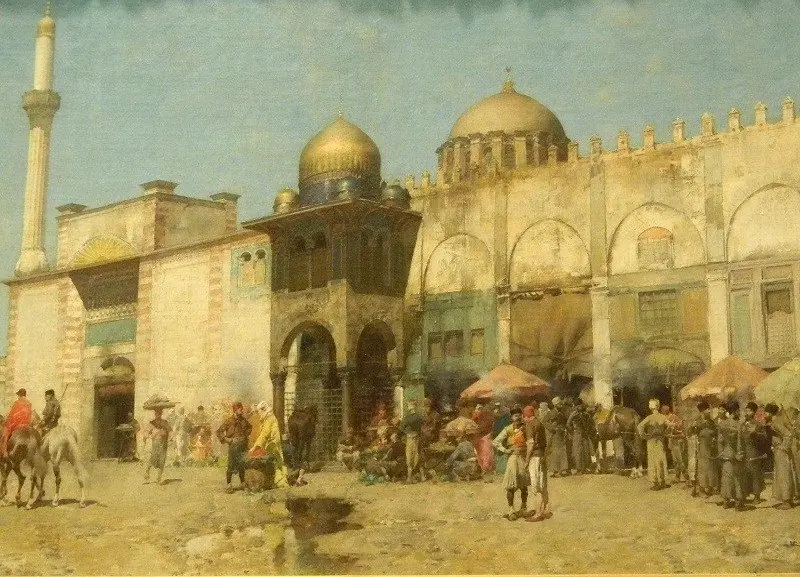 A Mosque
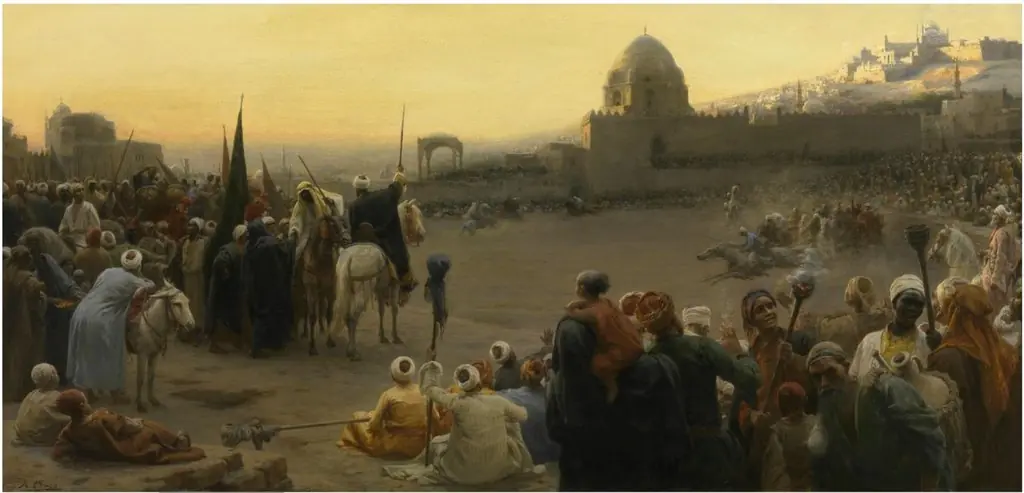 Fantasia in Egypt
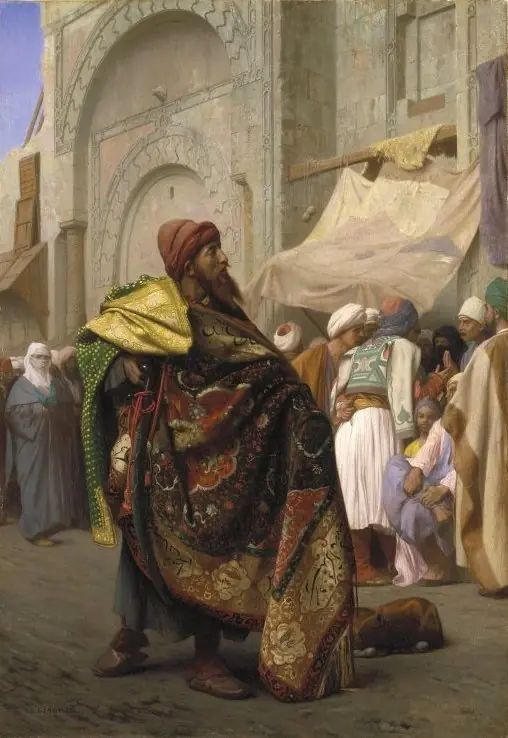 The Carpet Merchant of Cairo
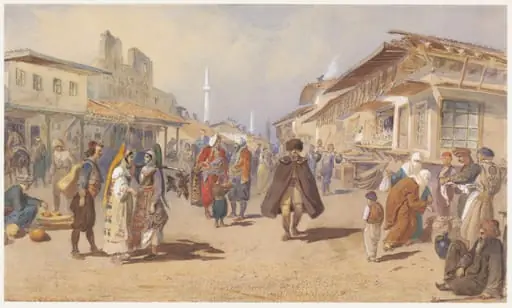 Vue de Belgrad la ruine du Prince Eugene
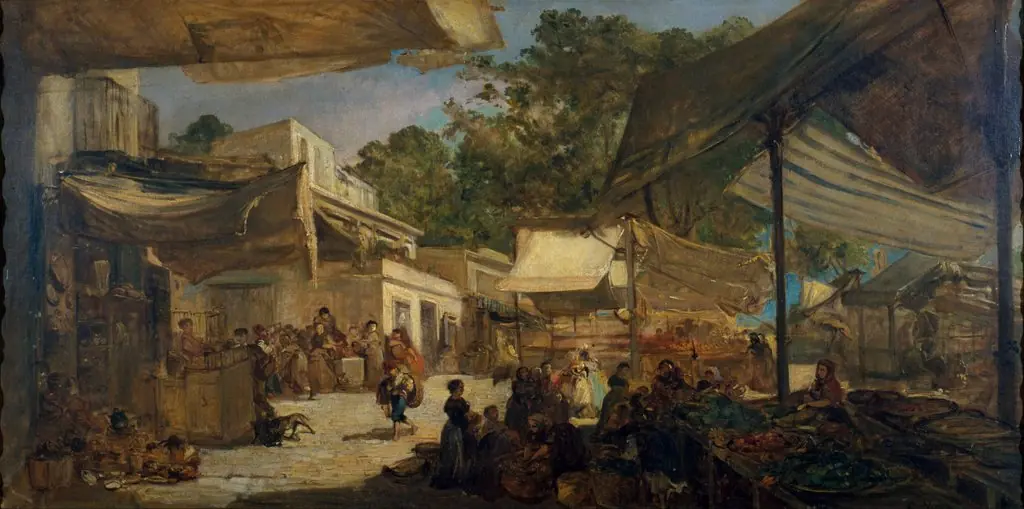 El Bornet
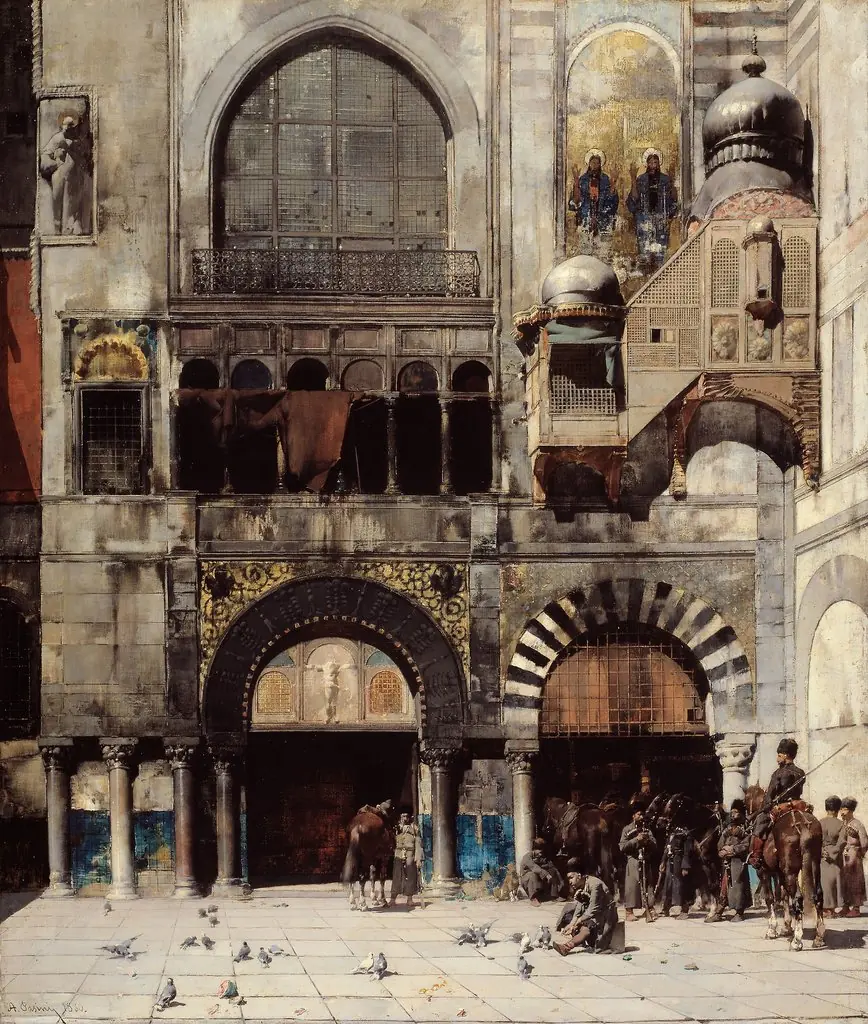 Circassian Cavalry Awaiting their Commanding Officer at the Door of a Byzantine Monument; Memory of the Orient
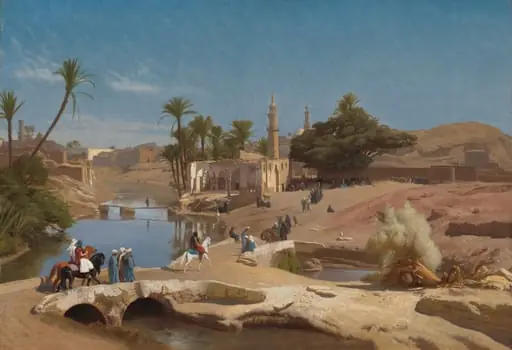 View of Medinet El-Fayoum
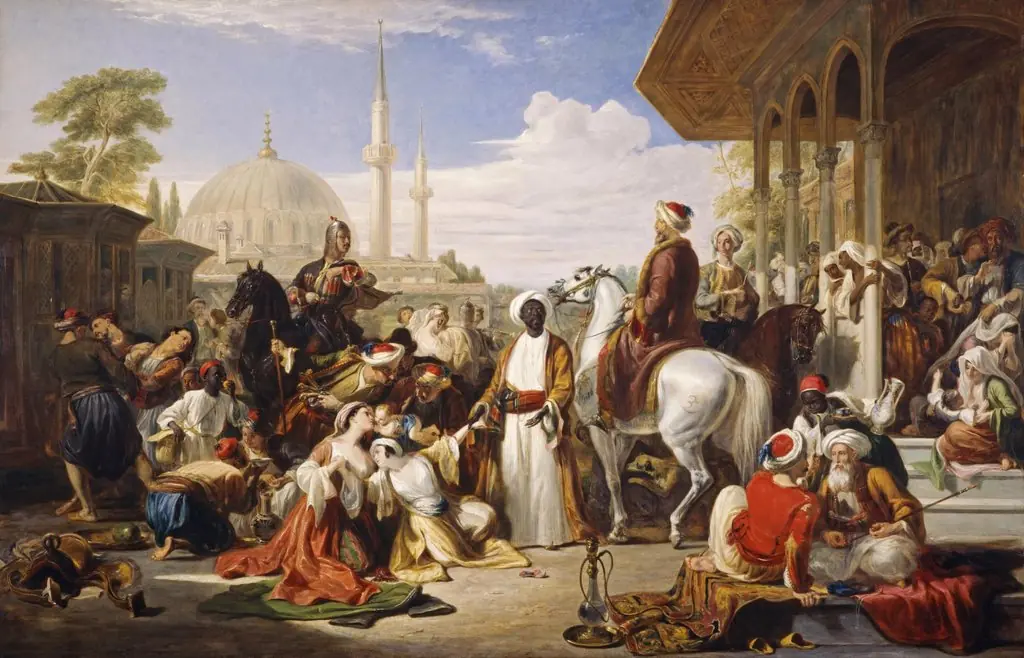 The Slave Market, Constantinople
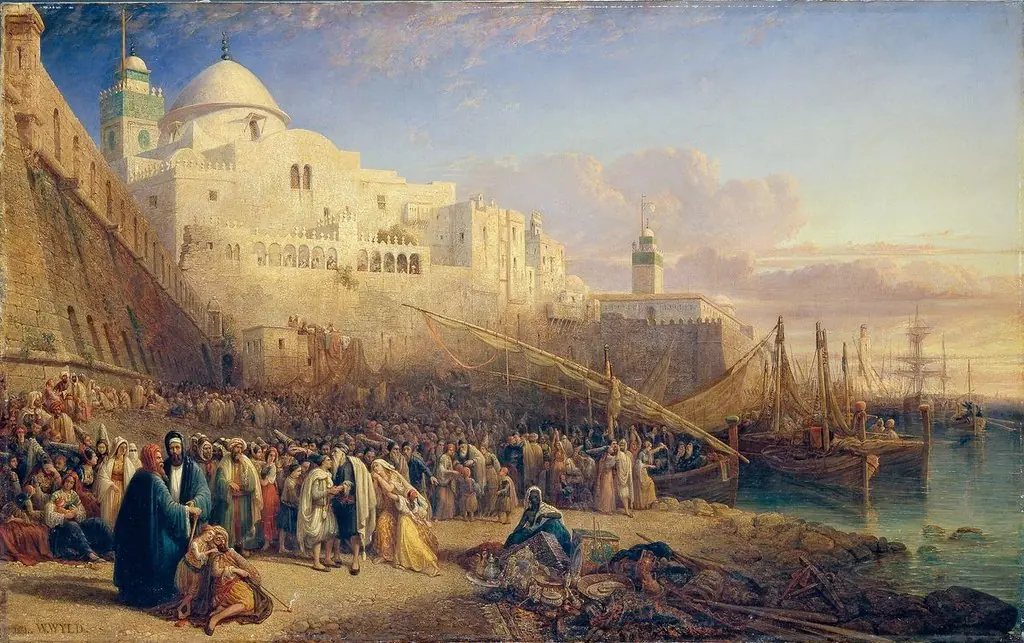 Le Départ d'Israélites pour la Terre sainte (scène algérienne)
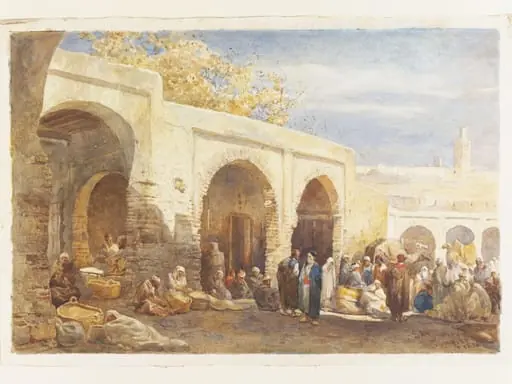 The Corn Market, Tangier
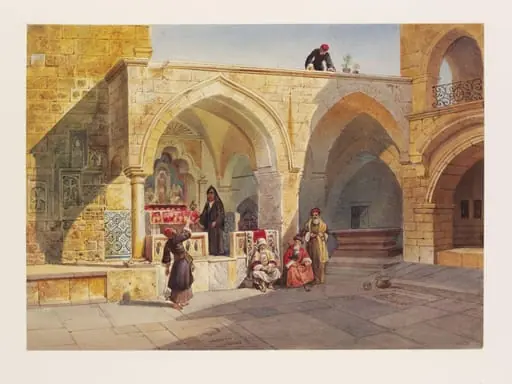 Court of the House of Caiaphus
 Muhammed's carpet moving from Mecca to Cairo