Artwork
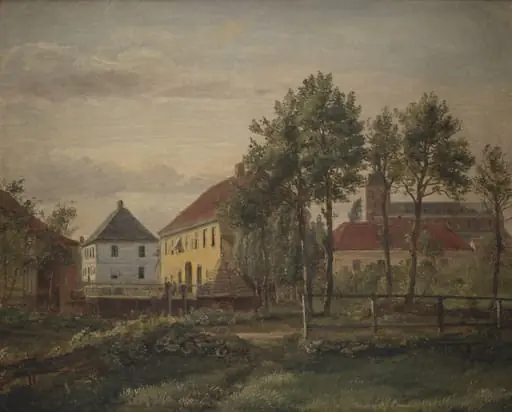
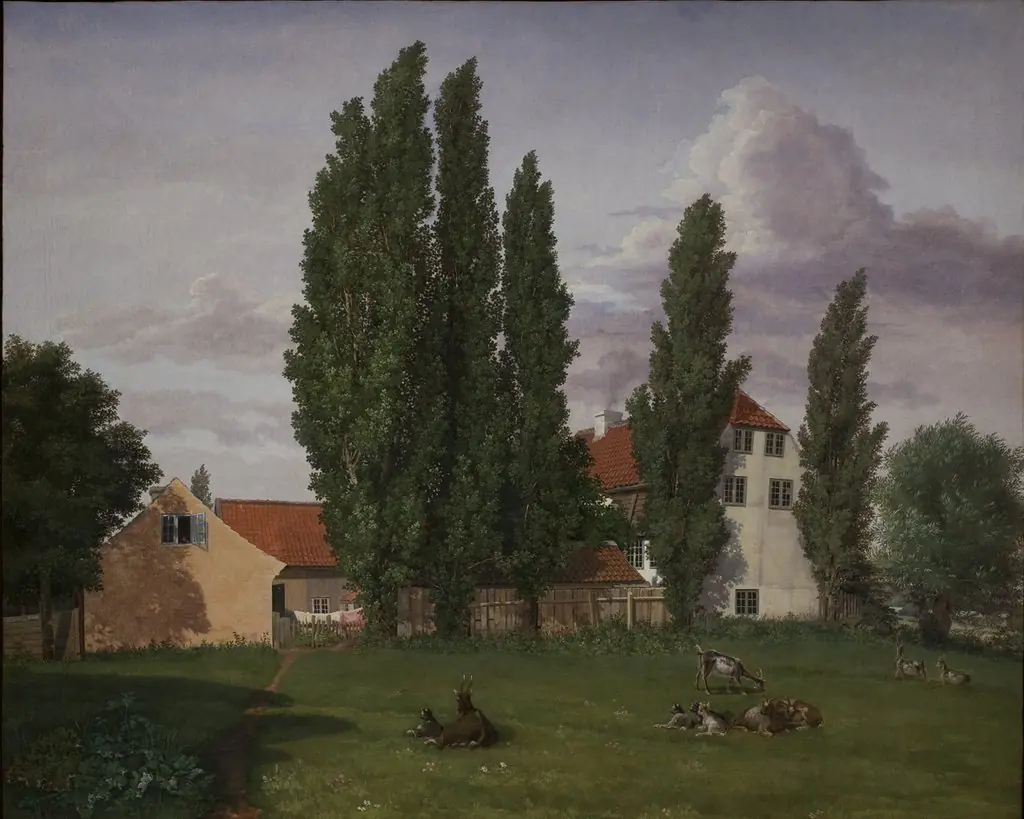
"Marialyst" at Frederiksberg. Ole Winstrup's House
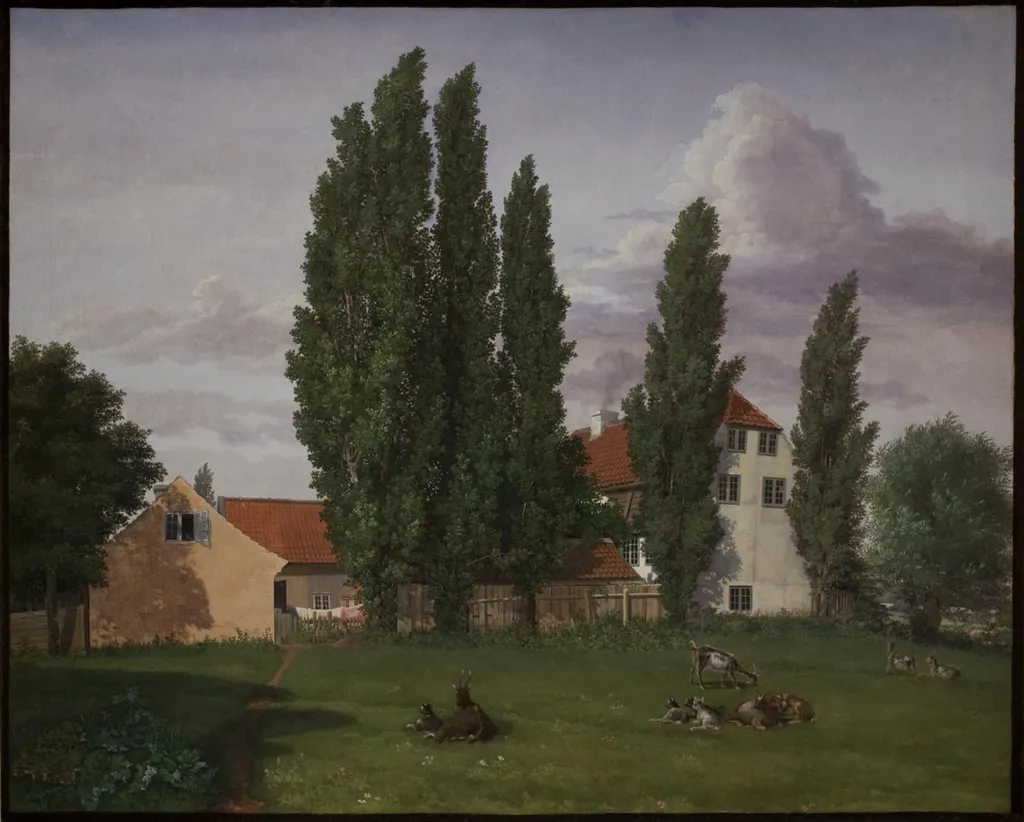
"Marialyst" at Frederiksberg. Ole Winstrup's House is a photography by the Romanticist artist Unknown. It dates from 1828 and is held in the collection of the Statens Museum for Kunst. Painted in 1828, 'Marialyst' at Frederiksberg.
About this work
Overview
The work is part of the Museum of Ethnography’s collection and represents a moment in early 19th-century Danish landscape painting.
Painted in 1828, 'Marialyst' at Frederiksberg. Ole Winstrup's House depicts a quiet rural estate in Denmark. The work is part of the Museum of Ethnography’s collection and represents a moment in early 19th-century Danish landscape painting. Its calm composition and attention to natural detail distinguish it from more theatrical contemporaries, aligning it with broader European tendencies toward intimate, contemplative scenery.
Subject & Meaning
The painting centers on a modest country house with white walls and a red-tiled roof, nestled within a gently rolling landscape. Grazing animals and dense foliage suggest a harmonious coexistence between human habitation and nature. The absence of human figures amplifies a sense of solitude, inviting reflection rather than narrative. This quietude reflects a Romantic ideal of nature as a sanctuary from urban or social disturbance.
Technique & Style
The artist employs soft brushwork to render the sky’s muted blues and greys, with delicate cloud formations that blend seamlessly into the horizon. Foreground elements—grass, trees, and stone pathways—are rendered with precise, observational detail, while background forms recede through subtle tonal shifts. The palette remains restrained, emphasizing naturalism over dramatic contrast, reinforcing the scene’s serenity.
History & Provenance
The painting was created during a period of growing interest in Danish national identity and rural life. It was likely commissioned or collected by someone connected to Ole Winstrup’s estate, though specific provenance details before its acquisition by the Museum of Ethnography remain undocumented. Its preservation suggests early recognition of its value as a record of domestic architecture and landscape.
Context
In the 1820s, Danish artists increasingly turned to local scenery as subjects, moving away from classical or mythological themes. 'Marialyst' reflects this shift, aligning with a national trend toward documenting everyday environments. While not overtly political, such works contributed to a cultural project of defining Danish identity through its land and architecture.
Legacy
The painting endures as a quiet example of early Romantic landscape painting in Denmark. It does not represent a radical departure but rather a consistent, thoughtful engagement with nature that influenced later generations of Nordic painters. Its preservation in a museum of ethnography underscores its role as both artistic and cultural documentation.
Artist & collection

 Domestic Scene
 Giacomo and Cardinal Marco, investing Andrea, Abbot of San Zeno, with his Benefice
 The Nymph of Fontainebleau
 Portrait of a Woman
 Madonna and Child with Saints in the Enclosed Garden
 Venus and Minerva
 Family Group of Four on Sofa
 Wall painting from Room H of the Villa of P. Fannius Synistor at Boscoreale
 View of Falkonerallé outside Copenhagen
 View of Falkonerallé outside Copenhagen
 Landscape with a Cottage beside a Pond
 A Mill in Odense
 Farm in Merksem
 A Barn on the Bank of a Stream in Gelderland
 Landscape with a Cottage beside a Pond
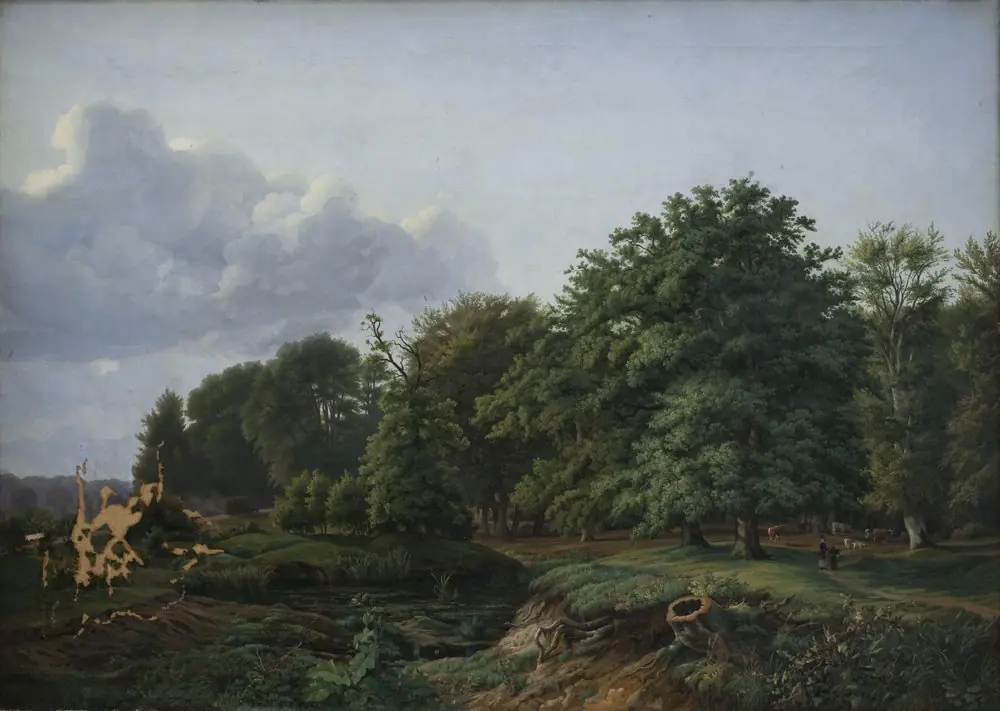 A Forrest near Hellebæk in the North of Zealand. Afternoon.
 Millpond and Cottage
 A Forester Cottage in Putte
 A Forrest near Hellebæk in the North of Zealand. Afternoon.
 "Marialyst" at Frederiksberg. Ole Winstrup's House