Artwork
A Man Smoking His Pipe
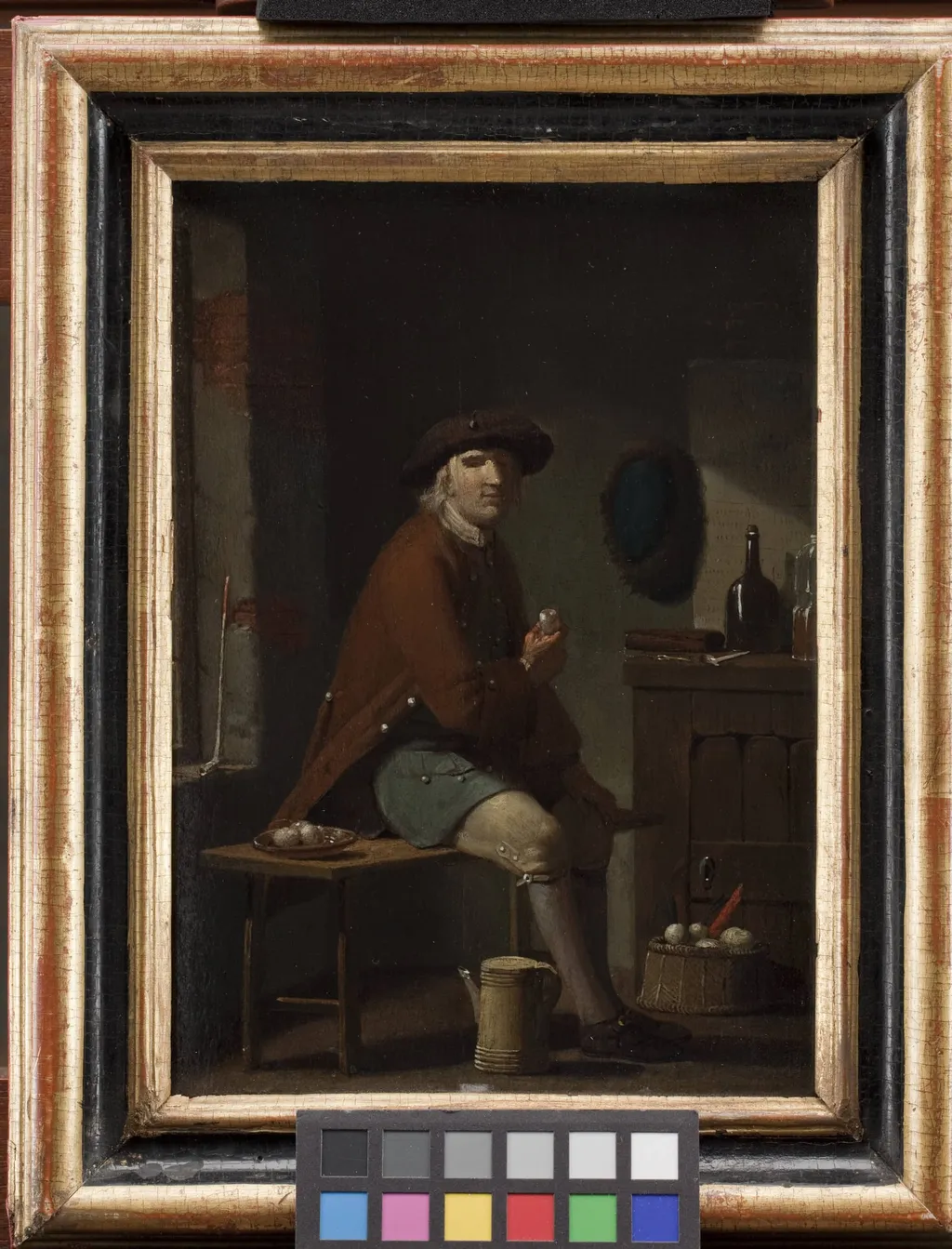
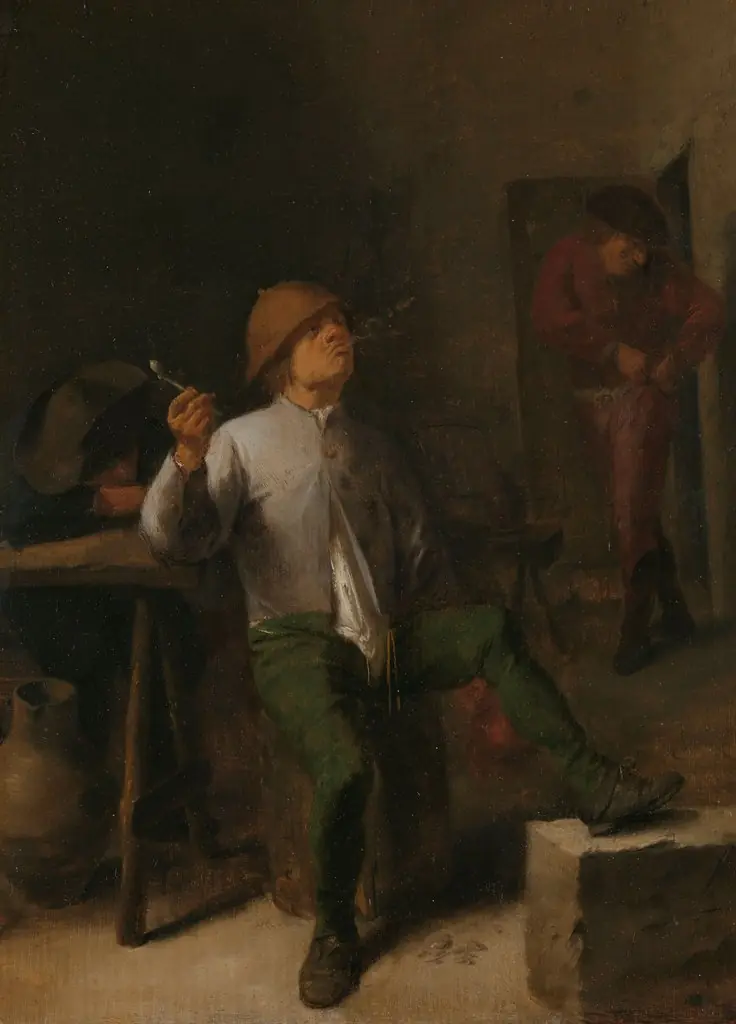
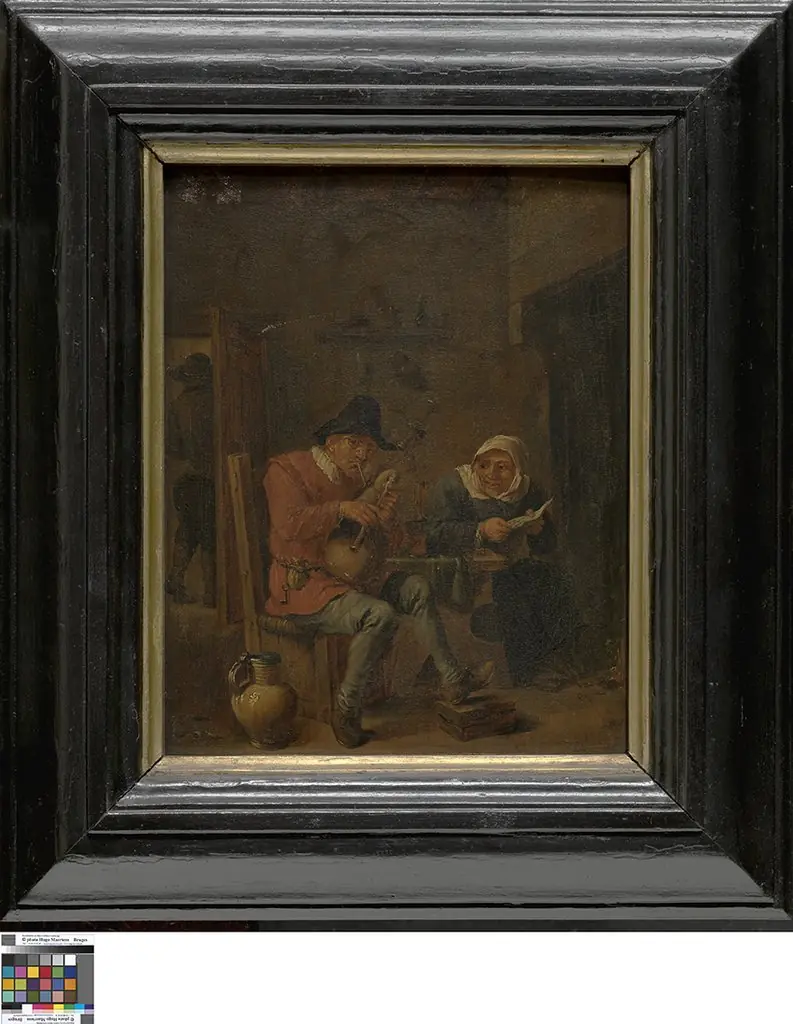
A Man Smoking His Pipe is a photography by Unknown. It dates from 1761 and is held in the collection of the Statens Museum for Kunst. Painted around 1761, this work portrays a solitary figure engaged in the quiet act of smoking a pipe.
About this work
Overview
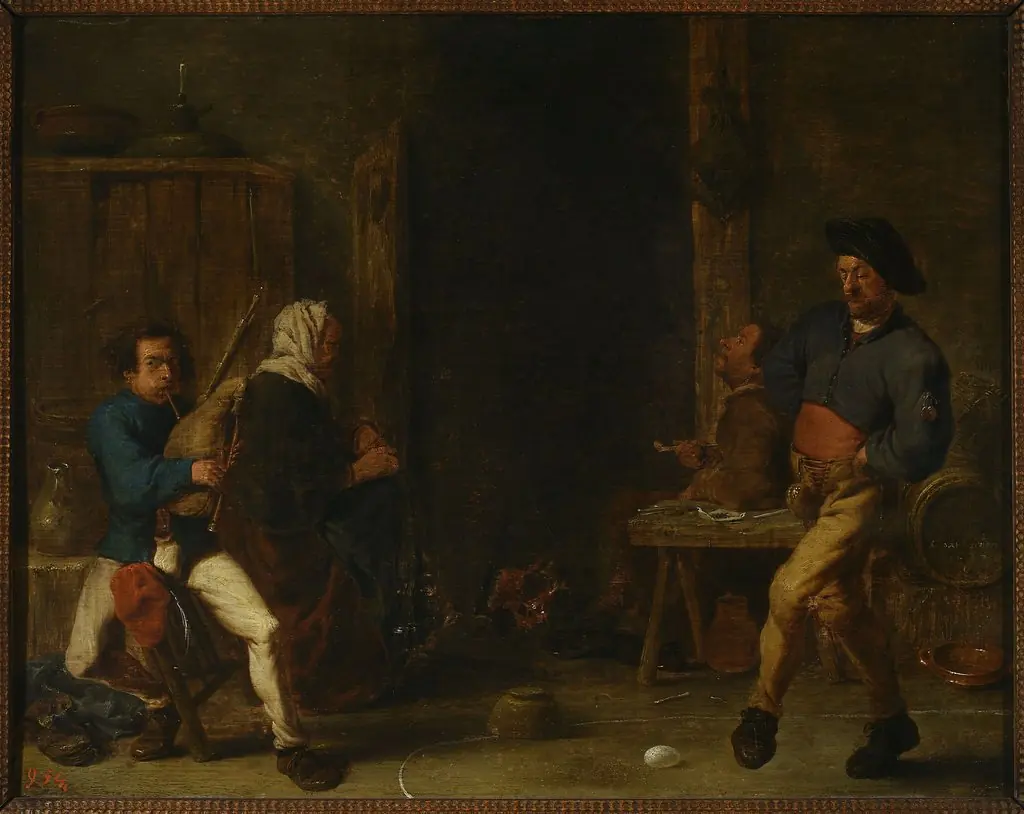
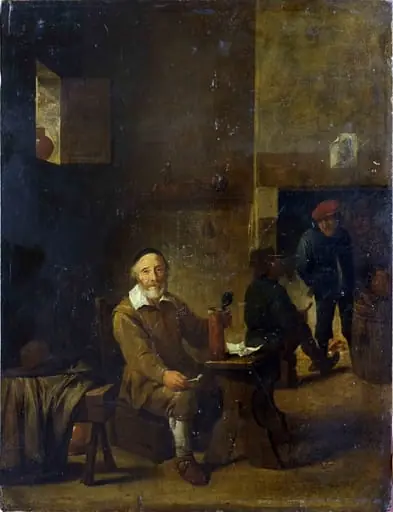
Painted around 1761, this work portrays a solitary figure engaged in the quiet act of smoking a pipe. Executed in oil on canvas, it belongs to the collection of the Museum of Ethnography. The composition centers on a seated man, rendered with subtle modeling and restrained color, evoking a moment of stillness. The scene lacks dramatic action, instead emphasizing ordinary domestic presence.
Subject & Meaning
The presence of household items—eggs, a jug, a table—anchors the scene in daily life, implying themes of routine, solitude, or quiet labor.
The figure, dressed in typical 18th-century rural attire, is depicted in a moment of introspection. His blurred facial features obscure individual identity, suggesting a generalized representation rather than a portrait. The presence of household items—eggs, a jug, a table—anchors the scene in daily life, implying themes of routine, solitude, or quiet labor. The pipe, a common object of contemplation, reinforces the mood of inward focus.
Technique & Style
The artist employs a muted palette of browns, greens, and ochres, harmonizing with the natural setting. Chiaroscuro is used sparingly to define form and create spatial depth, particularly around the figure’s torso and the objects on the table. Brushwork is soft and blended, avoiding sharp detail, especially on the face, which enhances the sense of anonymity and calm. The composition is tightly framed, drawing attention to the man’s posture and the still life elements around him.
History & Provenance
The painting’s origin remains undocumented, with no known records of its commission or early ownership. It entered the Museum of Ethnography’s collection in the late 19th or early 20th century, likely as part of a broader acquisition of vernacular art. Its attribution to a specific artist is uncertain, and it has been cataloged primarily for its ethnographic value rather than its artistic pedigree.
Context
Created during a period when genre scenes of rural life gained interest among collectors, this work reflects a shift toward depicting ordinary people outside aristocratic settings. Though not signed or dated with precision, its style aligns with regional European traditions of domestic realism. The absence of narrative or symbolic allegory distinguishes it from more elaborate genre paintings of the era.
Legacy
The painting endures as a quiet example of 18th-century observational art, valued for its unembellished portrayal of everyday life. It contributes to scholarly understanding of how non-elite subjects were visually represented in pre-industrial Europe. While not widely exhibited, it remains a reference point in studies of material culture and the aesthetics of stillness in early modern visual art.
Artist & collection

 Domestic Scene
 Giacomo and Cardinal Marco, investing Andrea, Abbot of San Zeno, with his Benefice
 The Nymph of Fontainebleau
 Portrait of a Woman
 Madonna and Child with Saints in the Enclosed Garden
 Venus and Minerva
 Family Group of Four on Sofa
 Wall painting from Room H of the Villa of P. Fannius Synistor at Boscoreale