Artwork
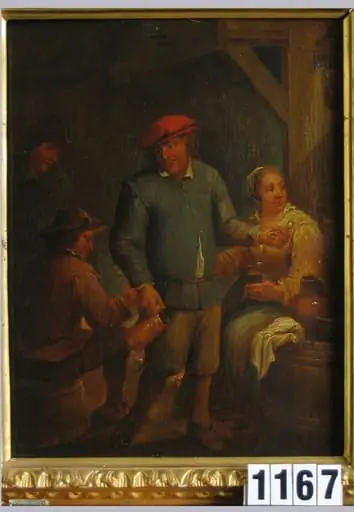
Interior țărănesc cu fumători
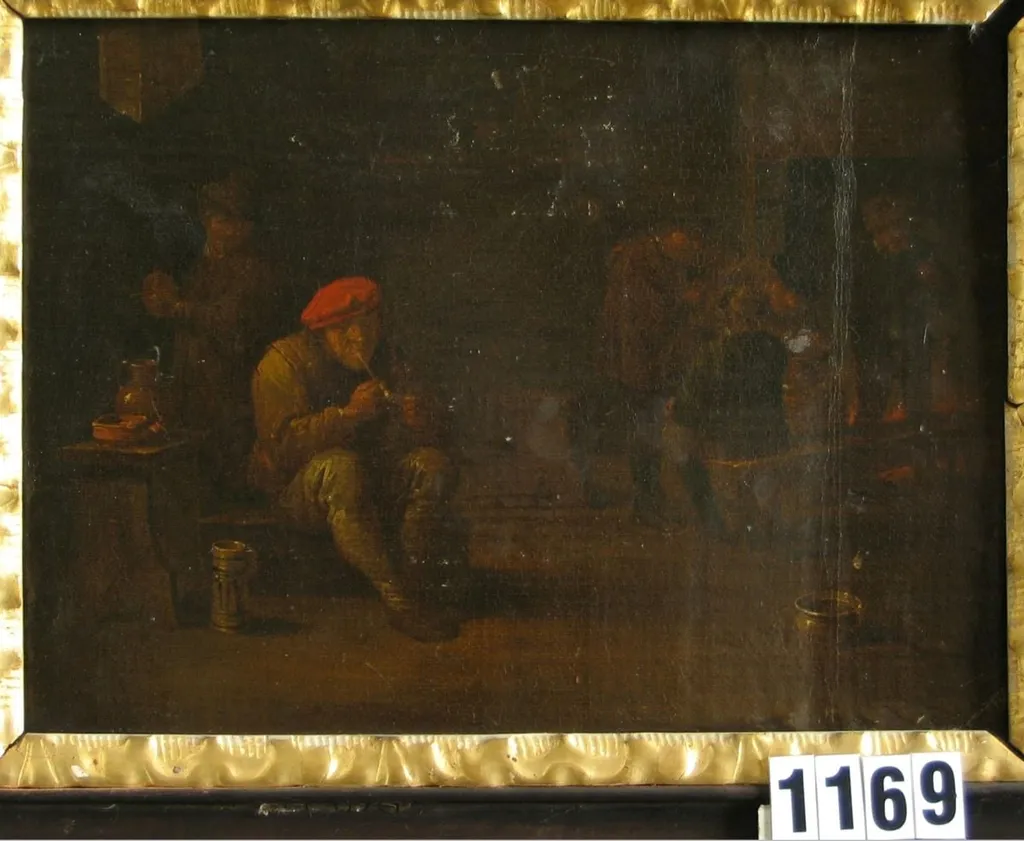
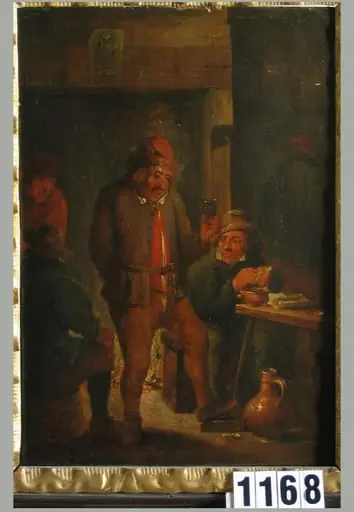
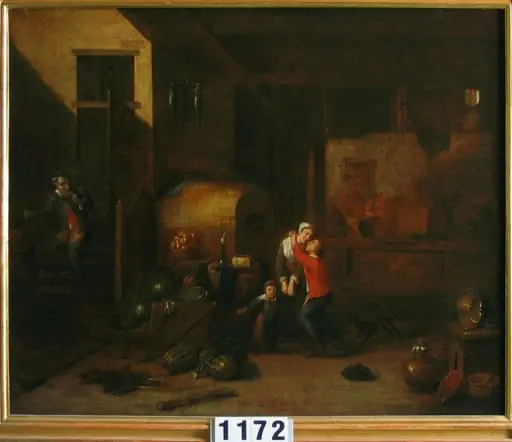
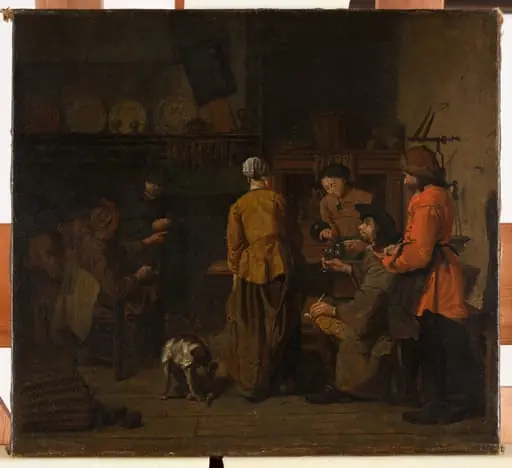
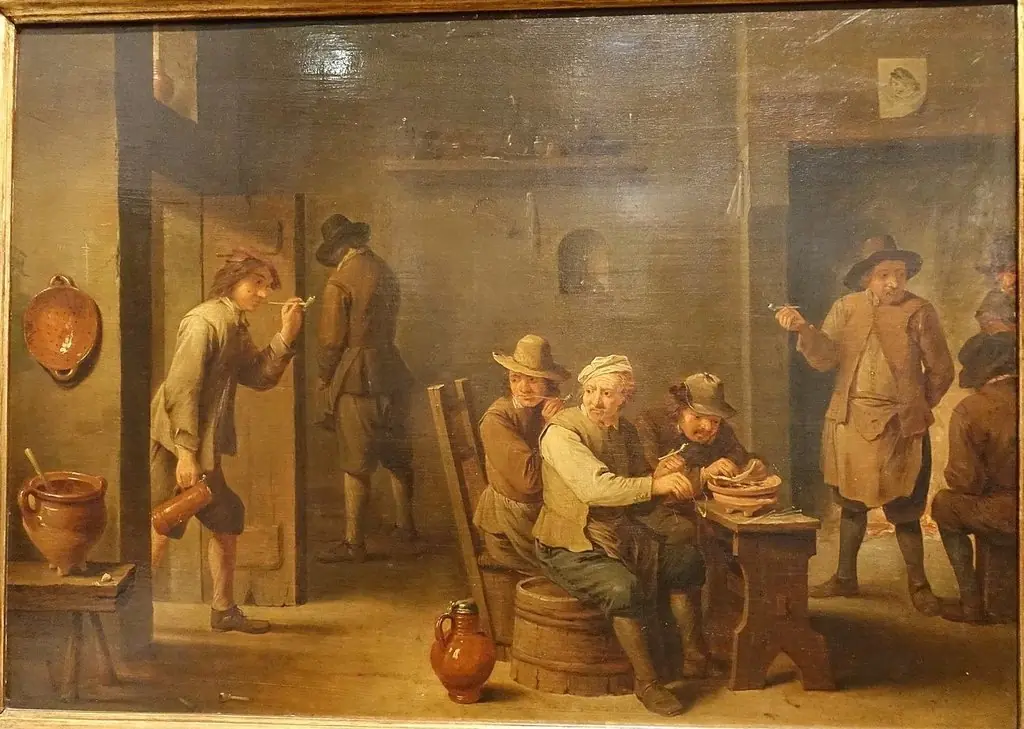
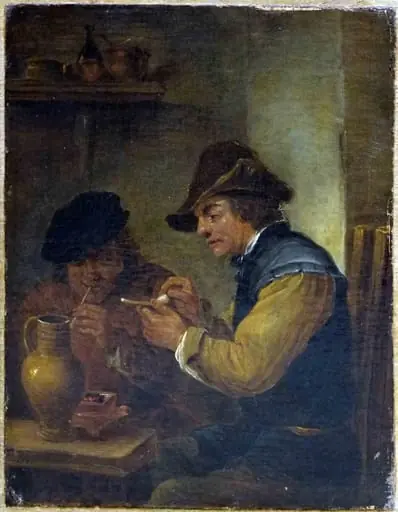
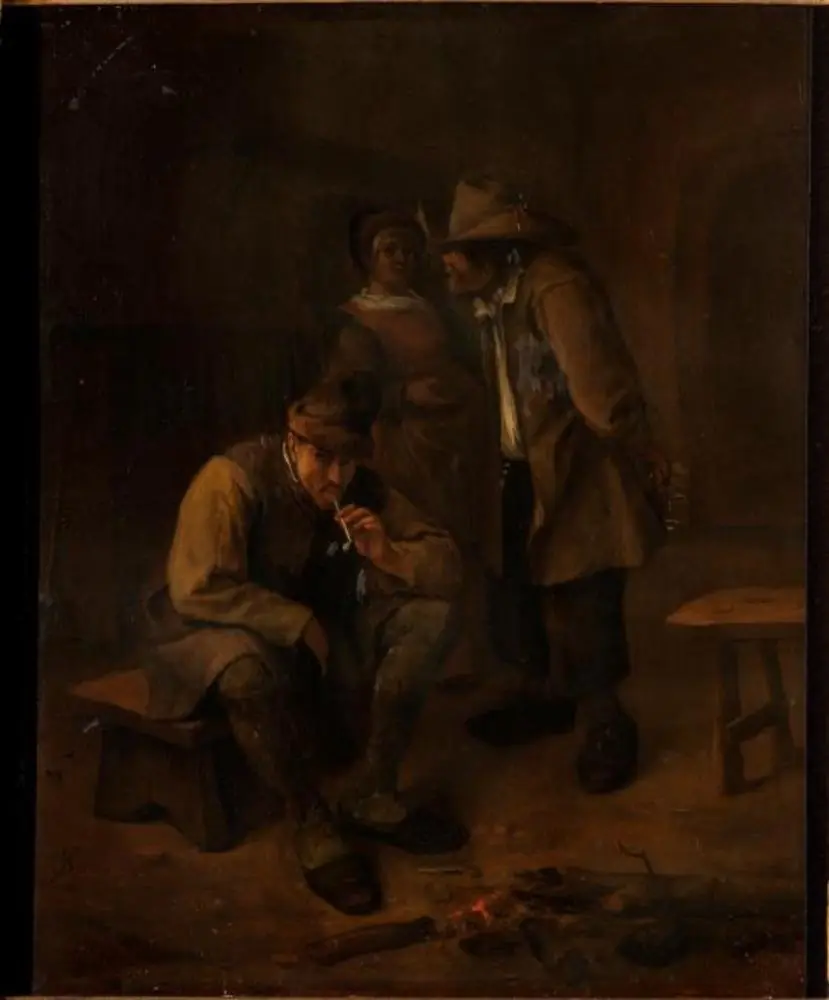
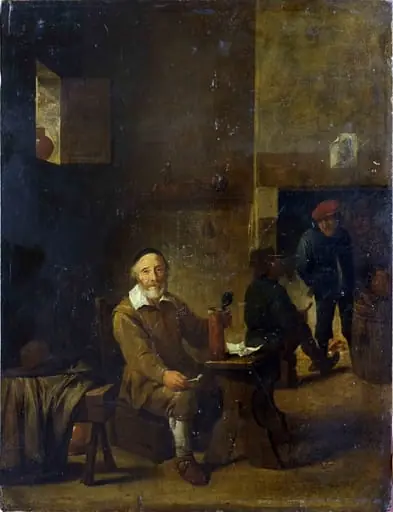
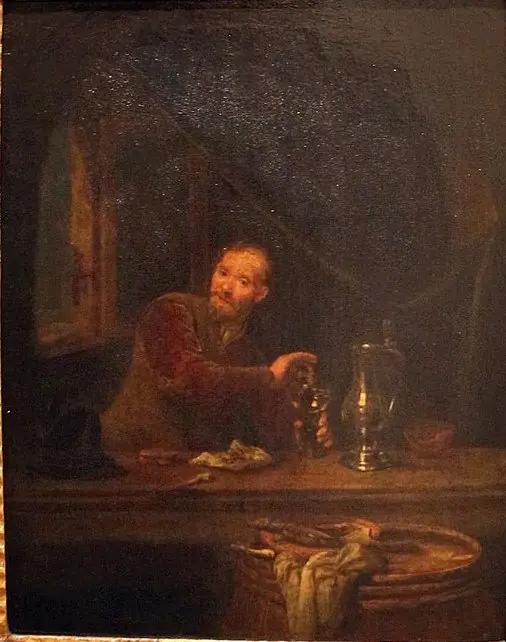
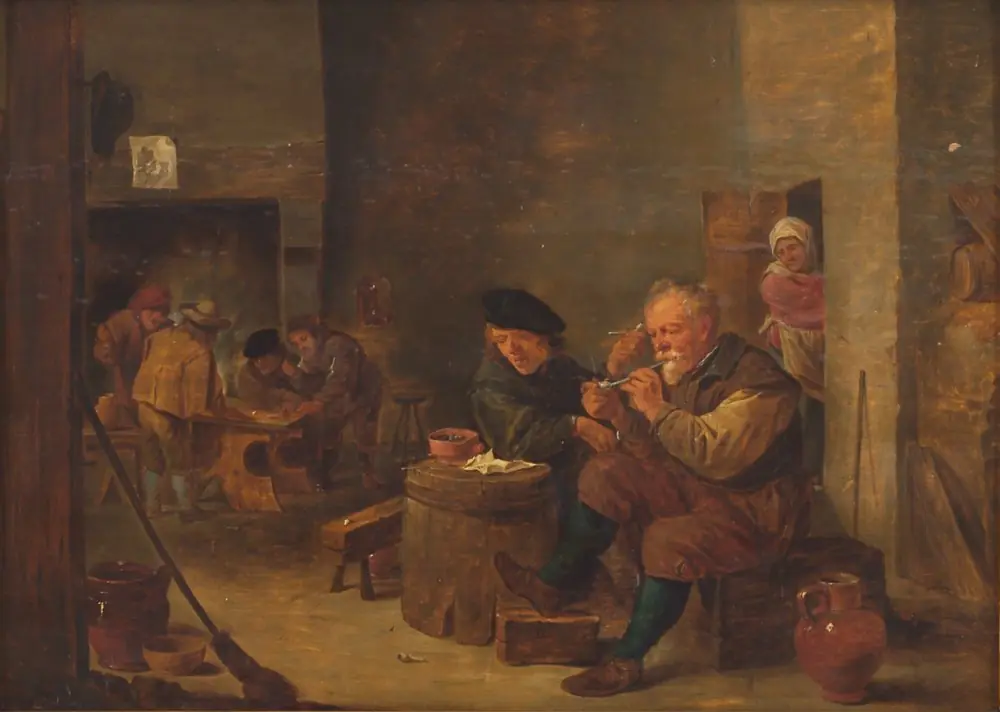
Interior țărănesc cu fumători is a print by the Baroque artist David II Teniers. It is held in the collection of the Brukenthal National Museum.
About this work
Overview
This painting depicts an intimate interior scene of rural Romanian life, centered on a solitary man smoking a pipe in a modest, dimly lit room.
This painting depicts an intimate interior scene of rural Romanian life, centered on a solitary man smoking a pipe in a modest, dimly lit room. Surrounding figures—a child on the floor and two adults near a barrel—engage in quiet, unremarkable activities. The composition avoids drama, instead emphasizing the stillness and routine of domestic space. Light filters from a single source, casting soft shadows that define forms without illuminating the entire space.
Subject & Meaning
The scene captures ordinary moments of rural labor and rest, with no clear narrative or symbolic intent. The man’s hunched posture and worn clothing suggest physical toil, while the presence of the child and others implies familial or communal life. The pipe, a common object, becomes a quiet anchor of solitude amid shared space. The painting values authenticity over idealization, portraying daily existence without sentiment or moral judgment.
Technique & Style
The artist employs chiaroscuro to model forms through subtle contrasts between light and shadow, creating a sense of volume and spatial depth. Dark, muted walls recede, while the illuminated surfaces of the table, clothing, and faces emerge with quiet clarity. Brushwork is restrained, favoring texture over detail—worn fabric, rough wood, and smoke are suggested rather than rendered precisely. The palette is earth-toned, reinforcing the scene’s grounded realism.
History & Provenance
The work originates from late 19th-century Romanian art, a period when painters increasingly turned to peasant life as a subject of cultural identity. Likely created during a time of national introspection, it reflects a shift away from aristocratic or religious themes toward the dignity of rural labor. Its early ownership remains undocumented, but it entered public collections in the 20th century as regional art gained institutional recognition.
Context
This painting emerged amid broader European trends that valued realism and ethnographic observation. In Romania, artists sought to define a national visual language by depicting peasant communities, often seen as repositories of authentic tradition. Unlike romanticized portrayals elsewhere, this work avoids idealization, presenting a quiet, unembellished view of domestic life that aligns with local social conditions of the time.
Legacy
The painting contributes to a modest but enduring tradition of Romanian realist painting that prioritizes quiet observation over grandeur. It influenced later generations of artists interested in everyday life, particularly those who rejected theatricality in favor of restrained, truthful representation. Though not widely known outside regional circles, it remains a touchstone for studies of rural identity in Eastern European art.
Artist & collection
Artist
Flemish painter David II Teniers created cozy, everyday scenes full of detail. In works like *Interior țărănesc cu cântăreț la lăută* (a textile piece) and the painting *Interior țărănesc cu băutori*, he captured…