Artwork
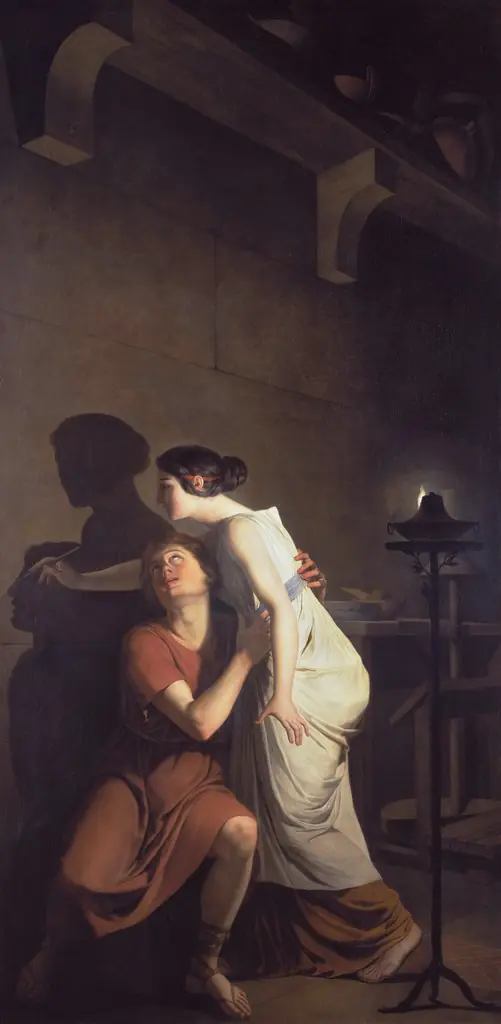
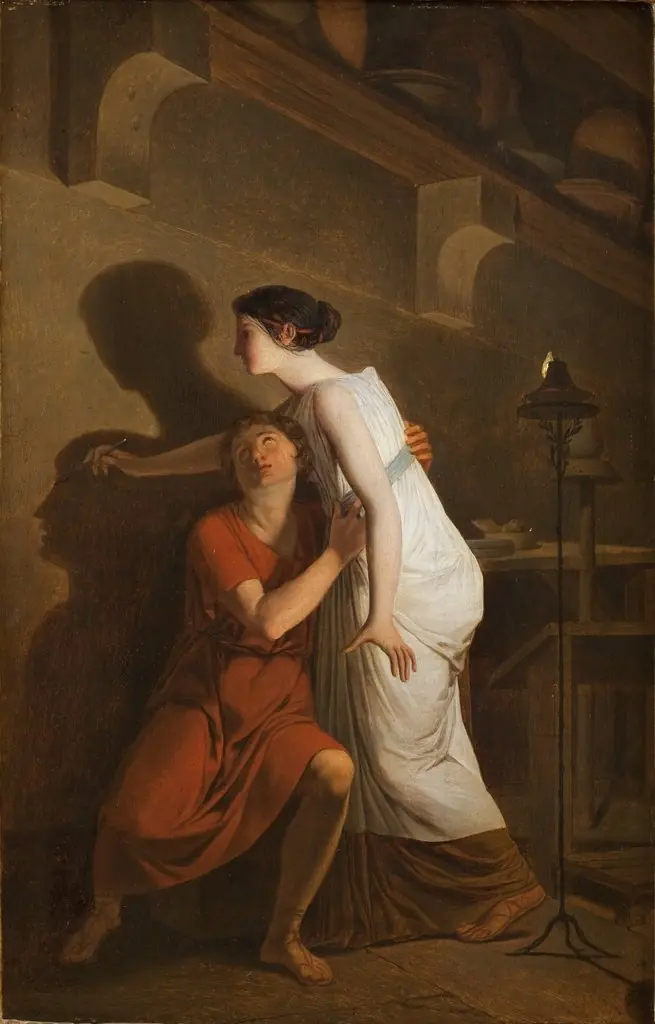
The Origin of Painting
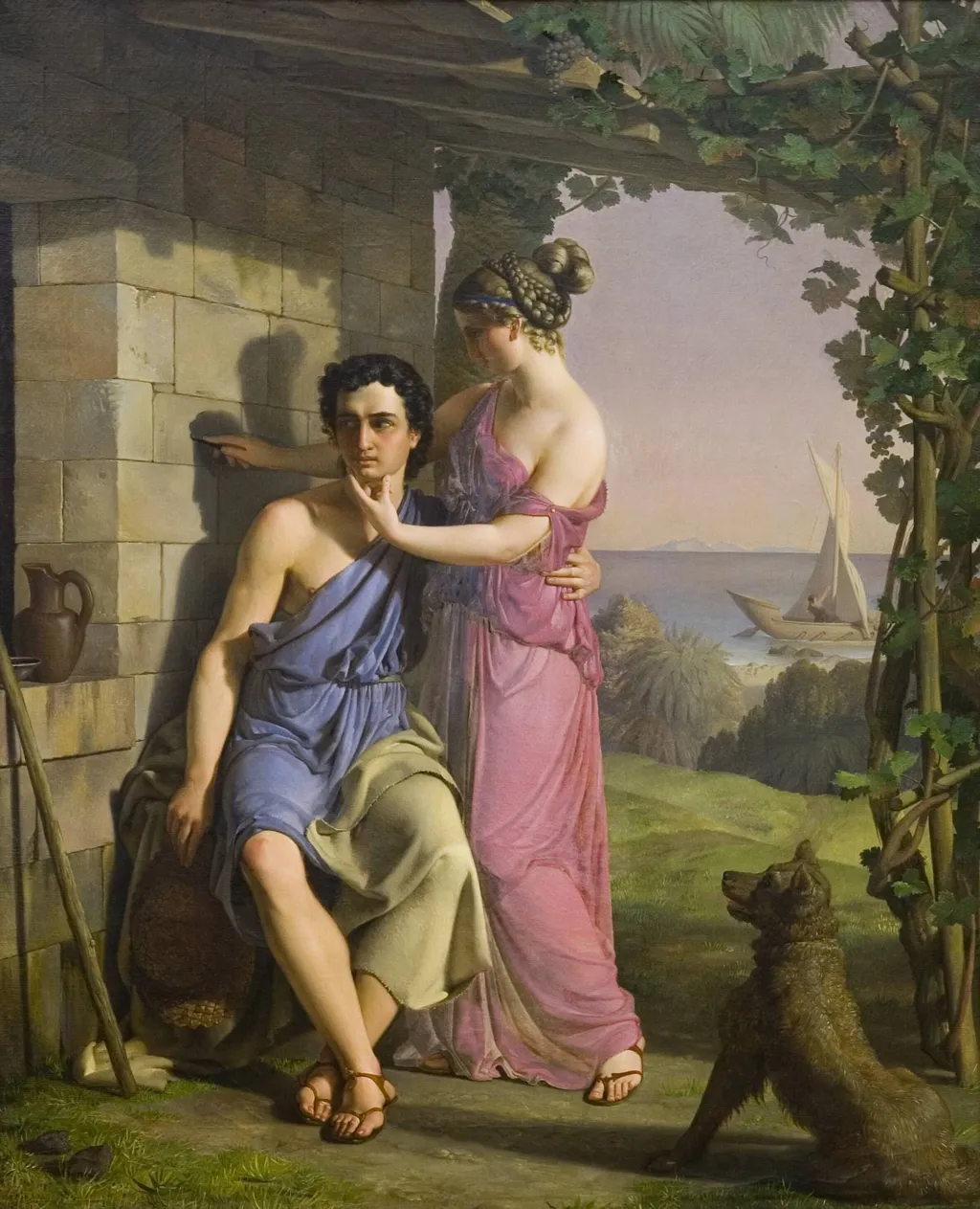
The Origin of Painting is an unspecified painting by the Romanticist artist Unknown. It dates from 1831 and is held in the collection of the Statens Museum for Kunst. Painted in 1831, this work is attributed to an artist identified as 612_person.
About this work
Overview
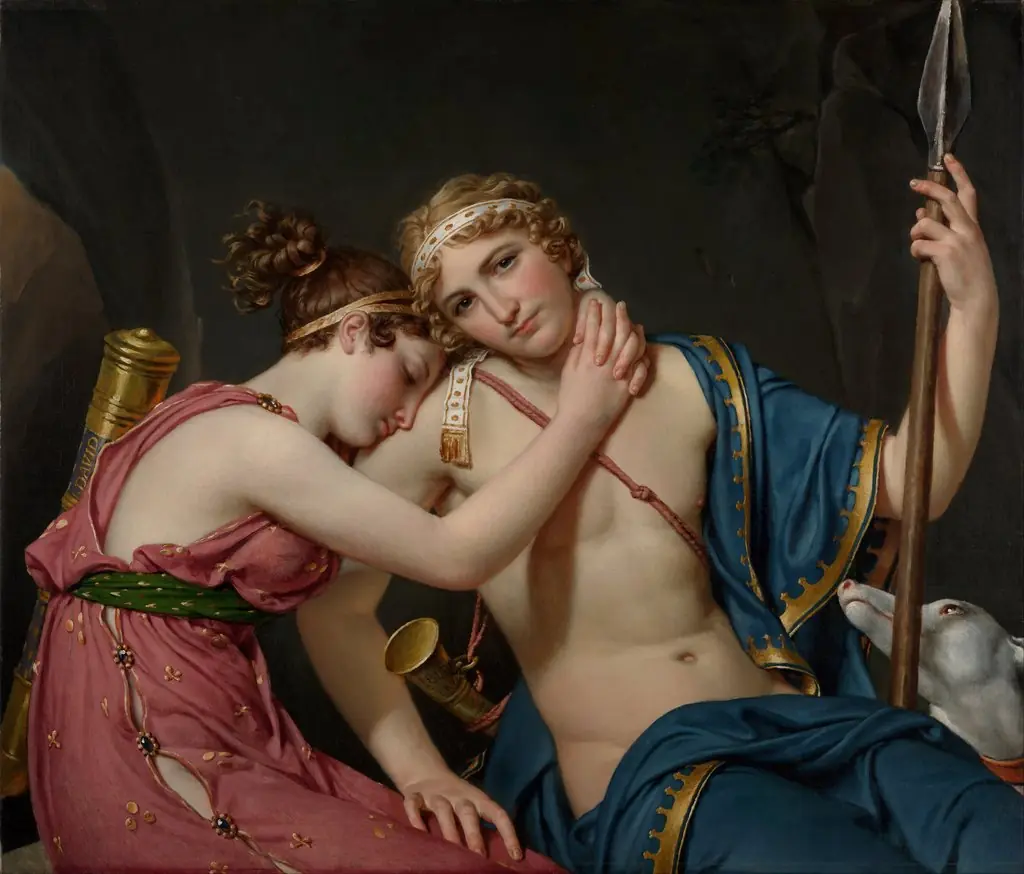
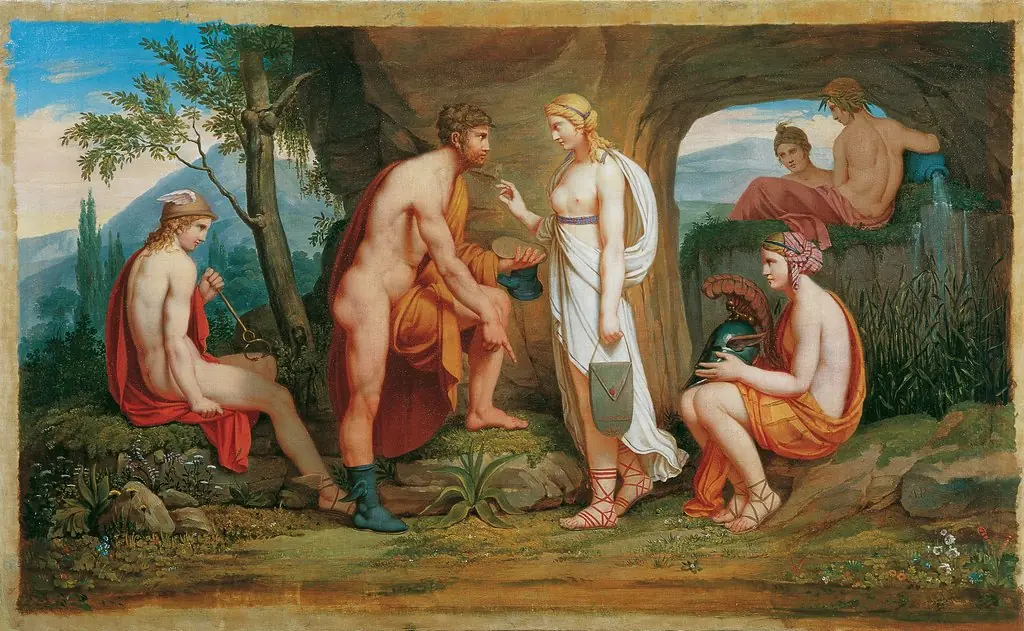
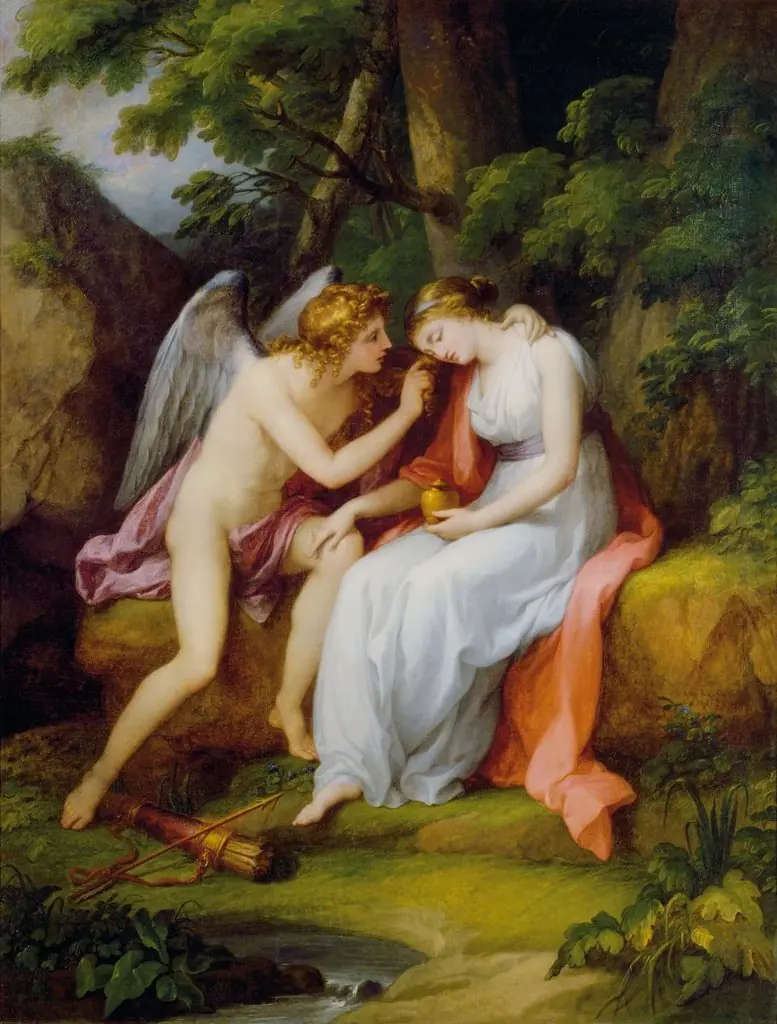
The composition centers on a seated man and standing woman, their physical proximity and subtle gesture suggesting a private exchange.
Painted in 1831, this work is attributed to an artist identified as 612_person. It resides in the Museum of Ethnography and presents a quiet domestic moment framed within an ancient architectural setting. The composition centers on a seated man and standing woman, their physical proximity and subtle gesture suggesting a private exchange. The inclusion of a dog and distant boat anchors the scene in a naturalistic, almost mythic environment.
Subject & Meaning
The figures appear to represent an idealized pair, their interaction—woman’s hand touching the man’s face—conveys tenderness without narrative clarity. The stone structure may imply antiquity or ritual space, while the boat and landscape hint at a broader world beyond the immediate moment. The scene resists explicit symbolism, instead evoking a timeless sense of human connection, possibly reflecting 19th-century romantic ideals of domestic harmony.
Technique & Style
The artist employs soft, muted tones to unify the palette, with the woman’s pink gown and the man’s blue tunic providing subtle contrast against earthy backgrounds. Brushwork is delicate, emphasizing texture in fabric and stone without overt detail. Atmospheric perspective is used to recede the background, enhancing the intimacy of the foreground. Light falls evenly, avoiding dramatic shadows, reinforcing the calm, contemplative mood.
History & Provenance
The painting entered the Museum of Ethnography’s collection in the 19th century, likely acquired during a period of expanding ethnographic and antiquarian interests. Its attribution to 612_person remains unverified by scholarly consensus, and little documentation exists regarding its creation or early ownership. It has been exhibited intermittently, primarily in contexts exploring the representation of daily life in historical art.
Context
Created during a time when European artists increasingly turned to classical and pastoral themes, the work aligns with broader trends of idealizing ancient or non-Western domestic scenes. While not overtly ethnographic in subject, its inclusion in an ethnographic museum suggests a curatorial interest in visual representations of perceived 'primitive' or timeless human relationships, reflecting 19th-century anthropological frameworks.
Legacy
The painting has not influenced major artistic movements but remains a quiet example of early 19th-century genre painting with ethnographic overtones. It is occasionally referenced in studies of how domestic intimacy was visually constructed in museum contexts. Its enduring presence in the Museum of Ethnography underscores shifting attitudes toward the boundaries between art, anthropology, and cultural representation.
Artist & collection

 Domestic Scene
 Giacomo and Cardinal Marco, investing Andrea, Abbot of San Zeno, with his Benefice
 The Nymph of Fontainebleau
 Portrait of a Woman
 Madonna and Child with Saints in the Enclosed Garden
 Venus and Minerva
 Family Group of Four on Sofa
 Wall painting from Room H of the Villa of P. Fannius Synistor at Boscoreale