Artwork
The invention of the art of drawing
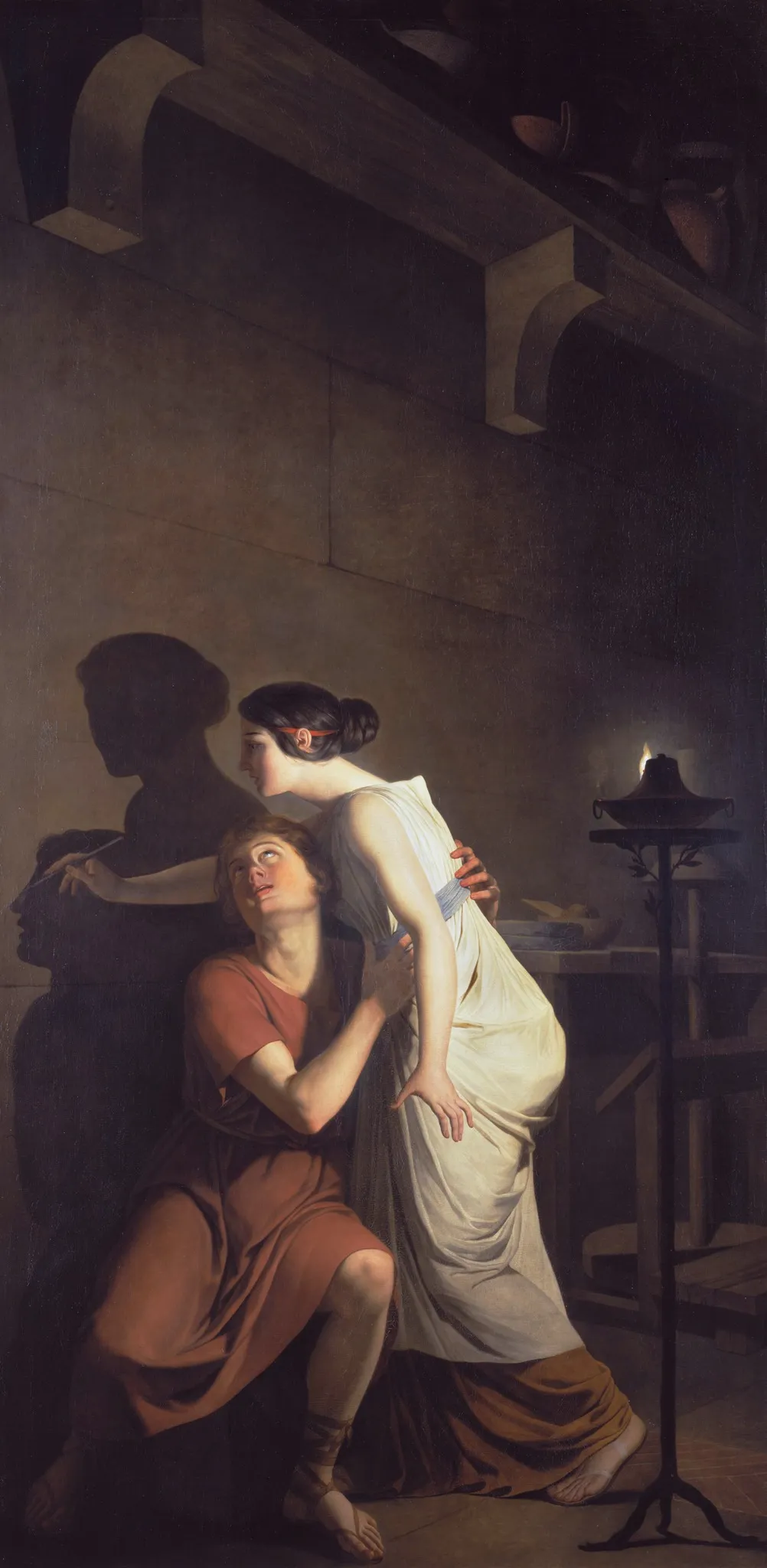
The invention of the art of drawing is an oil painting by the Neoclassicist artist Joseph-Benoît Suvée. It dates from 1796 and is held in the collection of the Groeningemuseum.
About this work
Overview
Painted in 1796 by Joseph-Benoît Suvée, a Flemish artist influenced by French neoclassicism, *The Invention of the Art of Drawing* is an oil painting depicting an ancient draftsperson, Kora of Sicyon, in a moment of creative intimacy. The work is part of the Groeningemuseum collection.
Subject & Meaning
The painting portrays Kora of Sicyon, an early figure associated with drawing, in a collaborative and intimate scene with a kneeling male figure. The composition conveys the origins of drawing as a shared, emotionally charged act.
Technique & Style
Suvée employs chiaroscuro to create depth and dramatic tension, emphasizing the emotional connection between the two figures. The neoclassical style is evident in the simplicity, classical attire, and the emphasis on the narrative's moral and artistic significance.
History & Provenance
Created in 1796, the painting reflects Suvée's absorption of French neoclassical ideals during his career. It is currently housed in the Groeningemuseum.
Context
Emerging in the late 18th century, the work aligns with the neoclassical movement's fascination with ancient themes and the revival of classical ideals in art and society.
Legacy
While specific lasting impacts of *The Invention of the Art of Drawing* on subsequent art movements are not widely highlighted, it remains a notable example of neoclassical painting's thematic and stylistic preferences.
Artist & collection
Artist
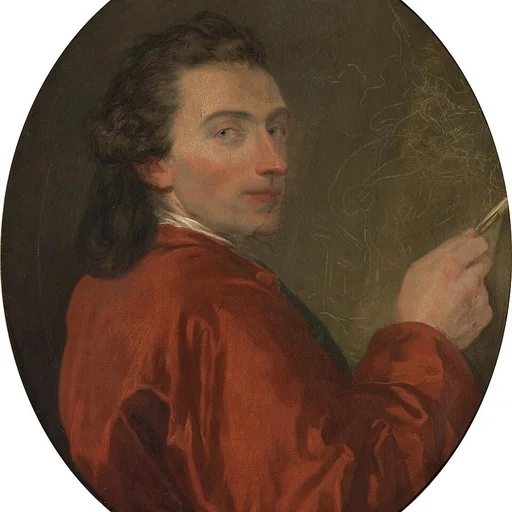
Joseph-Benoît Suvée (3 January 1743 – 9 February 1807) was a Flemish painter strongly influenced by French neo-classicism.

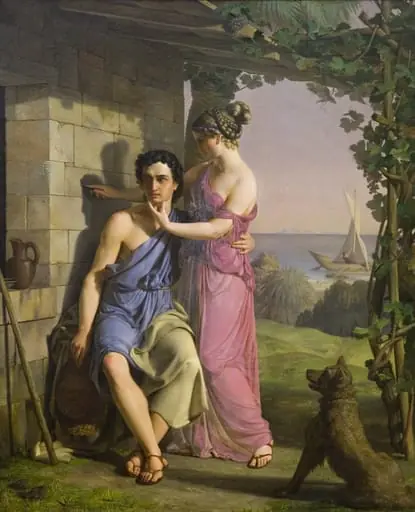 The Origin of Painting
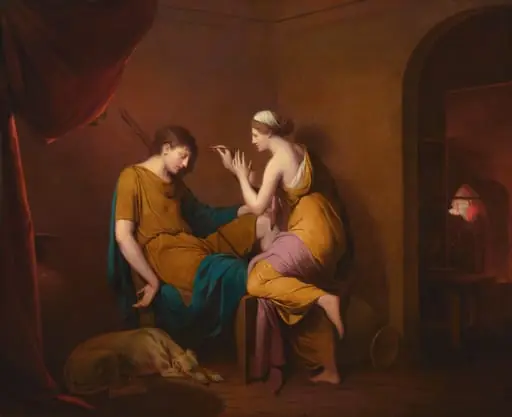 The Corinthian Maid
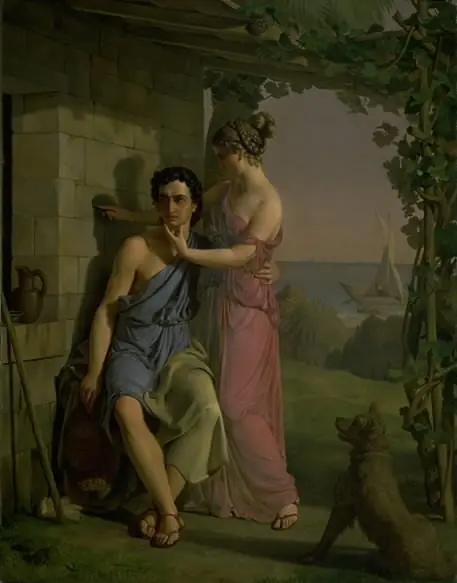 The Origin of Painting
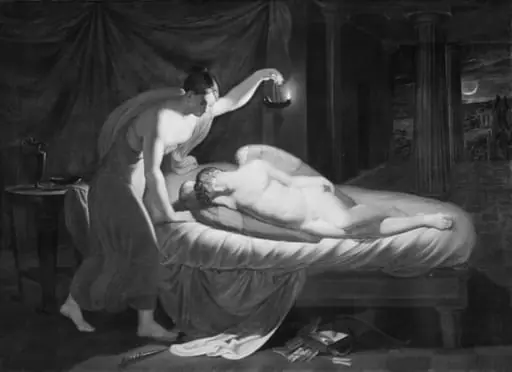 Psyke, der nærmer sig den sovende Amor
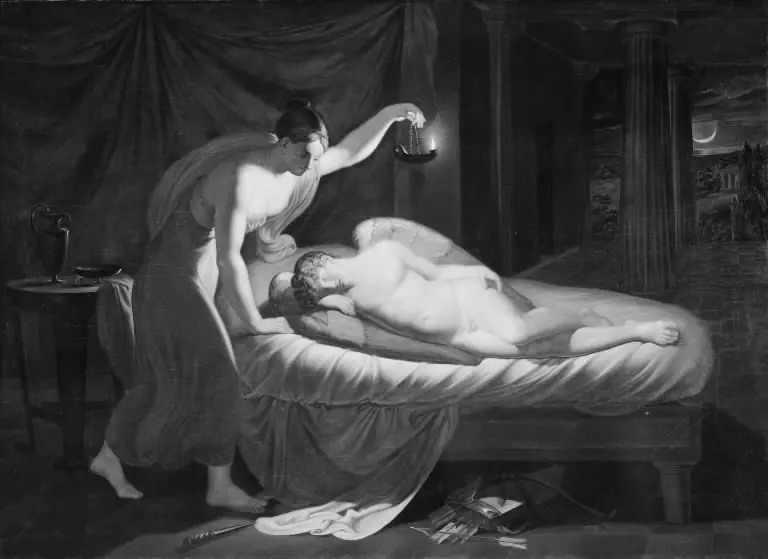 Psyke, der nærmer sig den sovende Amor
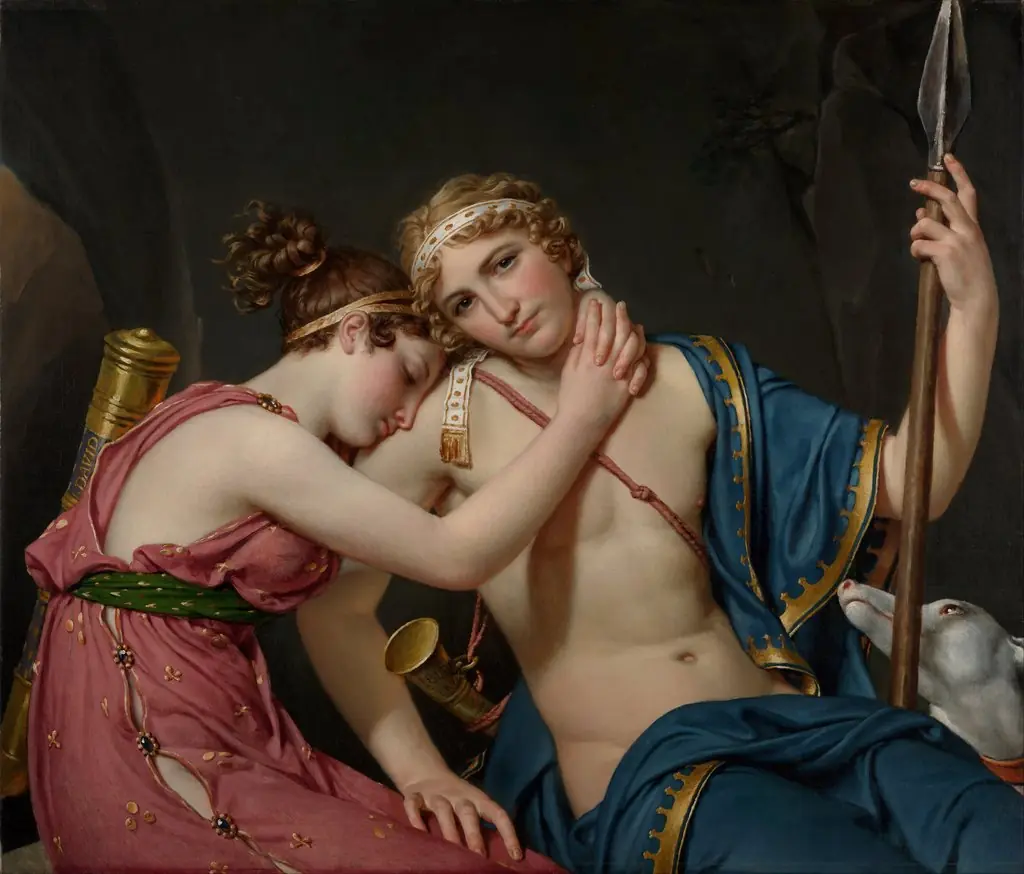 The Farewell of Telemachus and Eucharis
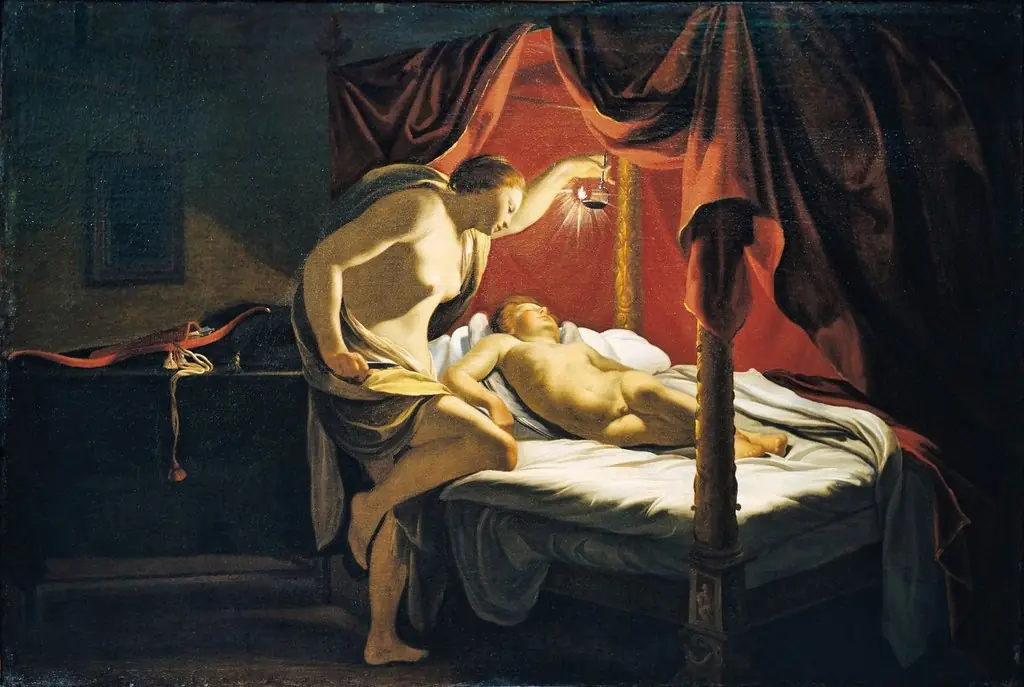 Psyché et l'Amour
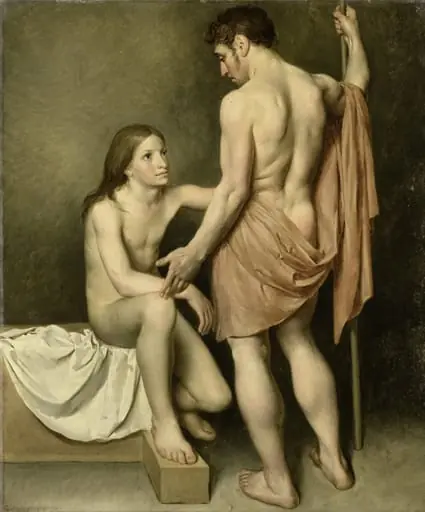 Academic Study of a Man and a Woman
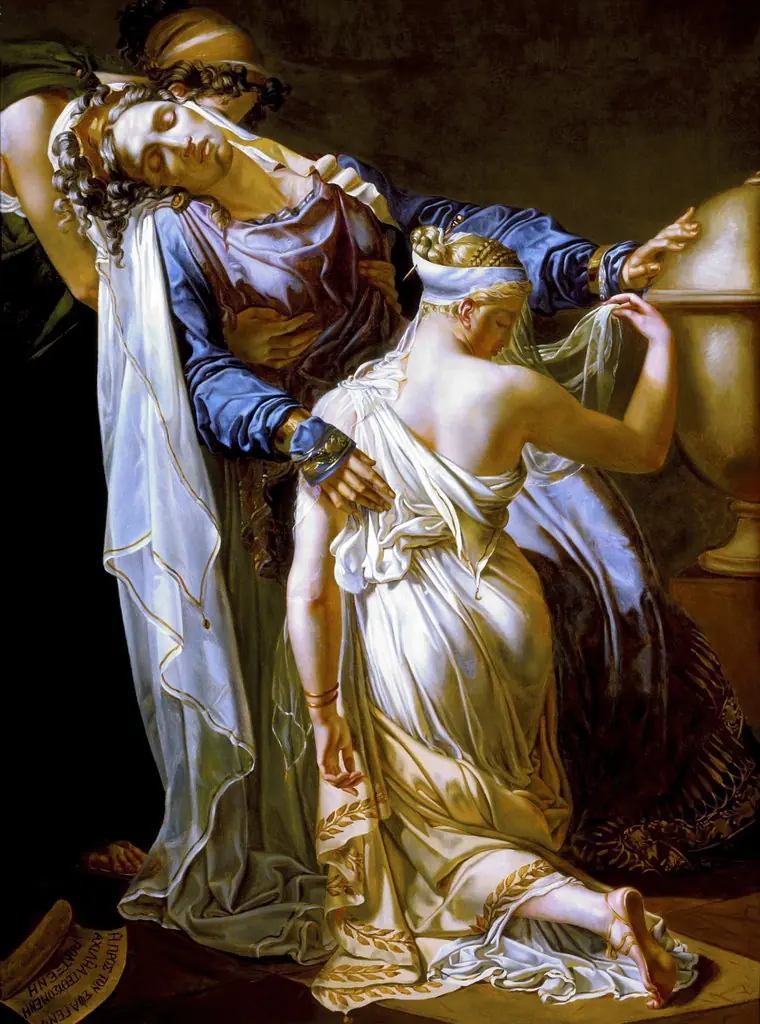 Hecuba and Polyxena
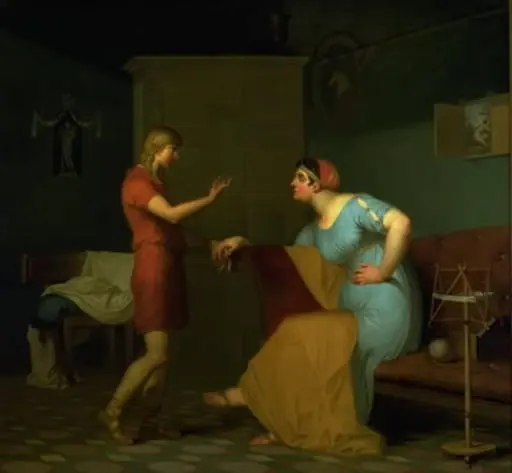 Papirius and his Mother
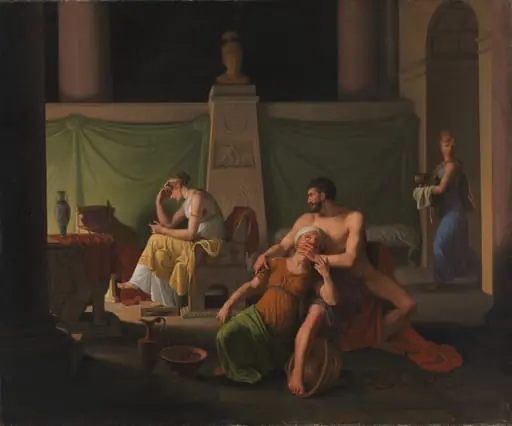 The Return of Ulysses. Scene from Homer´s Ulysses
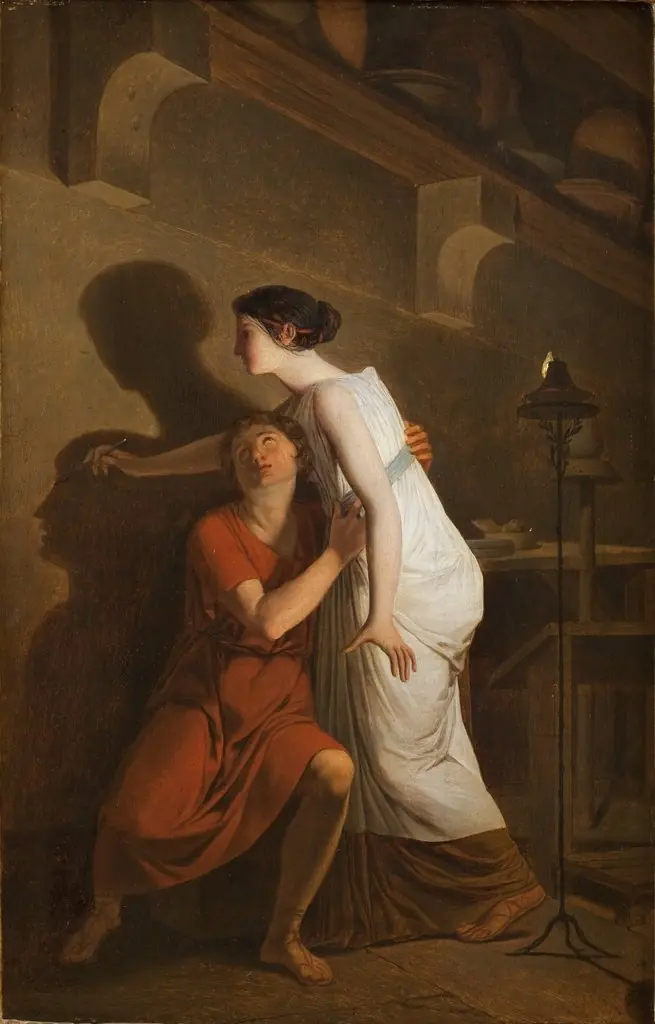 The invention of the art of drawing