Artwork
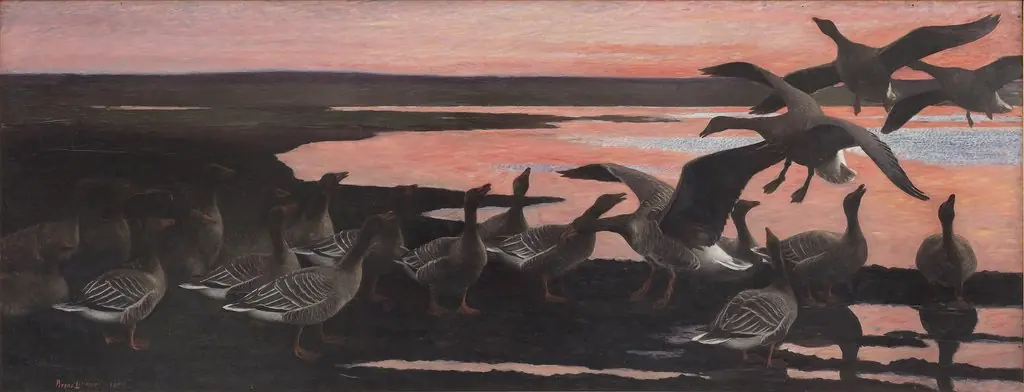
Regnspover klar til at lette
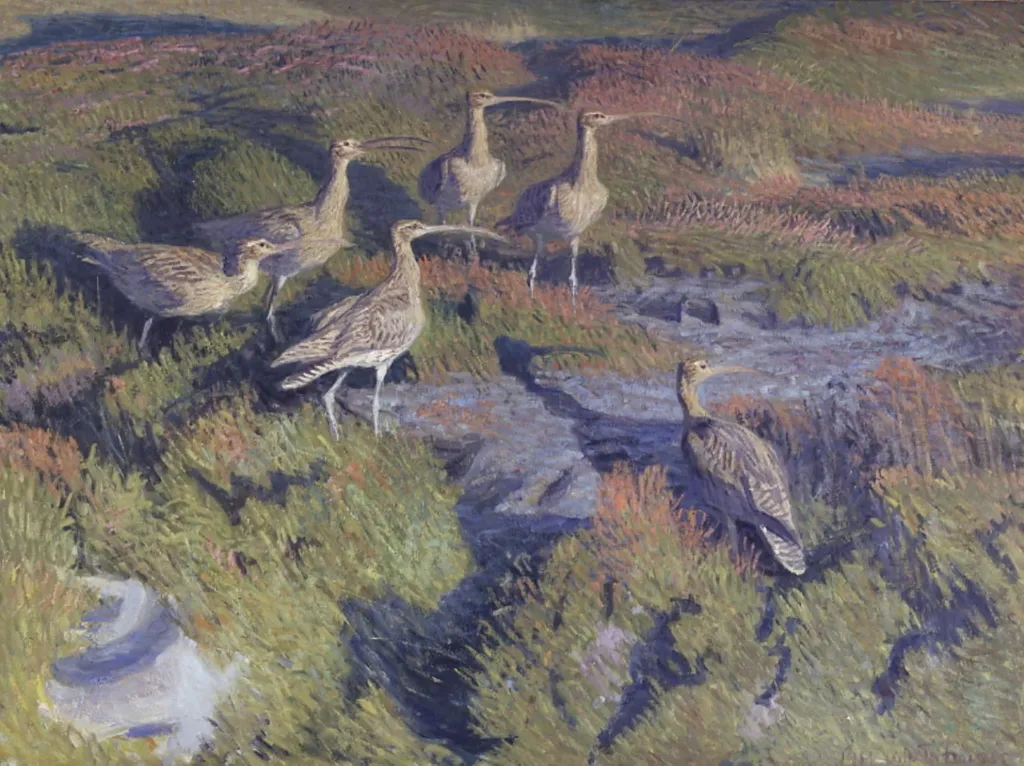
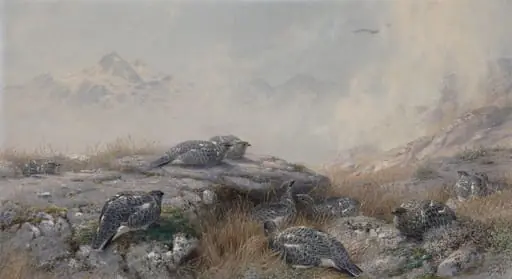
Regnspover klar til at lette is a photography by Unknown. It dates from 1911 and is held in the collection of the Statens Museum for Kunst. Created in 1911 by 621_person, this photograph captures a quiet moment in a wetland environment.
About this work
Overview
Created in 1911 by 621_person, this photograph captures a quiet moment in a wetland environment. It is part of the collection at the Museum of Ethnography, where it serves as a record of natural life observed in its habitat. The image is not staged but reflects an intimate, spontaneous encounter with wildlife, emphasizing the relationship between animals and their surroundings.
Subject & Meaning
Five birds stand in shallow water amid tall reeds, their postures suggesting daily routines—feeding, drinking, or scanning for danger.
Five birds stand in shallow water amid tall reeds, their postures suggesting daily routines—feeding, drinking, or scanning for danger. The composition avoids symbolism, instead presenting the birds as subjects of natural behavior. Their placement within the landscape implies coexistence with the environment, offering a quiet testament to the rhythms of wetland ecosystems without anthropomorphic interpretation.
Technique & Style
The photographer employed sharp focus on the birds, isolating them against a softly blurred background of reeds and water. This selective clarity draws attention to their forms and movements. Natural light filters through the scene, highlighting ripples and foliage in muted greens, browns, and blues. The technique reflects an early 20th-century interest in capturing nature with precision, yet without theatrical staging.
History & Provenance
The photograph entered the Museum of Ethnography’s collection shortly after its creation, likely as part of a broader effort to document indigenous and natural environments. Its origin is tied to fieldwork conducted by the artist, who may have been engaged in ethnographic or biological observation. No evidence suggests public exhibition prior to its institutional acquisition.
Context
In 1911, photographic technology allowed for greater mobility and detail in outdoor settings, enabling artists to record wildlife with increasing accuracy. This image aligns with emerging trends in naturalist photography, where scientific curiosity and aesthetic observation converged. Unlike studio portraiture, it reflects a growing cultural interest in unmediated encounters with nature.
Legacy
The photograph remains a quiet example of early nature documentation, valued for its observational integrity rather than artistic innovation. It contributes to the Museum of Ethnography’s holdings as a visual record of avian behavior in a specific ecological context. Its enduring presence underscores the role of photography in preserving moments of natural life before widespread environmental change.
Artist & collection

 Domestic Scene
 Giacomo and Cardinal Marco, investing Andrea, Abbot of San Zeno, with his Benefice
 The Nymph of Fontainebleau
 Portrait of a Woman
 Madonna and Child with Saints in the Enclosed Garden
 Venus and Minerva
 Family Group of Four on Sofa
 Wall painting from Room H of the Villa of P. Fannius Synistor at Boscoreale