Artwork
Gevinsten i tallotteriet
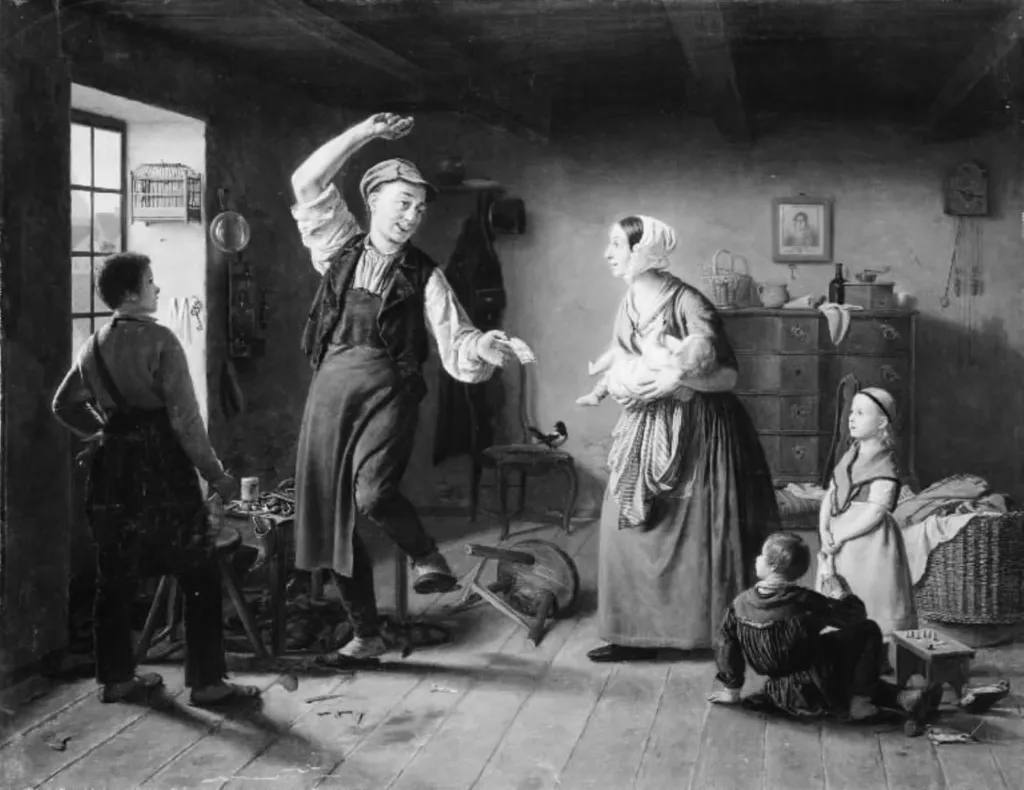
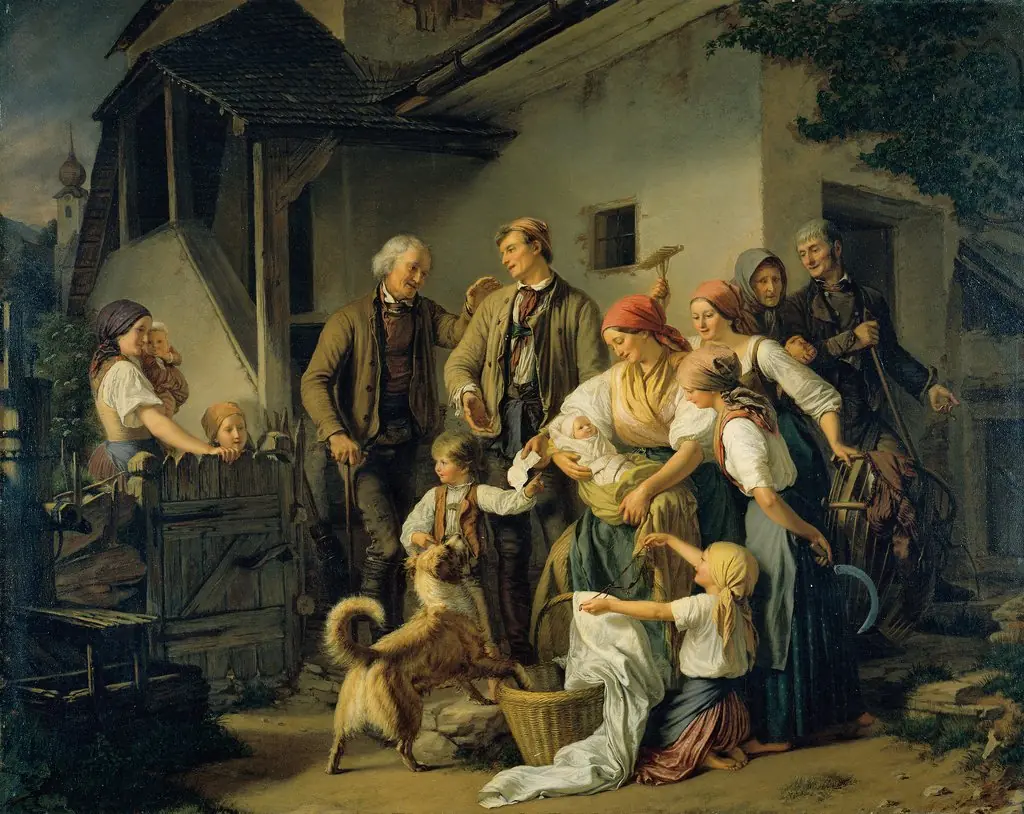
Gevinsten i tallotteriet is a photography by the Romanticist artist Unknown. It dates from 1848 and is held in the collection of the Statens Museum for Kunst. Created in 1848 by 625_person, this black-and-white photograph captures an intimate domestic moment in a modest interior.
About this work
A woman in a long apron stands with her arms raised, smiling, while a man in work clothes leans against a wall nearby.
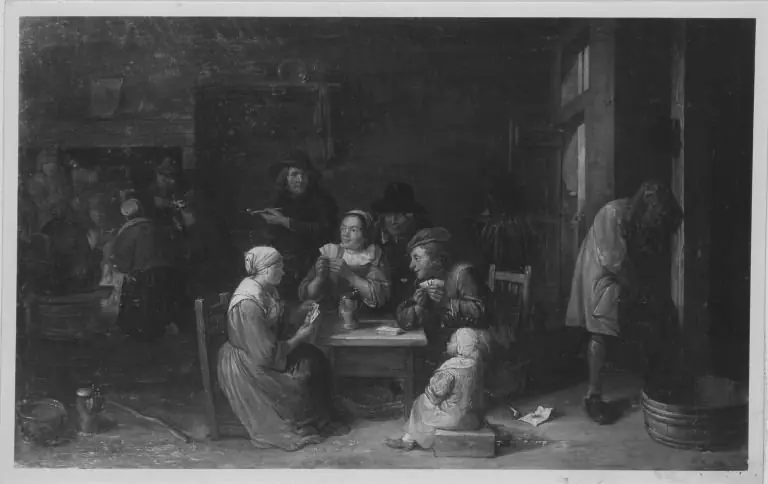
This black-and-white photo shows a cozy room with five people inside. A woman in a long apron stands with her arms raised, smiling, while a man in work clothes leans against a wall nearby. A seated woman holds a baby, and two children sit on the floor—one playing with a basket, the other crouching. The room has simple furniture, a wooden cabinet, and a small stove, with light coming through a window.
The woman’s raised arms and bright expression suggest excitement or celebration. This photo was taken in 1848, and it’s part of a collection that shows everyday life.
Look up Romanticism next to see how this style focused on real people and emotions.
Overview
Created in 1848 by 625_person, this black-and-white photograph captures an intimate domestic moment in a modest interior. Held by the Museum of Ethnography, the image is part of a broader collection documenting ordinary life in the mid-nineteenth century. Its unposed composition and quiet detail reflect an early interest in recording everyday scenes rather than idealized narratives.
Subject & Meaning
The scene centers on a woman in a long apron, arms raised in what appears to be joy or triumph, possibly celebrating a small household victory. A man stands nearby, arms crossed, while a seated woman holds a baby. Two children engage quietly with a basket and the floor. The gestures and expressions suggest a private, unscripted moment of contentment, emphasizing emotional authenticity over theatricality.
Technique & Style
Rendered in monochrome, the photograph relies on natural light filtering through a window to define form and texture. The composition is unstructured yet balanced, with figures arranged organically around simple furnishings—a wooden cabinet, a small stove. The lack of formal posing and the focus on mundane details align with emerging documentary practices of the era, prioritizing realism over artifice.
History & Provenance
The photograph entered the collection of the Museum of Ethnography shortly after its creation, likely as part of a systematic effort to preserve visual records of domestic life. Its origin as a personal or observational record, rather than a commissioned work, underscores its value as a candid anthropological document from the mid-1800s.
Context
Produced during a period when photography was becoming a tool for social observation, the image resonates with broader cultural shifts toward valuing everyday experience. Though not overtly aligned with Romanticism’s grand themes, it shares its emphasis on genuine human emotion and the dignity of ordinary settings, reflecting a quiet but significant change in visual culture.
Legacy
As one of the earliest photographic records of domestic life in its region, the image contributes to the historical understanding of family dynamics and material culture in the 1840s. Its preservation in a museum setting signals its recognition as a primary source for studying non-elite lived experience, influencing later ethnographic and documentary practices.
Artist & collection

 Domestic Scene
 Giacomo and Cardinal Marco, investing Andrea, Abbot of San Zeno, with his Benefice
 The Nymph of Fontainebleau
 Portrait of a Woman
 Madonna and Child with Saints in the Enclosed Garden
 Venus and Minerva
 Family Group of Four on Sofa
 Wall painting from Room H of the Villa of P. Fannius Synistor at Boscoreale