Artwork
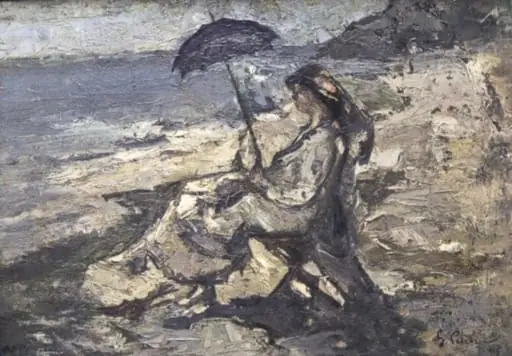
My Mother Reading on the Beach
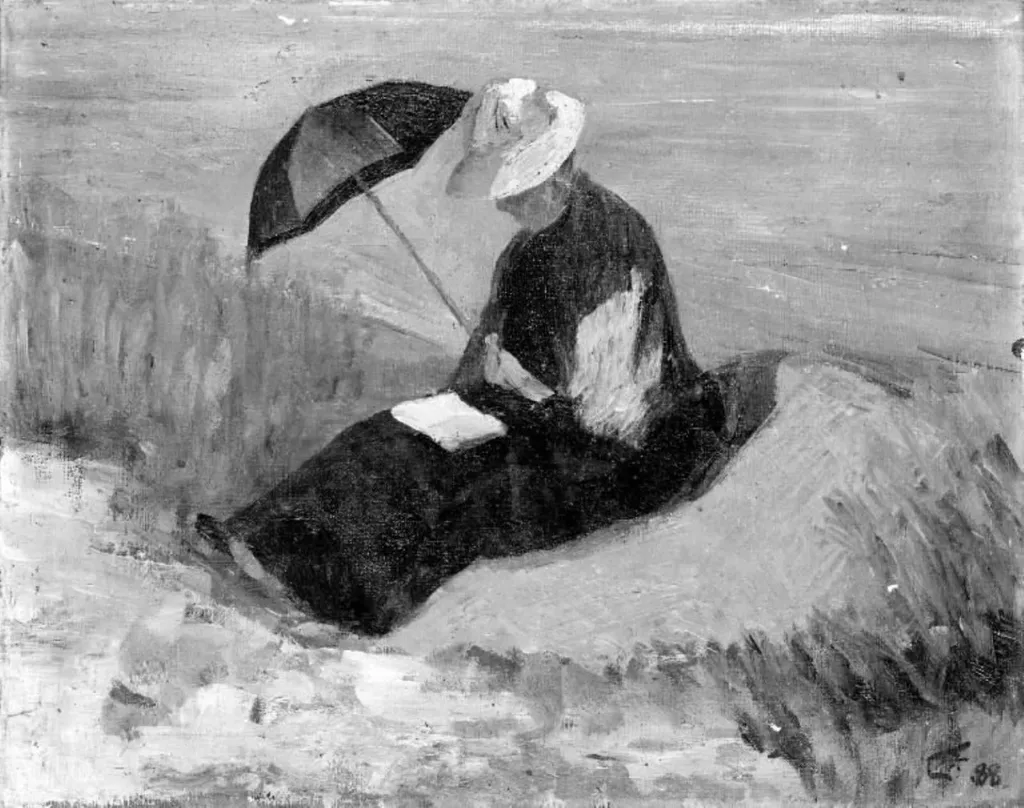
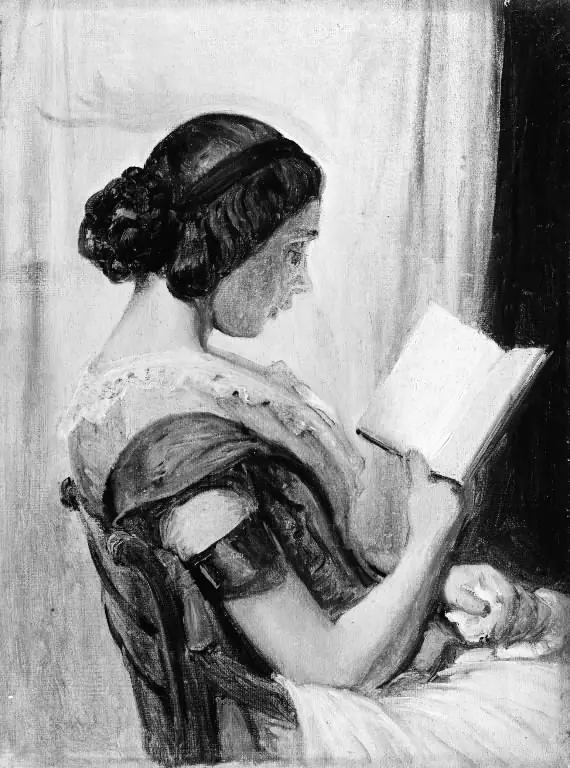
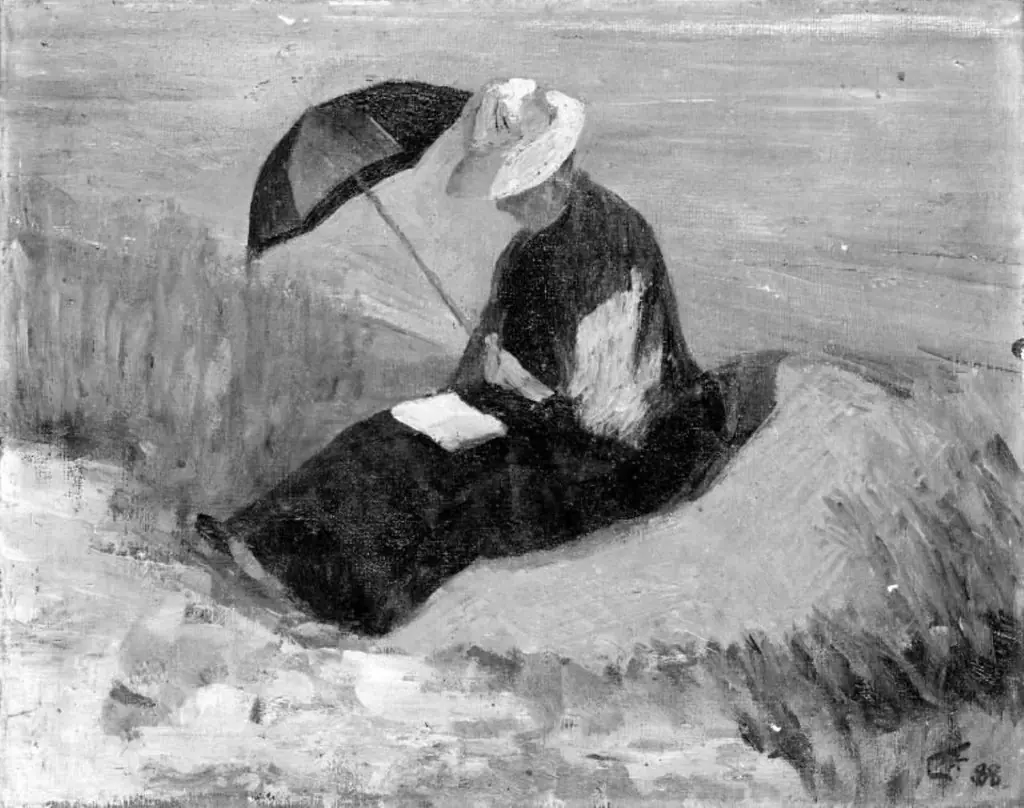
My Mother Reading on the Beach is a photography by the Impressionist artist Unknown. It dates from 1888 and is held in the collection of the Statens Museum for Kunst. Created in 1888, this black-and-white image depicts a woman seated on a beach, engrossed in reading.
About this work
Overview
Though often associated with painting, this work exists as a photographic image, reflecting the era’s expanding visual language beyond traditional media.
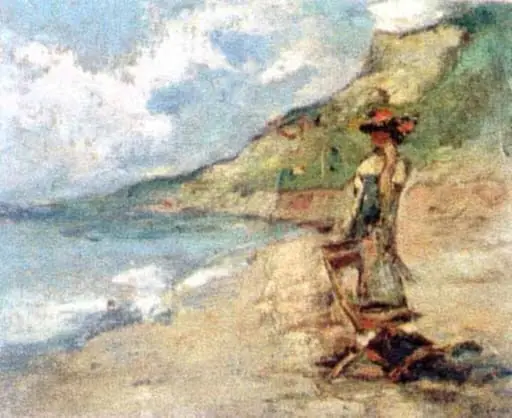
Created in 1888, this black-and-white image depicts a woman seated on a beach, engrossed in reading. Executed with loose, suggestive brushwork, the scene captures a quiet moment of solitude. The composition emphasizes atmosphere over detail, with soft transitions between sand, sea, and sky. Though often associated with painting, this work exists as a photographic image, reflecting the era’s expanding visual language beyond traditional media.
Subject & Meaning
The figure, dressed in a dark coat and wide-brimmed hat, is absorbed in a book, suggesting introspection and leisure. The folded cloth and closed umbrella imply a pause in a day outdoors, reinforcing themes of rest and personal ritual. The absence of other figures heightens the sense of private contemplation, aligning the image with late 19th-century ideals of quiet domesticity and the emerging cultural value placed on individual reading.
Technique & Style
The image employs blurred edges and muted tonal contrasts to convey fleeting light and movement. Rather than precise rendering, the artist prioritizes the impression of form through texture and shadow. This approach echoes the observational priorities of Impressionism, though adapted to photography’s limitations. The lack of sharp definition invites the viewer to perceive the scene as a transient moment rather than a fixed tableau.
History & Provenance
The work is held in the collection of the Museum of Ethnography, suggesting its significance as a cultural document rather than a fine art object. Its preservation in this context indicates an early recognition of photography’s role in recording everyday life. The artist’s identity remains unverified in public records, and the image’s origin as a photograph, not a painting, has shaped its archival classification and scholarly reception.
Context
In the late 1880s, photography was increasingly used to capture informal, candid moments, challenging the dominance of staged portraiture and academic painting. This image reflects broader societal shifts: rising literacy, the popularity of seaside leisure among the middle class, and the blurring boundaries between art and documentation. The work aligns with contemporaneous efforts to elevate photography as a medium of personal and social observation.
Legacy
Though not widely exhibited outside specialized collections, the image contributes to the historical record of how ordinary life was visually recorded in the late 19th century. Its stylistic simplicity and focus on transient light anticipate later documentary and modernist approaches. It remains a quiet example of how photography, even in its early stages, could convey emotional resonance without theatricality.
Artist & collection

 Domestic Scene
 Giacomo and Cardinal Marco, investing Andrea, Abbot of San Zeno, with his Benefice
 The Nymph of Fontainebleau
 Portrait of a Woman
 Madonna and Child with Saints in the Enclosed Garden
 Venus and Minerva
 Family Group of Four on Sofa
 Wall painting from Room H of the Villa of P. Fannius Synistor at Boscoreale