Artwork
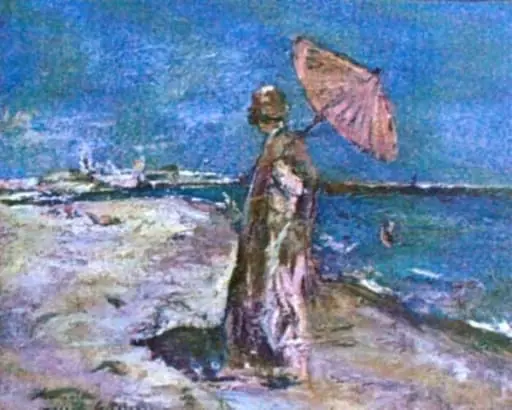
Femeie la mare
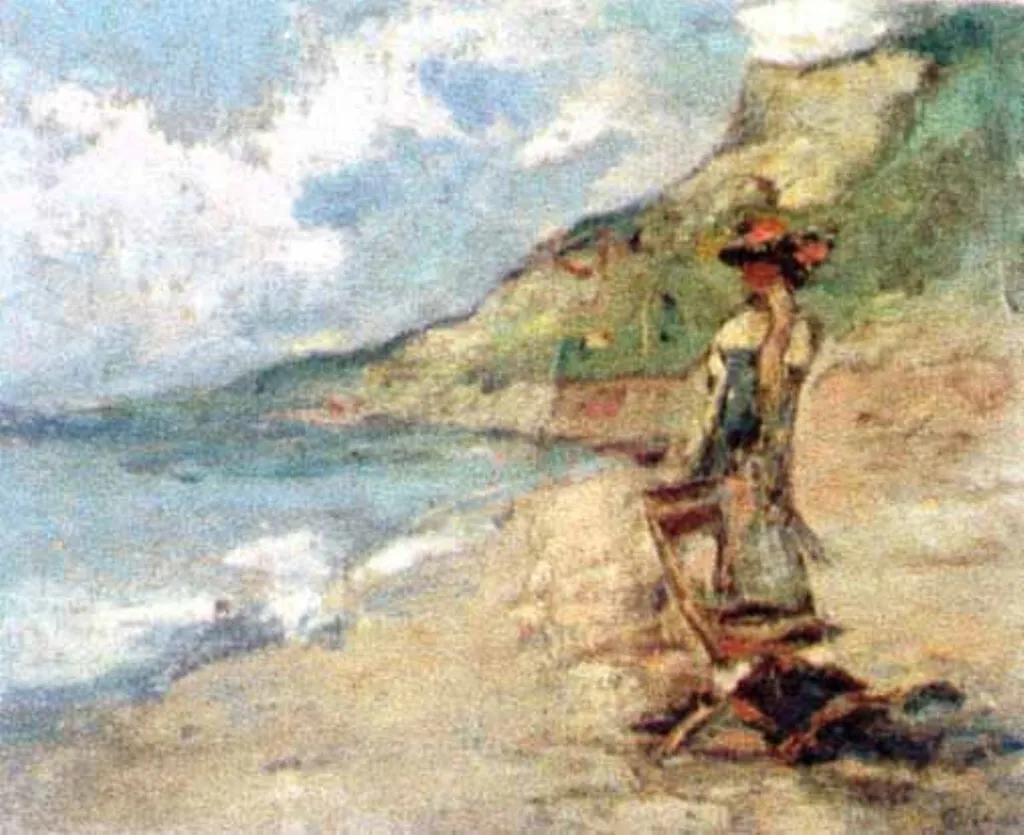
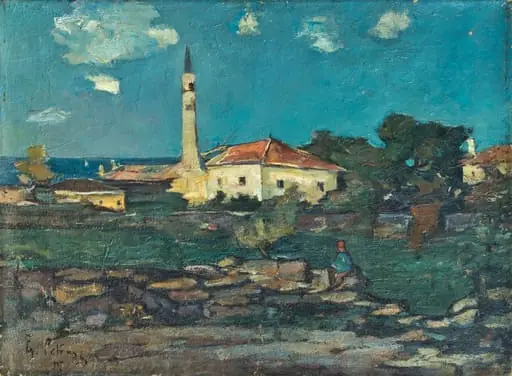
Femeie la mare is an unspecified painting by Gheorghe Petrașcu. It dates from 1920 and is held in the collection of the Art Museum of Constanta.
About this work
Overview
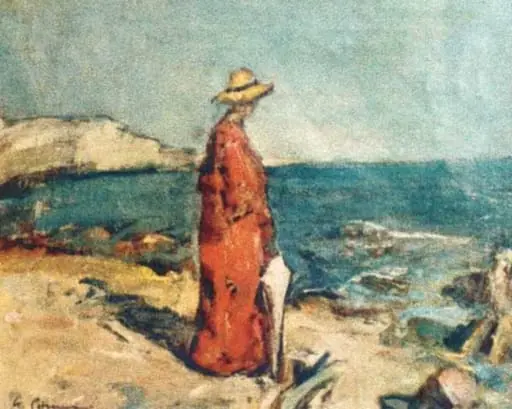
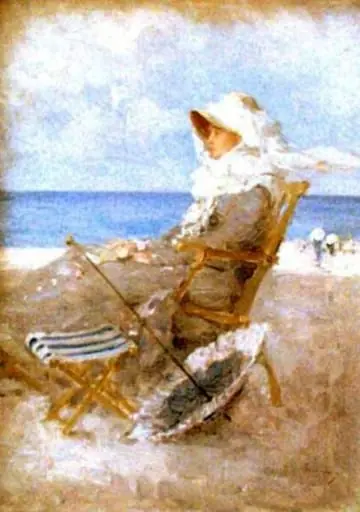
Painted in 1920 by Romanian artist Gheorghe Petrașcu, Femeie la mare is a quiet coastal scene depicting a solitary woman on a beach.
Painted in 1920 by Romanian artist Gheorghe Petrașcu, Femeie la mare is a quiet coastal scene depicting a solitary woman on a beach. The work is part of the collection at the Museum of Ethnography in Bucharest. Rendered in oil, it captures a moment of stillness between land, sea, and sky, emphasizing atmosphere over narrative. The composition centers the figure against a natural backdrop, suggesting contemplation rather than action.
Subject & Meaning
The woman, dressed in a long garment and wide-brimmed hat, stands facing the sea, holding an indistinct object in her hand. Her posture is calm, neither engaged nor distressed, inviting interpretation as a moment of personal reflection. The absence of other figures or activity reinforces solitude. The painting does not convey a specific story but evokes a mood of quiet endurance, common in early 20th-century Romanian landscape traditions that valued introspection.
Technique & Style
Petrașcu employed layered brushwork and a muted yet varied palette to suggest the texture of sand, the movement of water, and the softness of the sky. Colors blend subtly, avoiding sharp contrasts, to create a sense of atmospheric depth. The figure is rendered with loose, suggestive strokes, integrating her into the environment rather than isolating her as a portrait. Light is diffused, enhancing the feeling of a warm, hazy afternoon.
History & Provenance
The painting was completed in 1920, during a period when Petrașcu was increasingly focused on domestic and natural scenes after earlier travels abroad. It entered the Museum of Ethnography’s collection in the decades following its creation, likely through acquisition or donation. Its placement in an ethnographic institution reflects its perceived connection to everyday Romanian life, though Petrașcu’s approach remained more lyrical than documentary.
Context
In early 20th-century Romania, artists like Petrașcu moved away from academic formalism toward more personal, impressionistic interpretations of rural and coastal life. Femeie la mare aligns with this shift, echoing broader European trends in plein air painting while retaining a distinctly local sensibility. The work reflects a cultural interest in the individual’s relationship with nature, particularly in regions like the Black Sea coast, which were becoming sites of leisure and artistic retreat.
Legacy
Though not among Petrașcu’s most widely exhibited works, Femeie la mare exemplifies his mature style—calm, tonally nuanced, and emotionally restrained. It contributes to the understanding of Romanian modernism as a quiet, introspective movement rather than a radical one. The painting remains a reference point for scholars examining how national identity was subtly expressed through everyday scenes in interwar Romanian art.
Artist & collection
Artist
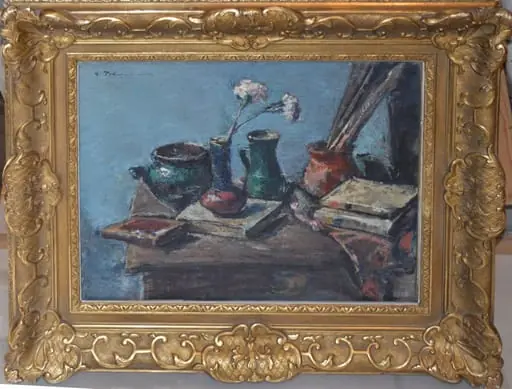
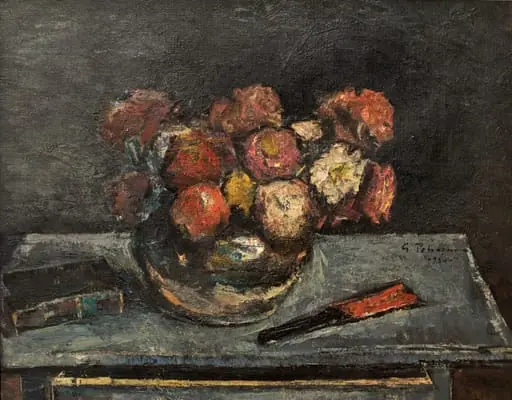
Gheorghe Petrașcu painted quiet scenes of buildings, streets, and still lifes in the 1920s and ’30s Romania.