Artwork
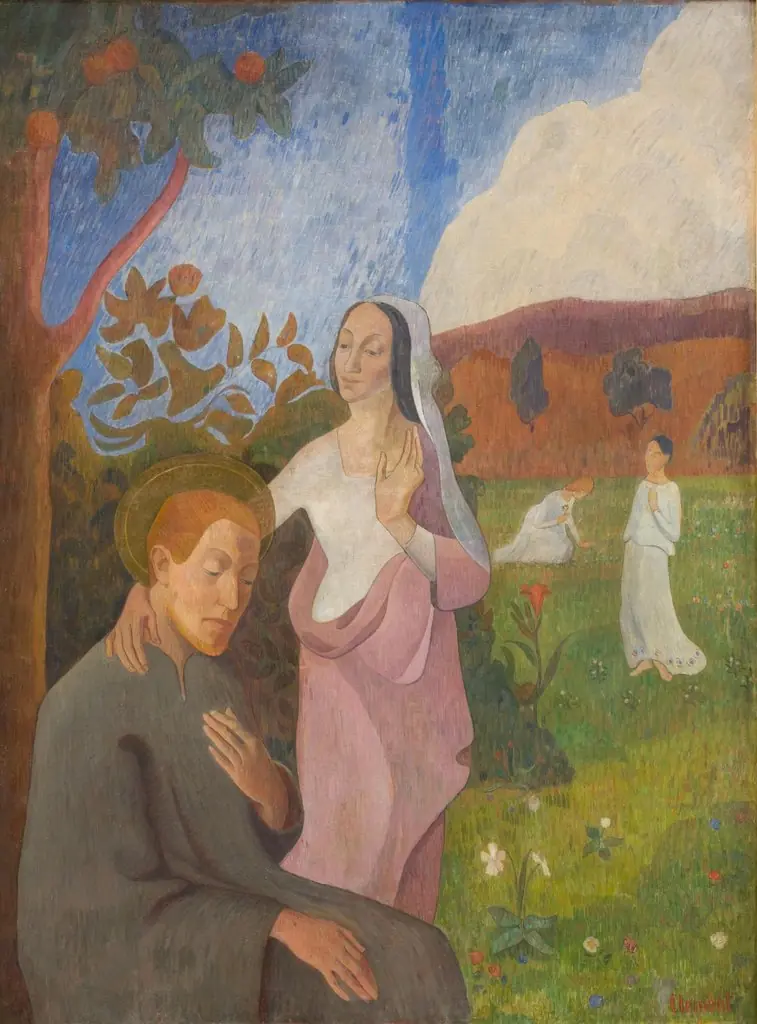
Decorative Picture. The Vision of Saint Francis with the Three White Virgins
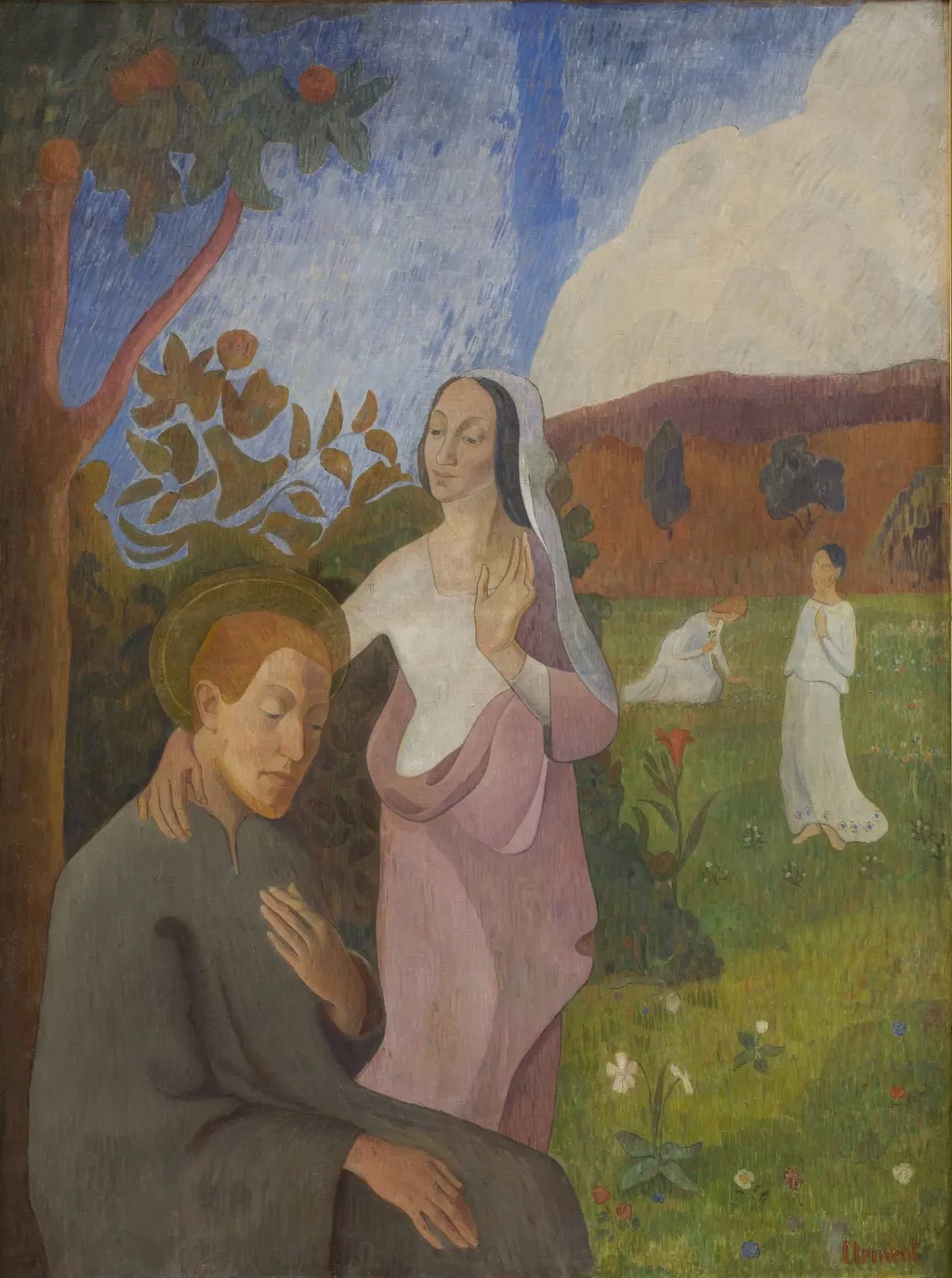
Decorative Picture. The Vision of Saint Francis with the Three White Virgins is a photography by the Impressionist artist Unknown. It dates from 1892 and is held in the collection of the Statens Museum for Kunst. Created in 1892, this religious composition depicts a vision attributed to Saint Francis of Assisi.
About this work
Overview
Painted by an artist associated with the late 19th-century spiritual revival in art, the work is held in the Museum of Ethnography.
Created in 1892, this religious composition depicts a vision attributed to Saint Francis of Assisi. Painted by an artist associated with the late 19th-century spiritual revival in art, the work is held in the Museum of Ethnography. Its quiet, atmospheric tone distinguishes it from more dramatic hagiographic traditions, favoring serenity over spectacle. The scene unfolds in a softly lit natural setting, suggesting inner revelation rather than public miracle.
Subject & Meaning
The painting illustrates Saint Francis kneeling beside a woman, possibly a symbolic representation of humility or divine grace, while three figures in white robes stand behind them. These figures are commonly interpreted as the Three White Virgins, a motif from Franciscan legend representing purity and celestial companionship. The composition invites contemplation, emphasizing spiritual presence over narrative action, aligning with late 19th-century interests in mystical experience.
Technique & Style
The artist employs loose, fluid brushwork to dissolve boundaries between figures and landscape, creating a hazy, dreamlike atmosphere. Colors are muted and warm—soft pinks, pale greens, and creamy whites—blending gently under a luminous sky. There is no sharp contrast or defined shadowing; instead, light diffuses evenly, enhancing the ethereal quality. The lack of dramatic chiaroscuro reinforces the painting’s meditative, otherworldly intent.
History & Provenance
The painting entered the collection of the Museum of Ethnography shortly after its completion, likely through acquisition from the artist’s circle or a private patron aligned with religious revivalist movements. Its placement in an ethnographic institution, rather than a fine arts museum, suggests contemporary interest in its symbolic and cultural dimensions, possibly as an expression of folk piety or spiritual aesthetics beyond institutional orthodoxy.
Context
Produced during a period when European artists increasingly turned to mysticism and nature-based spirituality, the work reflects broader trends away from academic realism. It resonates with Symbolist tendencies and the interest in medieval hagiography revived by movements like the Arts and Crafts. The emphasis on harmony, quietude, and natural elements aligns with contemporary spiritual critiques of industrial modernity.
Legacy
Though not widely exhibited outside its institutional home, the painting remains a quiet example of how religious themes were reimagined in late 19th-century visual culture. Its gentle aesthetic and symbolic ambiguity influenced regional artists exploring inner spirituality through landscape and figure. It endures as a testament to the persistence of devotional imagery in an era increasingly dominated by secular modernism.
Artist & collection

 Domestic Scene
 Giacomo and Cardinal Marco, investing Andrea, Abbot of San Zeno, with his Benefice
 The Nymph of Fontainebleau
 Portrait of a Woman
 Madonna and Child with Saints in the Enclosed Garden
 Venus and Minerva
 Family Group of Four on Sofa
 Wall painting from Room H of the Villa of P. Fannius Synistor at Boscoreale
 Dante. Prophets, Opus I
 Dante and Beatrice in Paradise
 Le sorcier d'Hiva-Oa
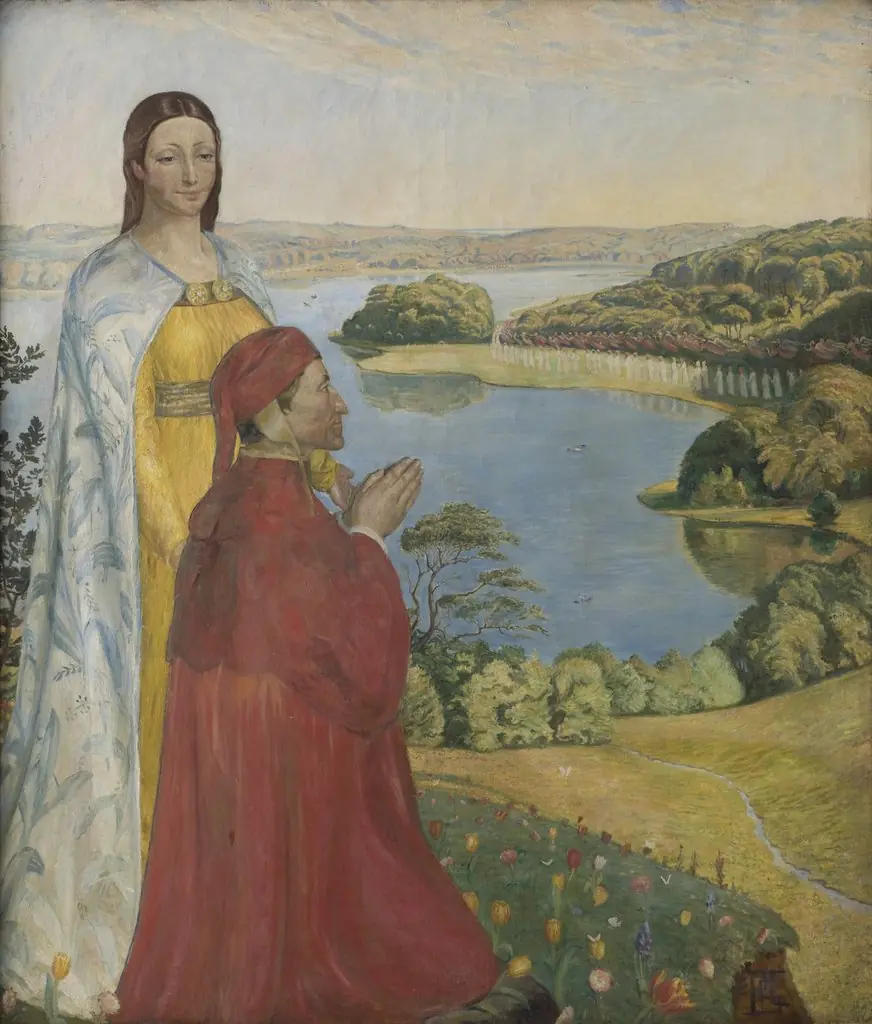 Dante and Beatrice in Paradise
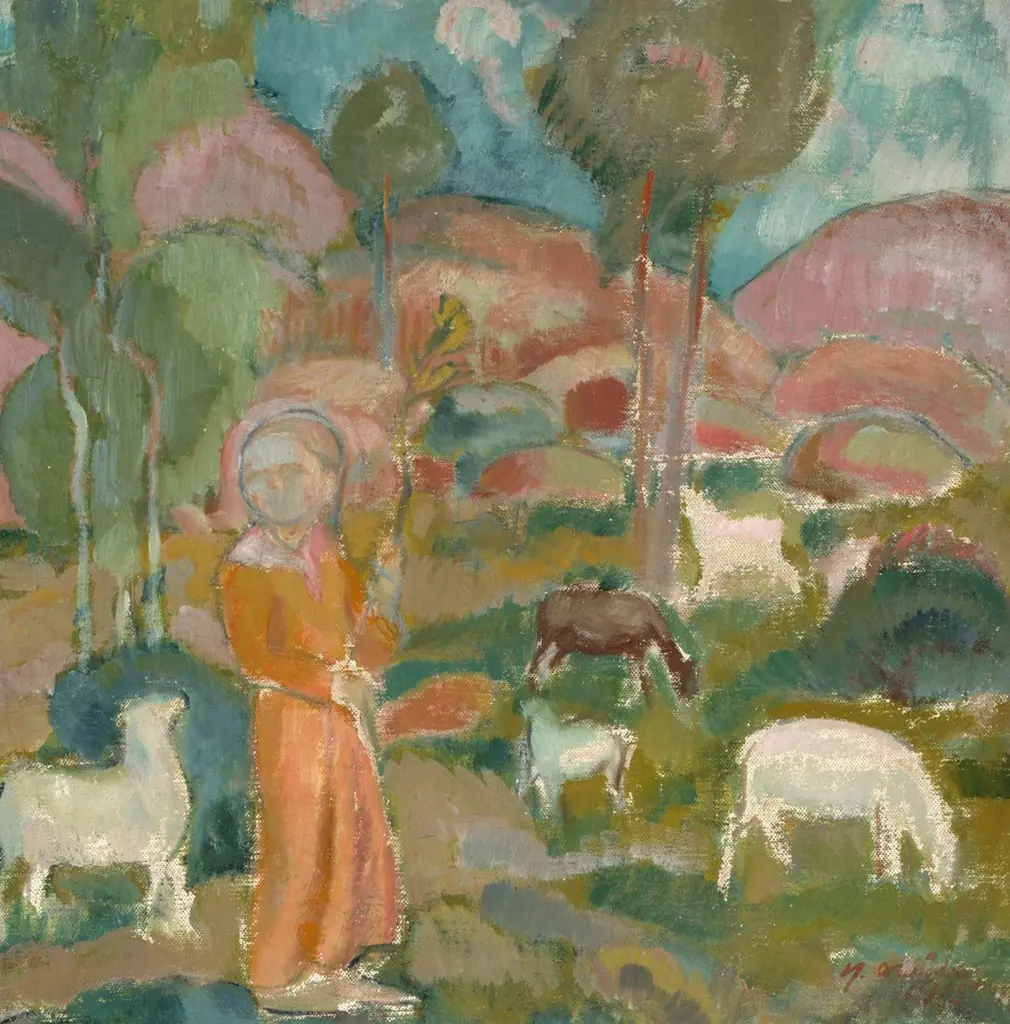 Shepherdess
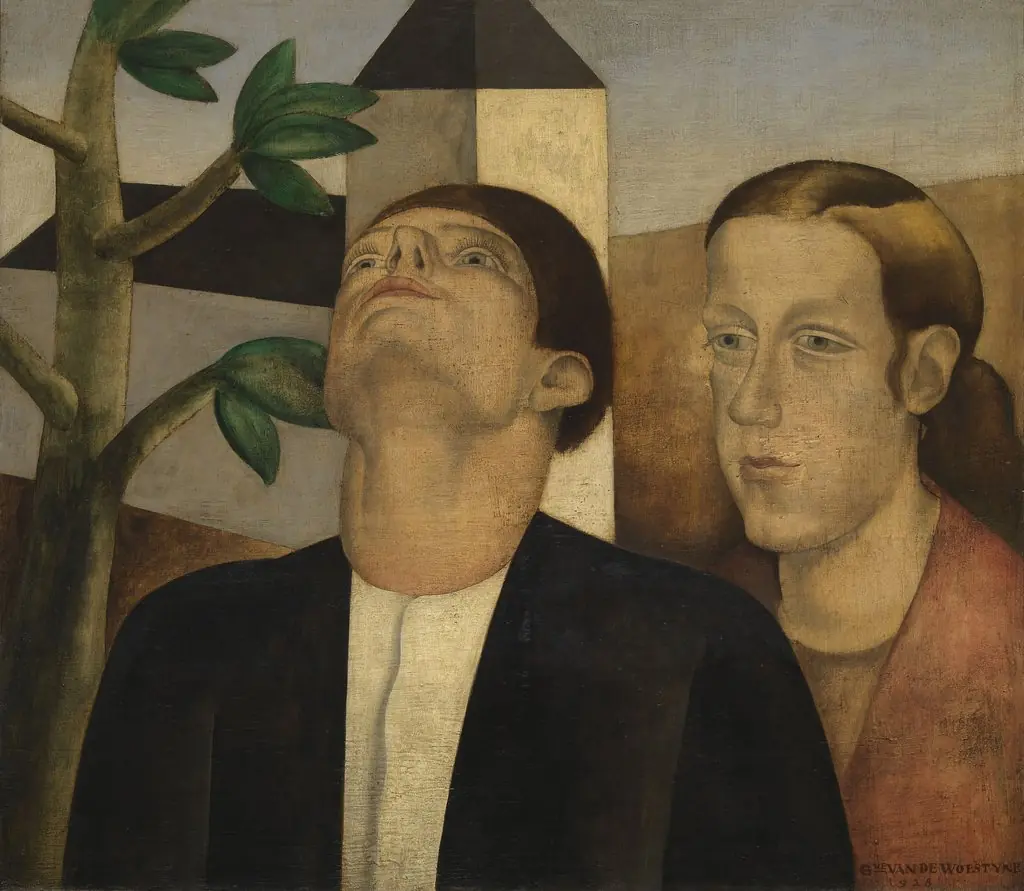 Azure
Azure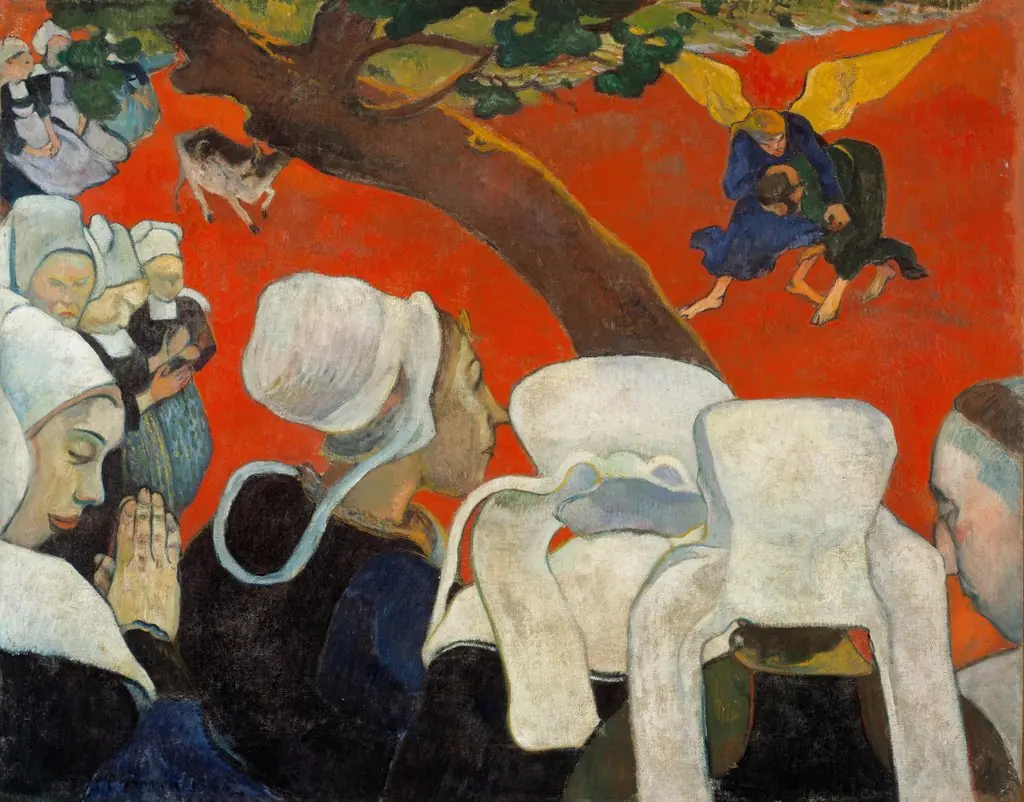 Vision After the Sermon
 Anunciación
 Familie de tătari
 Memories of My California Childhood
 Figures in a Garden
 Decorative Picture. The Vision of Saint Francis with the Three White Virgins