Artwork
Reitergefecht
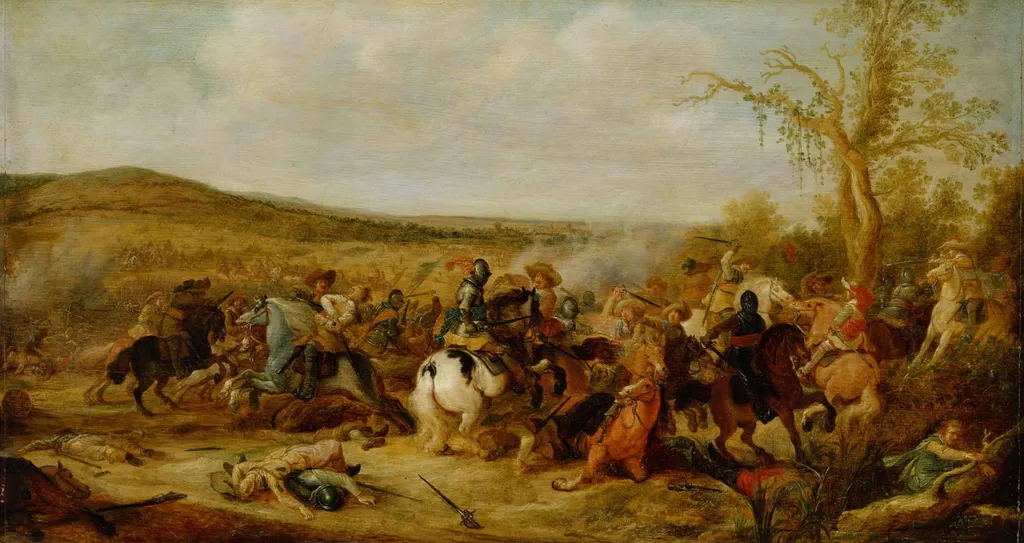
Reitergefecht is an unspecified painting by Jan Martszen de Jonge. It dates from 1638 and is held in the collection of the Kunsthistorisches Museum.
About this work
Overview
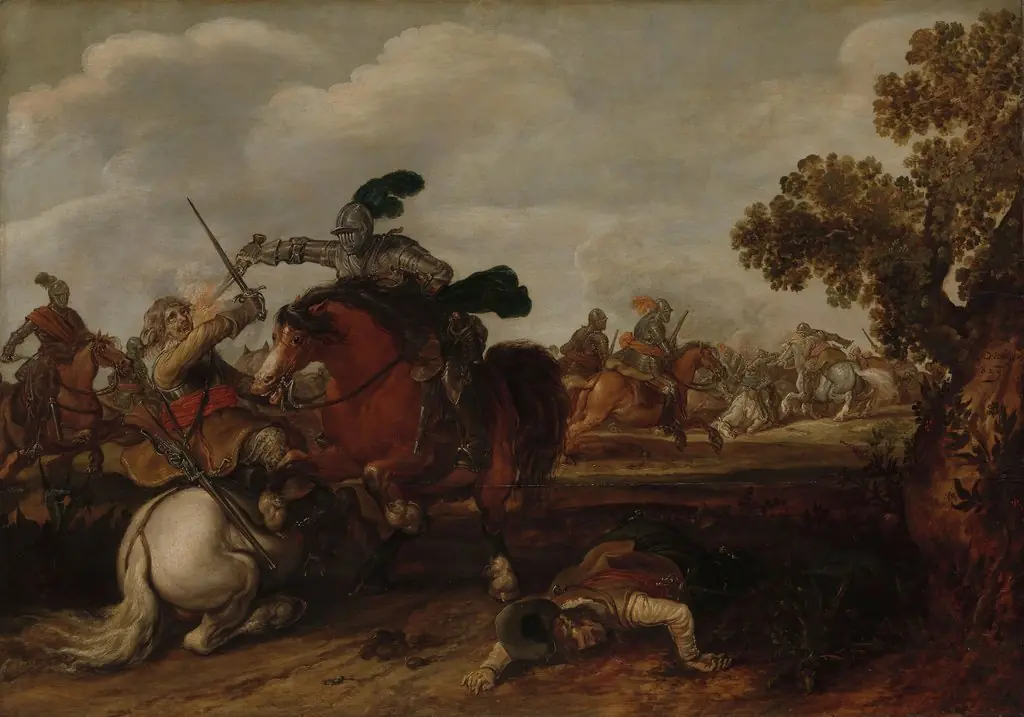
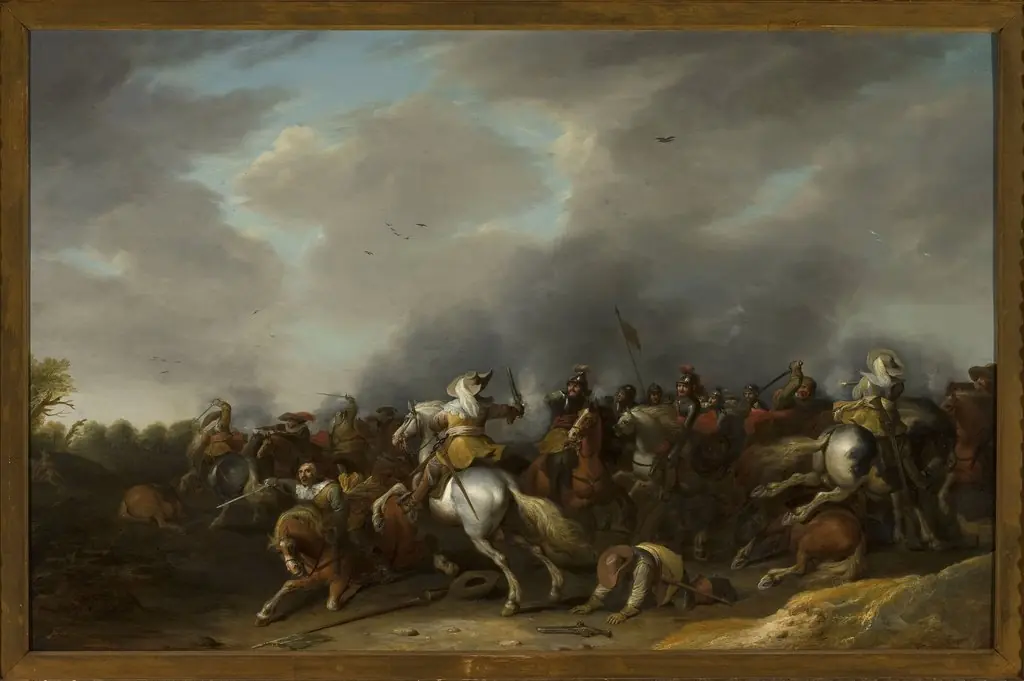
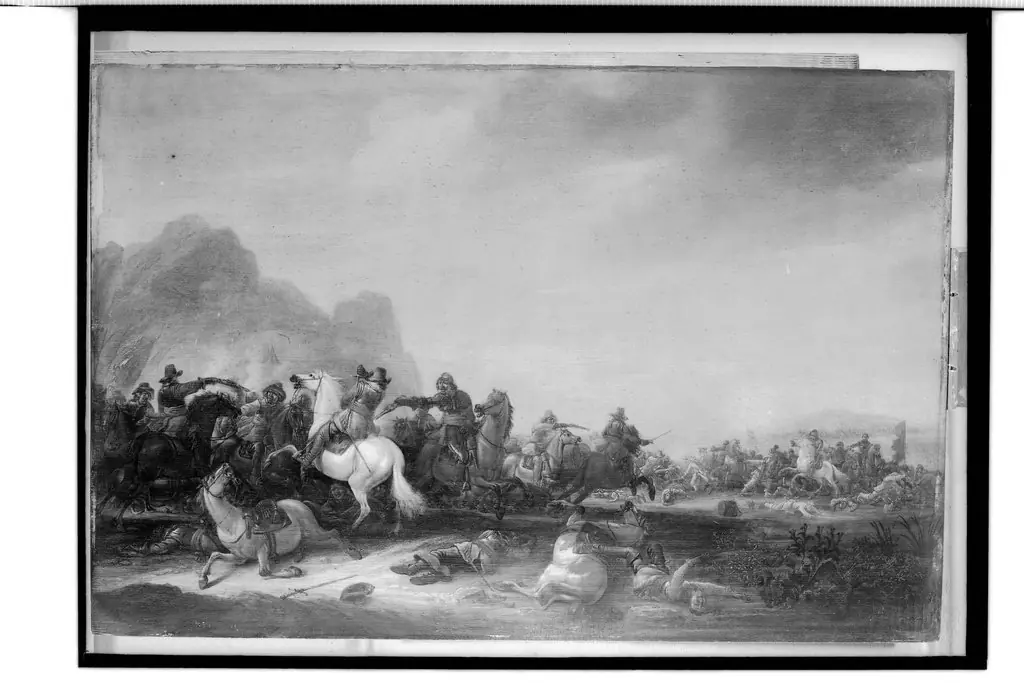
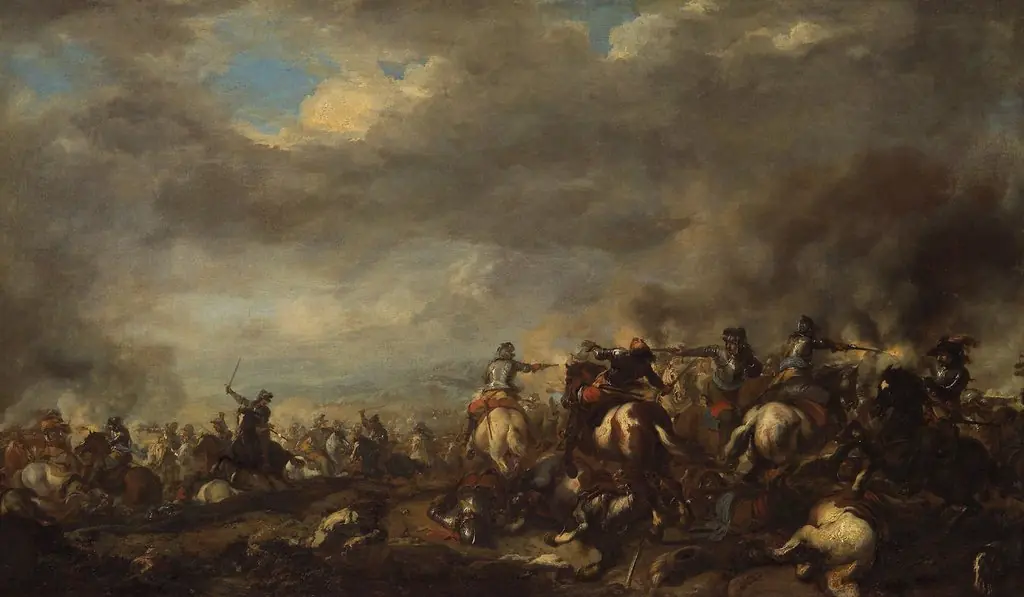
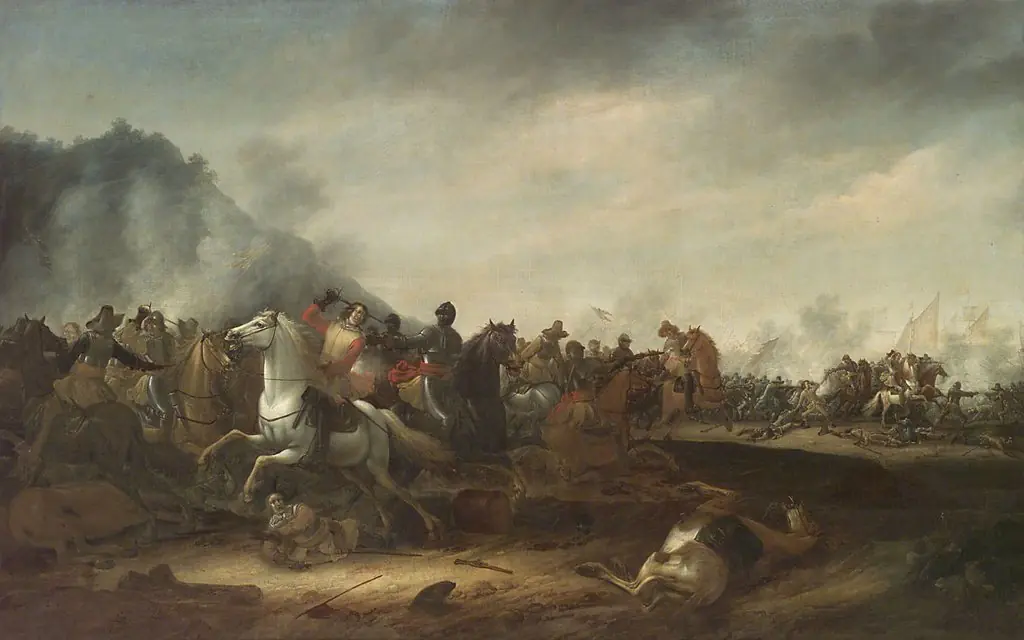
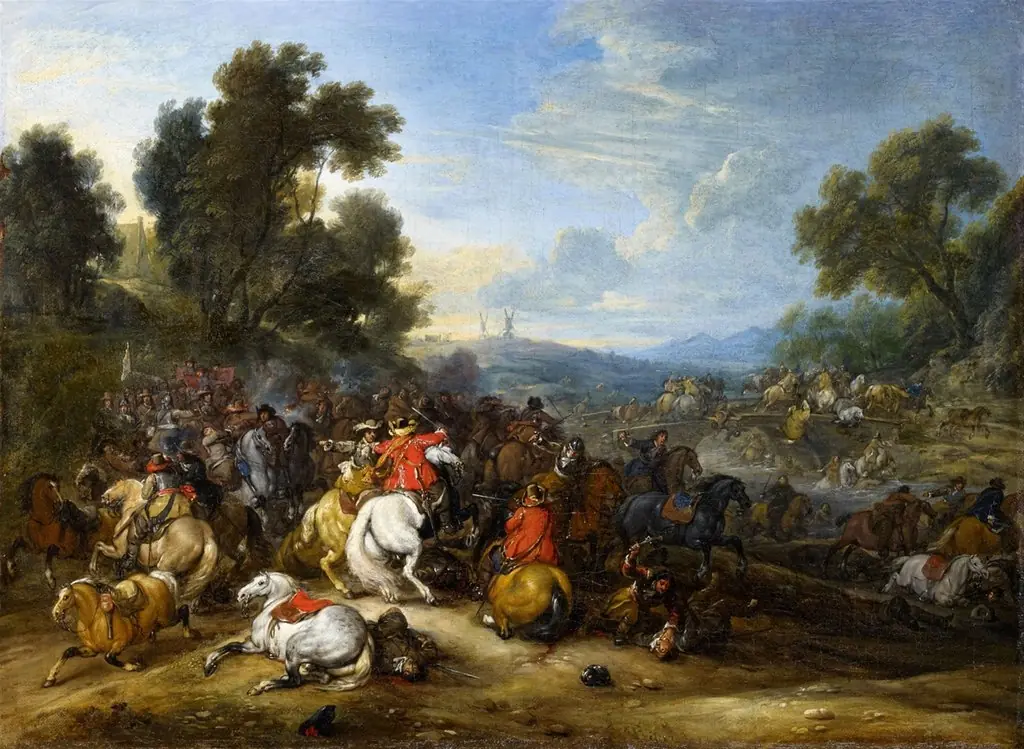
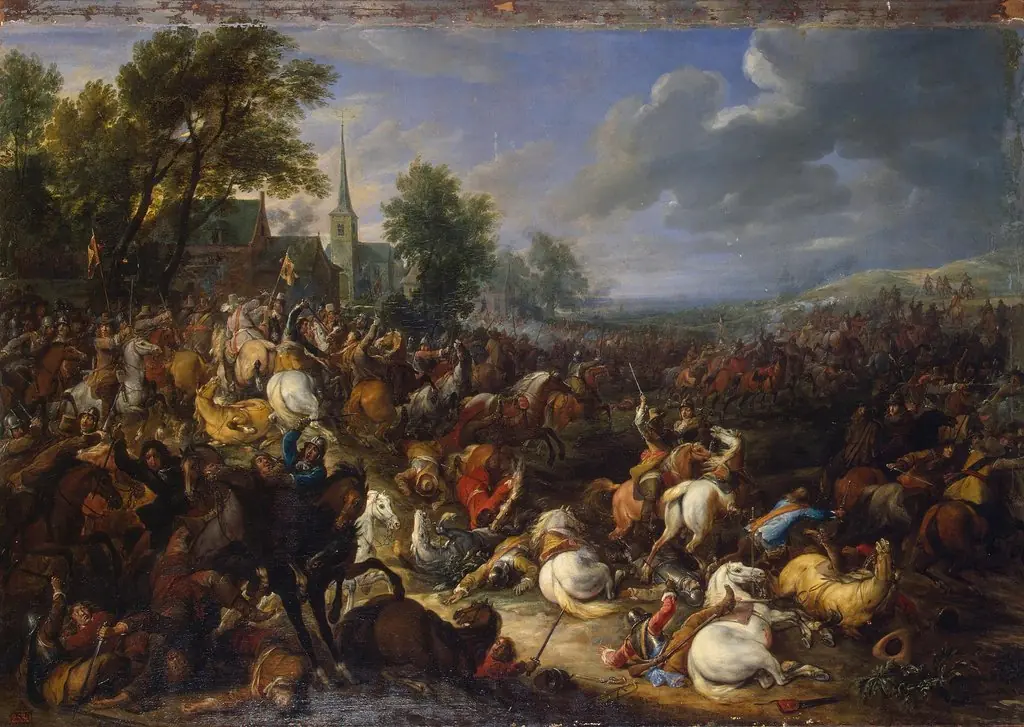
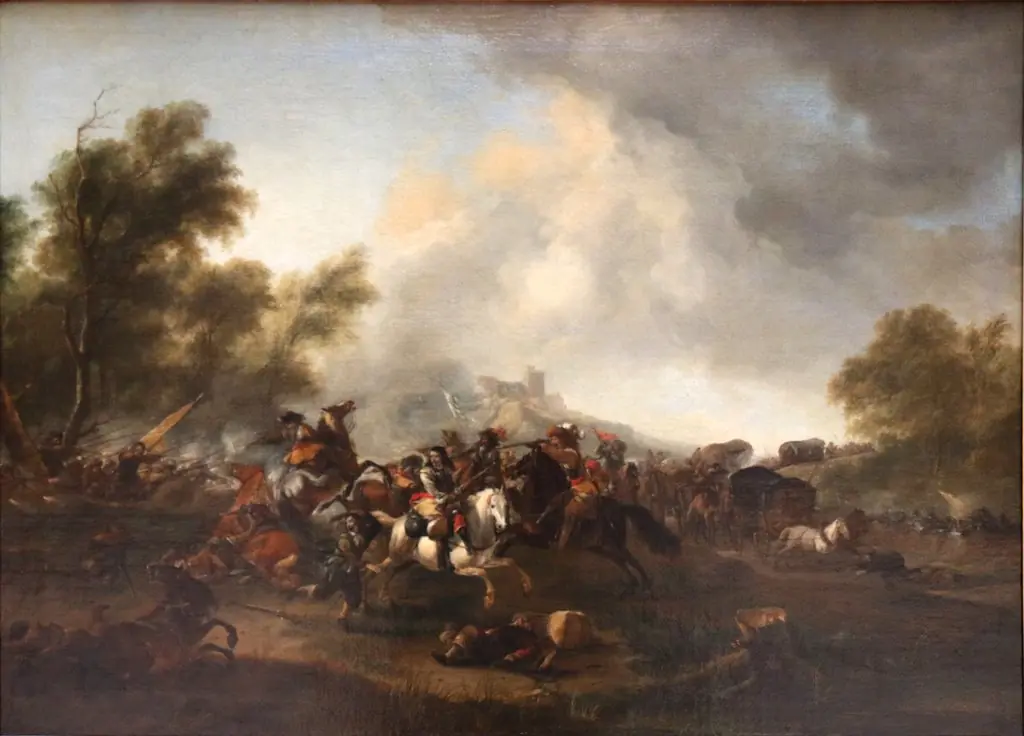
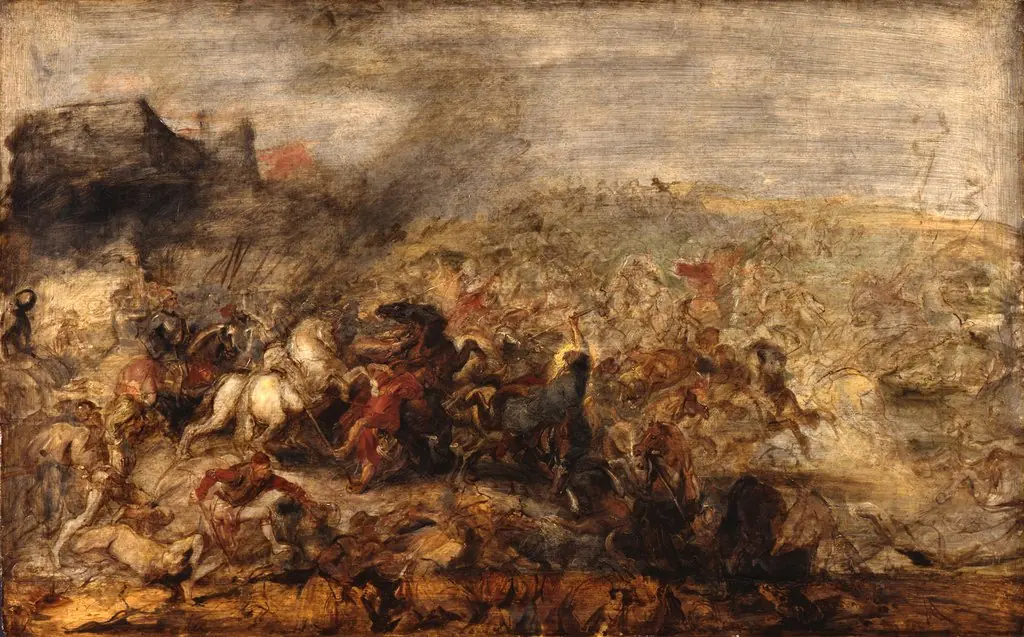
Painted around 1638 by Jan Martszen de Jonge, this work depicts a violent cavalry engagement. Executed in oil on panel, it is part of the Kunsthistorisches Museum’s collection in Vienna. The composition captures a moment of disorder amid mounted combat, with figures and animals scattered across a rural landscape. Earth-toned pigments dominate, reinforcing the somber mood of the scene.
Subject & Meaning
The painting portrays a chaotic battlefield where soldiers and horses are locked in conflict, some fallen, others still engaged.
The painting portrays a chaotic battlefield where soldiers and horses are locked in conflict, some fallen, others still engaged. A fallen warrior in the foreground, sword nearby, signals the brutality of the encounter. No clear side is identified, suggesting a focus on the universal chaos of war rather than a specific historical event. The scene evokes the disorder and human cost of cavalry skirmishes common in early 17th-century Europe.
Technique & Style
The artist employs muted earth tones—browns, olives, and grays—to unify the composition and enhance its somber tone. Light and shadow are subtly modulated to define forms without dramatic contrast, avoiding the intense chiaroscuro typical of some contemporaries. Brushwork is controlled yet expressive, capturing movement in tangled limbs and rearing horses while maintaining a sense of spatial depth through layered recession.
History & Provenance
The painting entered the Kunsthistorisches Museum’s collection in the 19th century, likely as part of the Habsburg imperial holdings. Its attribution to Jan Martszen de Jonge, a Dutch painter active in the 1630s, is based on stylistic comparison with his other known works. No earlier documentation of its ownership before the 1800s has been established, though its subject matter aligns with Dutch military scenes popular in the period.
Context
Created during the Thirty Years’ War, the painting reflects contemporary Dutch interest in military themes, even though the Netherlands were not directly involved in this particular conflict. Dutch artists often depicted battles as moral or historical allegories, emphasizing chaos and loss. This work fits within a broader tradition of small-scale battle scenes produced for private collectors who valued realism and narrative tension.
Legacy
Though not widely exhibited today, the painting remains a representative example of Dutch cavalry scenes from the mid-17th century. It contributes to the understanding of how Northern European artists interpreted war—not as glorified triumph, but as fragmented, visceral experience. Its preservation in a major museum underscores its role in documenting the visual culture of conflict during a turbulent era.
Artist & collection