Artwork
Den elvte Juni, V. akt, 1. scene
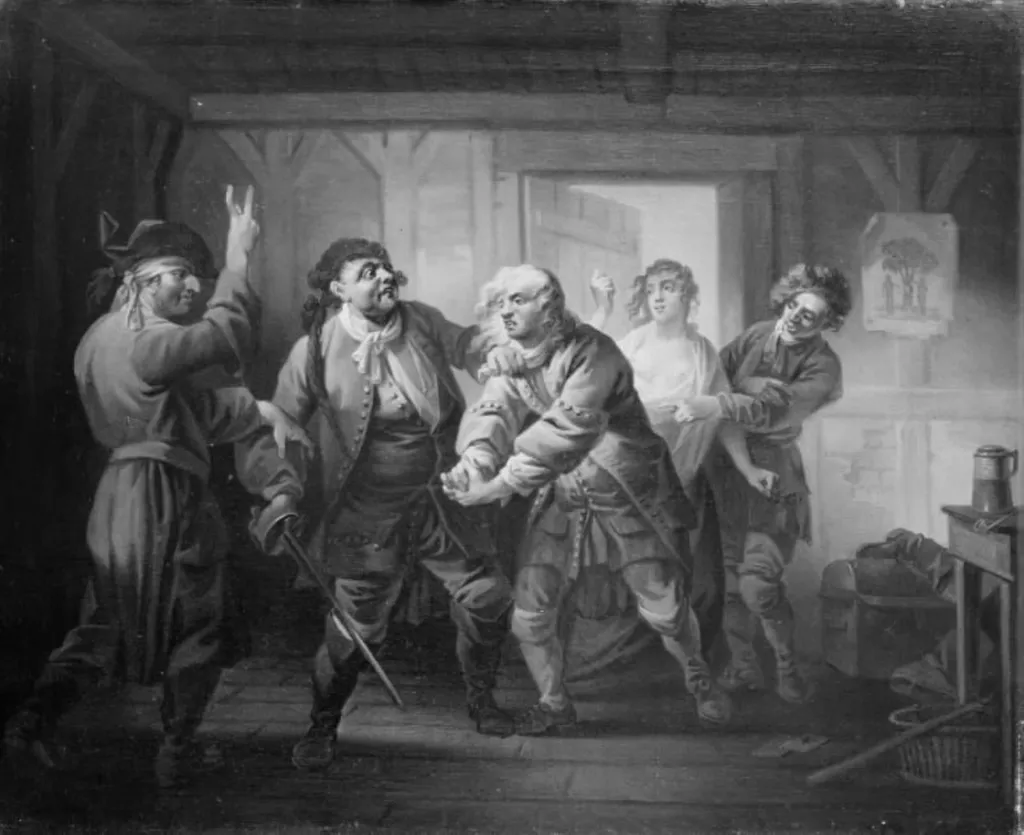
Den elvte Juni, V. akt, 1. scene is a photography by Unknown. It dates from 1750 and is held in the collection of the Statens Museum for Kunst. Created around 1750, this image captures a moment of intense confrontation within an interior setting.
About this work
Overview
It is attributed to an artist identified only by a numerical designation, and it resides in the collection of the Museum of Ethnography.
Created around 1750, this image captures a moment of intense confrontation within an interior setting. It is attributed to an artist identified only by a numerical designation, and it resides in the collection of the Museum of Ethnography. The composition centers on a figure under physical restraint, surrounded by others whose gestures suggest urgency or coercion. The scene is rendered with careful attention to spatial depth and emotional gravity.
Subject & Meaning
The scene portrays a man in the center being held by two others, while a woman raises her hands in apparent distress. A sword held by one figure implies the threat of violence, and the presence of a doorway behind the central figure may suggest an impending exit or escape. The interaction appears to depict a moment of arrest, punishment, or personal crisis, though the specific narrative remains unconfirmed. The tension is conveyed through posture and proximity rather than overt action.
Technique & Style
The artist employs chiaroscuro to model forms and heighten the emotional weight of the scene. Contrasts between light and shadow define the figures against a dimly lit interior, emphasizing the central figure’s vulnerability. Clothing is rendered with attention to texture and fold, while the wooden floor and walls provide a restrained backdrop. The composition is tightly framed, focusing attention on the group’s physical and psychological dynamics.
History & Provenance
The work has been held by the Museum of Ethnography since at least the early 20th century, though its origin prior to acquisition is undocumented. The artist, identified only by a catalog number, remains otherwise unidentified. No records confirm its commission, ownership history, or intended audience. Its presence in an ethnographic collection suggests it may have been acquired as part of a broader assemblage of cultural or historical imagery.
Context
Created in the mid-18th century, the image reflects a period when narrative painting often depicted moments of social or moral conflict. While the setting lacks overt markers of place or class, the clothing and interior suggest a European domestic or institutional environment. The scene’s ambiguity may reflect a theatrical or literary source, though no direct link to a known play or text has been established.
Legacy
The work remains a quiet but potent example of 18th-century narrative imagery preserved outside mainstream art institutions. Its inclusion in an ethnographic museum underscores its value as a document of human interaction rather than aesthetic achievement. Though not widely reproduced or studied, it continues to invite interpretation through its restrained yet charged composition.
Artist & collection

 Domestic Scene
 Giacomo and Cardinal Marco, investing Andrea, Abbot of San Zeno, with his Benefice
 The Nymph of Fontainebleau
 Portrait of a Woman
 Madonna and Child with Saints in the Enclosed Garden
 Venus and Minerva
 Family Group of Four on Sofa
 Wall painting from Room H of the Villa of P. Fannius Synistor at Boscoreale
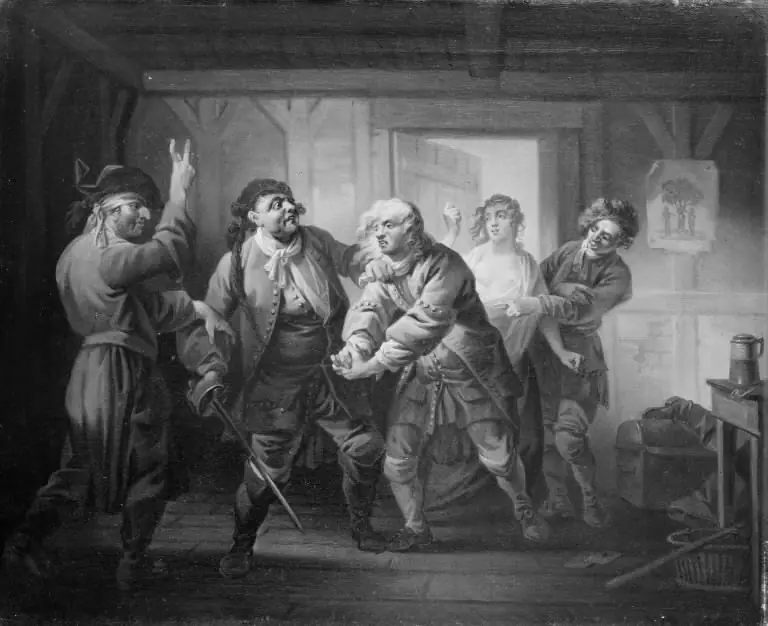 Den elvte Juni, V. akt, 1. scene
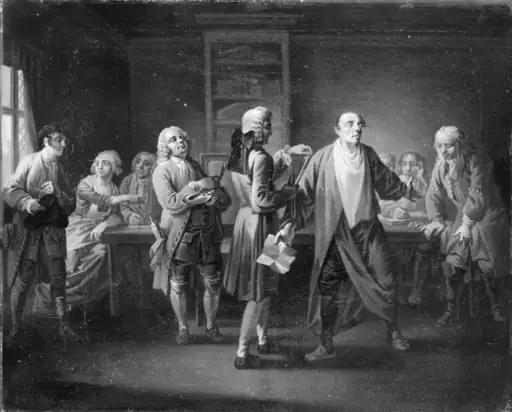 Den Stundesløse, I akt, 6. scene
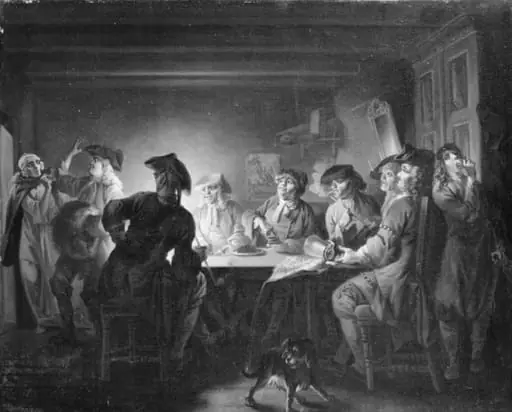 Den politiske Kandestøber, II akt, 2. scene
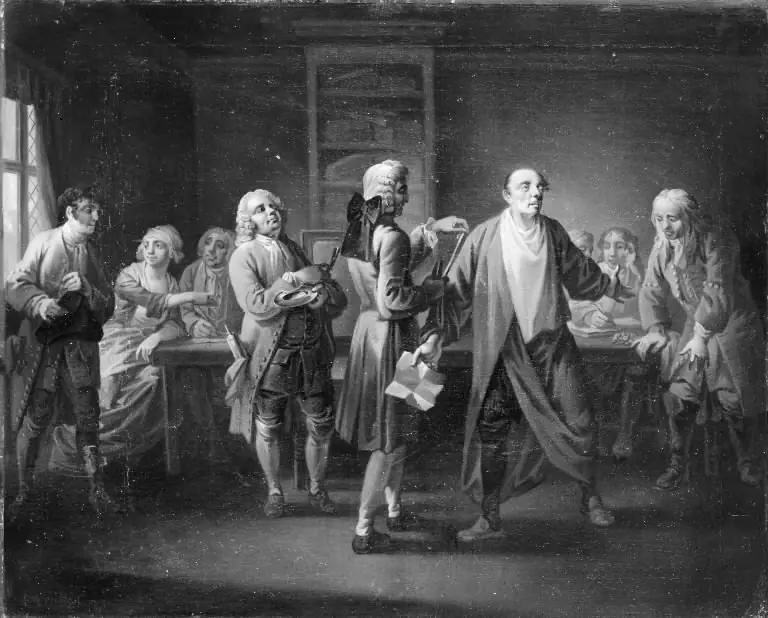 Den Stundesløse, I akt, 6. scene
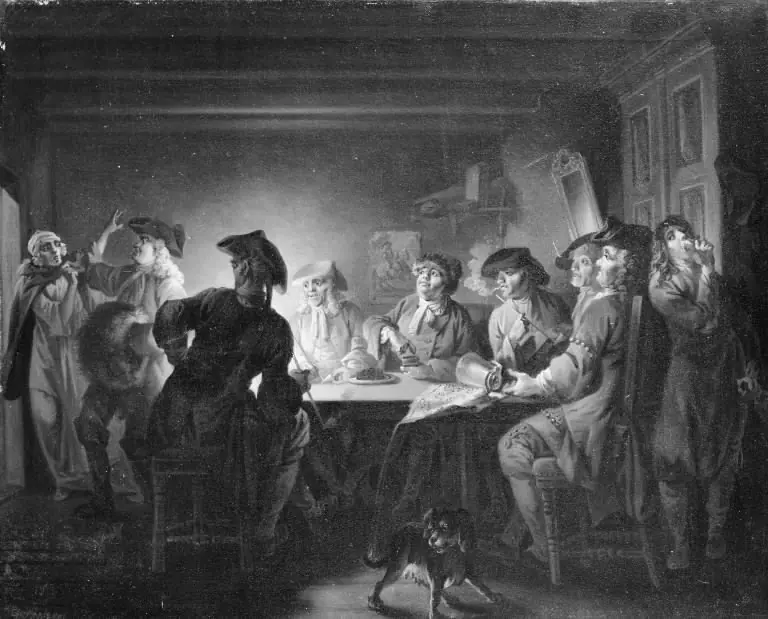 Den politiske Kandestøber, II akt, 2. scene
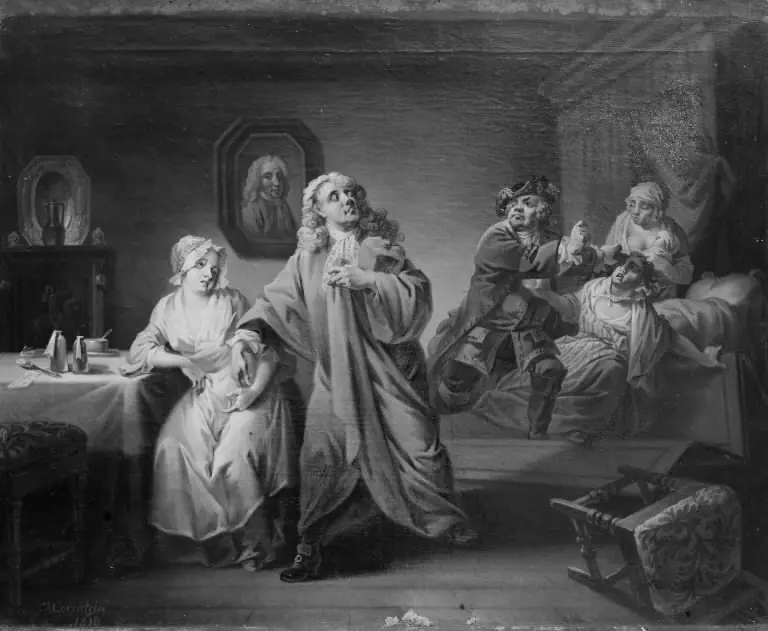 Barselstuen, III akt, 6. scene
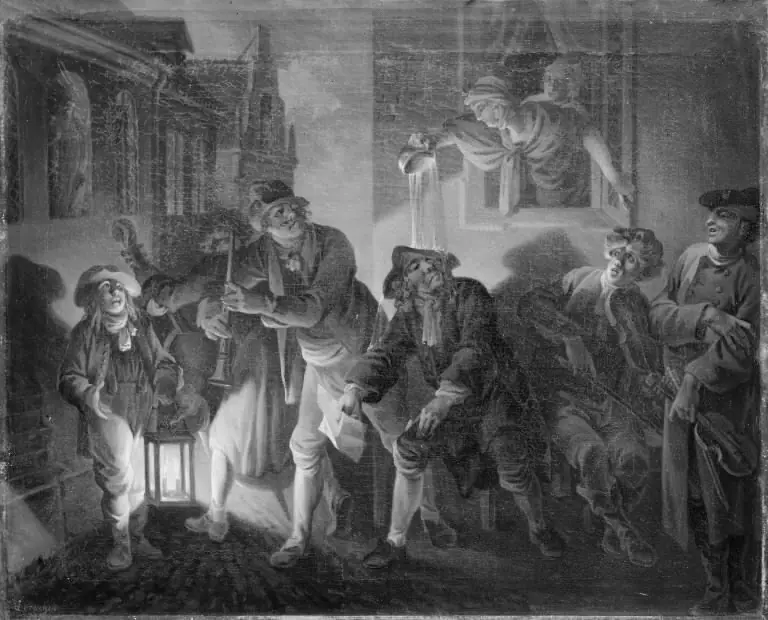 Den Vægelsindede, II akt, 16. scene
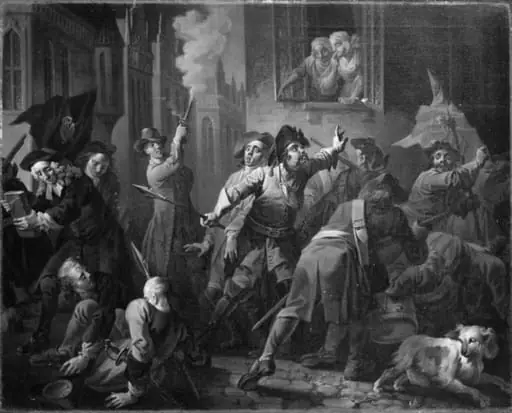 Jacob von Thyboe, V. akt, 11. scene
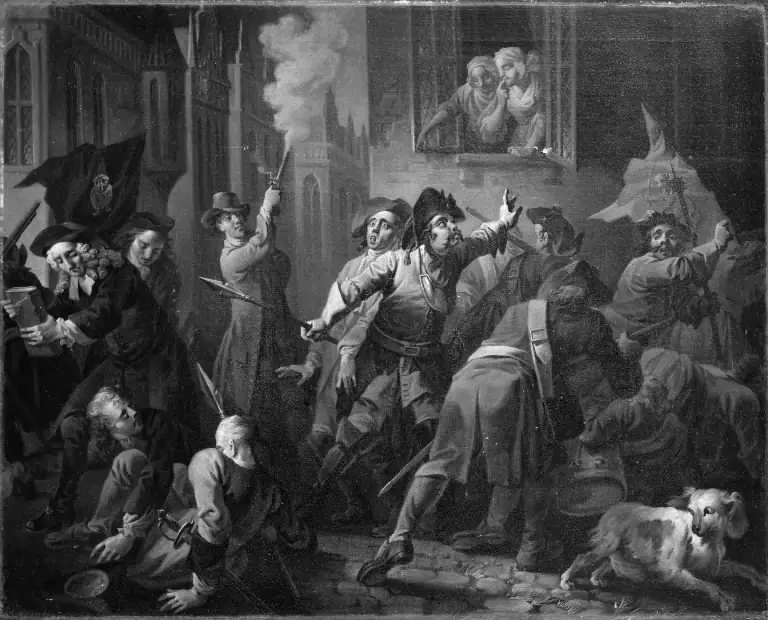 Jacob von Thyboe, V. akt, 11. scene
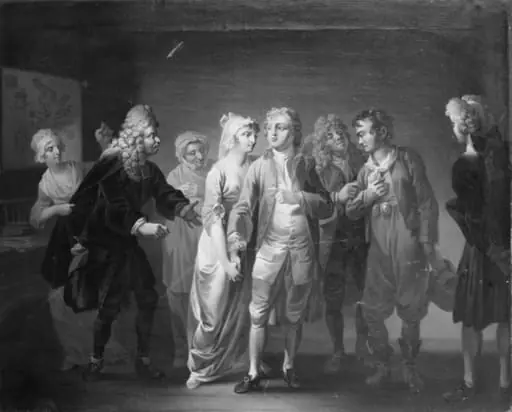 Det lykkelige Skibbrud, IV akt, 6. scene