Artwork
Jacob von Thyboe, V. akt, 11. scene
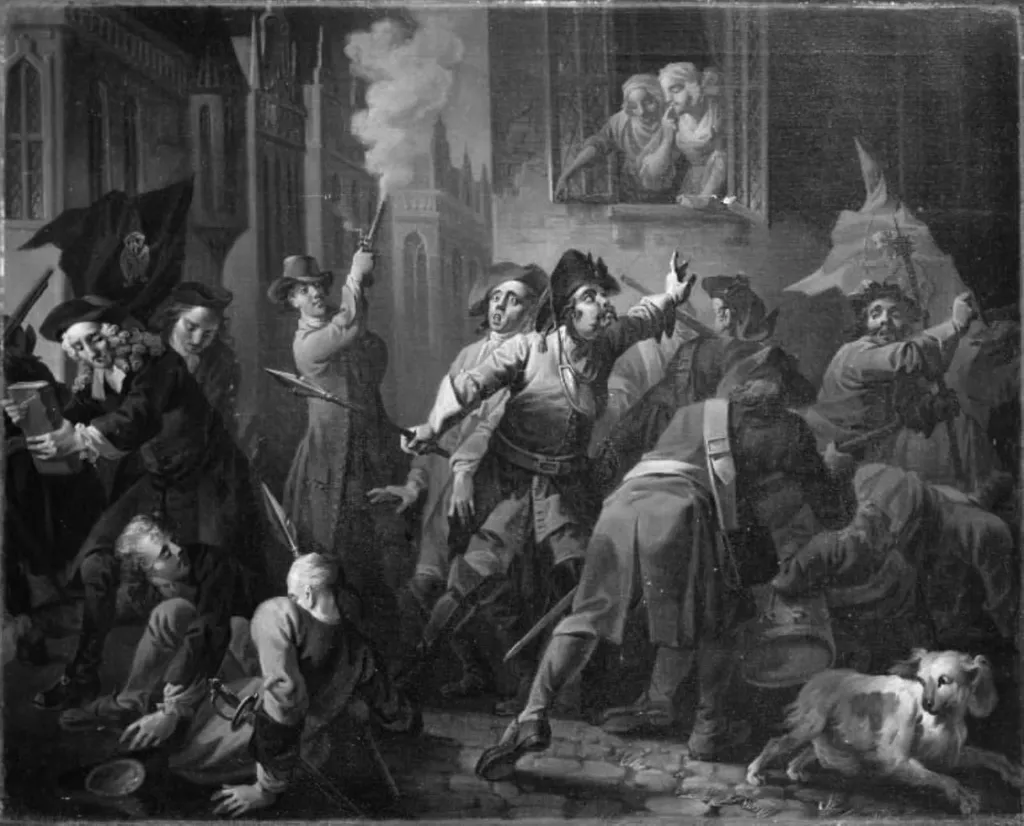
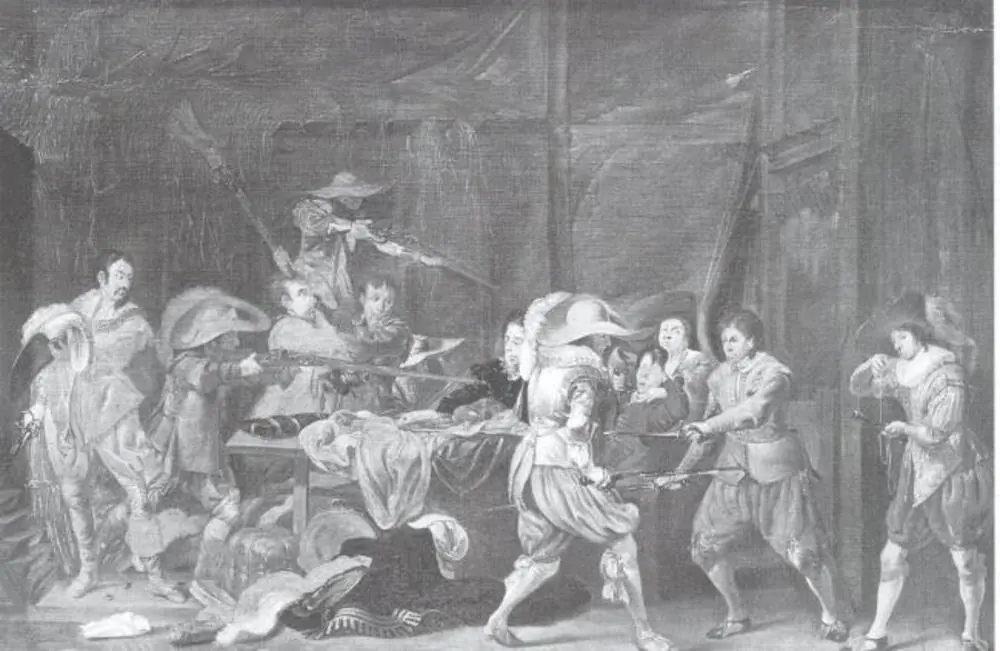
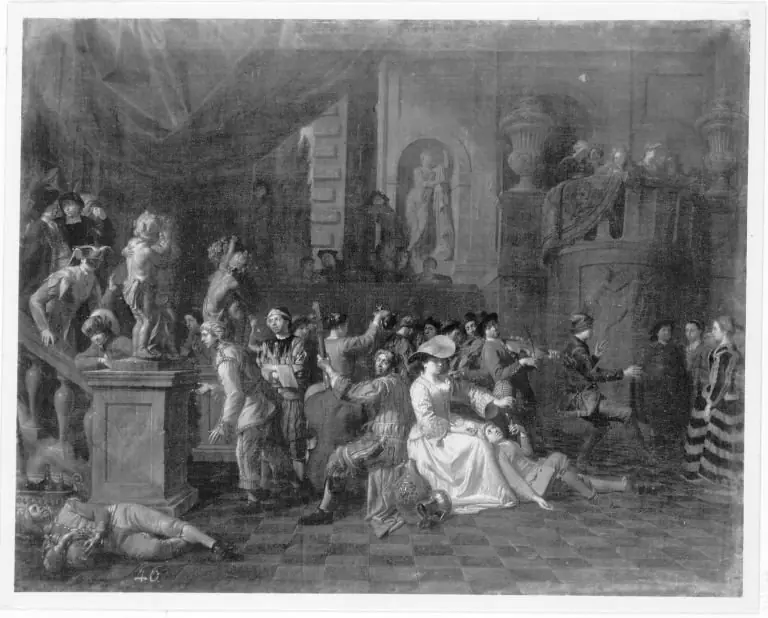
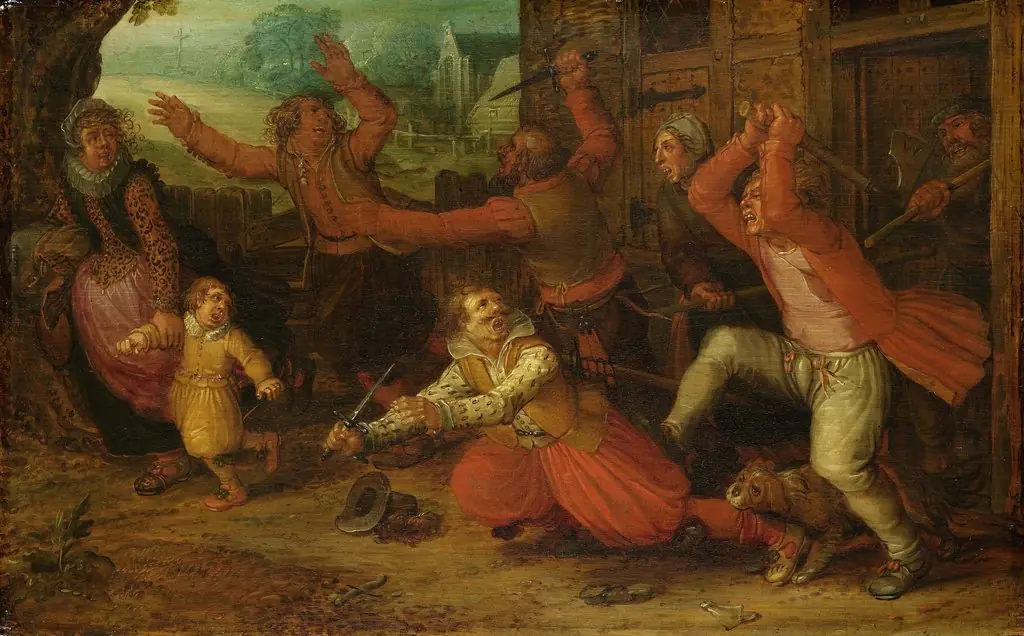
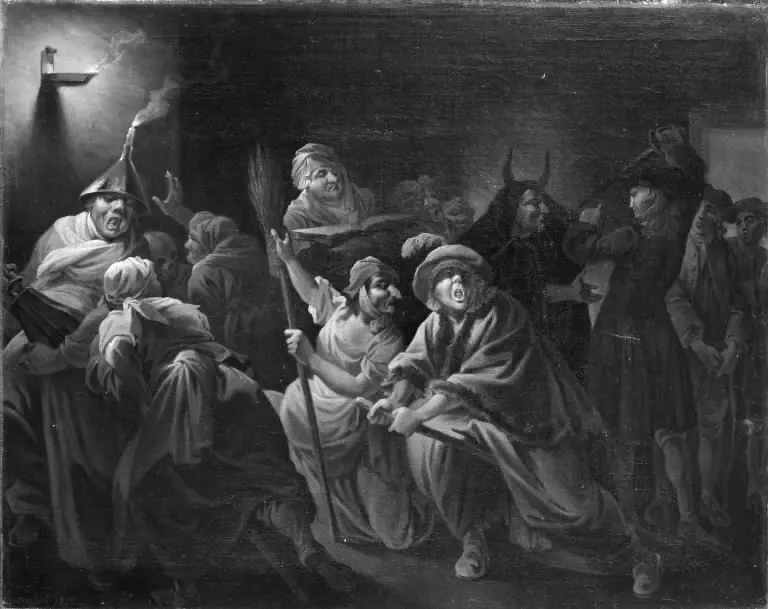
Jacob von Thyboe, V. akt, 11. scene is a photography by the Romanticist artist Unknown. It dates from 1810 and is held in the collection of the Statens Museum for Kunst. Created in 1810 by Jacob von Thyboe, this image captures a moment of violent confrontation within a theatrical narrative.
About this work
Overview
It is part of a larger sequence, likely drawn from a dramatic performance, and is currently preserved in the Museum of Ethnography.
Created in 1810 by Jacob von Thyboe, this image captures a moment of violent confrontation within a theatrical narrative. It is part of a larger sequence, likely drawn from a dramatic performance, and is currently preserved in the Museum of Ethnography. The composition centers on a fallen figure and an armed assailant, framed by a distant urban setting and onlookers, suggesting a public spectacle of justice or retribution.
Subject & Meaning
The scene portrays a climactic moment of physical conflict, possibly drawn from a historical or literary drama. The fallen man and the figure wielding a sword imply a moment of execution or duel, while the surrounding crowd indicates public witness. The absence of clear identifiers leaves the narrative open, but the intensity suggests themes of power, retribution, or moral judgment within a structured social order.
Technique & Style
Thyboe employs chiaroscuro to heighten emotional tension, directing focus to the central figures through stark contrasts of light and shadow. The figures are rendered with dynamic postures, emphasizing motion and physical strain. The background cityscape is rendered in softer tones, creating depth and isolating the drama in the foreground. Brushwork is controlled yet expressive, aligning with early 19th-century tendencies toward theatrical realism.
History & Provenance
The work was completed in 1810 and entered the collection of the Museum of Ethnography, where it remains today. Its origin as part of a multi-scene series suggests it was produced for a specific theatrical or literary context, possibly commissioned or created as a study. Little documentation exists regarding its early ownership or exhibition history prior to its institutional acquisition.
Context
Produced during the rise of Romanticism, the painting reflects a broader cultural interest in intense emotion, dramatic narratives, and individual heroism or tragedy. While not aligned with landscape or nature-focused Romanticism, it shares the movement’s fascination with heightened human experience. Thyboe’s work contributes to a Scandinavian tradition of staging historical and literary scenes with psychological gravity.
Legacy
Jacob von Thyboe’s work is not widely reproduced or studied outside regional art histories, but it remains a significant example of early 19th-century Danish theatrical illustration. Its preservation in the Museum of Ethnography underscores its value as a cultural artifact linking performance, visual art, and public narrative. It offers insight into how dramatic storytelling was visualized in Northern Europe during the Romantic era.
Artist & collection

 Domestic Scene
 Giacomo and Cardinal Marco, investing Andrea, Abbot of San Zeno, with his Benefice
 The Nymph of Fontainebleau
 Portrait of a Woman
 Madonna and Child with Saints in the Enclosed Garden
 Venus and Minerva
 Family Group of Four on Sofa
 Wall painting from Room H of the Villa of P. Fannius Synistor at Boscoreale