Artwork
Udfaldet på Amager 1658 under Svenskekrigen 1657-60
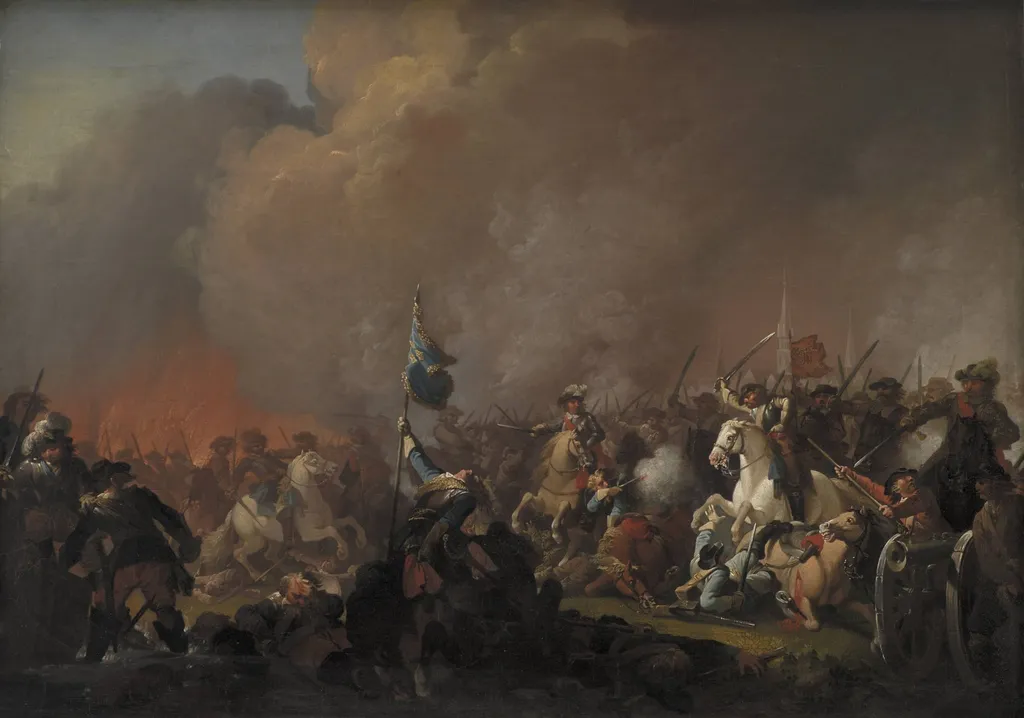
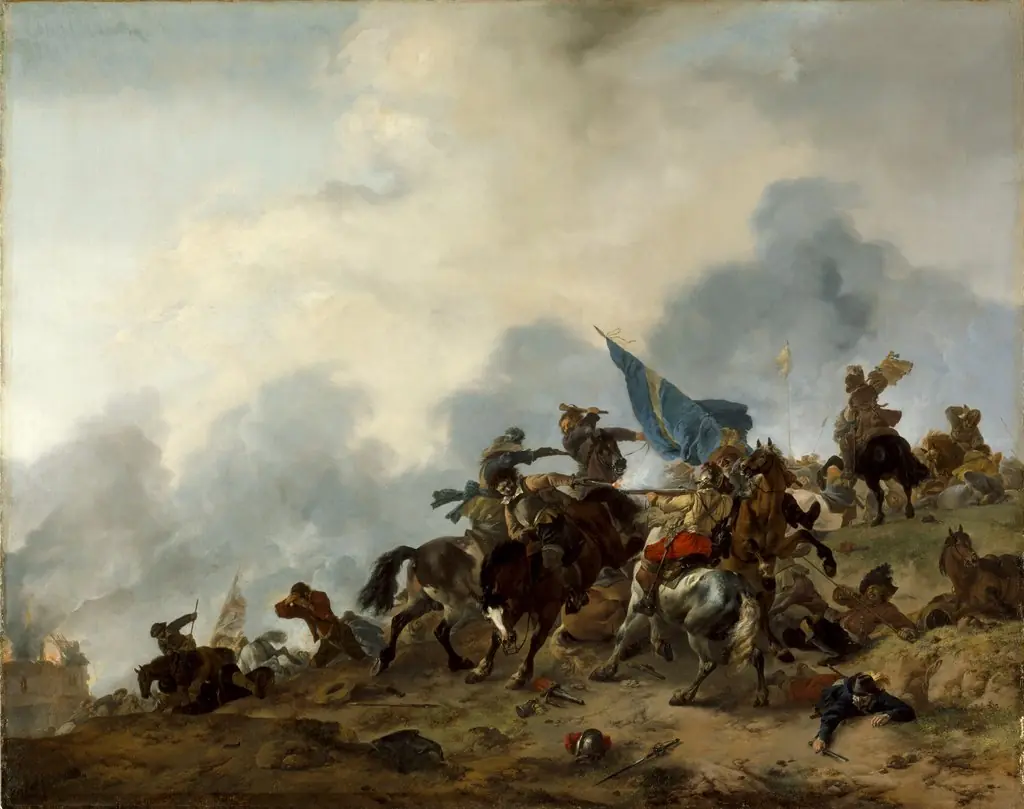
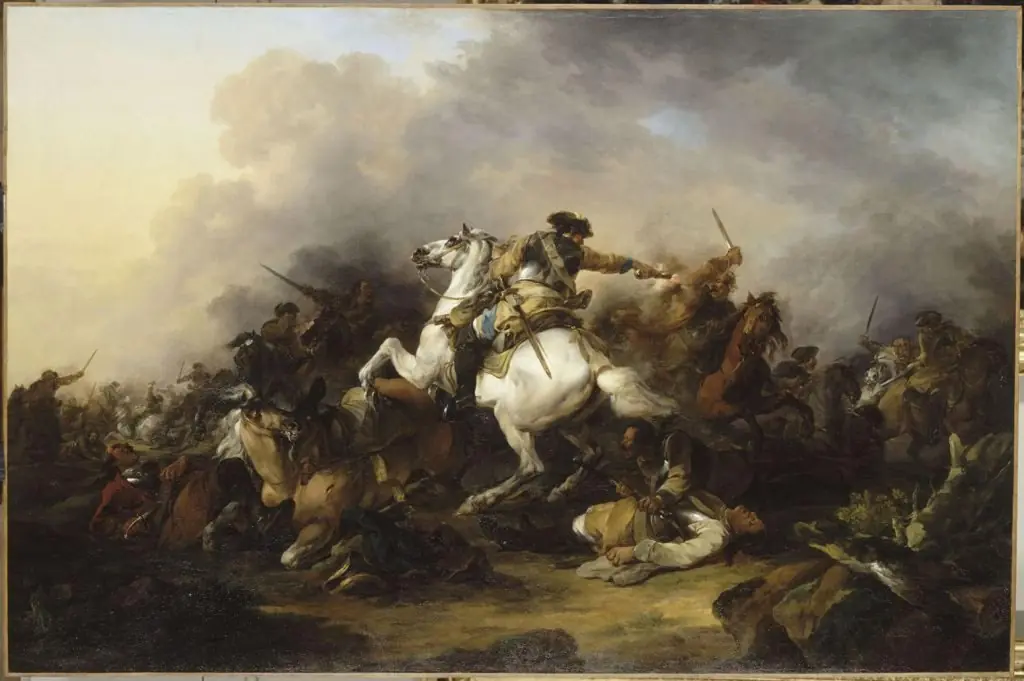
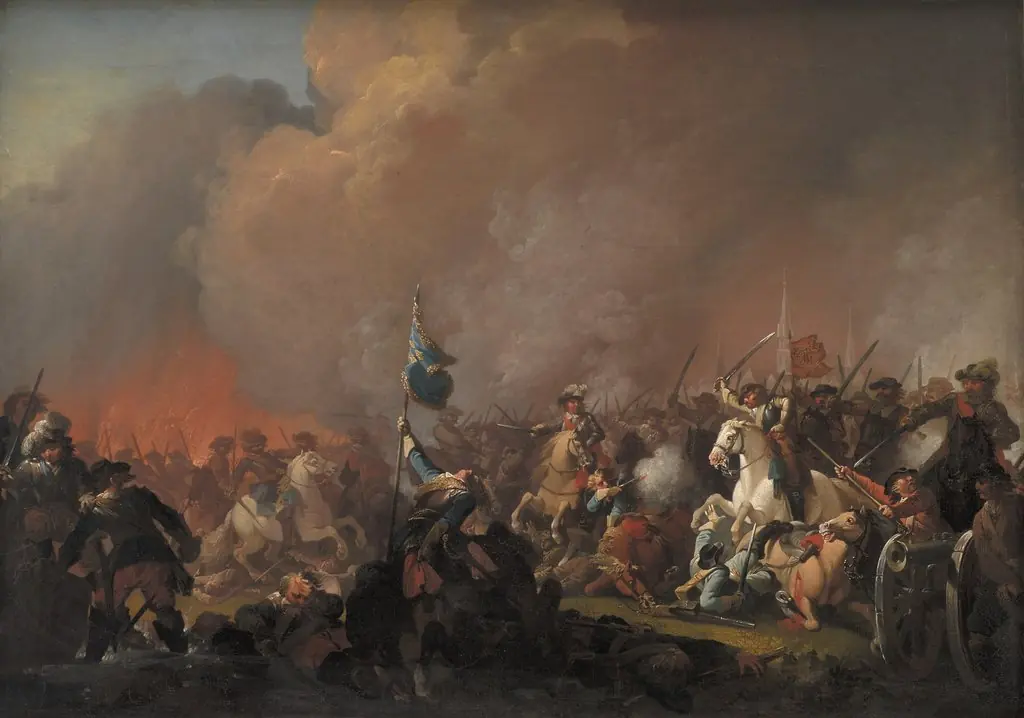
Udfaldet på Amager 1658 under Svenskekrigen 1657-60 is a photography by the Romanticist artist Unknown. It dates from 1791 and is held in the collection of the Statens Museum for Kunst. Created in 1791, this oil painting portrays the 1658 clash on Amager that occurred during the Swedish‑Danish war of 1657‑60.
About this work
Some soldiers are standing, others are falling, and a few horses are rearing up or lying down.
This painting shows a chaotic battle scene with soldiers on foot and horseback. Smoke and fire fill the sky, making it hard to see clearly. Some soldiers are standing, others are falling, and a few horses are rearing up or lying down. One man on a white horse holds a flag with a blue and yellow design.
The painting looks old but was actually made in 1791—long after the battle it shows. The artist used thick, dark brushstrokes to create drama and movement.
Look up chiaroscuro to see how light and shadow create mood in paintings.
Overview
Created in 1791, this oil painting portrays the 1658 clash on Amager that occurred during the Swedish‑Danish war of 1657‑60. Although the canvas is over two centuries old, it was produced long after the actual combat, offering a retrospective visualisation of the battle’s turmoil. The work is part of the collection of the Museum of Ethnography.
Subject & Meaning
The scene is dominated by a chaotic melee of infantry and cavalry, shrouded in billowing smoke and flames that obscure the sky. Figures tumble, some upright, others collapsing, while horses either rear or lie prone. A rider on a white horse bears a flag bearing blue and yellow, a likely reference to the opposing forces.
Technique & Style
The artist employs a heavy, impasto application of dark pigments, generating a sense of movement and tension. Strong contrasts of light and shadow—chiaroscuro—enhance the dramatic atmosphere, with illuminated patches highlighting the flag and the rearing horses against the gloom of smoke and fire.
History & Provenance
Although the battle occurred in the mid‑17th century, the painting was executed in the late 18th century, reflecting a period of renewed interest in national history. It entered the Museum of Ethnography’s holdings at an unspecified date, where it remains on display as a visual record of Denmark’s wartime past.
Artist & collection

 Domestic Scene
 Giacomo and Cardinal Marco, investing Andrea, Abbot of San Zeno, with his Benefice
 The Nymph of Fontainebleau
 Portrait of a Woman
 Madonna and Child with Saints in the Enclosed Garden
 Venus and Minerva
 Family Group of Four on Sofa
 Wall painting from Room H of the Villa of P. Fannius Synistor at Boscoreale