Artwork
Maleren Harald Holm
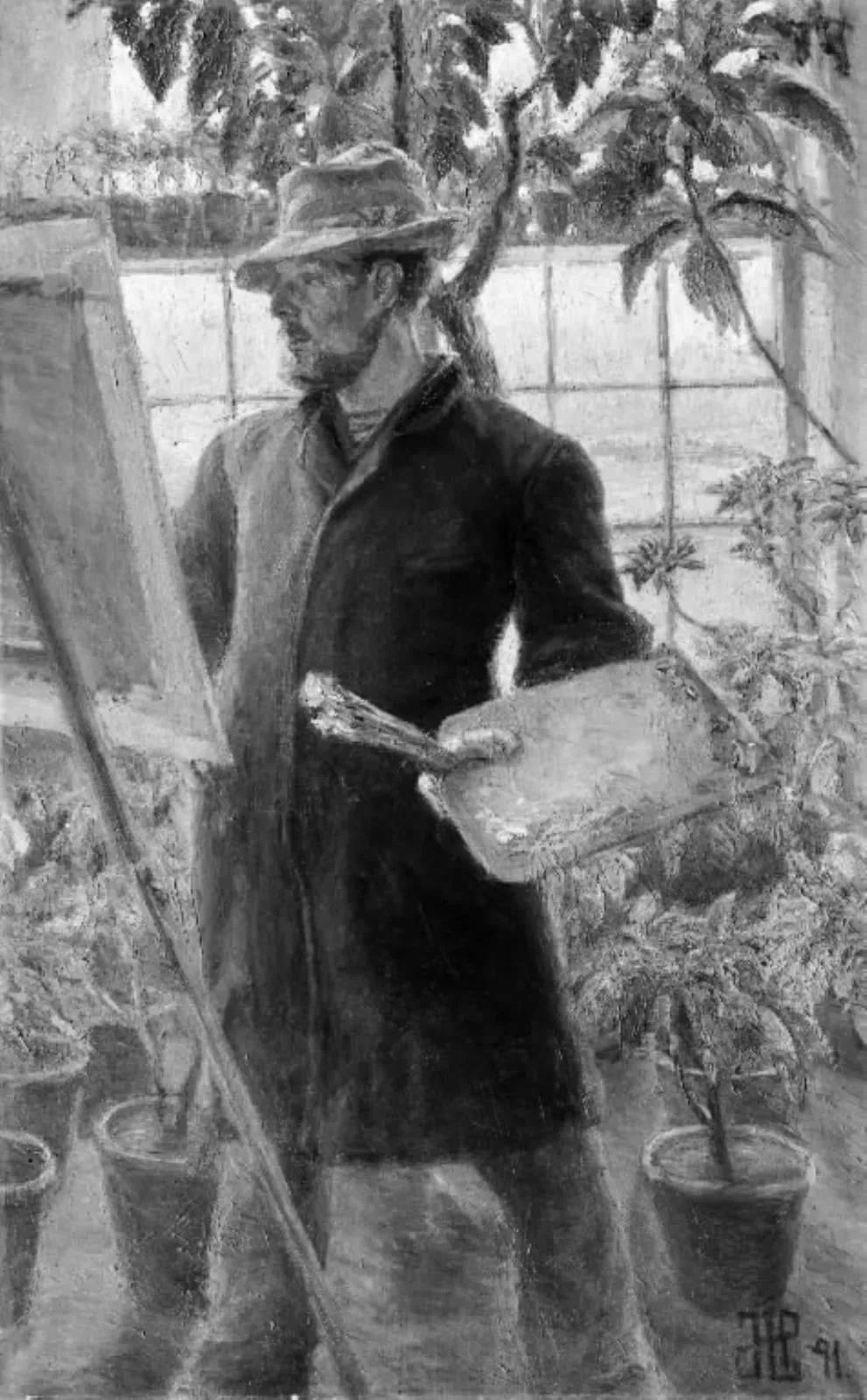
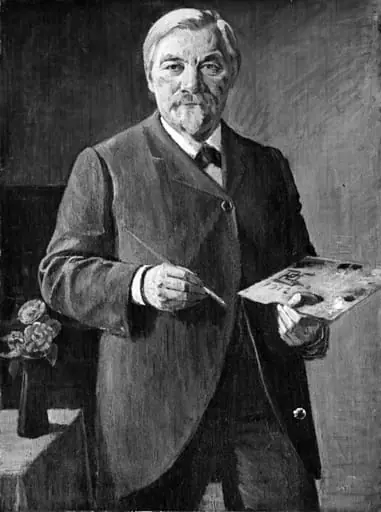
Maleren Harald Holm is a photography by the Impressionist artist Unknown. It dates from 1891 and is held in the collection of the Statens Museum for Kunst. This black-and-white photograph, dated 1891, depicts Harald Holm, a painter, standing outdoors with brush and palette in hand.
About this work
Overview
Unlike the colorful canvases typical of Impressionism, the image relies on tonal contrast and grainy texture, indicating it is a photographic print.
This black-and-white photograph, dated 1891, depicts Harald Holm, a painter, standing outdoors with brush and palette in hand. Unlike the colorful canvases typical of Impressionism, the image relies on tonal contrast and grainy texture, indicating it is a photographic print. It is held in the collection of the Museum of Ethnography, where it functions as a documentary record rather than an artistic composition in the traditional sense.
Subject & Meaning
Harald Holm is shown in his working attire, suggesting a focus on the artist’s identity and labor. The setting—a stone wall, barred window, and sparse vegetation—hints at a confined or institutional environment. The pose, leaning against the wall, conveys quiet contemplation rather than active creation. The image may reflect contemporary interest in documenting the lives of artists as social types, not just their finished works.
Technique & Style
The photograph employs strong chiaroscuro, with deep shadows and bright highlights shaping the figure’s form. The grainy surface and high contrast are characteristic of late 19th-century photographic processes like gelatin silver prints. Unlike painted portraits of artists, this image avoids idealization, emphasizing texture and realism. The lack of color aligns with the medium’s technical limitations and aesthetic choices of the time.
History & Provenance
Created in 1891, the photograph entered the Museum of Ethnography’s collection, likely as part of a broader effort to catalog cultural figures. Its preservation suggests it was valued for its ethnographic significance rather than its artistic merit. The photographer remains unidentified, and no records indicate public exhibition prior to its institutional acquisition.
Context
In the 1890s, photography increasingly served as a tool for anthropological and cultural documentation. While painters like Monet captured light in color, this image uses monochrome to record a person within a specific social role. The barred window and austere setting may reflect assumptions about the artist’s isolation or the boundaries between creativity and confinement in modern society.
Legacy
The photograph endures as a quiet testament to the intersection of art and documentation. It offers a counterpoint to the vibrant brushwork of Impressionism, reminding viewers that the artist’s presence could be captured through mechanical means. Today, it contributes to discussions about how identity, profession, and medium intersect in visual culture.
Artist & collection

 Domestic Scene
 Giacomo and Cardinal Marco, investing Andrea, Abbot of San Zeno, with his Benefice
 The Nymph of Fontainebleau
 Portrait of a Woman
 Madonna and Child with Saints in the Enclosed Garden
 Venus and Minerva
 Family Group of Four on Sofa
 Wall painting from Room H of the Villa of P. Fannius Synistor at Boscoreale