Artwork
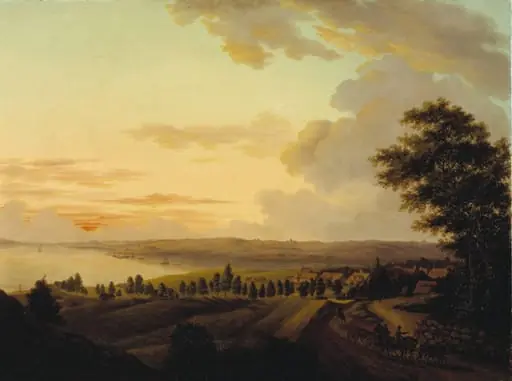
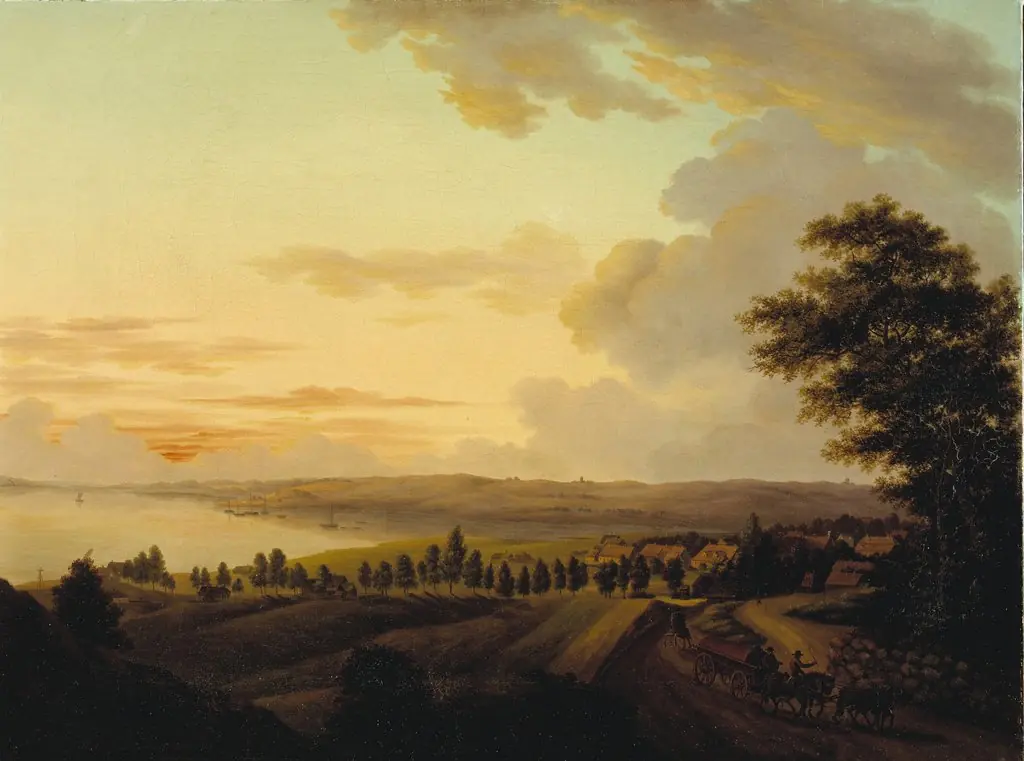
View of the Manor of Dronninggaard across Lake Fure, North Zealand.
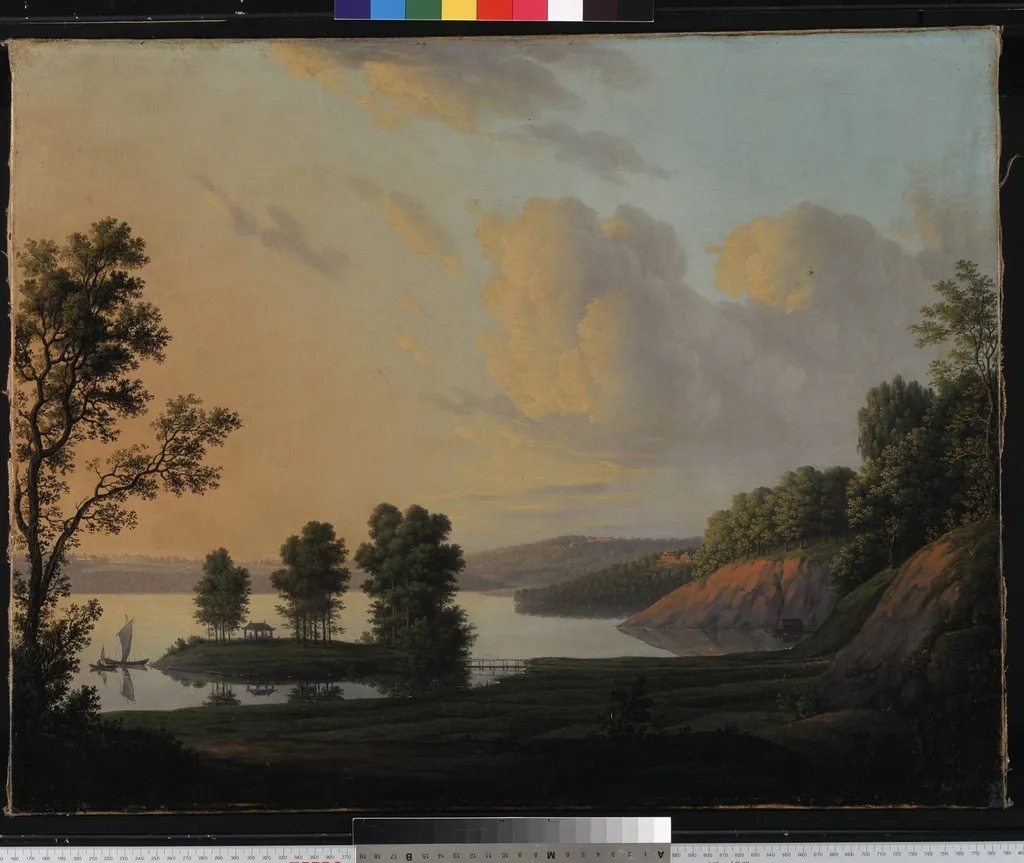
View of the Manor of Dronninggaard across Lake Fure, North Zealand. is a photography by the Romanticist artist Unknown. It dates from 1786 and is held in the collection of the Statens Museum for Kunst. Painted in 1786, this landscape depicts Dronninggaard Manor as seen across Lake Fure in North Zealand.
About this work
Overview
Though often associated with Romantic sensibilities, the work avoids overt drama, instead favoring subdued atmosphere and natural harmony.
Painted in 1786, this landscape depicts Dronninggaard Manor as seen across Lake Fure in North Zealand. The scene captures a tranquil evening with minimal human presence, emphasizing the quiet interplay between land, water, and sky. Though often associated with Romantic sensibilities, the work avoids overt drama, instead favoring subdued atmosphere and natural harmony. It resides today in the Museum of Ethnography, though its origins lie in Danish topographical tradition.
Subject & Meaning
The painting presents a quiet, unpopulated view of a noble estate nestled beside a still lake. The manor itself is not the focus; rather, the composition invites contemplation of nature’s endurance. The distant cliffs and sparse trees suggest a landscape shaped by time and weather, not human intervention. The stillness of the water and fading light evoke a sense of solitude, aligning with emerging 18th-century ideals of nature as a reflective, spiritual space.
Technique & Style
The sky is rendered with thick, expressive brushwork, creating a sense of motion in the clouds through layered strokes of pale yellow, gray, and blue. The lake’s surface mirrors these hues with subtle, horizontal touches, enhancing the calm. Foreground trees are loosely indicated, while the rocky cliff on the right is defined by darker, angular marks. The technique balances observation with emotional tone, characteristic of early Romantic landscape practices in Northern Europe.
History & Provenance
Created in 1786, the painting was likely commissioned or privately owned before entering the Museum of Ethnography’s collection. Its journey into an ethnographic institution suggests it was later valued more for its cultural record than its artistic merit. No definitive records of its early ownership exist, but its subject matter aligns with Danish landowners’ interest in documenting their estates during the late Enlightenment.
Context
In the late 18th century, Danish artists increasingly turned to native landscapes as subjects, moving away from classical or foreign ideals. This work reflects a growing national consciousness, where natural scenery became a vehicle for identity. Though not overtly political, its focus on a local estate and atmospheric conditions aligns with broader European trends that elevated nature as worthy of serious artistic attention.
Legacy
The painting contributes to a quiet but significant strand of Danish landscape art that preceded the more dramatic Romantic works of the 19th century. Its restrained approach—emphasizing mood over spectacle—helped shape a local aesthetic that valued subtlety and observation. While not widely exhibited today, it remains a document of how Danish artists began to see their own environment as worthy of artistic contemplation.
Artist & collection

 Domestic Scene
 Giacomo and Cardinal Marco, investing Andrea, Abbot of San Zeno, with his Benefice
 The Nymph of Fontainebleau
 Portrait of a Woman
 Madonna and Child with Saints in the Enclosed Garden
 Venus and Minerva
 Family Group of Four on Sofa
 Wall painting from Room H of the Villa of P. Fannius Synistor at Boscoreale
 Saska Kępa – Landscape at sunset
 Late Evening near Himmelbjerget, Jutland
 View from Stacey Hill, Stoddard, New Hampshire
 Sjællandsk landskab, aften
 Fresh Water Cove from Dolliver's Neck, Gloucester
 Sjællandsk landskab, aften
 Prospekt fra Dronninggård over Furesøen. I forgrunden øen Chevallier med det kinesiske lysthus
 A Horsecart Leaving a Forest
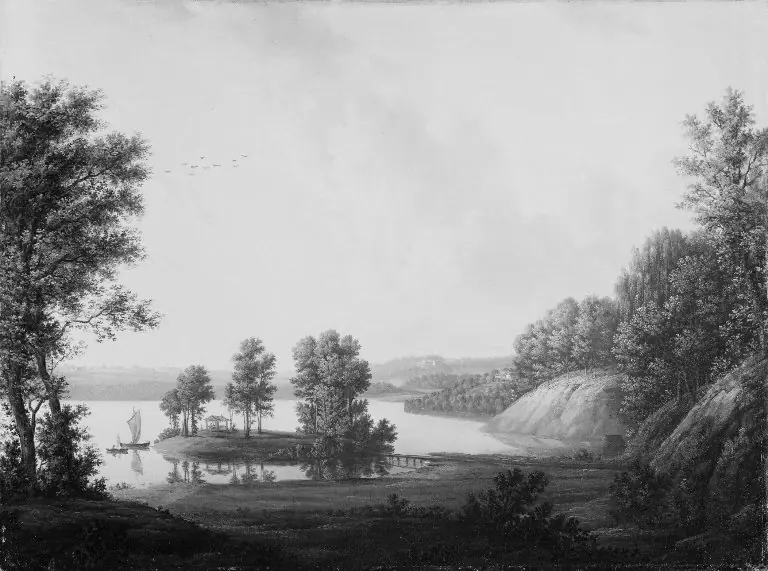 Prospekt fra Dronninggård over Furesøen. I forgrunden øen Chevallier med det kinesiske lysthus
 New Hampshire Lake