Artwork
Frederik IV
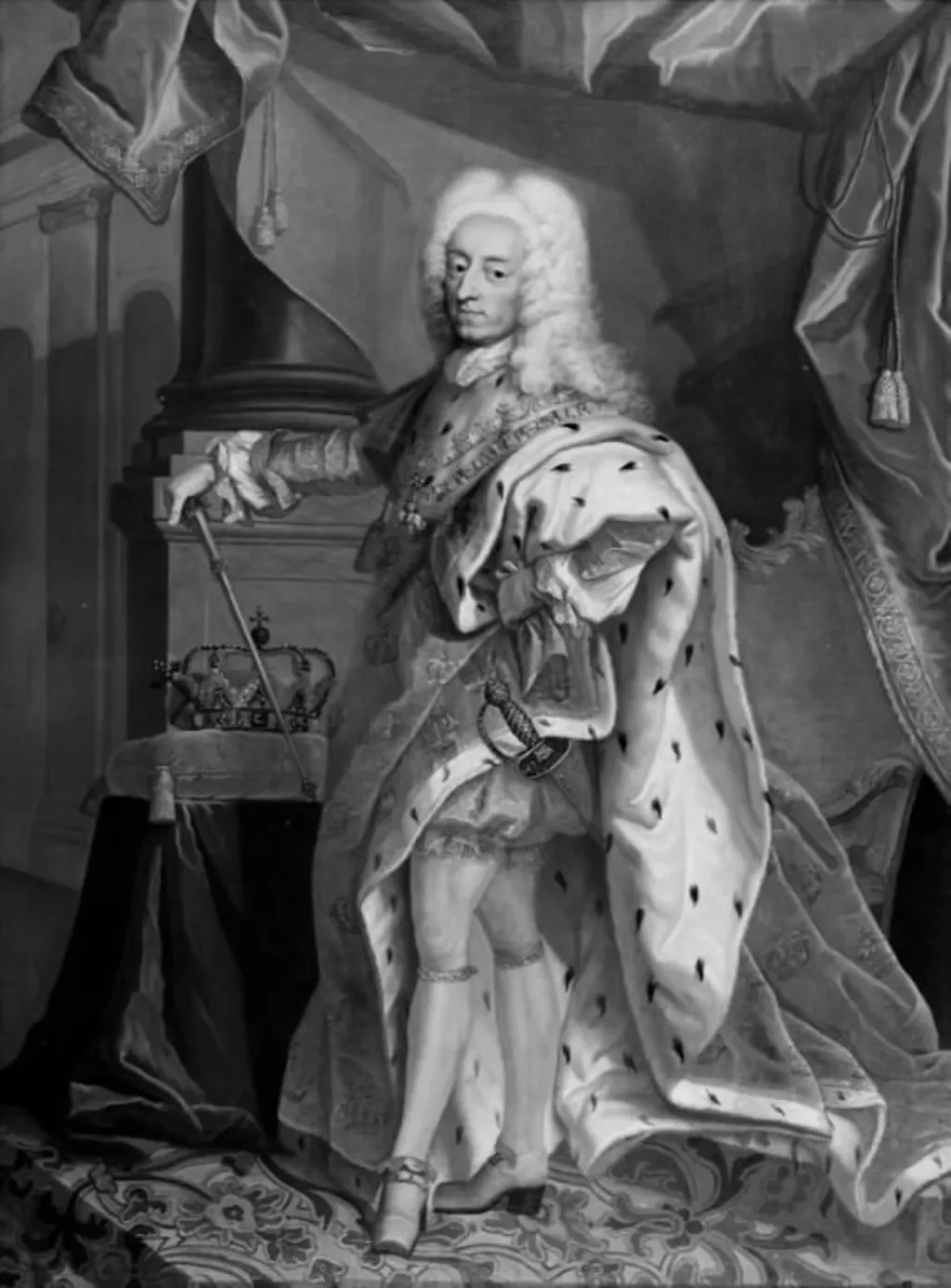
Frederik IV is a photography by Unknown. It dates from 1750 and is held in the collection of the Statens Museum for Kunst.
About this work
Overview
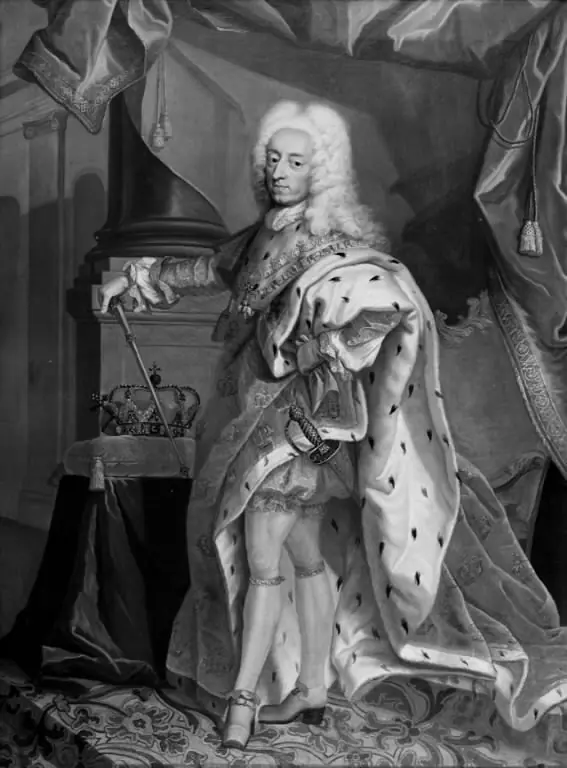
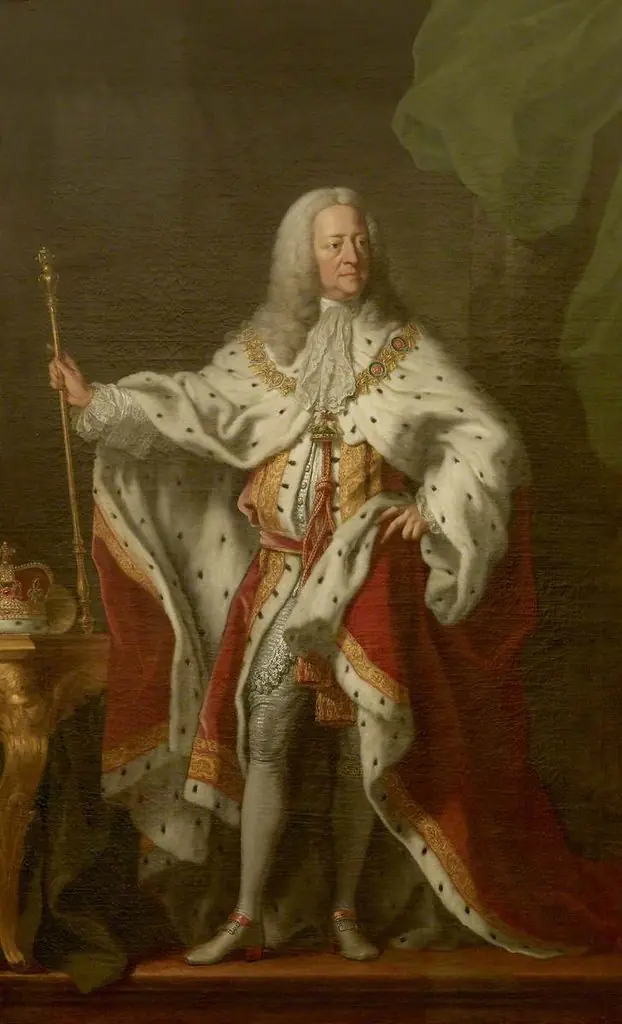
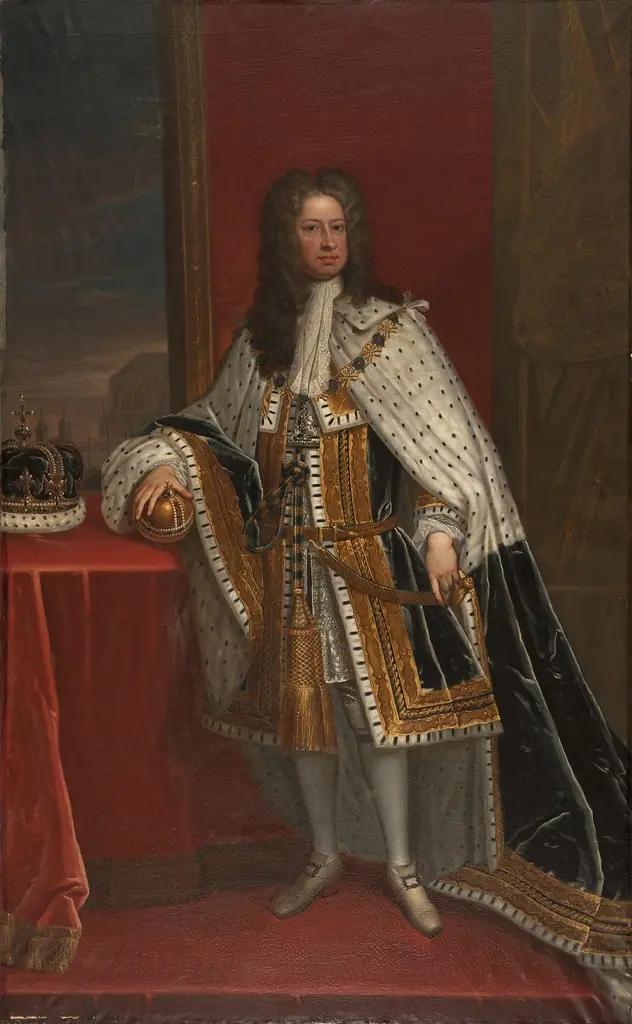
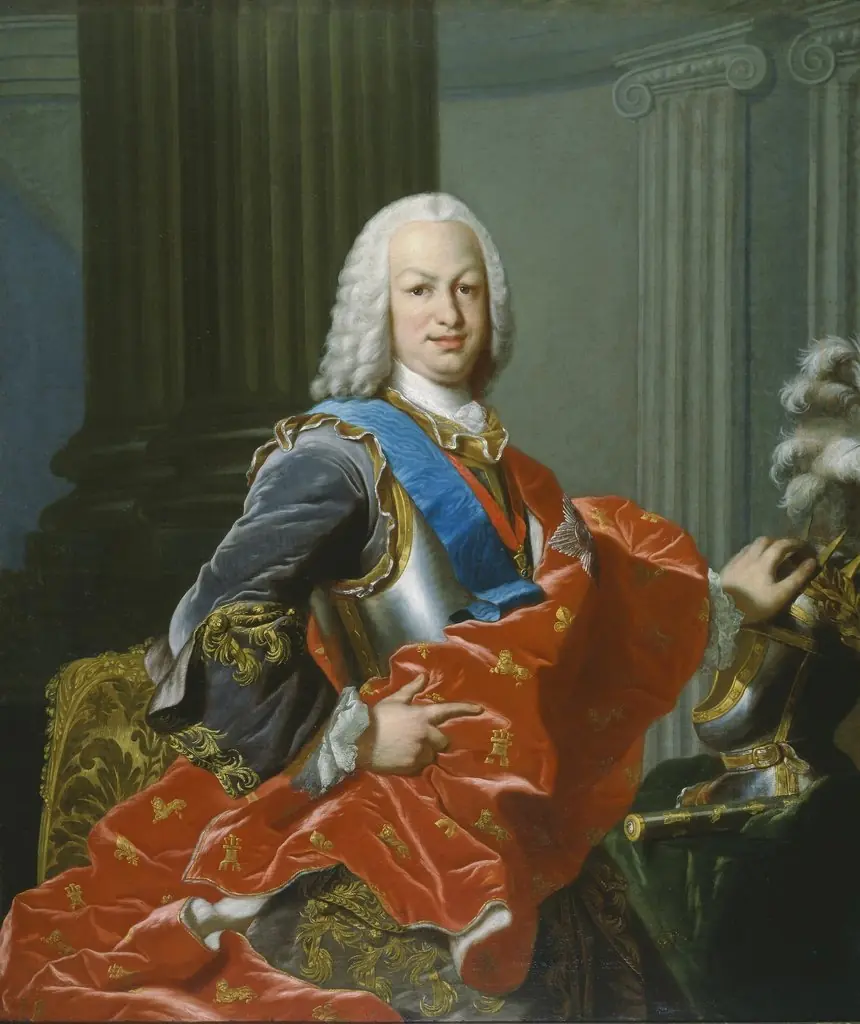
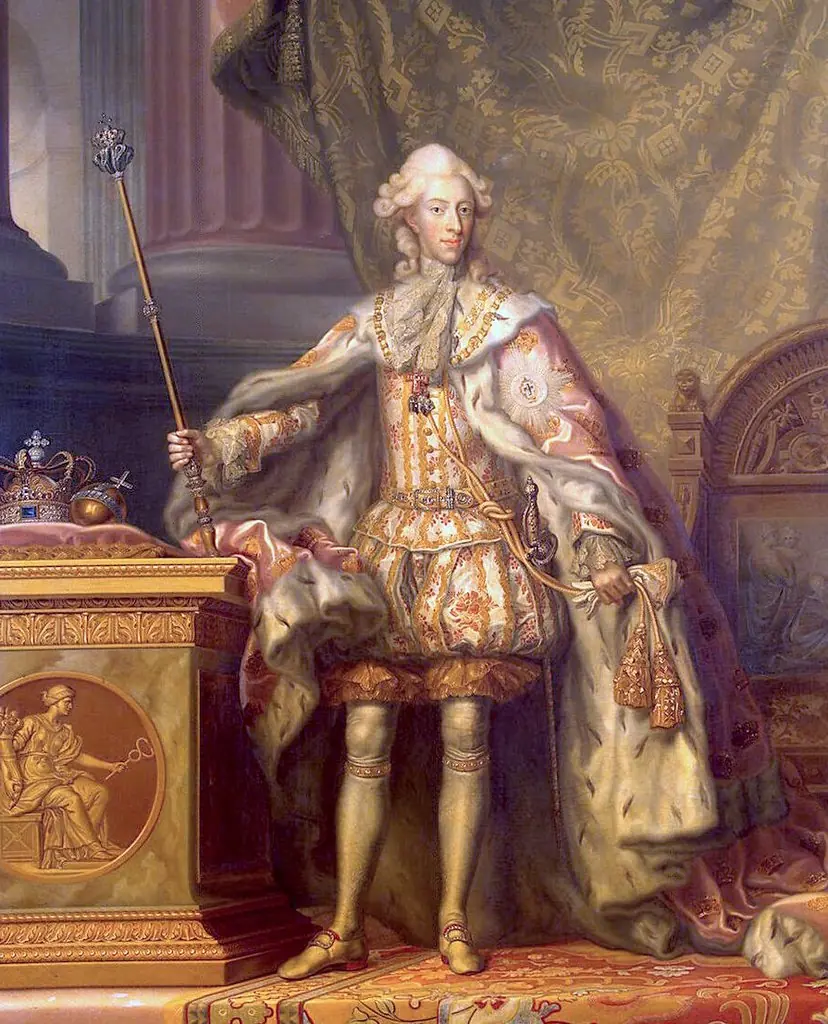
This portrait, dated around 1750, portrays a man identified as Frederik IV, likely a royal or ceremonial figure. Executed in oil on canvas, it is part of the Museum of Ethnography’s collection. The composition centers on the figure’s formal attire and symbolic objects, emphasizing status rather than individual likeness. The work’s origin and artist remain undocumented in available records.
Subject & Meaning
The figure, believed to be Frederik IV, is depicted with attributes of authority: a crown on the table, a sword in hand, and an elaborate robe.
The figure, believed to be Frederik IV, is depicted with attributes of authority: a crown on the table, a sword in hand, and an elaborate robe. The white robe with black spots and sash may reference ceremonial dress from a specific cultural or royal tradition. The placement of the crown beside him, not on his head, suggests a moment of transition or ritual, perhaps indicating sovereignty held in trust rather than actively worn.
Technique & Style
The painting employs a restrained palette dominated by white, black, and muted tones, focusing attention on texture and form. The robe’s pattern is rendered with careful brushwork, while the sword and crown are rendered with sharper detail to highlight their symbolic weight. Lighting is even and frontal, minimizing shadow to reinforce the figure’s static, ceremonial presence.
History & Provenance
The painting entered the Museum of Ethnography’s holdings in the late 19th or early 20th century, though its earlier history is unrecorded. No documentation links it to a known artist or commission. Its presence in an ethnographic context, rather than a royal or fine arts collection, suggests it may have been acquired as an artifact of non-European royalty or ritual practice.
Context
In the mid-18th century, European collectors often acquired portraits of foreign rulers as curiosities or symbols of global power. This work may reflect such collecting practices, though its stylistic elements do not clearly align with known European court portraiture. Its inclusion in an ethnographic museum implies it was interpreted as representing a non-Western monarchy or ceremonial tradition.
Legacy
The painting remains an enigmatic object within the museum’s collection, valued for its visual symbolism rather than its historical clarity. It continues to prompt questions about cultural representation, colonial collecting, and the classification of authority in visual form. No scholarly consensus has emerged regarding its origin or intended audience.
Artist & collection

 Domestic Scene
 Giacomo and Cardinal Marco, investing Andrea, Abbot of San Zeno, with his Benefice
 The Nymph of Fontainebleau
 Portrait of a Woman
 Madonna and Child with Saints in the Enclosed Garden
 Venus and Minerva
 Family Group of Four on Sofa
 Wall painting from Room H of the Villa of P. Fannius Synistor at Boscoreale