Artwork
Christian VI
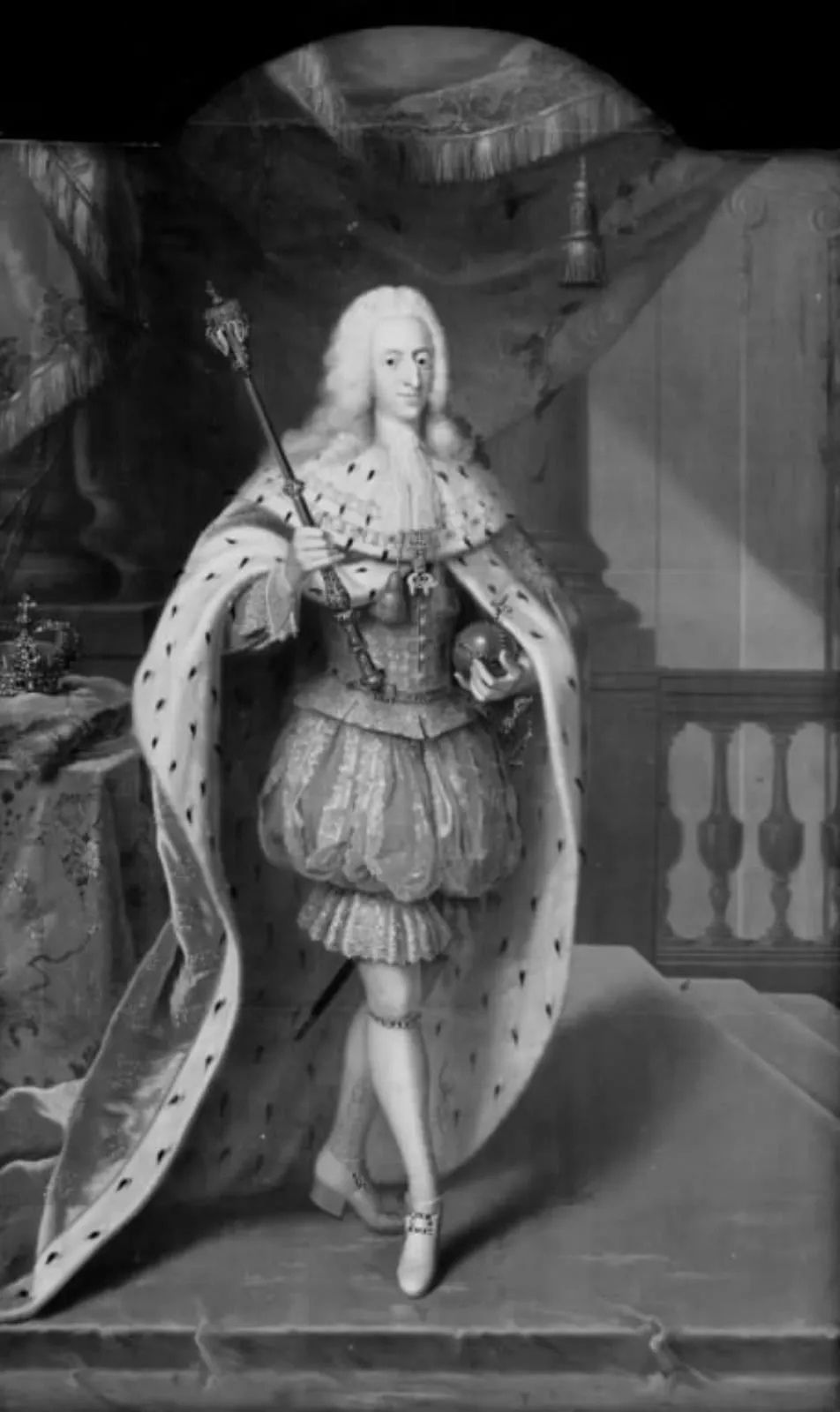
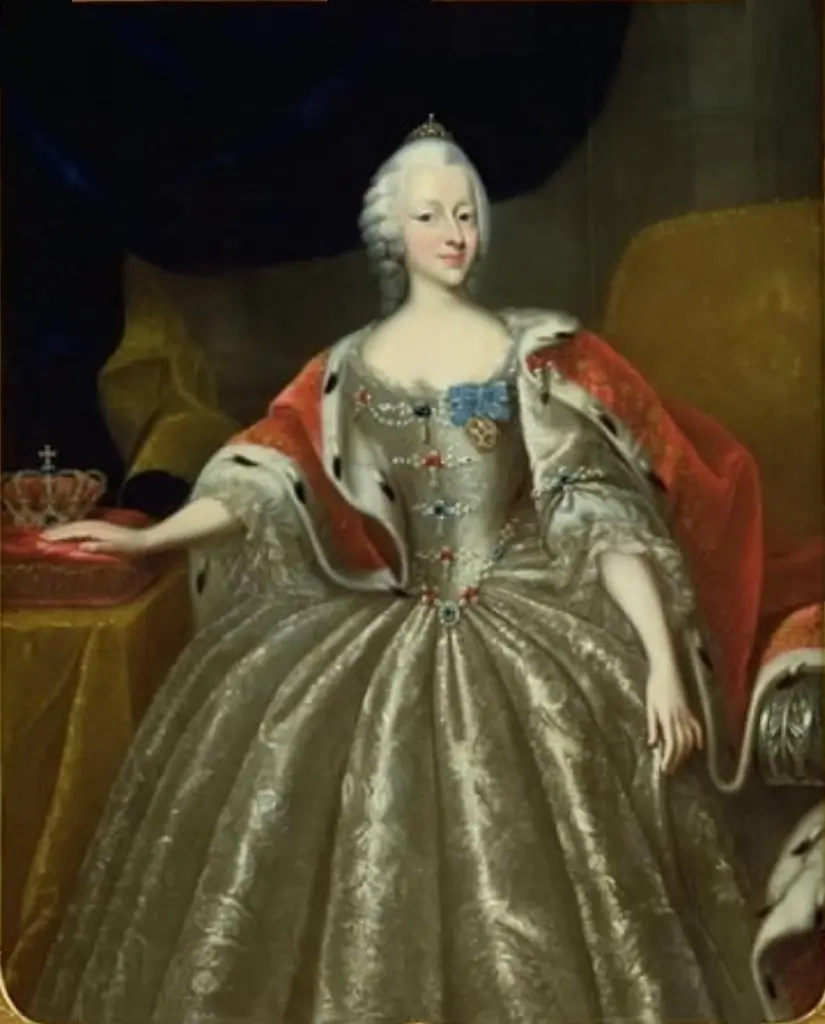
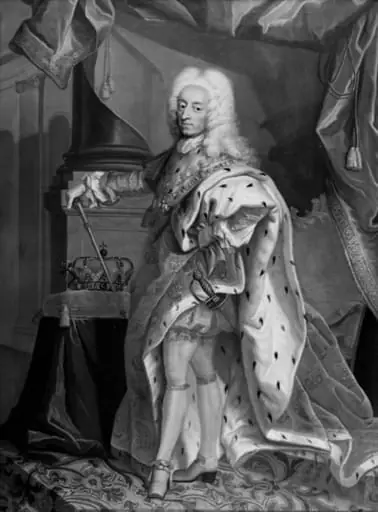
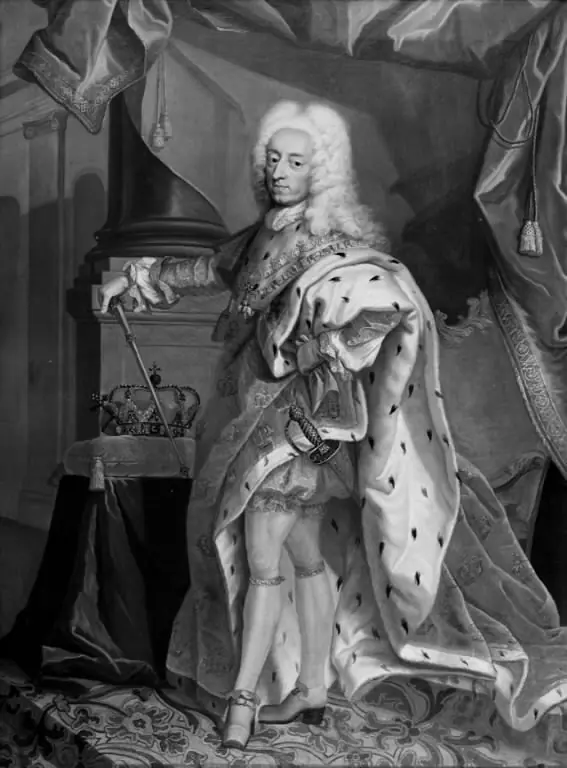
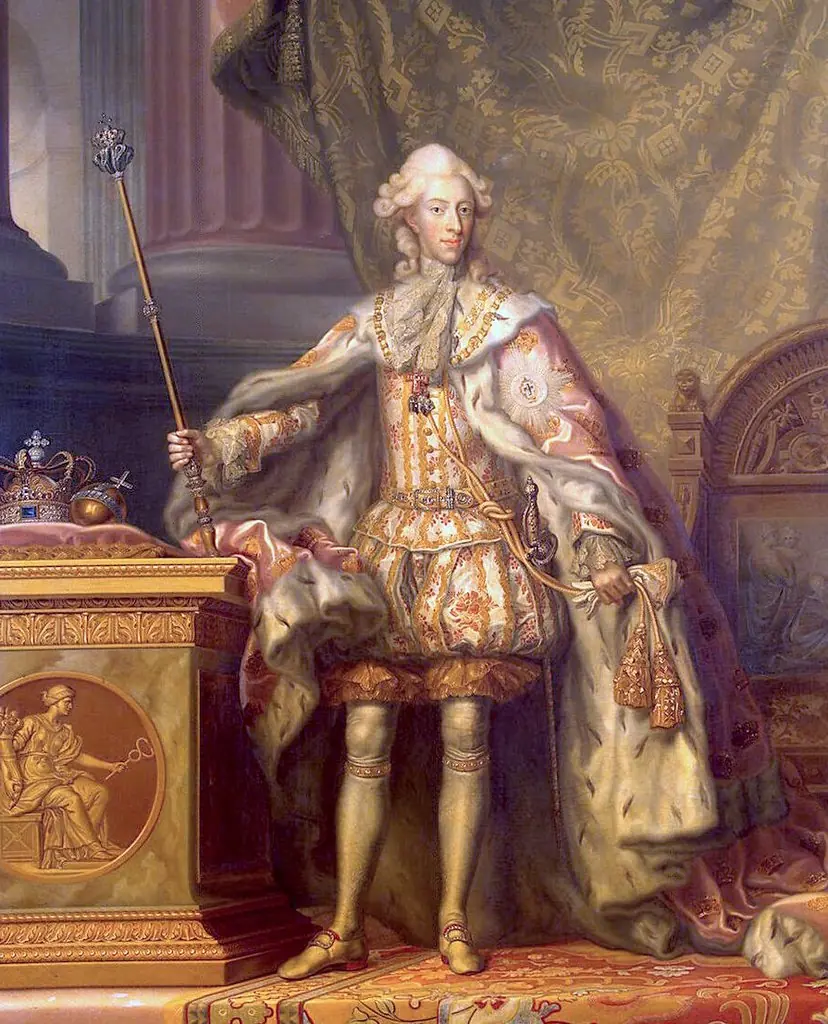
Christian VI is a photography by the Impressionist artist Unknown. It dates from 1870 and is held in the collection of the Statens Museum for Kunst.
About this work
Overview
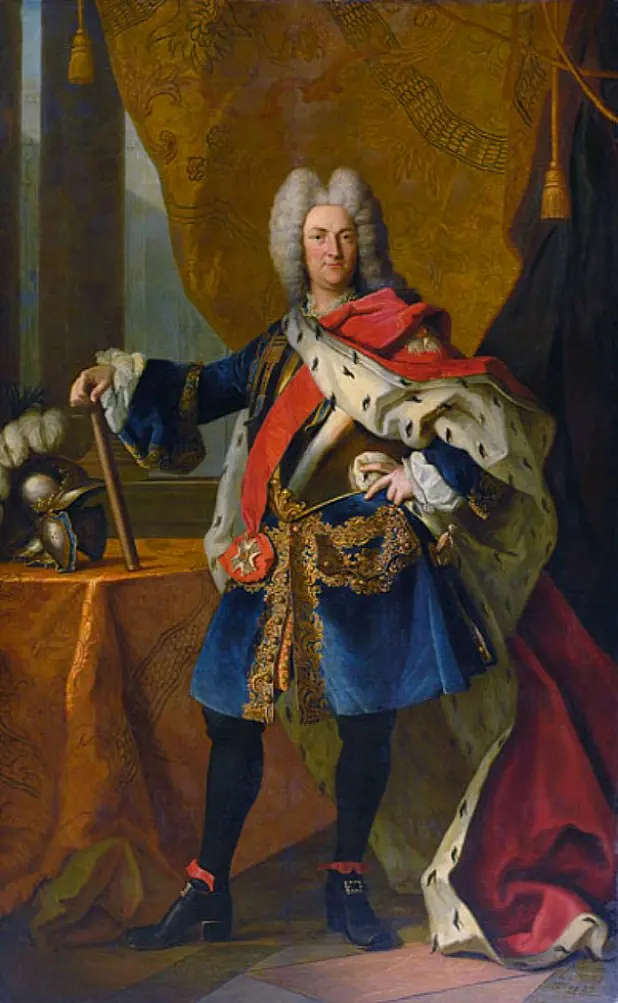
This portrait depicts Christian VI, King of Denmark and Norway, rendered in a formal photographic style from 1870. Though created long after his reign, the image deliberately evokes the visual language of 18th-century royal portraiture. It is held in the collection of the Museum of Ethnography, where it functions as a historical artifact rather than a contemporary likeness.
Subject & Meaning
Christian VI is portrayed in full regalia: a buttoned velvet cape, a powdered wig, a ceremonial sash, and a sword at his side. The rolled document suggests authority and governance. The pose and attire are not literal representations of his appearance but symbolic reconstructions meant to reinforce monarchical dignity and continuity, aligning the king with ideals of sovereign power.
Technique & Style
The photograph employs controlled lighting and a static composition typical of 19th-century studio portraiture. Deep shadows and even illumination model the fabric and features with precision, mimicking the chiaroscuro effects of painted royal portraits. The backdrop, with its dark walls and distant window, enhances the sense of solemnity and spatial depth without distraction.
History & Provenance
Created in 1870, the image was produced decades after Christian VI’s death in 1746. It likely served as a historical reconstruction for educational or ceremonial use, possibly commissioned by the museum or a cultural institution seeking to visualize Denmark’s monarchical past. Its presence in an ethnographic collection reflects an interest in material culture and symbolic dress.
Context
In the late 19th century, European museums increasingly collected and reconstructed royal imagery to document national heritage. This portrait aligns with broader efforts to visually codify monarchy through costume and pose, even when based on limited historical evidence. The photograph bridges the gap between historical memory and emerging photographic technology.
Legacy
The image remains a reference for understanding how 19th-century institutions interpreted and reimagined earlier eras of power. It illustrates the use of photography not merely to record, but to reconstruct identity and authority. Its preservation in an ethnographic context underscores its role as a cultural artifact shaped by later historical consciousness.
Artist & collection

 Domestic Scene
 Giacomo and Cardinal Marco, investing Andrea, Abbot of San Zeno, with his Benefice
 The Nymph of Fontainebleau
 Portrait of a Woman
 Madonna and Child with Saints in the Enclosed Garden
 Venus and Minerva
 Family Group of Four on Sofa
 Wall painting from Room H of the Villa of P. Fannius Synistor at Boscoreale