Artwork
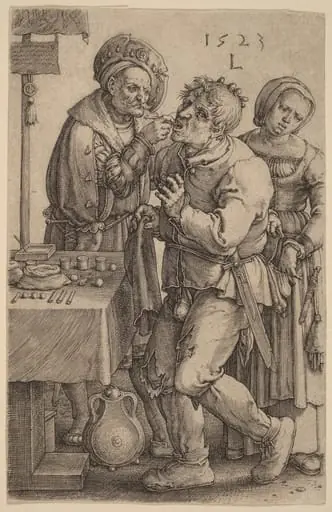
A Surgeon Operating on a Peasant
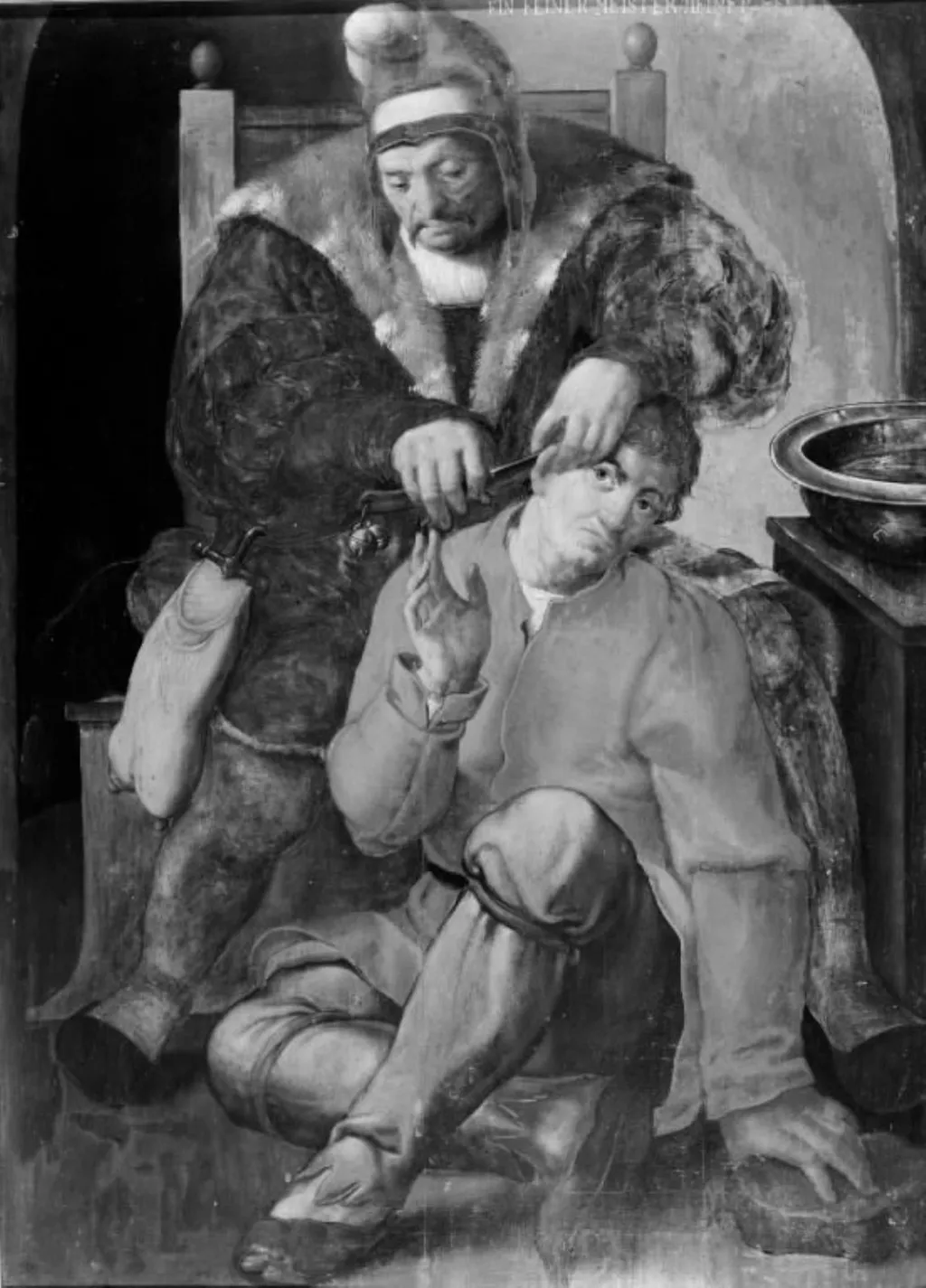
A Surgeon Operating on a Peasant is a photography by Unknown. It dates from 1550 and is held in the collection of the Statens Museum for Kunst. Created around 1550, this image depicts a medical procedure performed on a peasant in a modest interior setting.
About this work
Overview
Created around 1550, this image depicts a medical procedure performed on a peasant in a modest interior setting.
Created around 1550, this image depicts a medical procedure performed on a peasant in a modest interior setting. The work is attributed to an anonymous artist and is preserved in the Museum of Ethnography. Rendered in monochrome, the scene captures a moment of intimate, unflinching care, emphasizing the physical and emotional tension between the two figures through stark contrasts of light and shadow.
Subject & Meaning
The image portrays a barber-surgeon performing a procedure—possibly bloodletting or a minor surgical intervention—on a seated peasant. The subject’s tense expression and the surgeon’s focused posture suggest a moment of vulnerability and authority. The scene reflects the limited medical access of rural populations and the manual, often painful, nature of early surgical practice outside elite institutions.
Technique & Style
The artist employs chiaroscuro to heighten emotional intensity, directing a sharp light onto the surgeon’s hands and the patient’s face while plunging the background into deep shadow. The lack of color focuses attention on texture and gesture: the tension in the seated man’s neck, the precision of the kneeling figure’s movements. The composition is tightly framed, eliminating distraction and reinforcing the intimacy of the act.
History & Provenance
The work’s origins are undocumented, but its style and subject align with 16th-century Northern European depictions of everyday medical practice. It entered the Museum of Ethnography’s collection in the early 20th century, likely acquired as an ethnographic record rather than a fine art object. Its survival suggests it was valued for its documentary quality, even if its authorship remains unknown.
Context
In mid-16th-century Europe, surgical care for peasants was often administered by barber-surgeons, who combined grooming with minor medical procedures. This image reflects a time before formal medical training became widespread, when such interventions occurred in domestic or makeshift settings. The presence of a simple bowl and curtain hints at the rudimentary conditions under which care was delivered.
Legacy
Though not widely exhibited as fine art, the image endures as a quiet testament to pre-modern medical practice. It contributes to historical understanding of how healthcare was experienced by marginalized communities. Its unembellished realism offers a counterpoint to idealized depictions of medicine, preserving the dignity and discomfort of ordinary encounters with the body.
Artist & collection

 Domestic Scene
 Giacomo and Cardinal Marco, investing Andrea, Abbot of San Zeno, with his Benefice
 The Nymph of Fontainebleau
 Portrait of a Woman
 Madonna and Child with Saints in the Enclosed Garden
 Venus and Minerva
 Family Group of Four on Sofa
 Wall painting from Room H of the Villa of P. Fannius Synistor at Boscoreale