Artwork
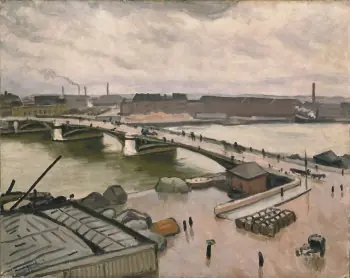
Quai de Paris at Rouen. Rainy Weather
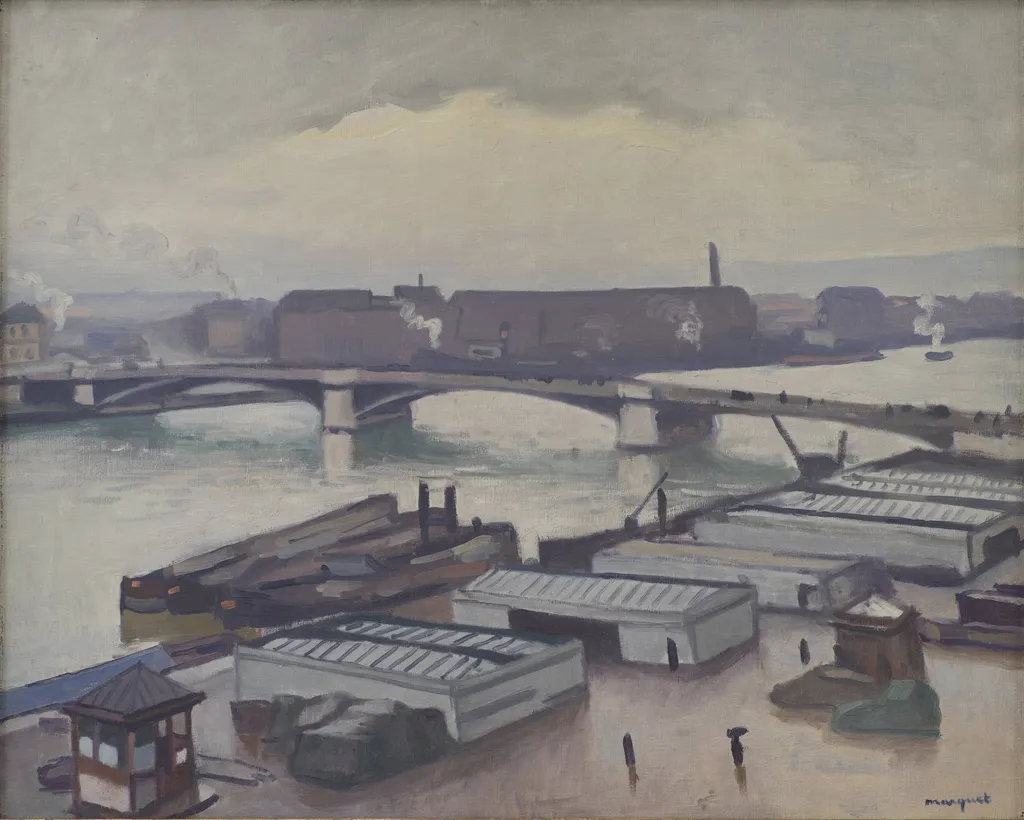
Quai de Paris at Rouen. Rainy Weather is a photography by Unknown. It dates from 1912 and is held in the collection of the Statens Museum for Kunst. Quai de Paris at Rouen.
About this work
Overview
The painting captures the atmosphere of a overcast day, with rain softening the edges of buildings, water, and sky.
Quai de Paris at Rouen. Rainy Weather, dated around 1912, depicts a quiet riverside scene in the French city of Rouen. The painting captures the atmosphere of a overcast day, with rain softening the edges of buildings, water, and sky. It is part of a small group of works by the artist focused on urban landscapes under changing weather conditions, and is currently held in the collection of the Museum of Ethnography.
Subject & Meaning
The scene centers on the Quai de Paris, a riverside promenade along the Seine, with a bridge spanning the water and a few moored boats visible. The absence of figures emphasizes solitude and stillness. The rain and gray sky suggest a moment of pause, not narrative drama. The painting conveys the quiet rhythm of daily life in a provincial port, observed with detachment rather than sentiment.
Technique & Style
The artist employed loose, blended brushwork to suggest the wet sheen of pavement and the ripple of rain on water. Colors are subdued—ochres, grays, and muted blues—reinforcing the overcast mood. There is no sharp definition; forms dissolve slightly at the edges, evoking the diffused light of a rainy day. The technique prioritizes atmosphere over detail, aligning with late Impressionist and early modernist tendencies.
History & Provenance
The painting was likely completed during a period when the artist frequently visited Rouen, drawn to its industrial riverfront and shifting light. It entered the Museum of Ethnography’s collection in the mid-20th century, possibly through a donation or acquisition of regional works. Its placement in an ethnographic context, rather than a fine arts museum, suggests an early interest in documenting everyday urban life as cultural record.
Context
Created in the years before World War I, the work reflects a broader European interest in capturing transient urban environments. While contemporaries like Monet painted Rouen’s cathedral under varying light, this artist turned attention to the quieter, less monumental riverbanks. The focus on weather and ordinary infrastructure aligns with a growing trend toward intimate, non-heroic depictions of modern life.
Legacy
Though not widely exhibited or reproduced, the painting contributes to a lesser-known strand of early 20th-century French painting that valued mood over monumentality. Its presence in an ethnographic museum underscores its role as a document of place and atmosphere. Later scholars have cited it as an example of how regional artists responded to modernity through subtle, observational realism.
Artist & collection

 Domestic Scene
 Giacomo and Cardinal Marco, investing Andrea, Abbot of San Zeno, with his Benefice
 The Nymph of Fontainebleau
 Portrait of a Woman
 Madonna and Child with Saints in the Enclosed Garden
 Venus and Minerva
 Family Group of Four on Sofa
 Wall painting from Room H of the Villa of P. Fannius Synistor at Boscoreale