Artwork
A Scholar
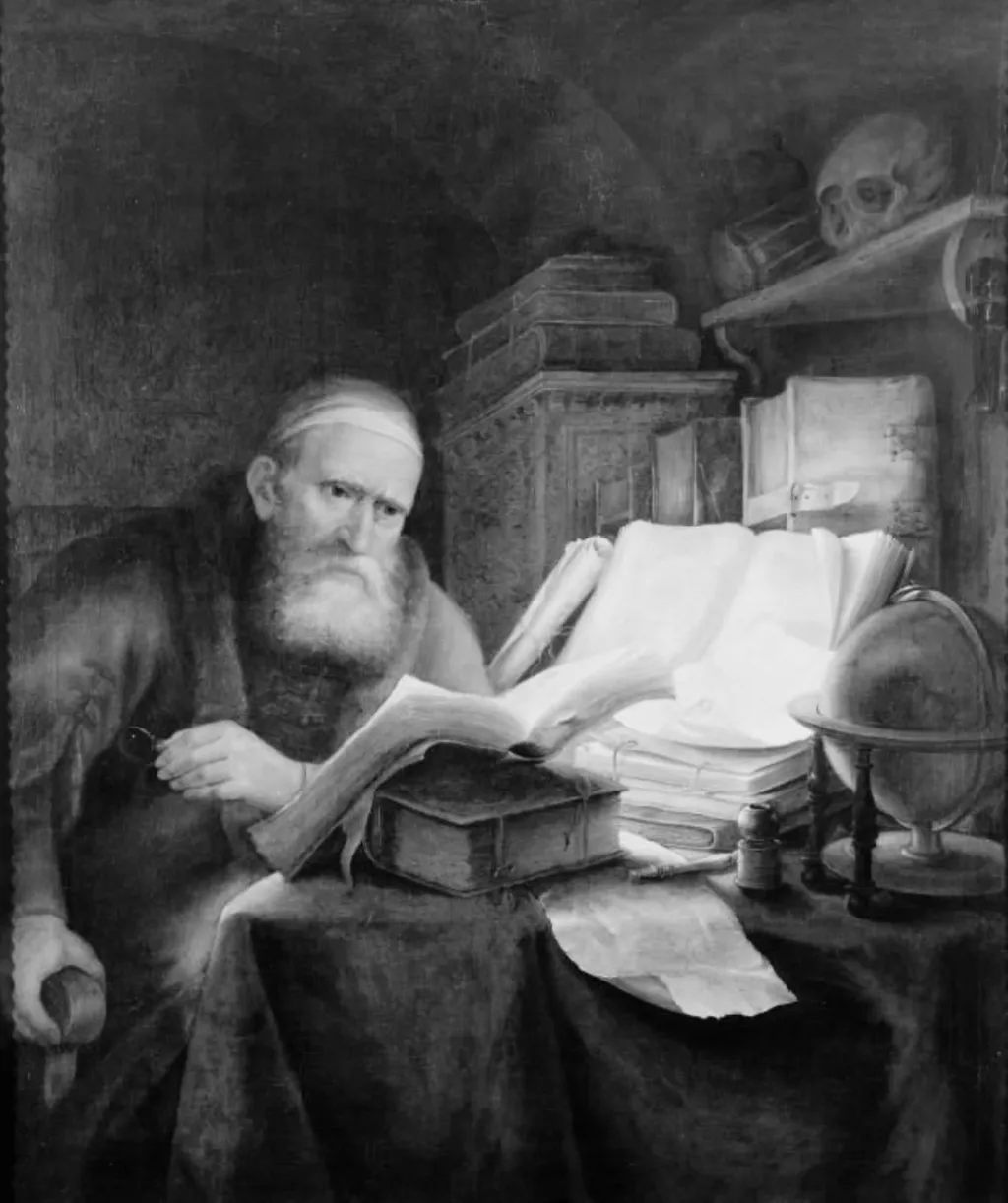
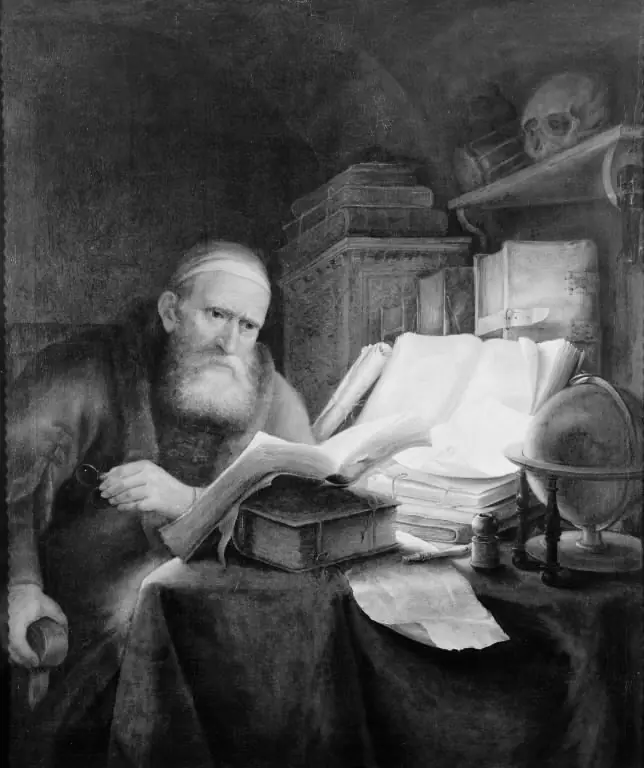
A Scholar is a photography by the Baroque artist Unknown. It dates from 1643 and is held in the collection of the Statens Museum for Kunst. Created in 1643, this black-and-white image depicts a bearded scholar seated at a desk, engrossed in reading.
About this work
Overview
The composition is rendered with high contrast lighting, emphasizing the figure’s face and hands against a dark, undefined background.
Created in 1643, this black-and-white image depicts a bearded scholar seated at a desk, engrossed in reading. The composition is rendered with high contrast lighting, emphasizing the figure’s face and hands against a dark, undefined background. Objects on the desk and shelf—books, a globe, and a skull—suggest themes of learning and mortality. The work is held in the collection of the Museum of Ethnography, though its original context remains unclear.
Subject & Meaning
The figure represents an intellectual engaged in solitary study, surrounded by symbols of human knowledge and its limits. The open book signifies active inquiry, while the globe points to global awareness or cosmology. The skull, a traditional memento mori, introduces a contemplative tension between intellectual pursuit and the inevitability of death. Together, these elements frame the scholar as both seeker and mortal.
Technique & Style
The image employs strong chiaroscuro, a hallmark of Baroque visual language, using sharp contrasts between light and shadow to model form and direct attention. The dramatic illumination isolates the scholar’s features and hands, enhancing emotional intensity. The cluttered desk and background are rendered with minimal detail, focusing the viewer’s gaze on the central figure and his symbolic surroundings.
History & Provenance
The work was produced in 1643 by an artist identified only as 896_person, whose broader oeuvre is not well documented. It entered the Museum of Ethnography’s collection at an unknown date, likely through acquisition or donation. Its origins as a standalone image or part of a larger series remain unverified, and no contemporary records confirm its initial purpose or patronage.
Context
In mid-17th-century Europe, depictions of scholars in private study were common, reflecting growing reverence for learning and the rise of humanist ideals. The inclusion of symbolic objects like the skull and globe aligns with broader cultural preoccupations with time, knowledge, and the transient nature of life. Though this image lacks a clear geographic origin, its visual language resonates with Northern European traditions of introspective portraiture.
Legacy
This image endures as a quiet example of how visual symbolism was used to convey philosophical ideas in early modern visual culture. While not widely reproduced or studied, it contributes to the understanding of how scholarly identity was visually constructed during a period of intellectual transformation. Its preservation in an ethnographic museum suggests its value as a cultural artifact beyond artistic merit.
Artist & collection

 Domestic Scene
 Giacomo and Cardinal Marco, investing Andrea, Abbot of San Zeno, with his Benefice
 The Nymph of Fontainebleau
 Portrait of a Woman
 Madonna and Child with Saints in the Enclosed Garden
 Venus and Minerva
 Family Group of Four on Sofa
 Wall painting from Room H of the Villa of P. Fannius Synistor at Boscoreale