Artwork
A Poulterer
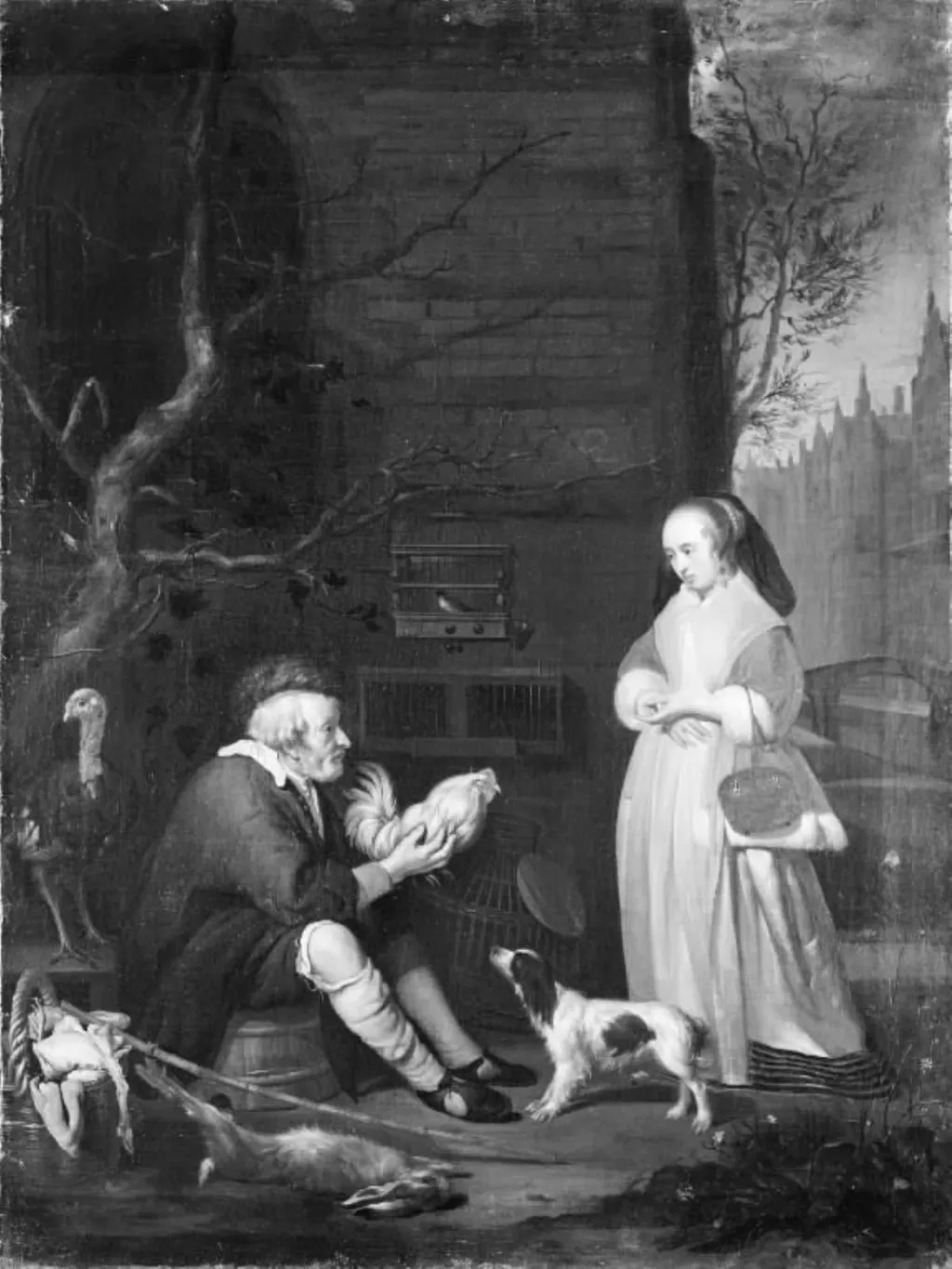
A Poulterer is a photography by Unknown. It dates from 1750 and is held in the collection of the Statens Museum for Kunst.
About this work
Overview
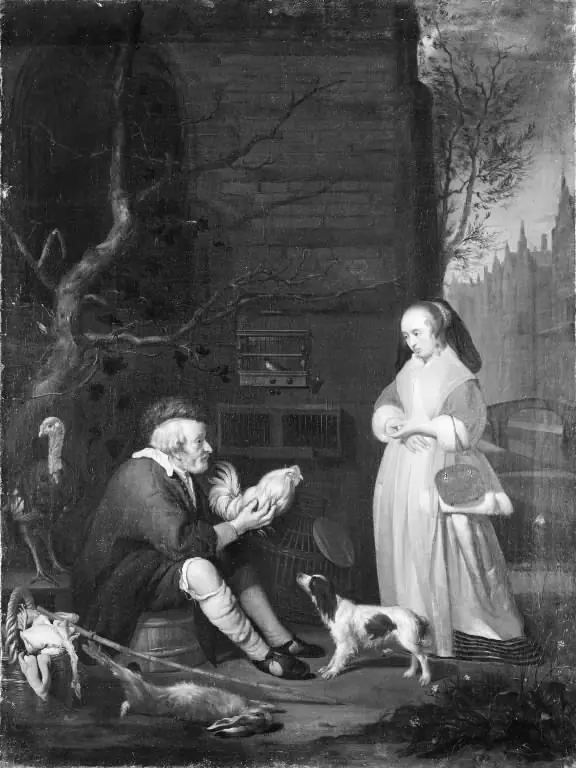
The scene captures a moment of quiet commerce: the man kneels with a bird in his hands, a dog at his side, while a woman stands nearby holding a basket.
Created around 1750, this black-and-white image depicts a poulterer—a dealer in poultry—at work in a modest interior. The scene captures a moment of quiet commerce: the man kneels with a bird in his hands, a dog at his side, while a woman stands nearby holding a basket. The setting, marked by rough stone walls and a window with a birdcage, suggests a functional space rather than a formal shop. The image is held in the collection of the Museum of Ethnography.
Subject & Meaning
The figure of the poulterer is portrayed not as a caricature but as a figure of quiet dignity in his trade. His gentle handling of the bird implies care and expertise, reinforcing his role as a supplier of live fowl. The presence of the dog and the woman suggests domestic continuity within the work environment. The turkey on the floor and the caged bird nearby indicate the variety of stock, grounding the scene in the everyday economics of food provision in the 18th century.
Technique & Style
The image employs strong chiaroscuro, with sharp contrasts between light and shadow defining form and depth. This lighting draws attention to the man’s hands and the bird, emphasizing tactile interaction and material texture. The rough stone walls and coarse fabrics are rendered with minimal detail, focusing attention on the figures and their gestures. The monochrome palette enhances the sense of realism and temporal distance, aligning the work with documentary traditions of the period.
History & Provenance
The origin of the image is undocumented beyond its approximate date and current location. It was likely produced as a study or record of daily life, possibly by an artist or artisan interested in social types. It entered the Museum of Ethnography’s collection in the 19th or early 20th century, where it was preserved as an example of pre-industrial labor practices. No artist is credited, and no earlier provenance is publicly recorded.
Context
In mid-18th-century Europe, poulterers were common figures in urban markets, supplying households with chickens, ducks, geese, and turkeys. This image reflects a time before centralized meat distribution, when such trades were intimate and localized. The domestic setting—part workshop, part home—mirrors the blending of commerce and daily life in pre-industrial towns, where trade often occurred within the family unit.
Legacy
The image survives as a quiet testament to the uncelebrated labor of food provision in the 18th century. It offers insight into the material culture and social dynamics of artisanal trades, preserved not as art but as ethnographic evidence. Its value lies in its unembellished depiction of work, offering a counterpoint to the grand narratives of art history and highlighting the dignity of ordinary professions.
Artist & collection

 Domestic Scene
 Giacomo and Cardinal Marco, investing Andrea, Abbot of San Zeno, with his Benefice
 The Nymph of Fontainebleau
 Portrait of a Woman
 Madonna and Child with Saints in the Enclosed Garden
 Venus and Minerva
 Family Group of Four on Sofa
 Wall painting from Room H of the Villa of P. Fannius Synistor at Boscoreale
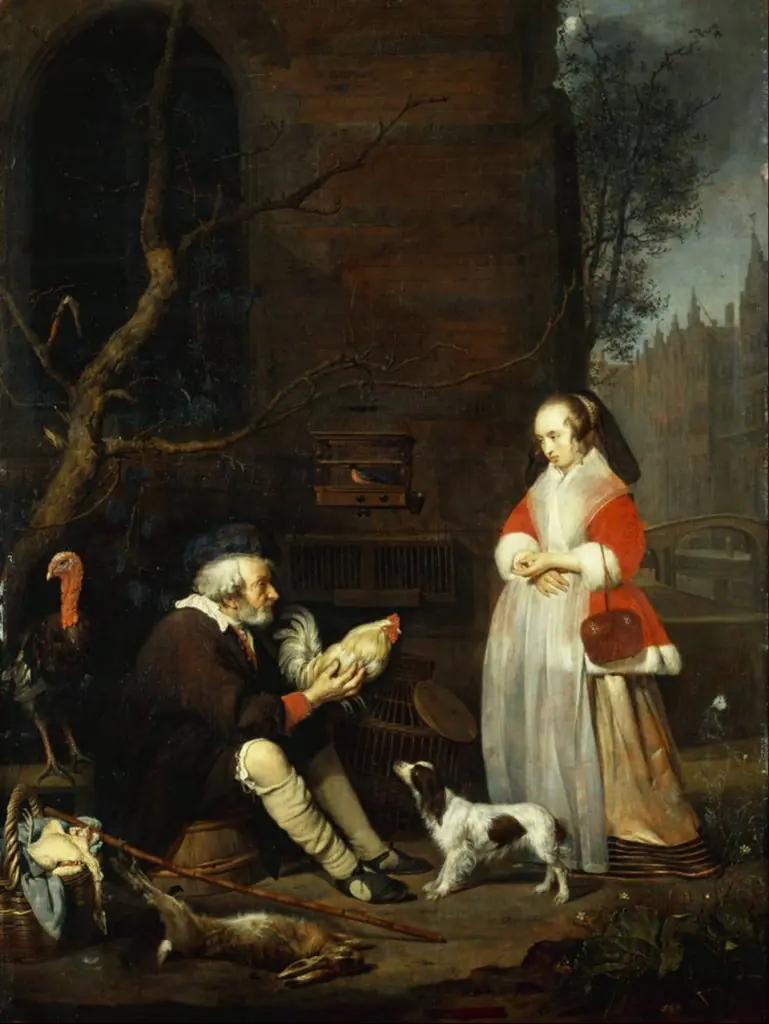 The Poultry Seller
 Young Woman playing the Violin
 Young Woman playing the Violin
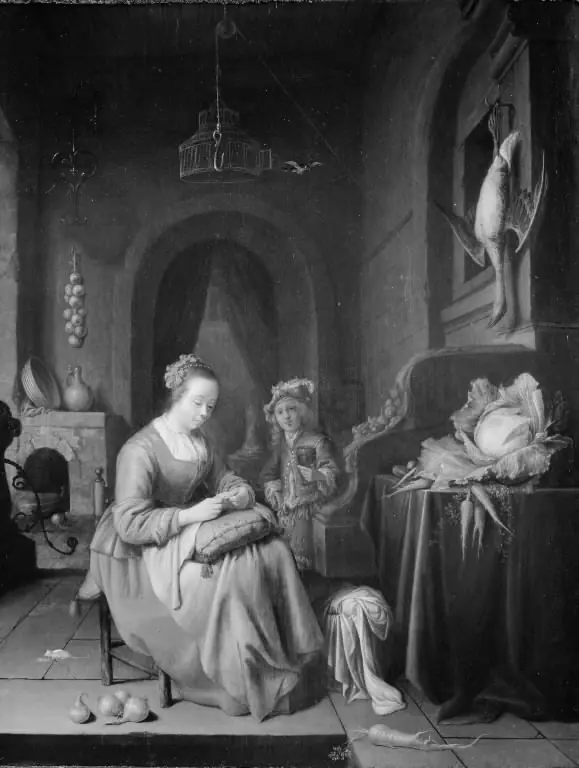 Domestic Scene
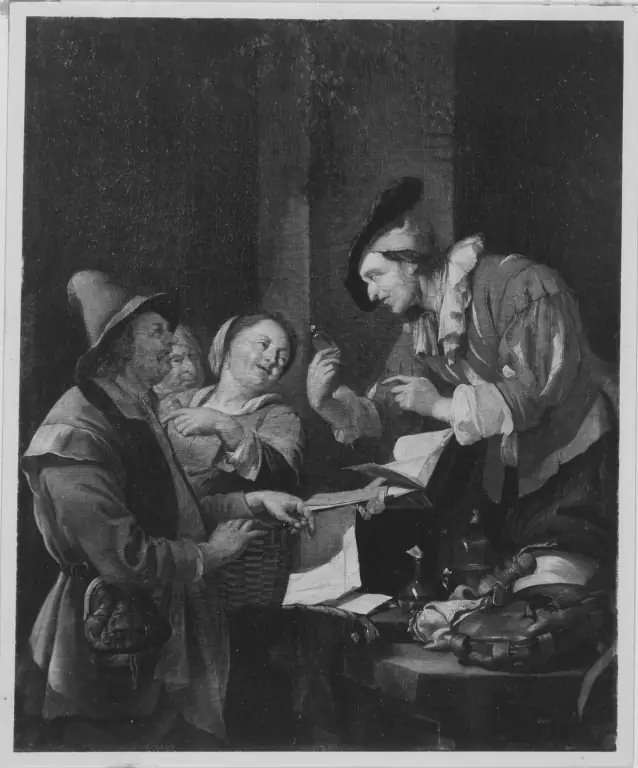 Quacksalber
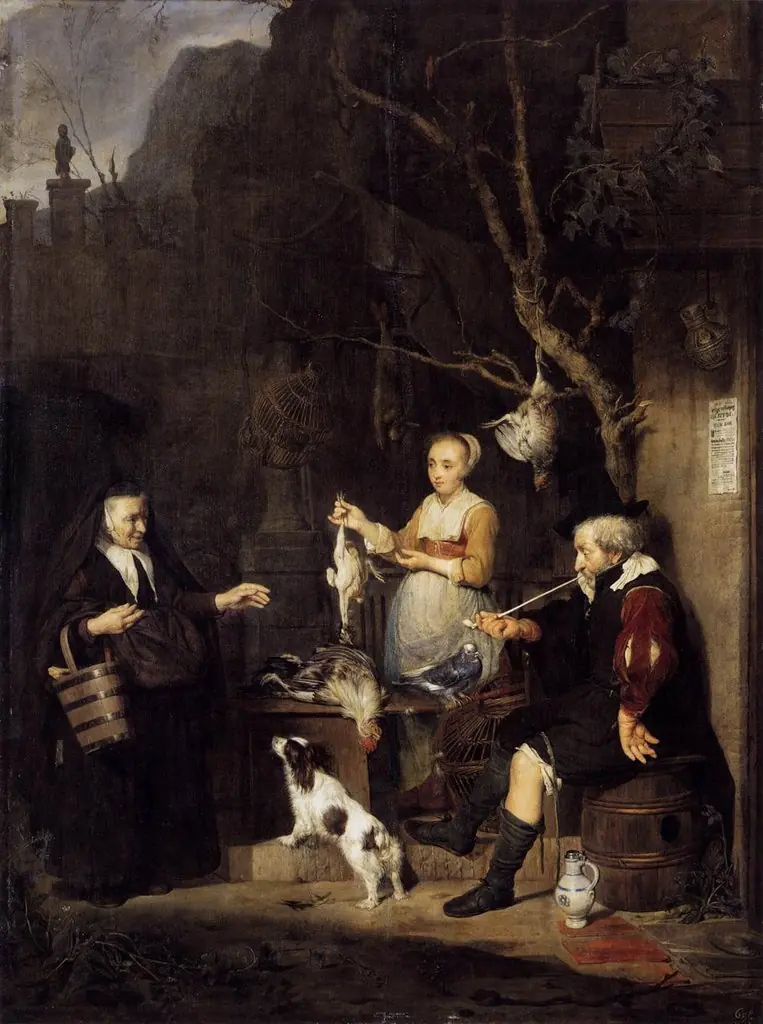 The Young Woman selling Poultry
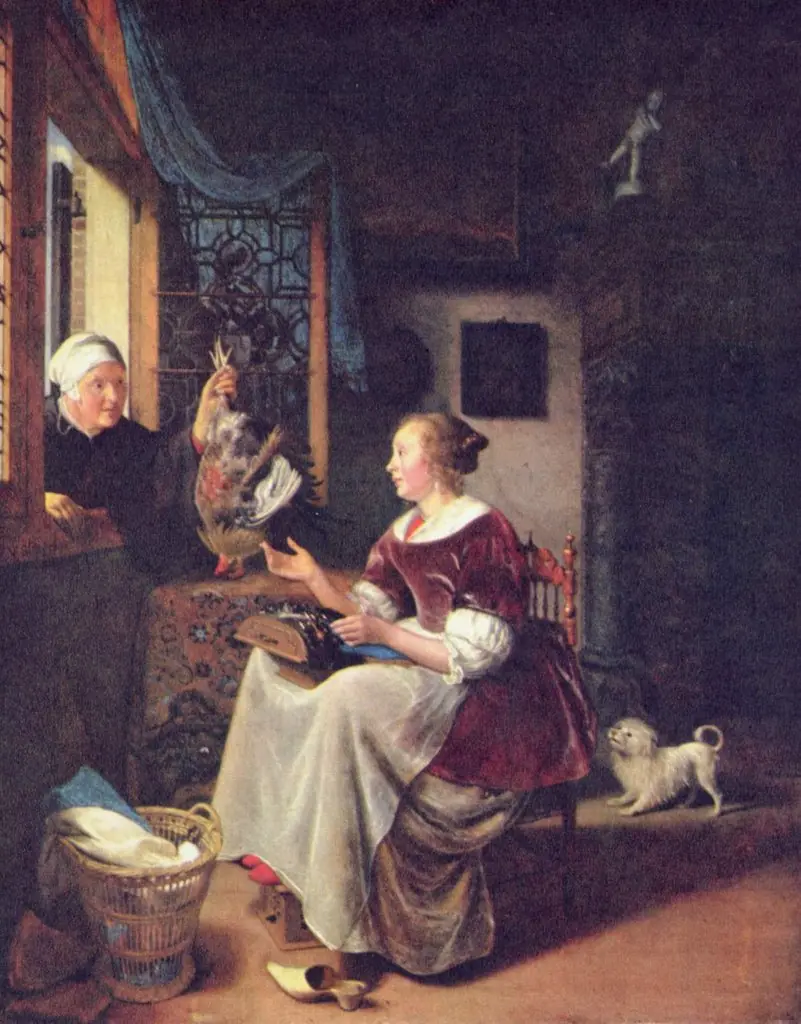 A young lacemaker is interrupted by a birdseller who offers her ware through the window
 Domestic Scene
 Woman Selling Poultry
 Woman Selling Poultry
 A Poulterer
 Music Lesson