Artwork
Music Lesson
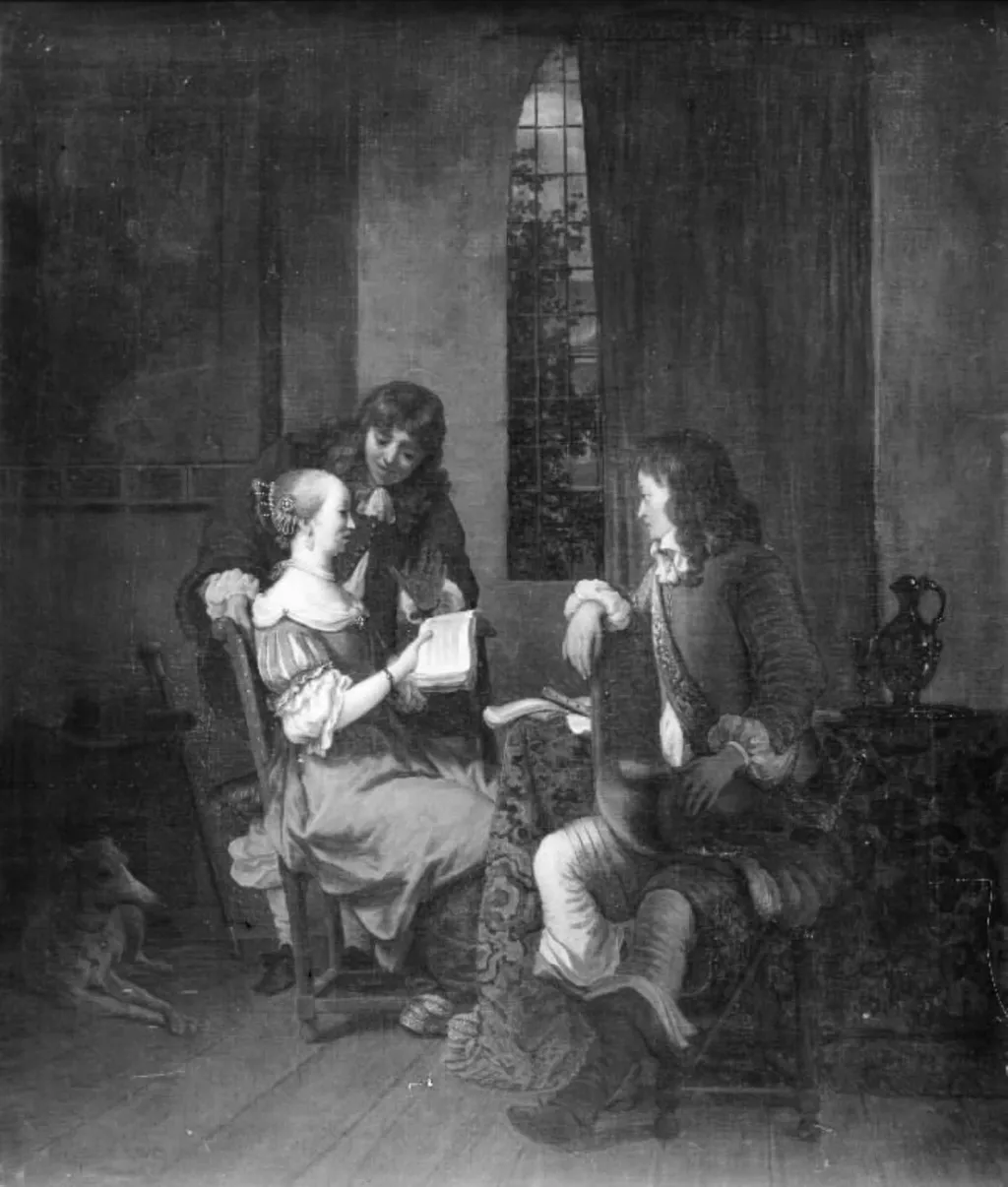
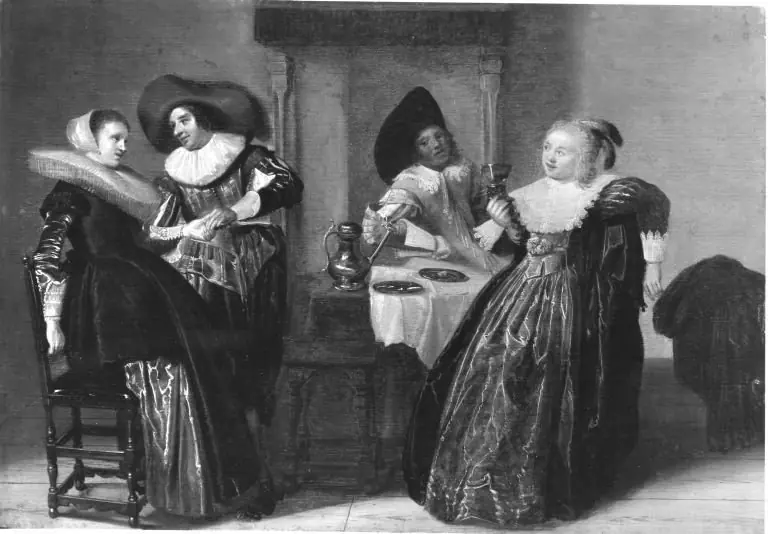
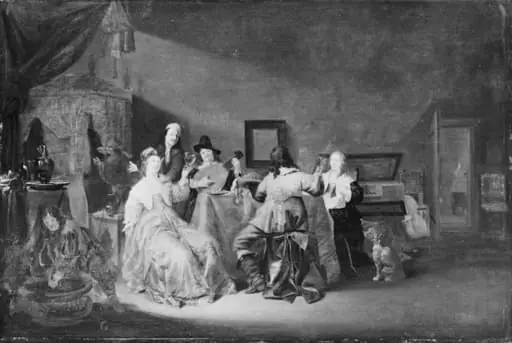
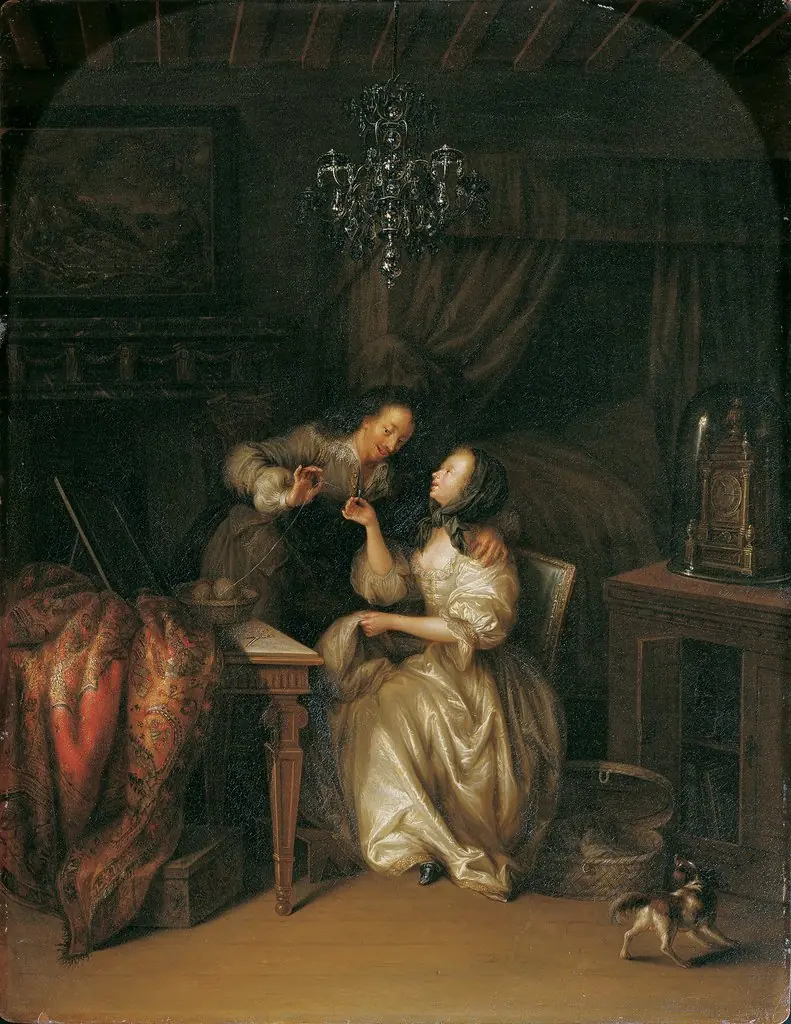
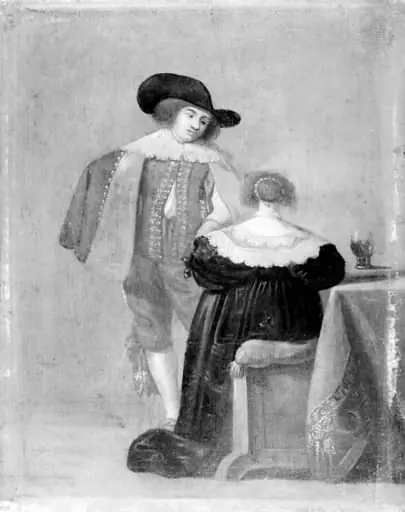
Music Lesson is a photography by the Baroque artist Unknown. It dates from 1655 and is held in the collection of the Statens Museum for Kunst. Painted in 1655, this domestic scene captures a quiet moment of musical instruction within a modest interior.
About this work
Overview
Painted in 1655, this domestic scene captures a quiet moment of musical instruction within a modest interior. The work is rendered in oil on panel, with a restrained palette dominated by earth tones and subtle contrasts of light and shadow. It is currently housed in the Museum of Ethnography, where it is valued for its intimate portrayal of daily life in mid-17th-century Europe.
Subject & Meaning
The composition centers on a woman seated with a child reading aloud, while a man stands near a window, holding a violin. The scene suggests an informal music lesson, blending education and familial routine. The presence of a sleeping dog and the unadorned interior reinforce the authenticity of the moment, reflecting values of quiet domestic harmony rather than theatrical display.
Technique & Style
The artist employs soft, diffused lighting to model forms gently, enhancing the tactile quality of fabrics and wood. Deep shadows anchor the figures within the dim room, while the window provides a subtle source of illumination. Brushwork is precise yet unobtrusive, favoring naturalism over ornamentation, characteristic of Northern European genre painting of the period.
History & Provenance
The painting entered the Museum of Ethnography’s collection in the early 20th century, acquired as part of a broader effort to document everyday life in historical European households. Its attribution to a specific artist remains uncertain, though stylistic elements align with regional traditions of Dutch and Flemish genre scenes from the 1650s.
Context
During the mid-17th century, genre painting flourished in the Low Countries, shifting focus from religious or aristocratic subjects to ordinary domestic activities. This work reflects that trend, portraying music not as performance but as a private, habitual act—consistent with Protestant ideals of modesty and the sanctity of home life.
Legacy
Though not widely reproduced, the painting contributes to scholarly understanding of how music functioned within household routines. Its quiet realism influenced later 19th-century interest in historical domestic scenes and remains a reference point for studies on the social role of music in early modern Europe.
Artist & collection

 Domestic Scene
 Giacomo and Cardinal Marco, investing Andrea, Abbot of San Zeno, with his Benefice
 The Nymph of Fontainebleau
 Portrait of a Woman
 Madonna and Child with Saints in the Enclosed Garden
 Venus and Minerva
 Family Group of Four on Sofa
 Wall painting from Room H of the Villa of P. Fannius Synistor at Boscoreale