Artwork
Boy sleeping on a Skull
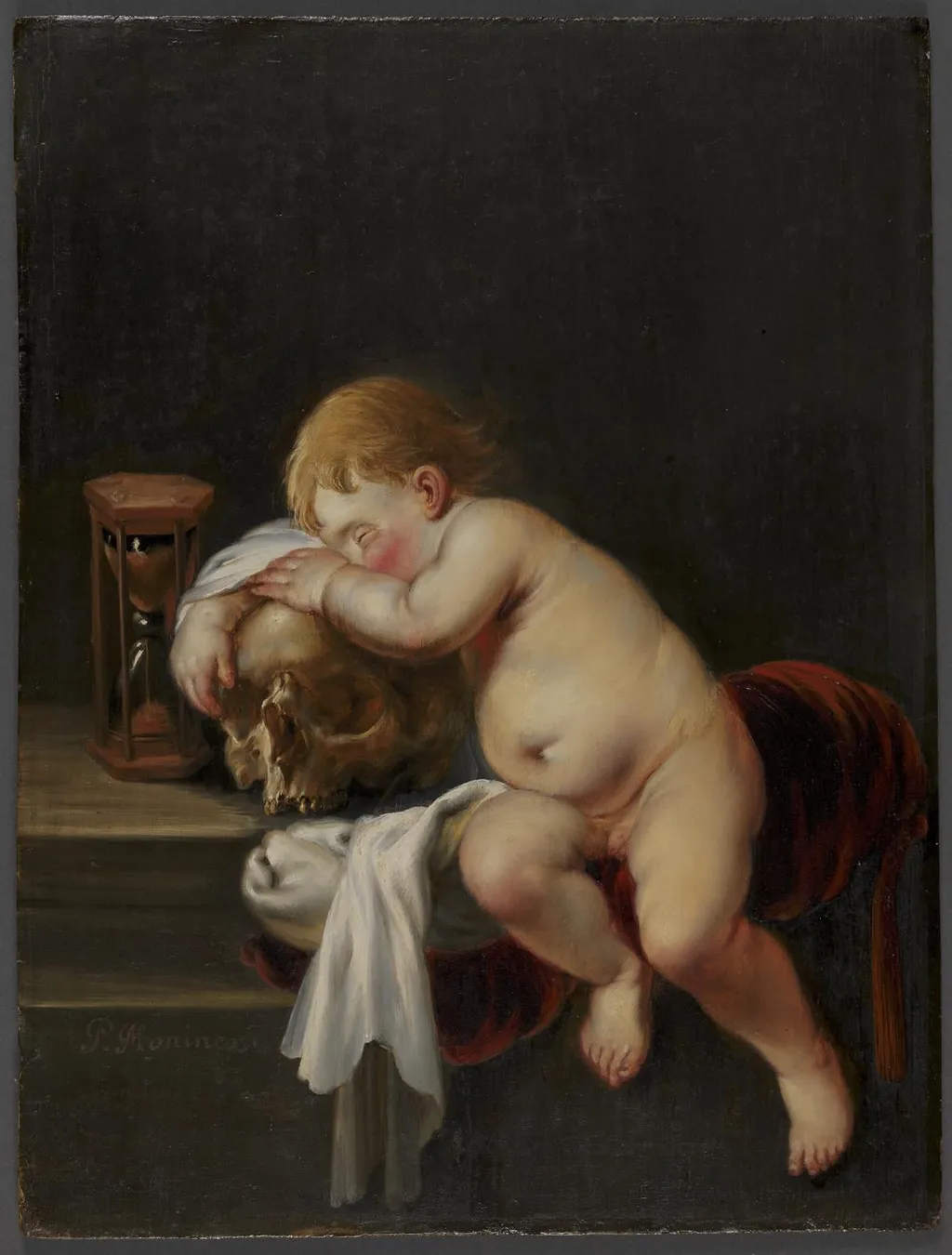
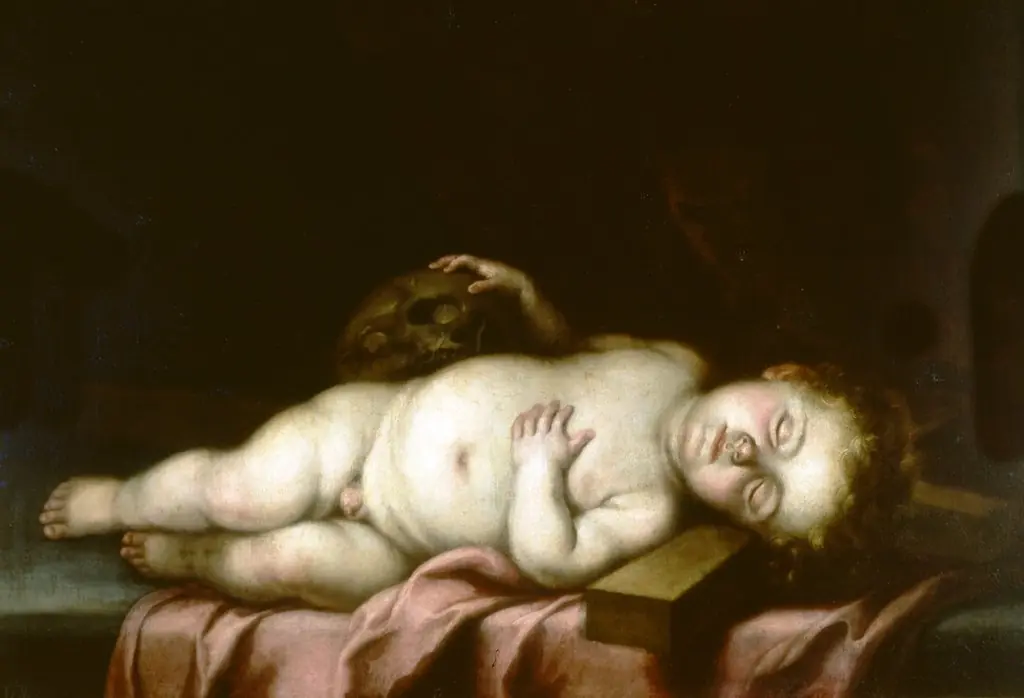
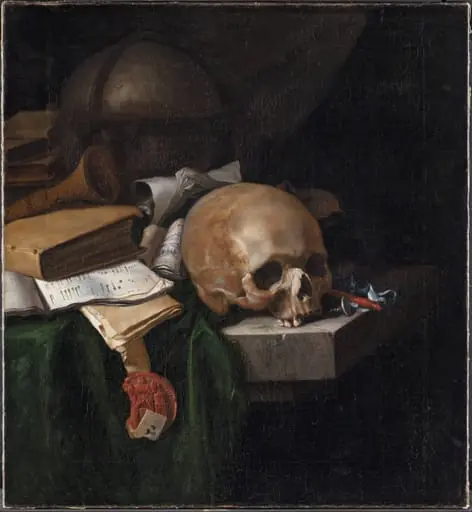
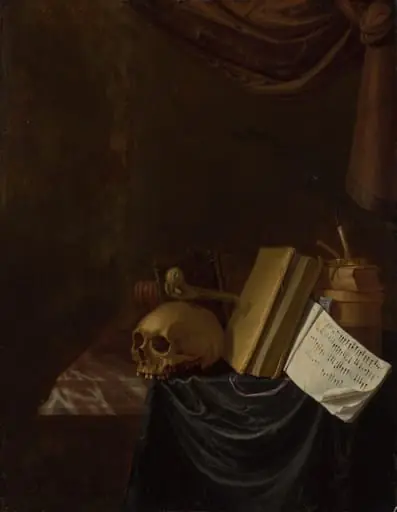
Boy sleeping on a Skull is a photography by Unknown. It dates from 1650 and is held in the collection of the Statens Museum for Kunst. Created around 1650, this painting portrays a nude boy in repose atop a human skull.
About this work
Overview
The composition is minimal yet striking, focusing on the contrast between youthful stillness and the symbol of mortality.
Created around 1650, this painting portrays a nude boy in repose atop a human skull. The composition is minimal yet striking, focusing on the contrast between youthful stillness and the symbol of mortality. The work is held in the collection of the Museum of Ethnography, where it is interpreted as a meditation on transience. Its quiet tone distinguishes it from more overtly dramatic vanitas imagery of the period.
Subject & Meaning
The boy’s serene posture suggests surrender rather than fear, transforming the skull from a warning into a cradle. The presence of an hourglass beside him reinforces the passage of time, but without alarm. The nudity implies vulnerability and purity, while the intimate embrace of the skull blurs the boundary between life and death. The image invites contemplation of peace within impermanence, not dread.
Technique & Style
Chiaroscuro is employed to model the boy’s form with soft, sculptural light, isolating him against a dark background. The contrast enhances the three-dimensionality of the skull and the gentle curve of the body, drawing attention to the tactile quality of skin and bone. Brushwork is restrained, avoiding theatricality; the mood is subdued, emphasizing stillness over drama. The composition is tightly framed, eliminating distractions.
History & Provenance
The painting’s origins remain obscure, with no documented commission or early ownership records. It entered the Museum of Ethnography’s collection in the early 20th century, likely acquired through a broader effort to preserve Northern European moralizing imagery. Its attribution to 941_person is tentative, based on stylistic parallels rather than archival evidence.
Context
Produced during a period when vanitas themes were common in Dutch and Flemish art, this work diverges by omitting traditional symbols like wilting flowers or extinguished candles. Its focus on a solitary child sleeping on a skull suggests a more personal, perhaps introspective approach to mortality. It may reflect broader cultural anxieties about youth, innocence, and the fragility of life.
Legacy
Though not widely reproduced or studied, the painting has influenced later interpretations of childhood and death in visual culture. Its quiet intensity offers an alternative to the moralizing tone of contemporaneous vanitas works. In modern collections, it is often cited for its emotional restraint and the ambiguity of its message, inviting varied readings across generations.
Artist & collection

 Domestic Scene
 Giacomo and Cardinal Marco, investing Andrea, Abbot of San Zeno, with his Benefice
 The Nymph of Fontainebleau
 Portrait of a Woman
 Madonna and Child with Saints in the Enclosed Garden
 Venus and Minerva
 Family Group of Four on Sofa
 Wall painting from Room H of the Villa of P. Fannius Synistor at Boscoreale