Artwork
Two Men at a Gate
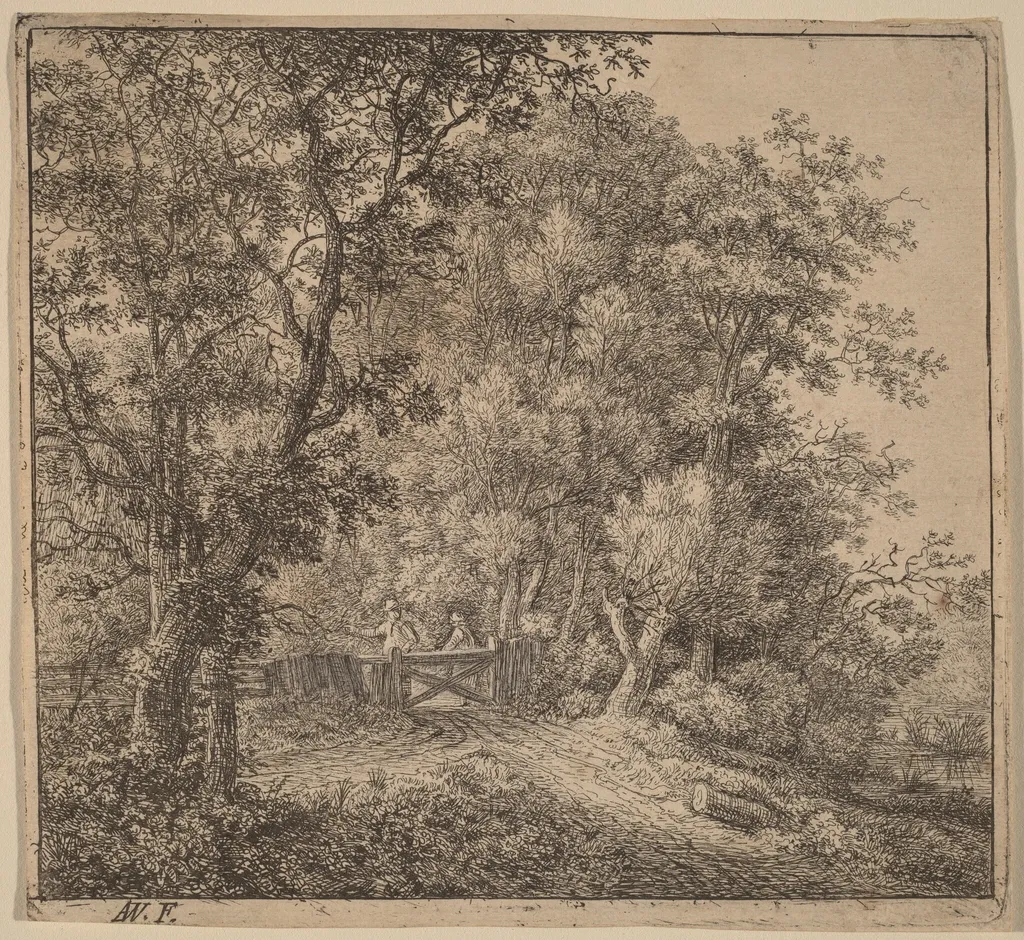
Two Men at a Gate is an ink print by the Baroque artist Antonie Waterloo. It dates from 1650 and is held in the collection of the National Gallery of Art.
About this work
Overview
Two Men at a Gate is an etching executed around 1650 by the Dutch printmaker Anthonie Waterloo. The work measures modestly and is rendered entirely in black ink on paper, presenting a compact scene that invites close inspection. It is held in the collection of the National Gallery of Art in Washington, where it is displayed among other 17th‑century prints.
Subject & Meaning
The composition depicts two diminutive figures positioned beside a wooden gate that opens into a dense, tangled woodland. Thick trunks and interlacing branches dominate the background, while the uneven ground is strewn with low bushes and winding paths. The quiet, shadow‑filled atmosphere suggests a moment of pause or contemplation within an otherwise untamed natural setting.
Technique & Style
Waterloo achieved the intricate foliage and atmospheric depth through fine, closely spaced lines characteristic of the etching process, in which acid incises a metal plate to hold the ink. The delicate hatching creates a sense of three‑dimensionality in the trees and conveys subtle variations of light and shade across the scene, demonstrating the artist’s command of line work and tonal modulation.
History & Provenance
Created in the mid‑17th century, the print reflects the period’s interest in landscape and genre subjects rendered in print form. It entered the National Gallery of Art’s holdings as part of a larger acquisition of Dutch prints, where it remains catalogued as an example of Waterloo’s contribution to the etching tradition of the Dutch Golden Age.
Own this work as a print
Artist & collection

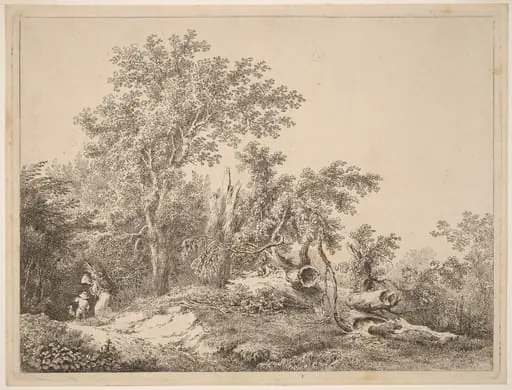 Landscape with Broken Tree
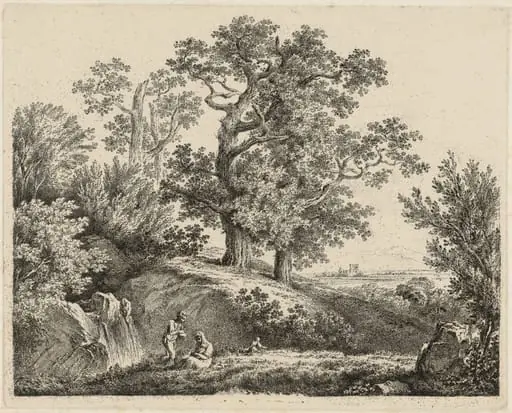 Landscape with a Waterfall and a Resting Family
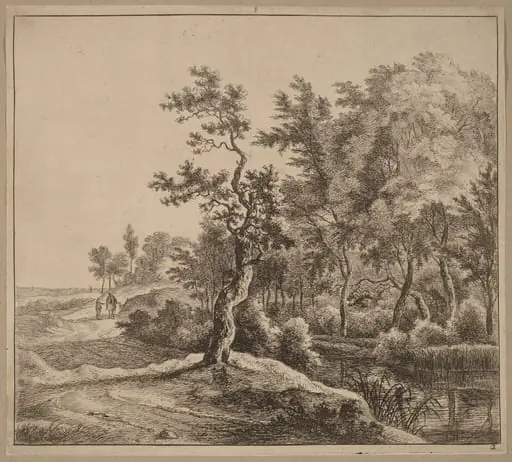 Landscape with a Winding Road
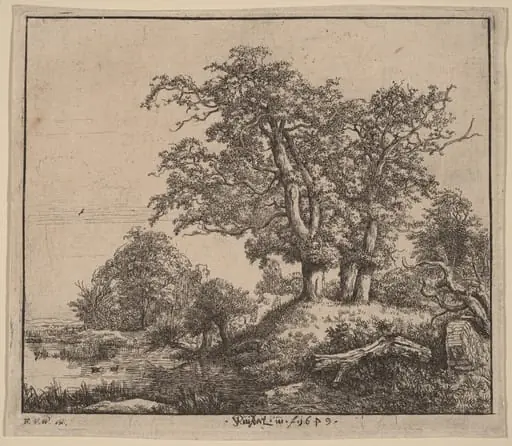 The Three Oaks
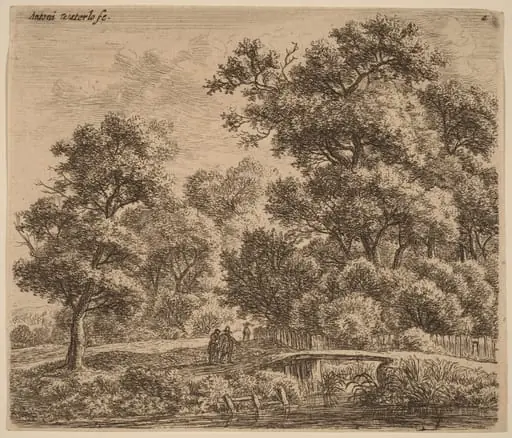 Wooded Landscape with a Bridge
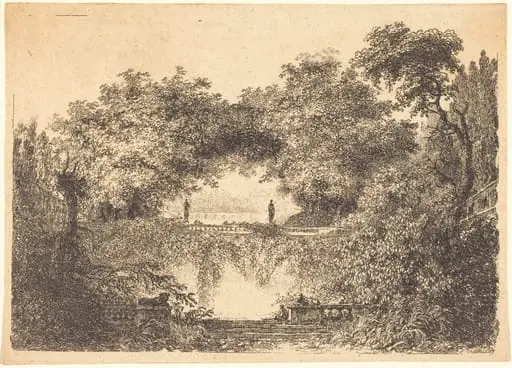 Le Petit Parc
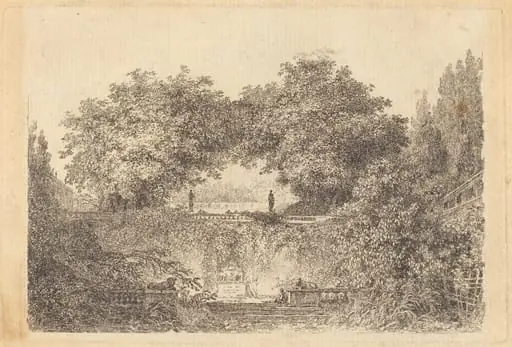 Le Petit Parc
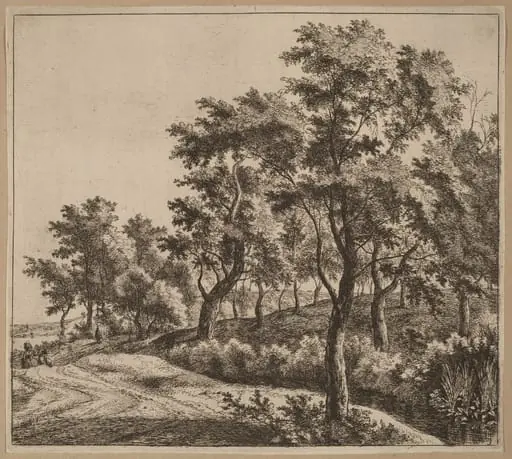 Landscape with a Stream
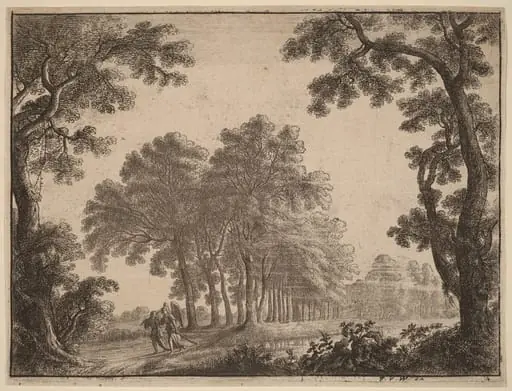 Landscape with Tobias and the Angel
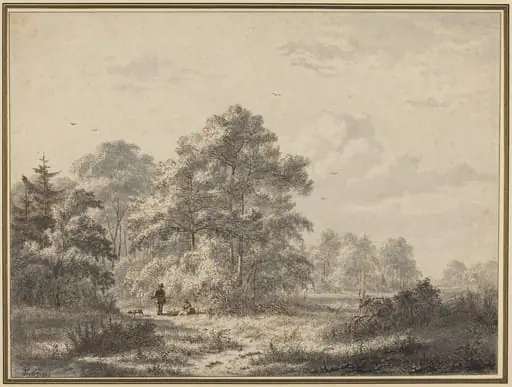 Hunters at the Edge of the Woods
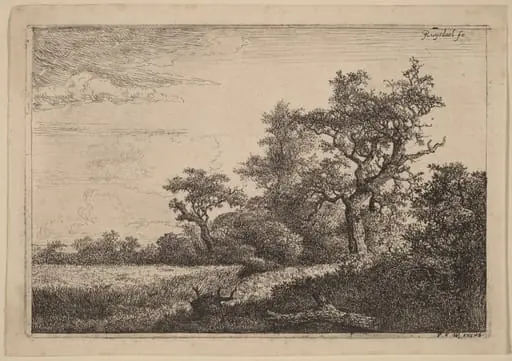 Grain Field at the Edge of a Wood (Corn Field)
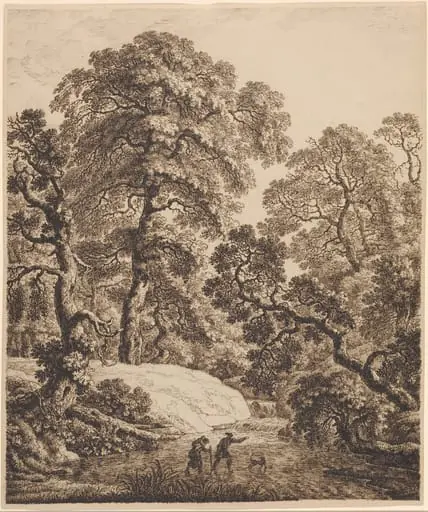 An Oak Forest with a Family of Travelers