Artwork
Bridge and Gate (verso)
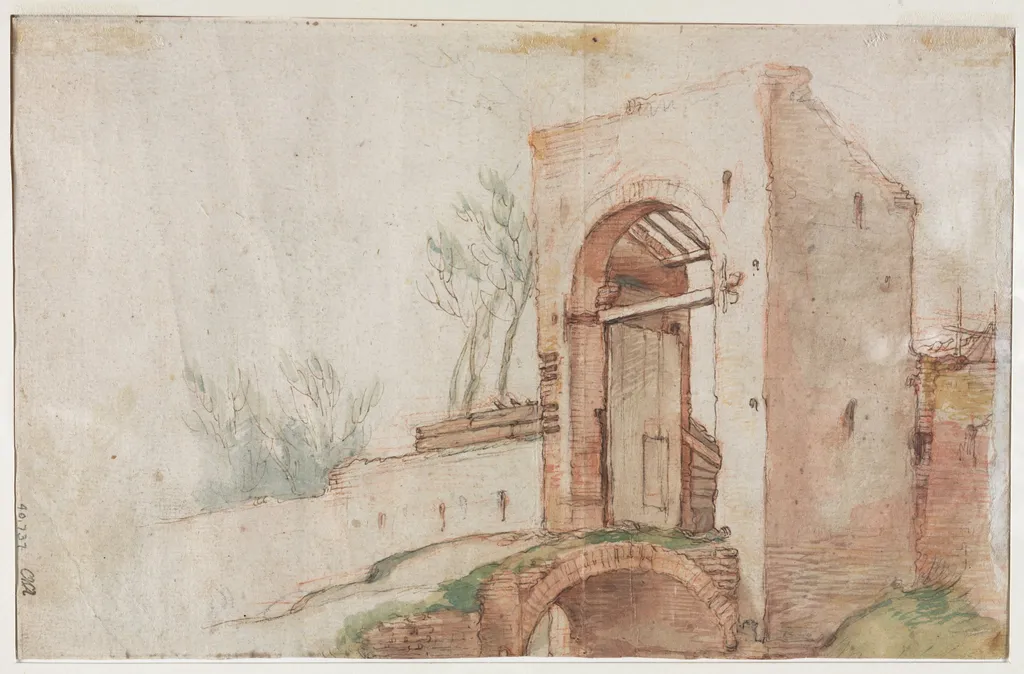
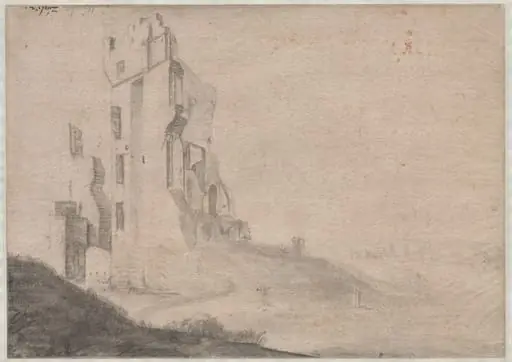
Bridge and Gate (verso) is a drawing by the Baroque artist Abraham Bloemaert. It dates from 1600 and is held in the collection of the Cleveland Museum of Art.
About this work
He worked in Utrecht around 1600, when Dutch artists were just starting to paint everyday places.
This painting shows a low wooden gate and a stone bridge over a quiet stream. The colors are soft and the light feels gentle, like early morning.
Bloemaert often drew landscapes like this. He worked in Utrecht around 1600, when Dutch artists were just starting to paint everyday places. You can almost hear the water trickling under the bridge.
To see more of his work, look up Abraham Bloemaert at The Cleveland Museum of Art.
Overview
Abraham Bloemaert’s drawing titled *Bridge and Gate (verso)* depicts a modest wooden gate and a stone bridge spanning a tranquil stream. The composition is rendered in muted tones, conveying a soft, early‑morning atmosphere that emphasizes the quietness of the scene.
Subject & Meaning
The work presents a slice of everyday Dutch countryside, focusing on ordinary architectural elements—a gate, a bridge, and the surrounding foliage. By portraying such commonplace subjects, Bloemaert aligns with the emerging interest in realistic observation of daily life that characterized early‑17th‑century Dutch art.
Technique & Style
Executed with a fine pen and subtle washes of colour, the drawing demonstrates Bloemaert’s skillful handling of line and his ability to suggest texture, from the grain of the wooden gate to the stonework of the bridge. The delicate coloration adds depth without overwhelming the drawing’s restrained palette.
History & Provenance
Created around 1600 while Bloemaert was active in Utrecht, the piece reflects the artist’s reputation as a prolific draftsman and teacher. Contemporary writer Karel van Mander praised Bloemaert’s landscape drawings for their lifelike detail and tasteful use of colour, a commendation that appears to refer to works such as this one.
Context
During the early 1600s Dutch painters began to turn away from purely religious or mythological subjects, focusing instead on the visual record of their surroundings. Bloemaert’s attention to local scenery and his practice of drawing directly from life place him among the forerunners of this realist turn in Dutch art.
Artist & collection

Artist
Abraham Bloemaert (25 December 1566 – 27 January 1651) was a Dutch painter and printmaker who used etching and engraving.

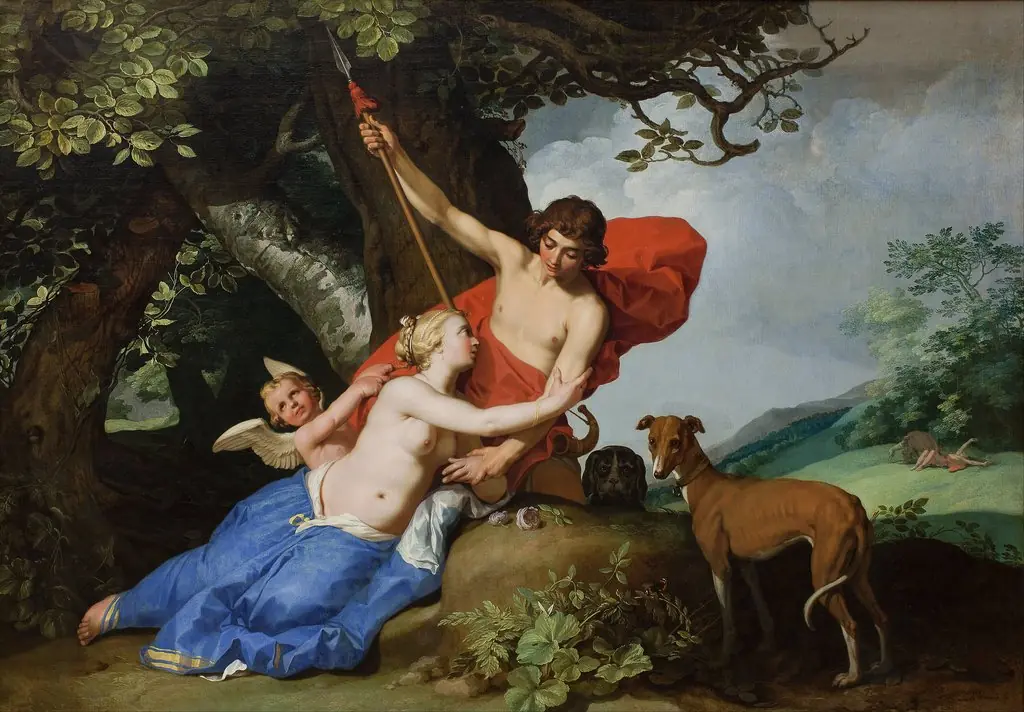
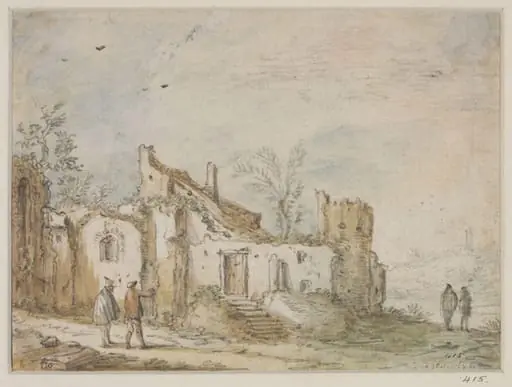 Untitled
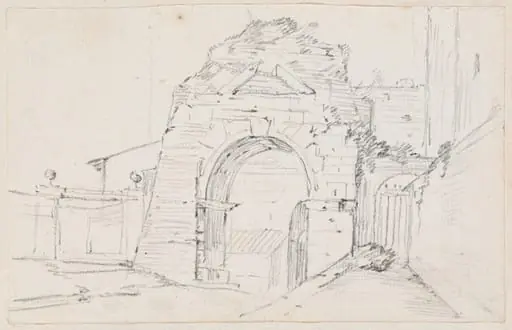 Arch of Drusus near the Appian Way
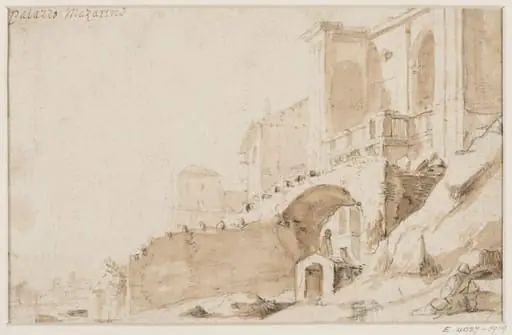 Palazzo Mazzarini, Rome
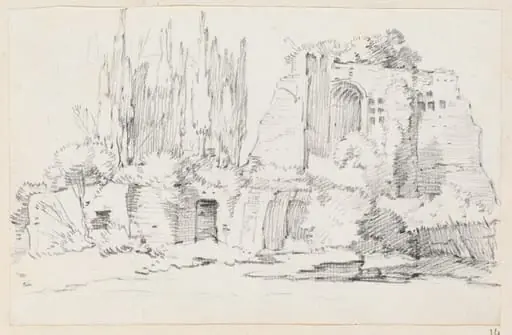 Roman Ruins with a Stand of Cypresses
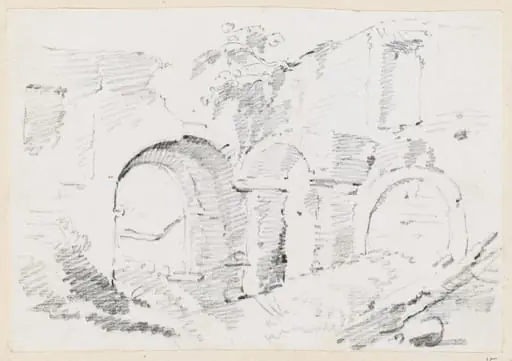 Roman Walls
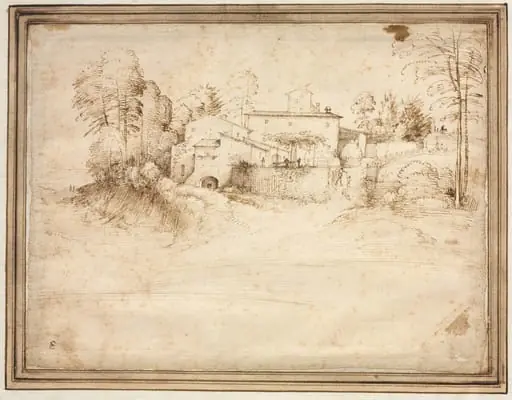 Farmhouse on the Slope of a Hill
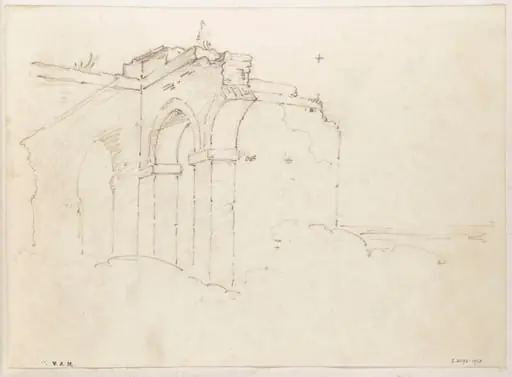 Ruins of an arcaded building
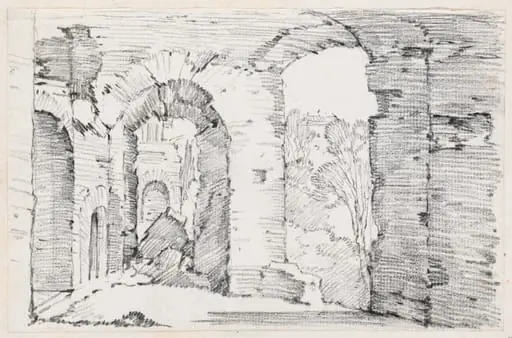 Arched Passageways of a Ruined Building
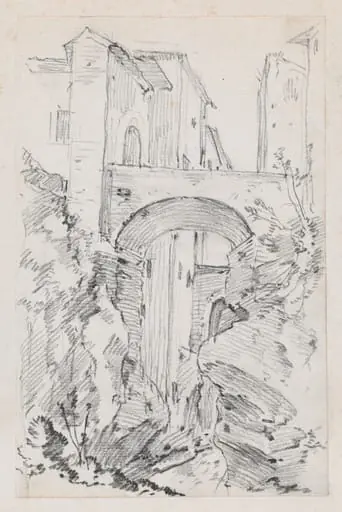 A High Bridge in Tivoli
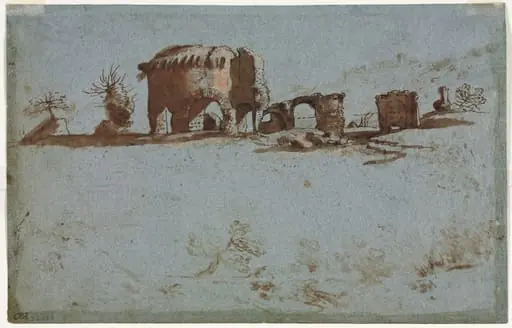 Small Group of Roman Ruins (verso)
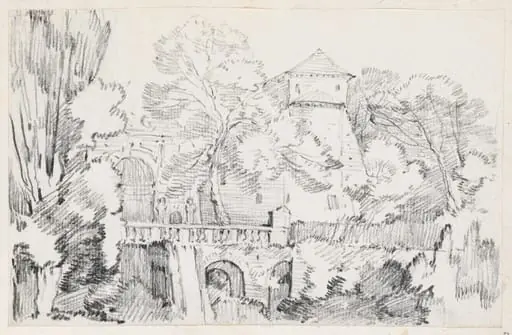 The Water Organ in the Gardens of the Villa d'Este, Tivoli
 Ruin of the huis Ter Kleef near Haarlem