Artwork
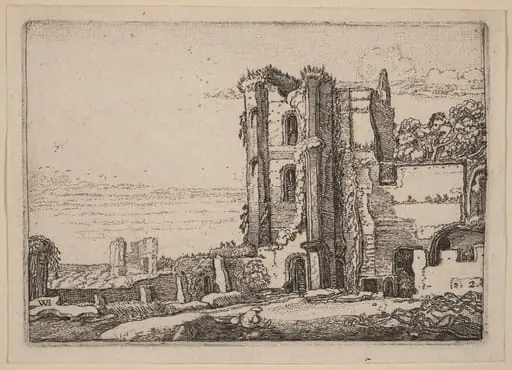
Ruin of the huis Ter Kleef near Haarlem
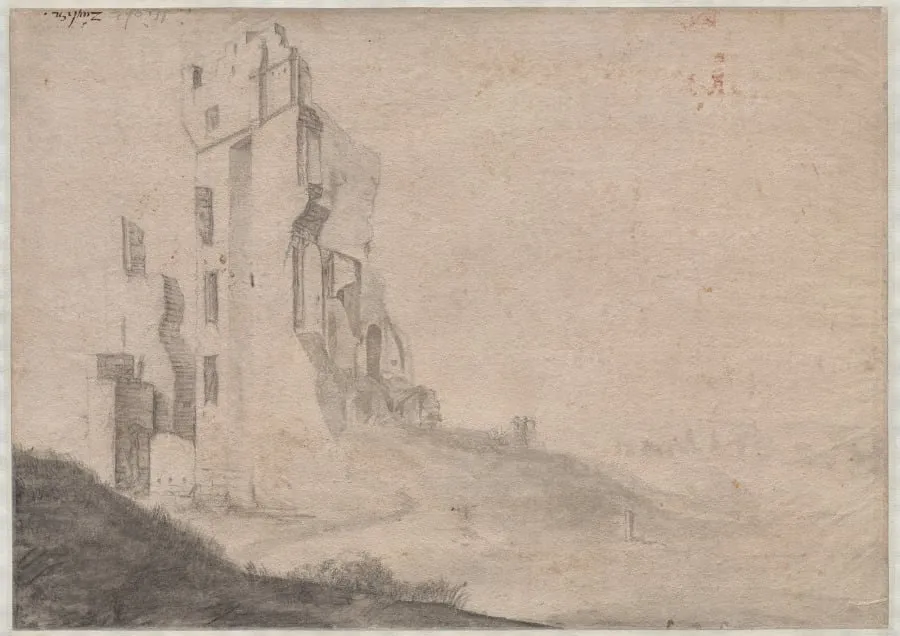
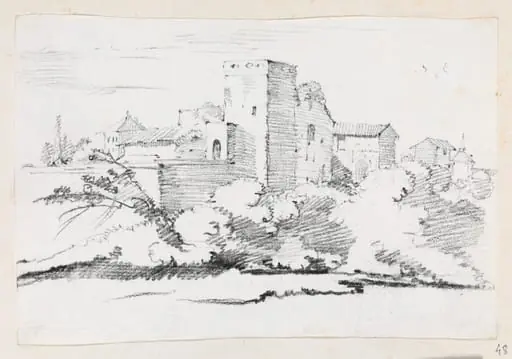
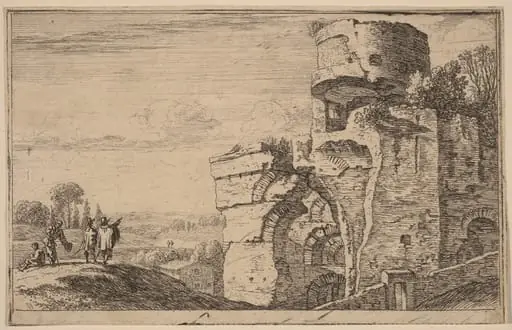
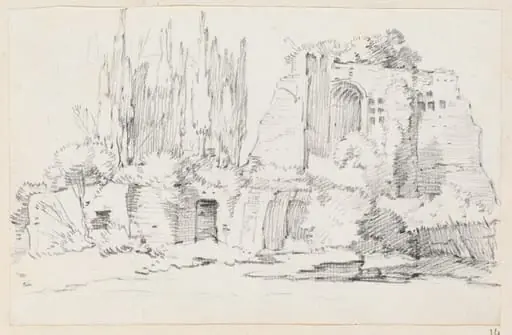
Ruin of the huis Ter Kleef near Haarlem is a drawing by the Baroque artist Roelant Roghman. It dates from 1646 and is held in the collection of the Cleveland Museum of Art. This drawing records the decayed state of the house known as Ter Kleef, situated near Haarlem.
About this work
Overview
This drawing records the decayed state of the house known as Ter Kleef, situated near Haarlem. Executed by Dutch draughtsman Roelant Roghman, it belongs to a series of more than two hundred sketches that document castles, manor houses and fortifications across the Netherlands in the mid‑17th century.
Subject & Meaning
The composition presents the crumbling brick structure, its towers still rising while windows gape empty. Trees and vines encroach upon the walls, emphasizing the passage of time and the impact of conflict on the built environment.
Technique & Style
Roghman worked on large sheets of paper, applying ink washes to render atmospheric tones and charcoal for linear detail. The combination creates deep shadows that convey the texture of stone and foliage, while the on‑site approach preserves the immediacy of the ruin’s appearance.
History & Provenance
The sketches were produced shortly after the conclusion of the Eighty Years’ War, when many fortifications lay in disrepair. Roghman travelled on foot throughout the country, recording each site as he encountered it, without embellishing or restoring the structures.
Context
The series reflects a broader Dutch interest in documenting the nation’s landscape and architecture after the protracted war with Spain. By portraying the ruins in situ, Roghman contributes to a visual record of the country’s recovery and the lingering scars of conflict.
Artist & collection


![Landscape with a Lake [top plate], by Augustin Hirschvogel](https://artifactworldgallery.com/img/augustin-hirschvogel--landscape-with-a-lake-top-plate--e7bf3d066d3912a6-w320.webp)