Artwork
The Prodigal Son: The Feast in Honor of the Prodigal's Return
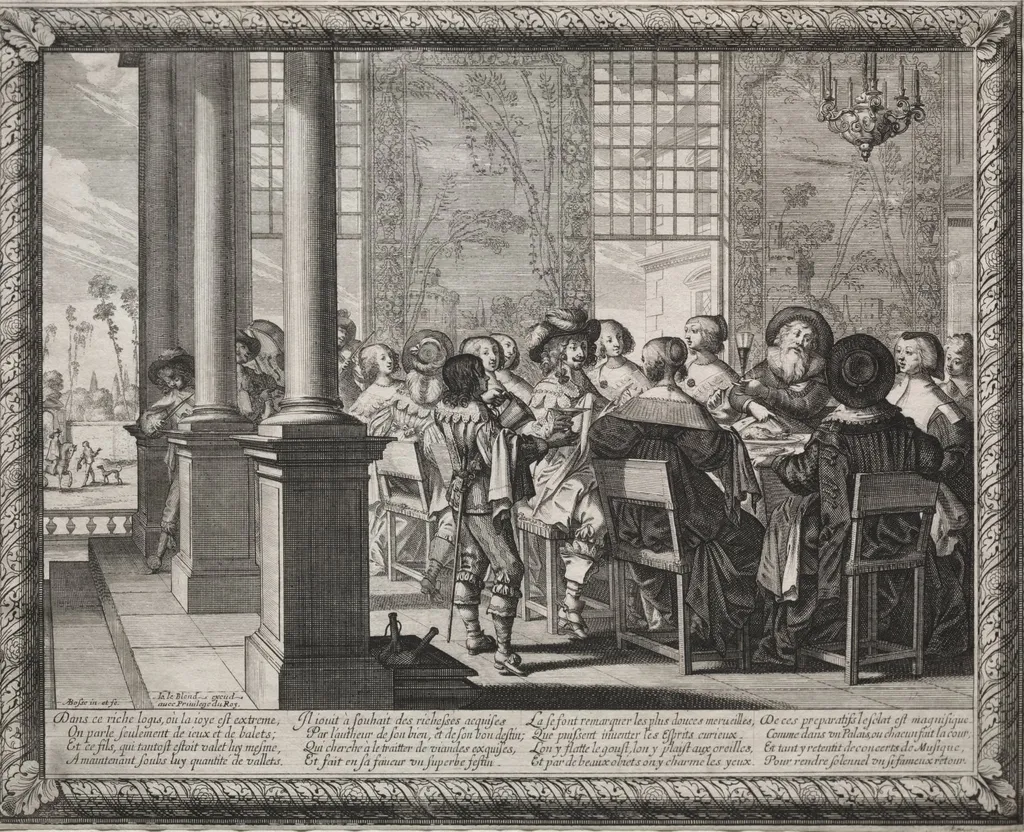
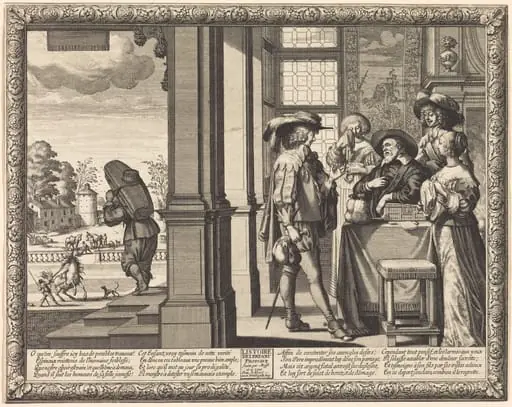
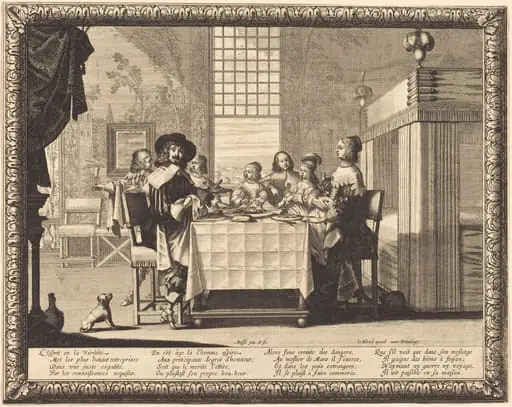
The Prodigal Son: The Feast in Honor of the Prodigal's Return is a print by the Baroque artist Abraham Bosse. It dates from 1635 and is held in the collection of the Cleveland Museum of Art.
About this work
Overview
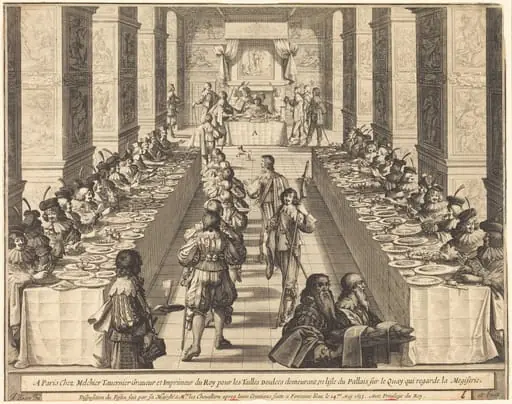
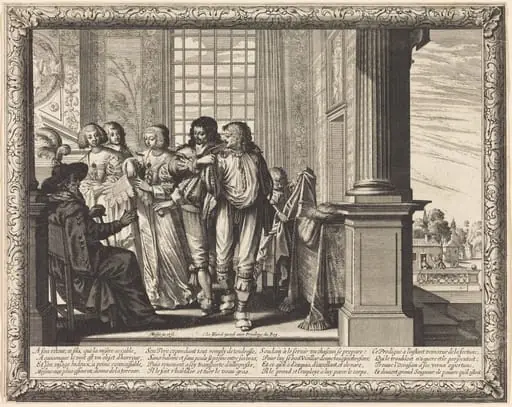
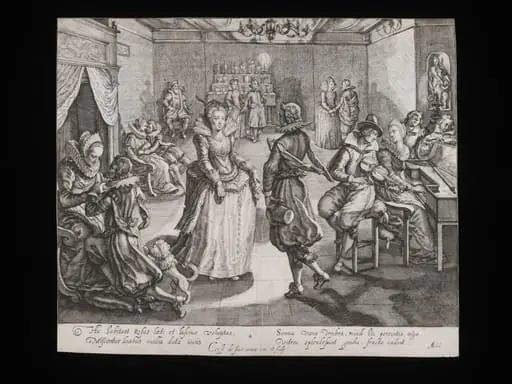
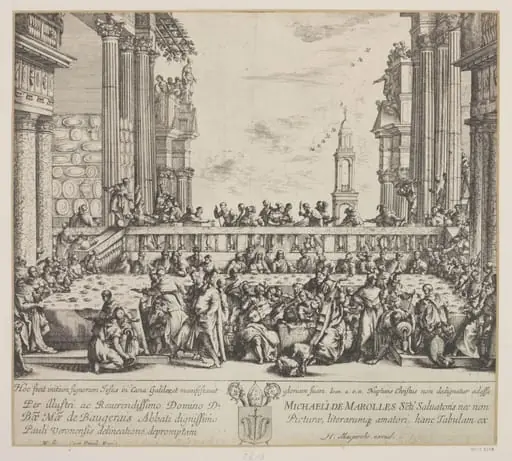
Created in 1635 by French engraver Abraham Bosse, this print illustrates a scene from the biblical parable of the Prodigal Son. Executed in etching and engraving, it captures the moment of the son’s homecoming with a lively interior gathering. The work is part of the collection at The Cleveland Museum of Art, where it is preserved as an example of 17th-century narrative printmaking.
Subject & Meaning
Figures surround a central table, engaged in conversation and music, while the returning son is implied rather than prominently featured.
The scene depicts the father’s celebration of the prodigal son’s return, emphasizing reconciliation over judgment. Figures surround a central table, engaged in conversation and music, while the returning son is implied rather than prominently featured. The presence of a sword held by one figure may allude to past conflict or social status. French inscriptions at the base reinforce the moral narrative of repentance and forgiveness.
Technique & Style
Bosse employed fine-line etching and engraving to render intricate details of clothing, architecture, and expression. The composition is tightly framed within a richly furnished interior, with decorative wall hangings and a distant garden visible through a window. The use of light and shadow, along with precise linework, reflects the influence of Northern European print traditions and the emerging Baroque emphasis on dynamic realism.
History & Provenance
The print was produced during Bosse’s active period in Paris, when he was known for his detailed genre scenes and illustrations of social life. It entered the Cleveland Museum of Art’s collection in the 20th century, likely through a broader acquisition of European prints. Its preservation reflects its value as a document of both religious storytelling and contemporary domestic culture in early modern France.
Context
Bosse’s work emerged in a period when printmaking served as a vehicle for moral and religious instruction among the literate middle class. The Prodigal Son was a popular subject in both visual and textual forms across Europe. This print aligns with contemporary trends in Northern art that favored domestic interiors and human emotion over grand historical or mythological themes.
Legacy
Though not widely reproduced today, Bosse’s print remains a significant example of how biblical narratives were adapted into secular visual culture. His technical precision and attention to social detail influenced later generations of printmakers. The work continues to be studied for its depiction of 17th-century French domestic life and its nuanced treatment of familial themes.
Artist & collection

Artist
Abraham Bosse (c. 1604 – 14 February 1676) was a French artist, mainly as a printmaker in etching, but also in watercolour.