Artwork
Feast in the house of the Rich Man
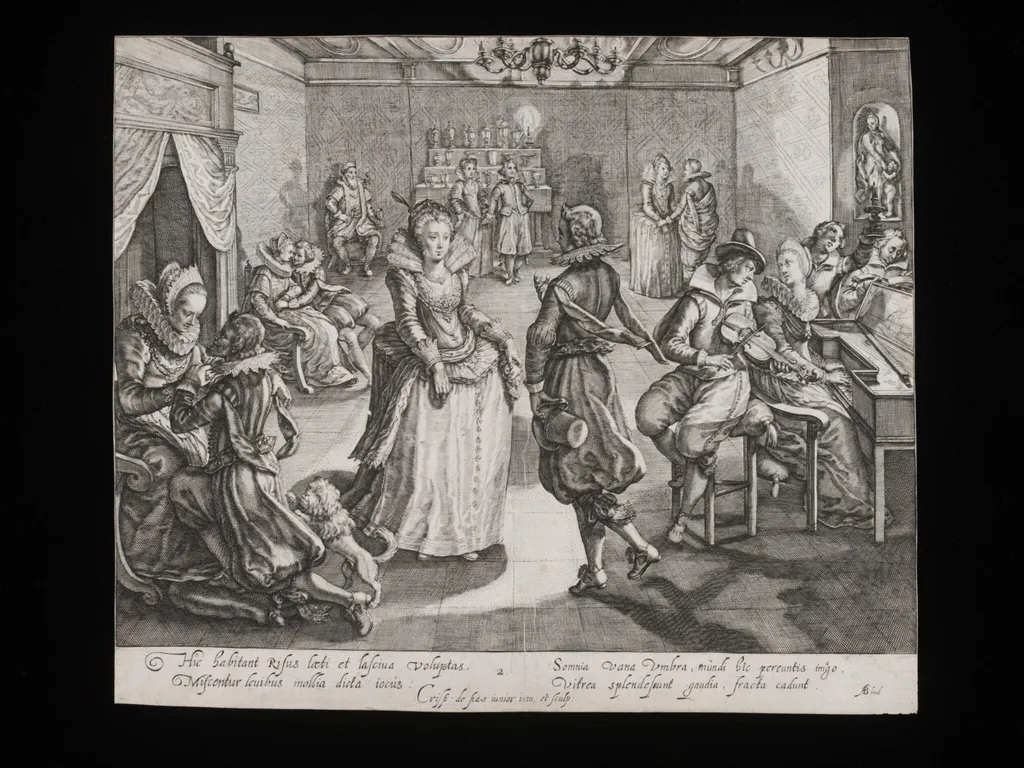
Feast in the house of the Rich Man is a print by the Baroque artist Crispijn de Passe. It dates from 1616 and is held in the collection of the Victoria and Albert Museum.
About this work
It's interesting that the print offers a glimpse into the interior of a rich man's house in the 17th century, with details like music and dancing.
This print shows a scene from the biblical 'Parable of the Bad Rich Man'.
The setting is a sumptuous interior with people dressed fashionably and expensively. It's interesting that the print offers a glimpse into the interior of a rich man's house in the 17th century, with details like music and dancing.
The print is held at the Victoria and Albert Museum, which is also where you can learn more about the Baroque movement.
Overview
Crispijn de Passe the Younger produced this copperplate print in 1616 as part of a quartet illustrating Luke’s parable of the rich man and Lazarus. The image captures a lavish banquet hall filled with musicians, dancers, and elegantly attired guests, juxtaposing the biblical narrative with a contemporary domestic scene.
Subject & Meaning
The composition visualizes the moment of indulgent revelry in the house of the affluent, while the underlying story recounts a beggar named Lazarus who is denied sustenance and later receives heavenly reward, whereas the rich man suffers after death. The print thus underscores the moral that material wealth holds no value beyond life, and that suffering may be recompensed in the afterlife.
Technique & Style
Executed in fine line engraving, de Passe renders intricate architectural details, textiles, and decorative objects with precise hatching. The artist’s baroque sensibility is evident in the dynamic arrangement of figures, the play of light across polished surfaces, and the inclusion of allegorical artworks within the scene, such as a Venus and Cupid sculpture and a painted hunting tableau on a clavichord lid.
Context
The figures are dressed in the latest early‑17th‑century fashion, reflecting the social aspirations of the Dutch and Flemish elite. Elements like the fleur‑de‑lis patterned wall covering, a reclining nude panel, and the presence of a Galliard dance illustrate contemporary tastes and the importance of cultured performance as a marker of refinement.
History & Provenance
The print is part of the Victoria and Albert Museum’s collection, where it is catalogued among works that document the visual culture of the Baroque period. Its inclusion in the museum’s holdings provides scholars with a visual record of domestic interiors and social customs of the era.
Artist & collection
Artist
This Dutch printmaker specialized in detailed engravings during the early 1600s. His work *Feast in the house of the Rich Man* (ca. 1616) shows a crowded banquet scene with sharp lines and careful textures. The image…

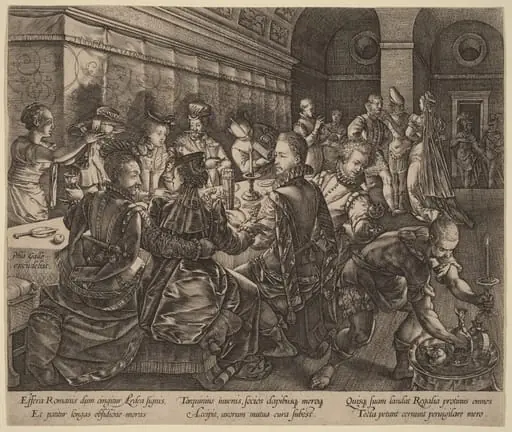 Banquet at the House of Tarquinius Collatinus
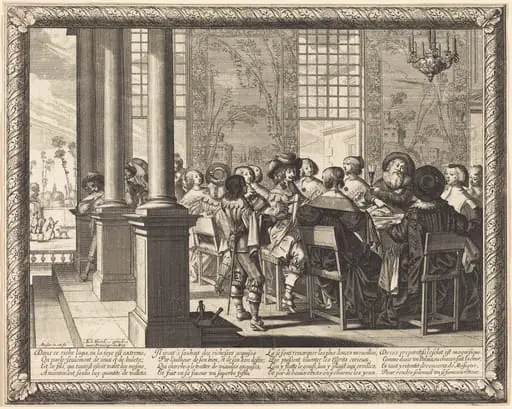 The Feast Celebrating the Return of the Prodigal Son
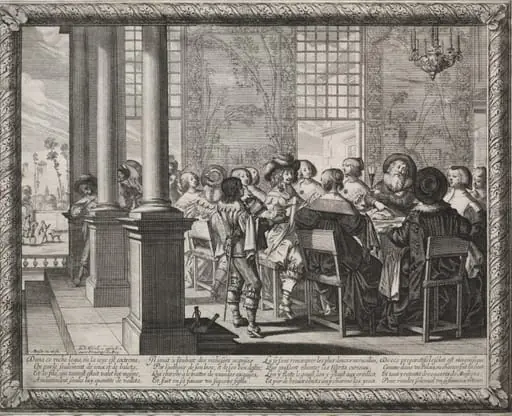 The Prodigal Son: The Feast in Honor of the Prodigal's Return
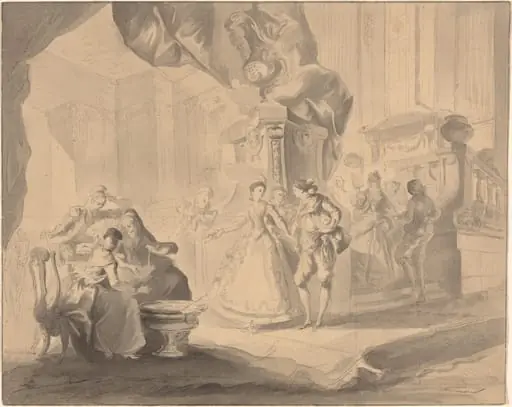 Dance in a Palace
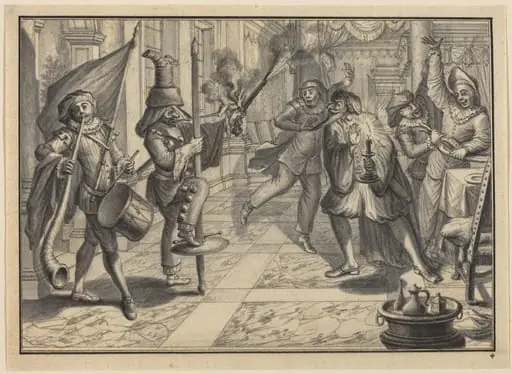 Mezzetin and Harlequin, Disguised as the Captain, Disrupt Pantaloon's Dinner
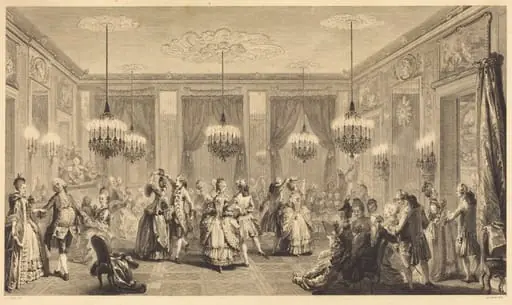 Le bal paré
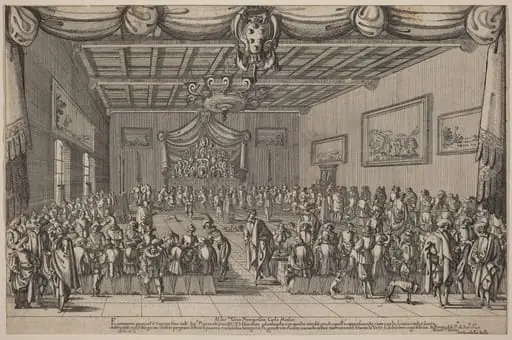 The Banquet of the Piacevoli
 H Beard Print Collection
 H Beard Print Collection
 Exempel und Lehr Jetziger Welt Lauf
 H Beard Print Collection
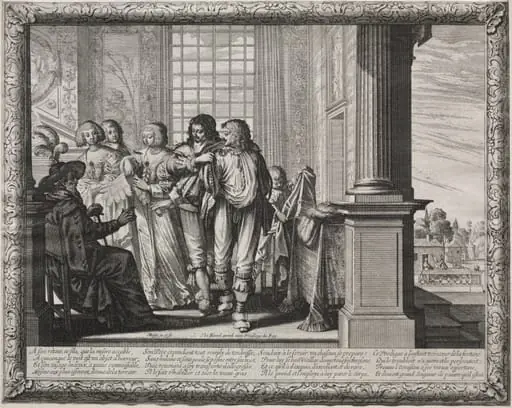 The Prodigal Son: Dressing for the Feast