Artwork
Die sieben freien Künste
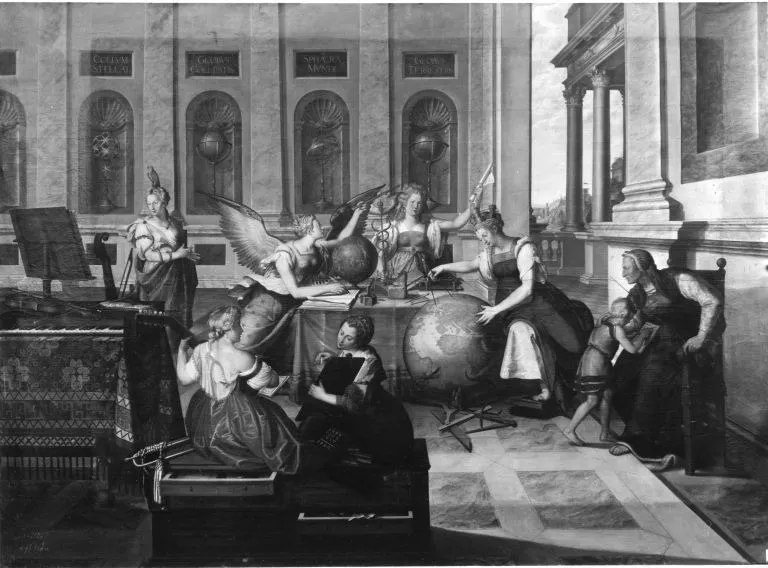
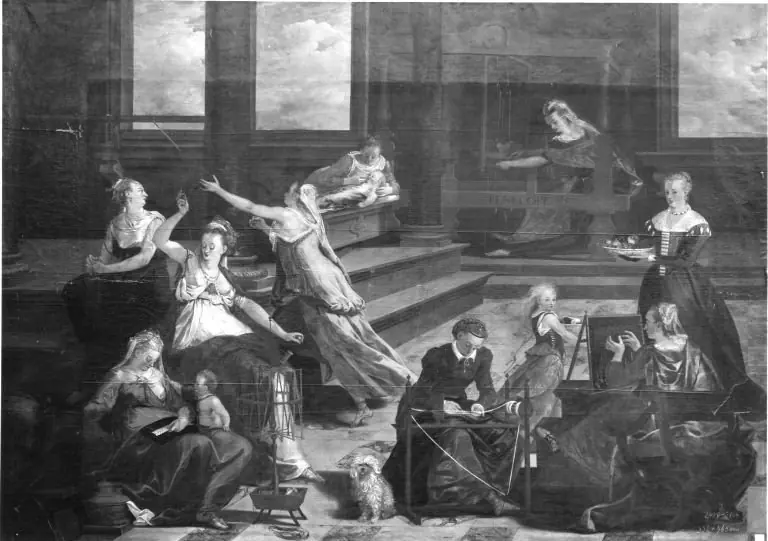
Die sieben freien Künste is an unspecified painting by the Dutch Golden Age artist Abraham del Hele. It is held in the collection of the Bavarian State Painting Collections.
About this work
Overview
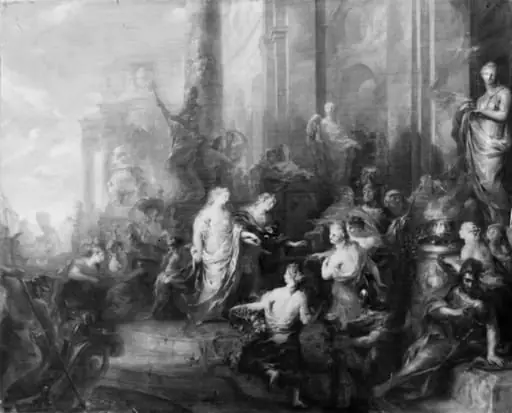
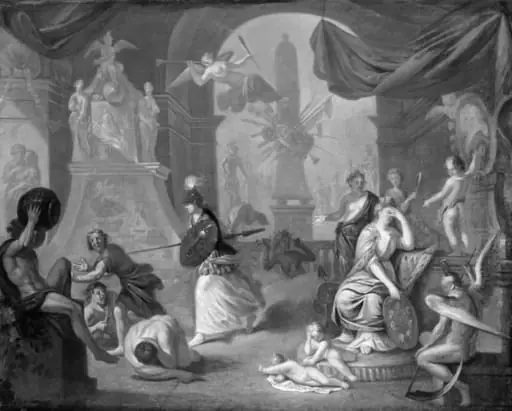
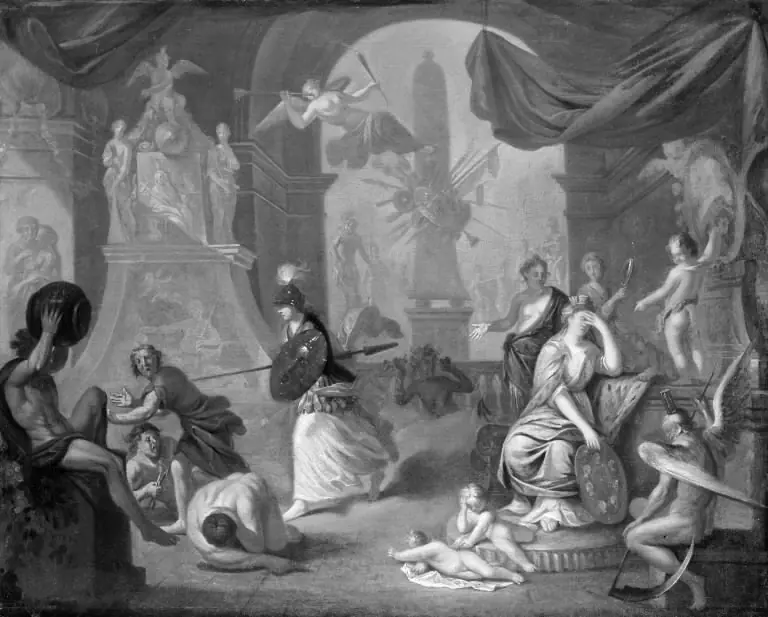
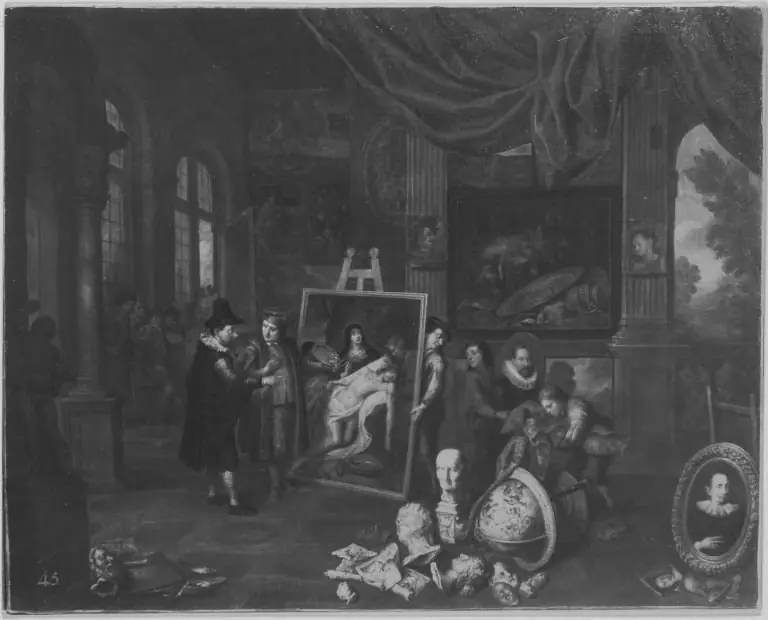
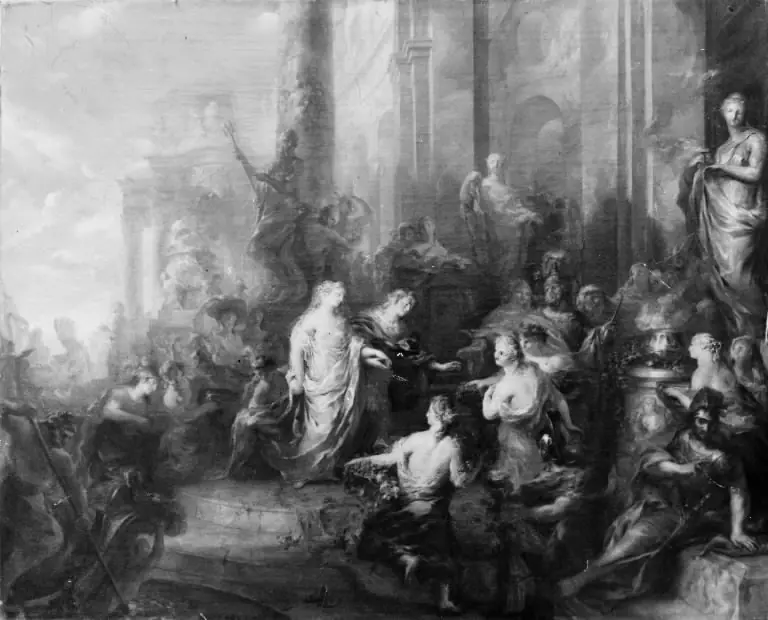
Painted in 1630 by Abraham del Hele, this work depicts an interior space dedicated to scholarly activity. Seven women are shown engaged in intellectual pursuits amid architectural details suggesting a learned environment. The painting is part of the collection at the Alte Pinakothek in Munich, where it remains a rare example of early 17th-century Northern European allegorical genre painting.
Subject & Meaning
The presence of a child and a bird may suggest nurturing and the soul’s ascent, reinforcing themes of education and moral cultivation.
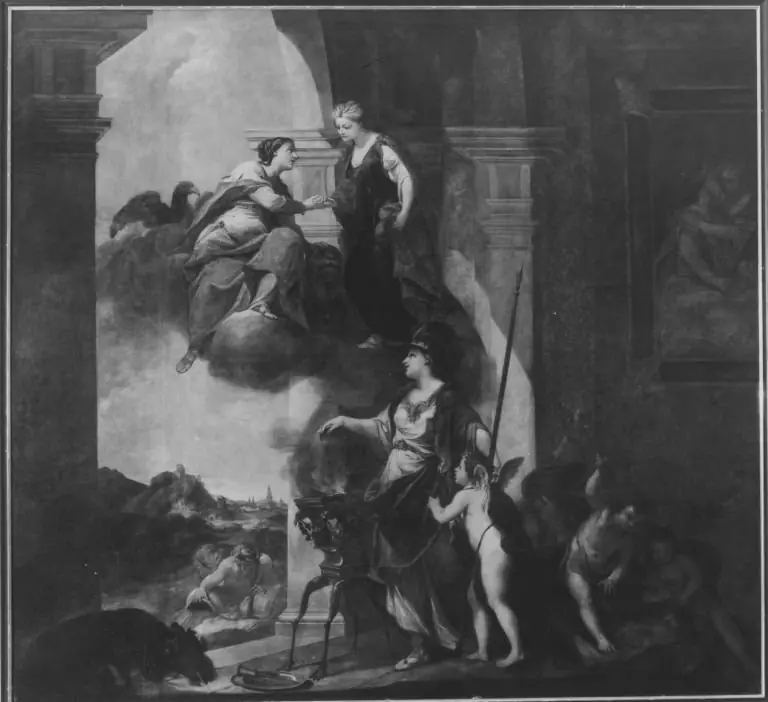
The painting symbolizes the seven liberal arts—grammar, rhetoric, logic, arithmetic, geometry, music, and astronomy—represented through the actions and objects surrounding the figures. Books, a globe, writing instruments, and musical elements all allude to these disciplines. The presence of a child and a bird may suggest nurturing and the soul’s ascent, reinforcing themes of education and moral cultivation.
Technique & Style
Del Hele employs careful attention to texture and spatial depth, using soft modeling and muted tones to define forms. Light enters through high windows, casting subtle shadows that enhance the three-dimensionality of figures and furnishings. The composition is orderly, with figures arranged to guide the viewer’s eye across the room, emphasizing harmony and balance over dramatic contrast.
History & Provenance
The painting entered the Alte Pinakothek’s collection in the 19th century, likely through royal or aristocratic acquisitions. Its attribution to Abraham del Hele, a lesser-known Dutch painter active in the early 1600s, was confirmed through stylistic analysis and archival records. Little is known of its earlier ownership, but its preservation suggests it was valued in private collections before institutional acquisition.
Context
Created during the Dutch Golden Age, the painting reflects broader cultural interest in humanist education and the role of women in intellectual life, albeit idealized. While women were largely excluded from formal universities, allegorical depictions like this one celebrated their symbolic participation in scholarly traditions, often commissioned by elite households to convey cultural refinement.
Legacy
Though not widely reproduced or studied in mainstream art history, the painting offers insight into how early modern societies visualized knowledge and gender roles. It contributes to ongoing scholarly discussions about the representation of learning in domestic settings and the quiet persistence of humanist ideals in Northern European art beyond major centers like Amsterdam or Antwerp.
Artist & collection