Artwork
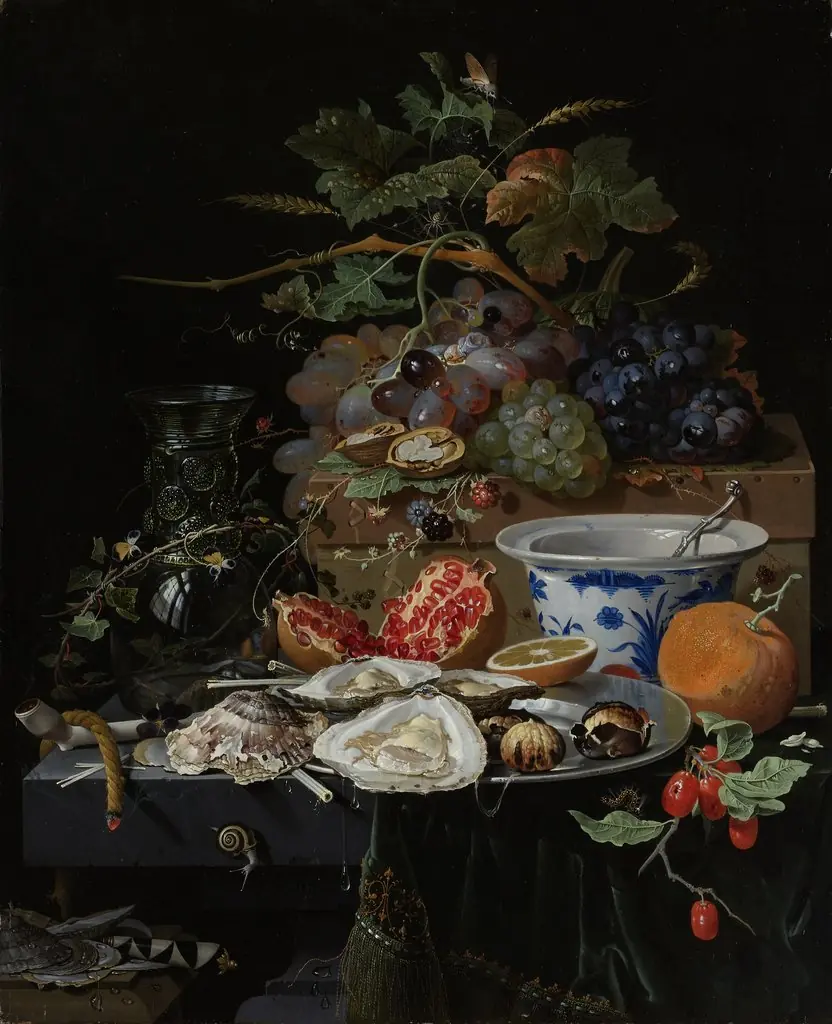
Still life with fruit and oysters
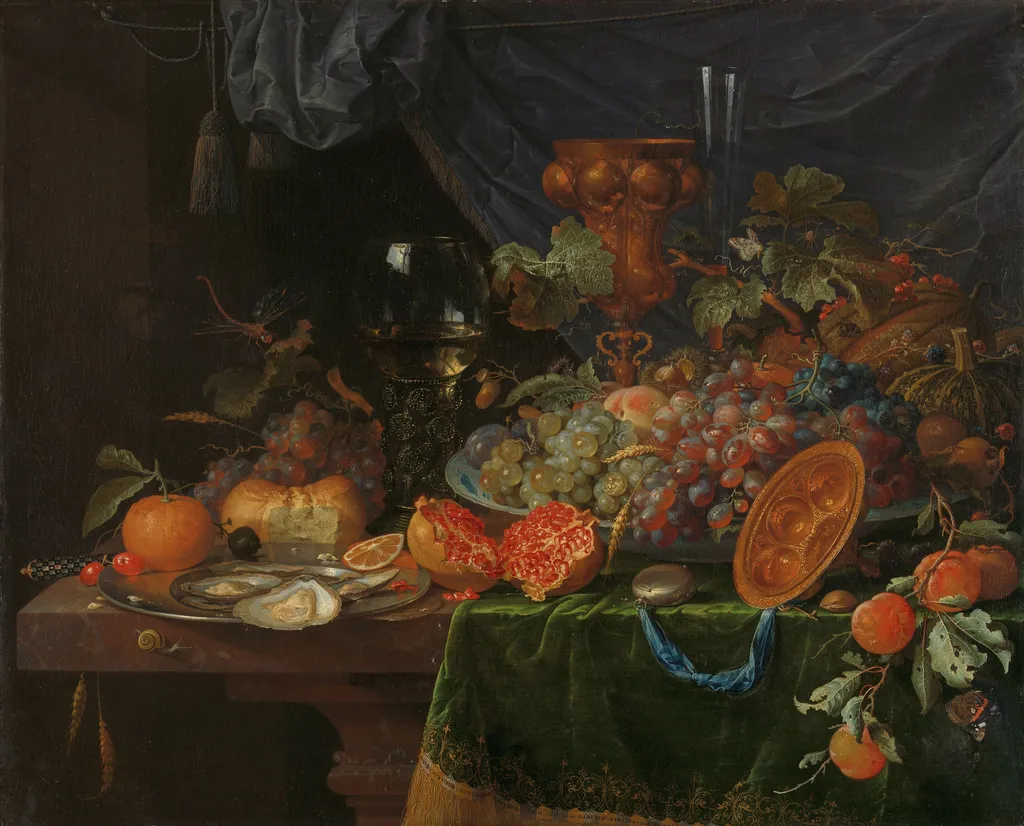
Still life with fruit and oysters is an oil painting by the Dutch Golden Age artist Abraham Mignon. It dates from 1669 and is held in the collection of the Rijksmuseum.
About this work
Overview
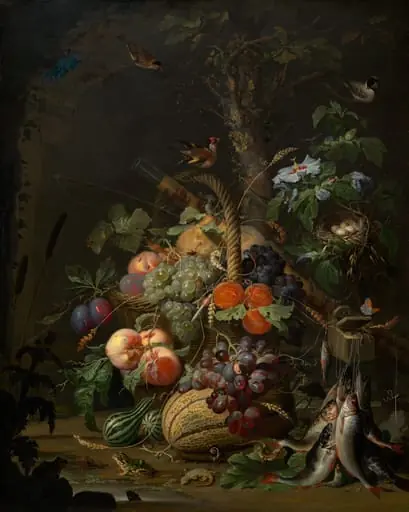
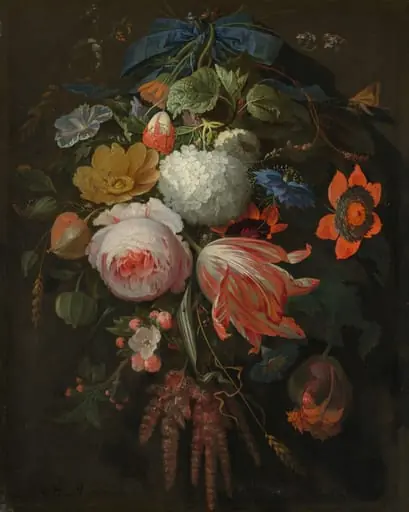
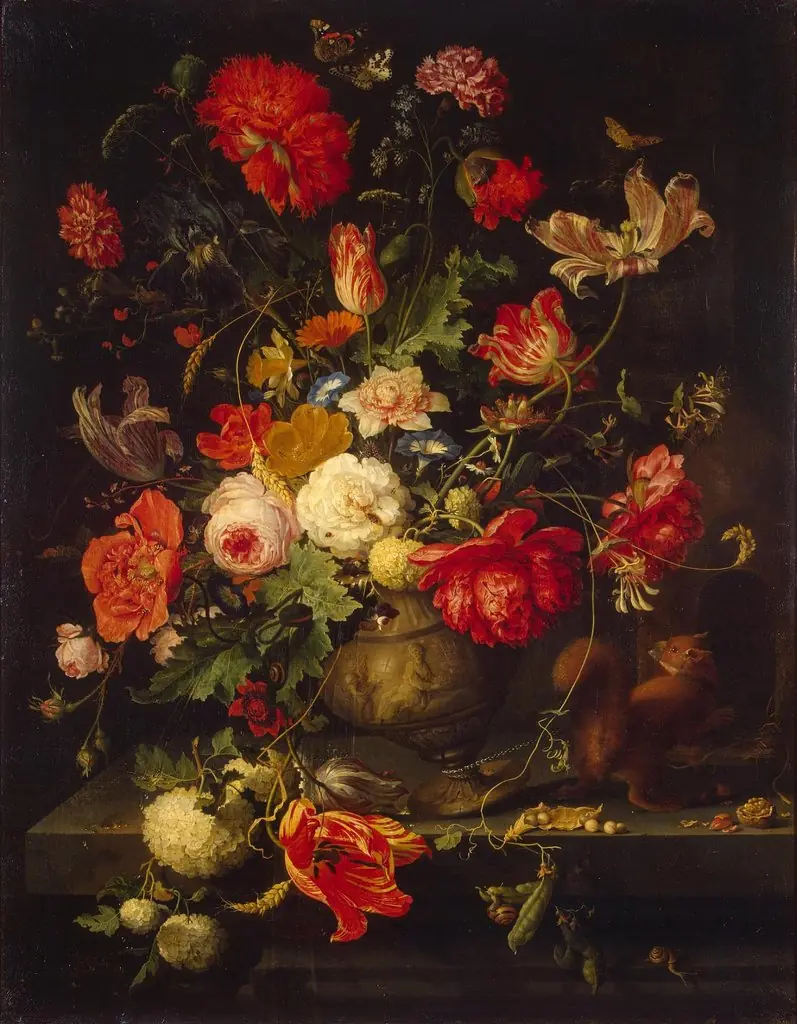
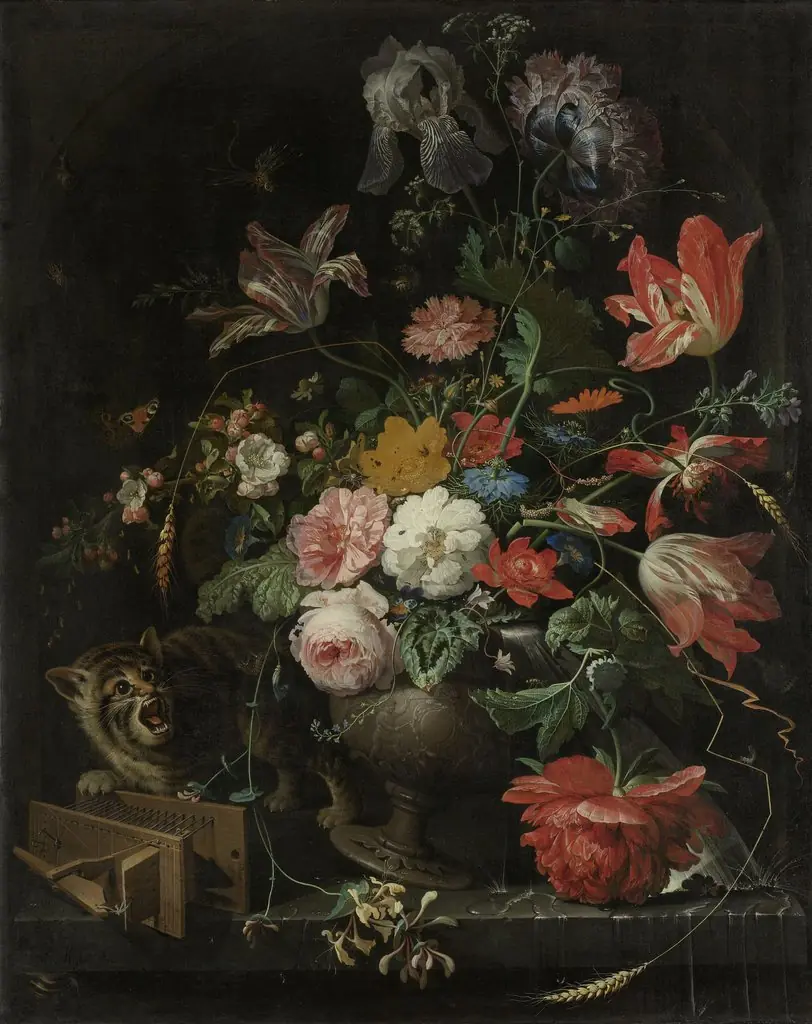
Abraham Mignon’s *Still Life with Fruit and Oysters* (1669) is an oil painting that exemplifies the Dutch Golden Age’s fascination with meticulously rendered banquet scenes. The work presents a tabletop laden with a variety of fruit, a plate of oysters, and a loaf of bread, all set upon a green‑draped surface.
Subject & Meaning
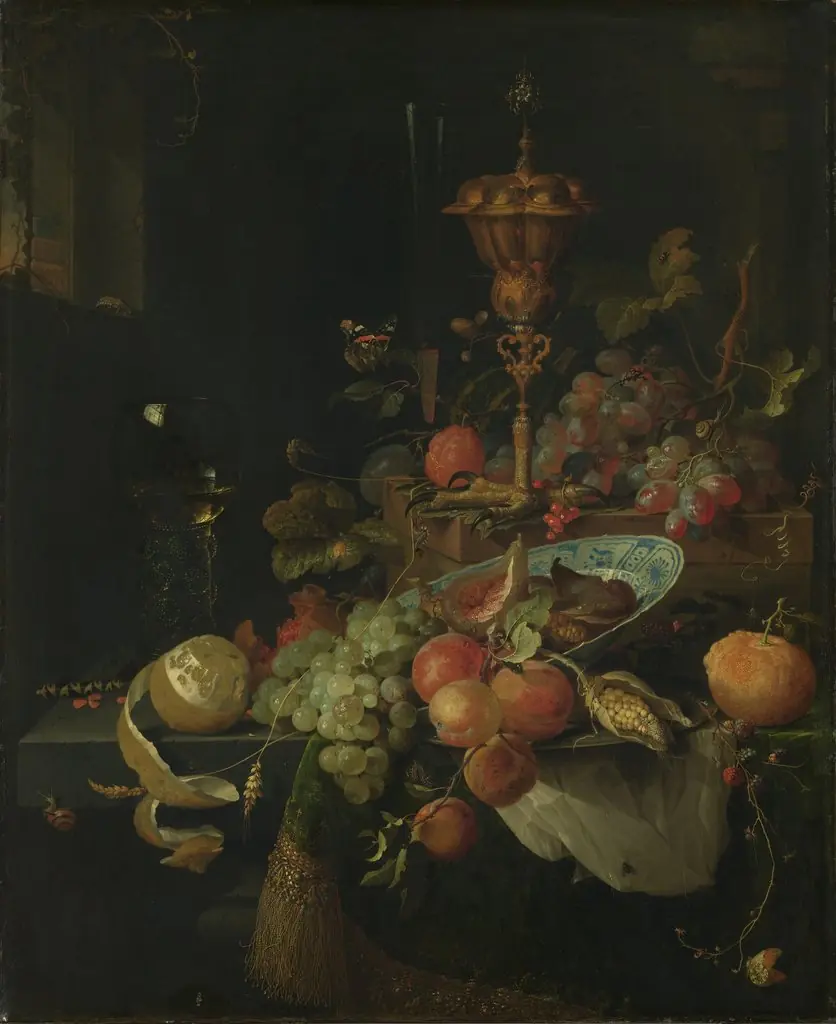
The composition juxtaposes fresh produce—grapes, pomegranates, peaches—with marine delicacies, creating a visual study of abundance and the fleeting nature of luxury. By grouping edible items together, Mignon invites contemplation of sensory pleasure and the transitory character of material wealth.
Technique & Style
Mignon employs a fine, almost tactile brushwork to capture the sheen on grapes, the porous texture of oysters, and the soft folds of the cloth. His palette balances saturated reds, yellows, and greens, while subtle chiaroscuro models each object, emphasizing the play of light across varied surfaces.
History & Provenance
Executed in Utrecht in the late 1660s, the painting reflects the influence of Jan Davidszoon de Heem and Jacob Marrel, whose still‑life conventions Mignon adapted. The work entered the Rijksmuseum’s collection, where it remains part of the museum’s Dutch Golden Age holdings.
Own this work as a print
Artist & collection

Artist
Abraham Mignon or Minjon (21 June 1640 – 27 March 1679) was a Dutch still life painter.