Artwork
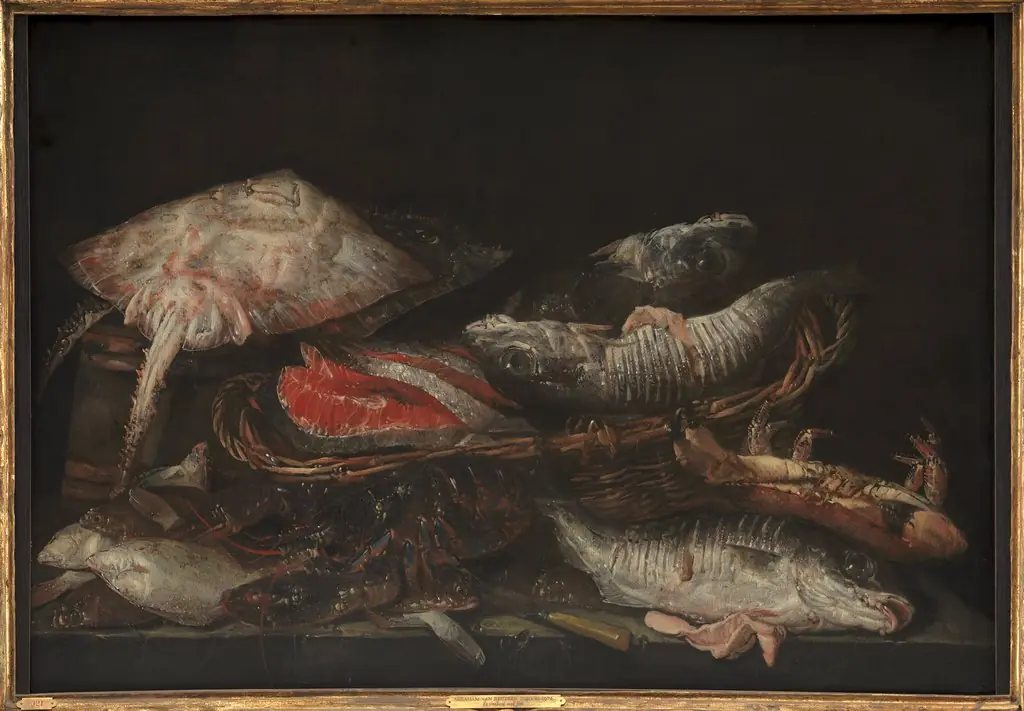
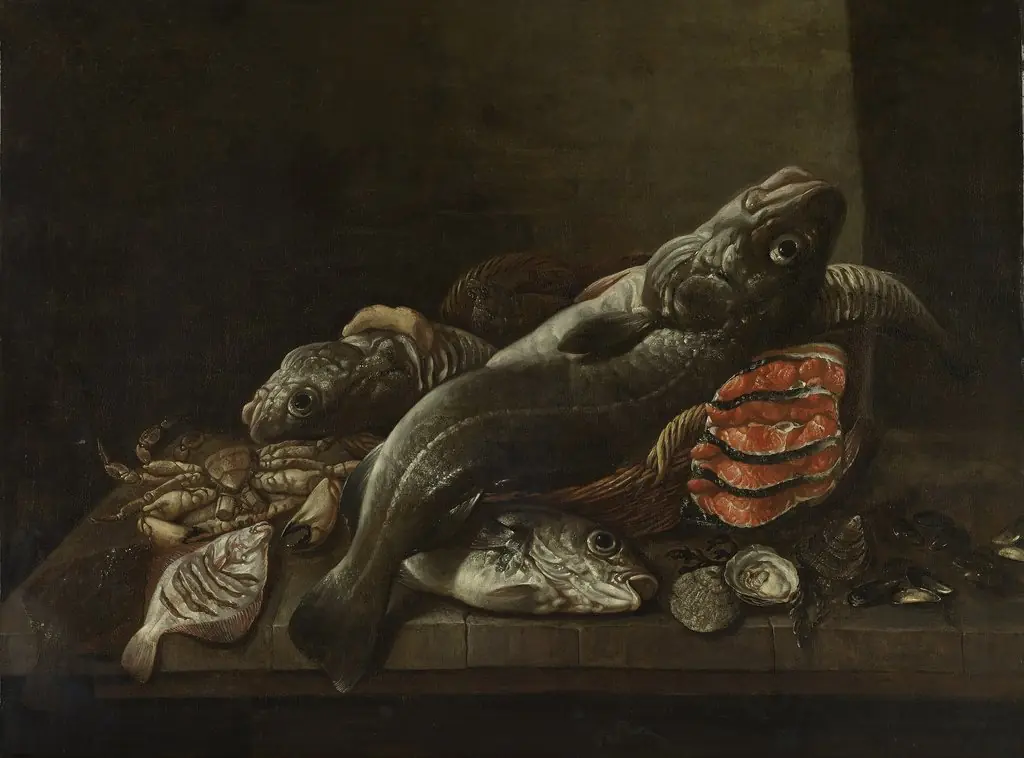
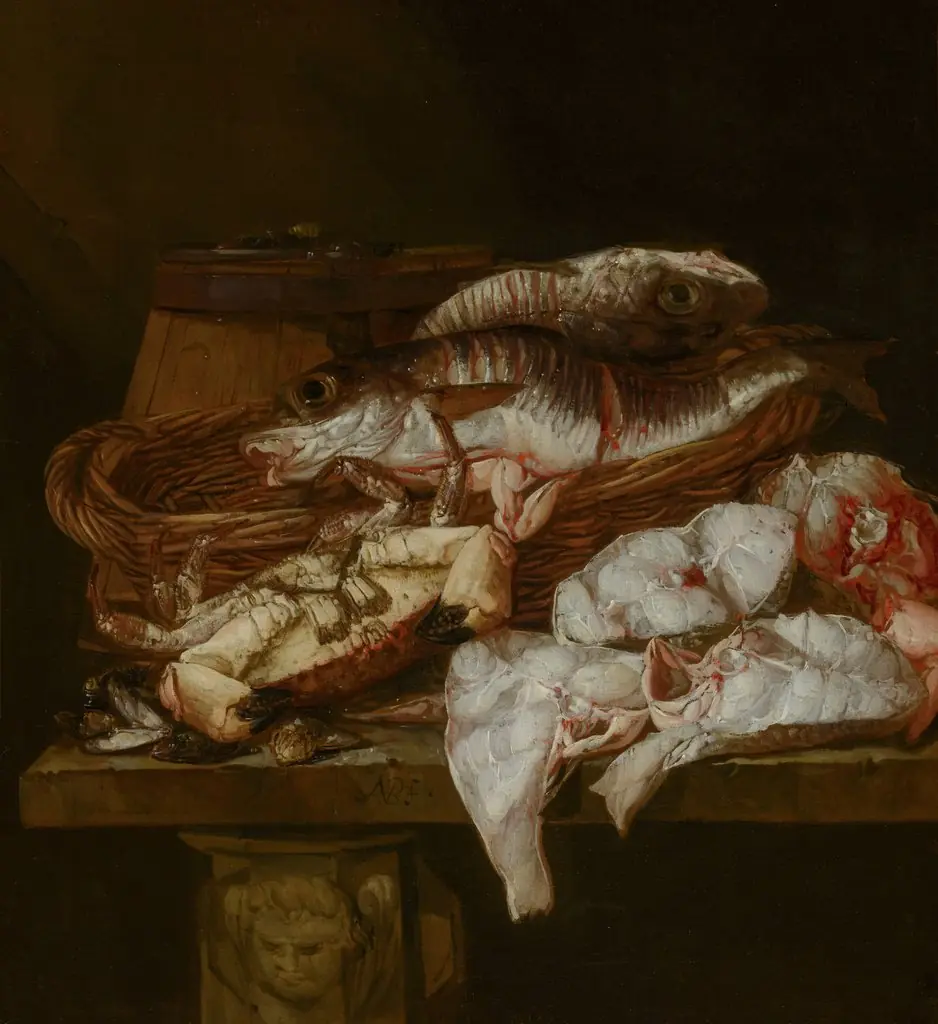
Still Life with Fish and Crustaceans on a Table
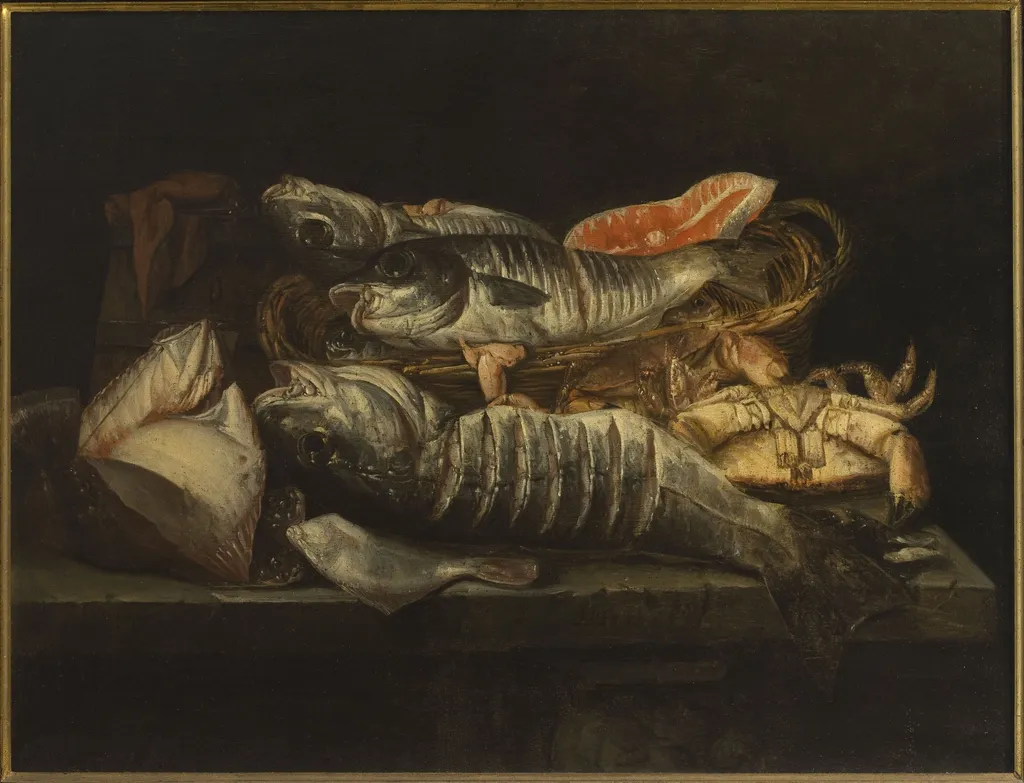
Still Life with Fish and Crustaceans on a Table is an oil painting by the Dutch Golden Age artist Abraham van Beijeren. It dates from 1660 and is held in the collection of the National Museum in Warsaw.
About this work
Overview
The composition is dominated by glistening fish, some opened to reveal pink flesh, and tangled crustaceans whose claws are curled inward.
Abraham van Beijeren’s oil painting, Still Life with Fish and Crustaceans on a Table, dates from 1660. Executed during the Dutch Golden Age, the work presents a densely arranged assortment of marine fare on a darkened tabletop. The composition is dominated by glistening fish, some opened to reveal pink flesh, and tangled crustaceans whose claws are curled inward. The stark black background isolates the subject, heightening its visual impact.
Subject & Meaning
The tableau concentrates on the material abundance of sea‑food, a motif that underscores both the bounty and the transience of luxury. By displaying the fish in various stages of preparation—whole, split, and exposed—the painting invites contemplation of consumption and the fleeting nature of earthly pleasures, themes common in 17th‑century Dutch still‑life symbolism.
Technique & Style
Van Beijeren employs a pronounced impasto, laying thick layers of pigment to render the tactile qualities of scales and shells. The silvery sheen of the fish is achieved through delicate brushwork that catches light, while the dark ground absorbs surrounding tones, allowing the luminous subjects to emerge. The overall style reflects the Baroque interest in dramatic contrast and material realism.
History & Provenance
Originally created for a private Dutch collector, the painting entered the National Museum in Warsaw’s holdings in the 20th century, where it remains part of the museum’s Dutch Golden Age collection. Documentation traces its movement from the Netherlands to Central Europe, though precise acquisition details are sparse.
Context
Van Beijeren began his career painting seascapes before turning to elaborate still lifes that combined marine life with opulent objects such as silverware and glassware. This shift mirrors a broader Dutch trend in the mid‑1600s, when artists explored the visual and moral possibilities of depicting food, luxury, and mortality within a single, richly detailed frame.
Artist & collection
Artist
Abraham Hendriksz van Beijeren or Abraham van Beyeren (c. 1620, The Hague – March 1690, Overschie (Rotterdam)) was a Dutch Baroque painter of still lifes. Little recognized in his day and initially active as a marine…

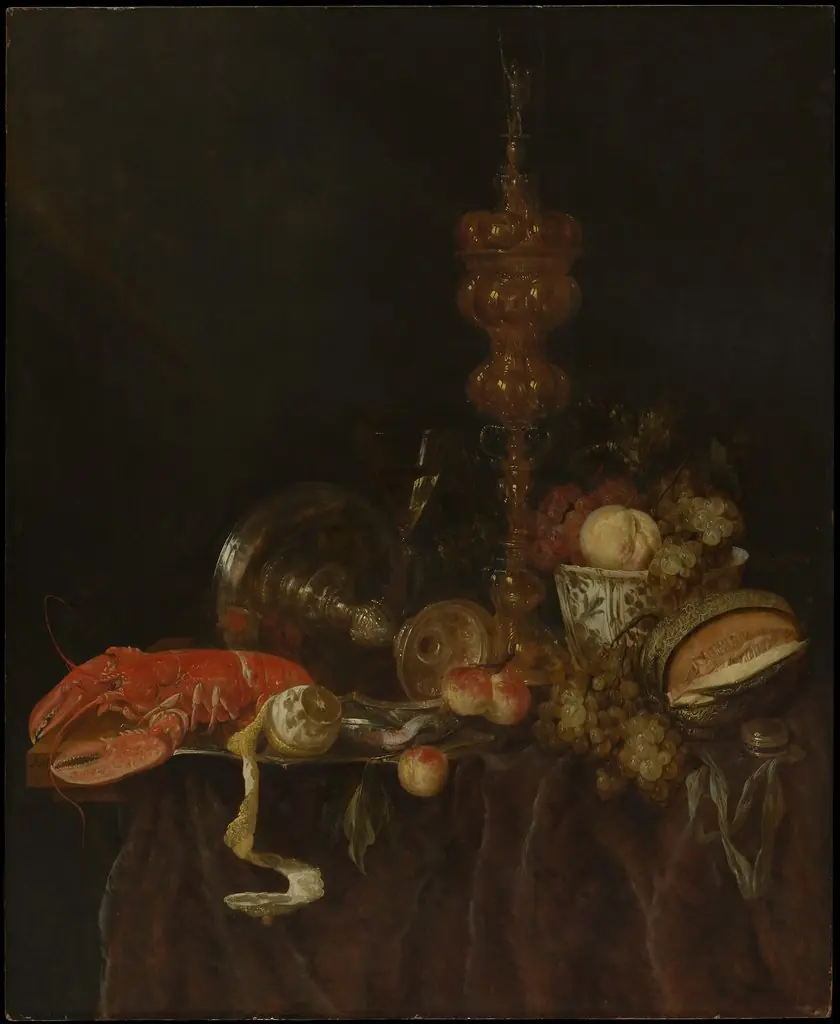 Still Life with Lobster and Fruit
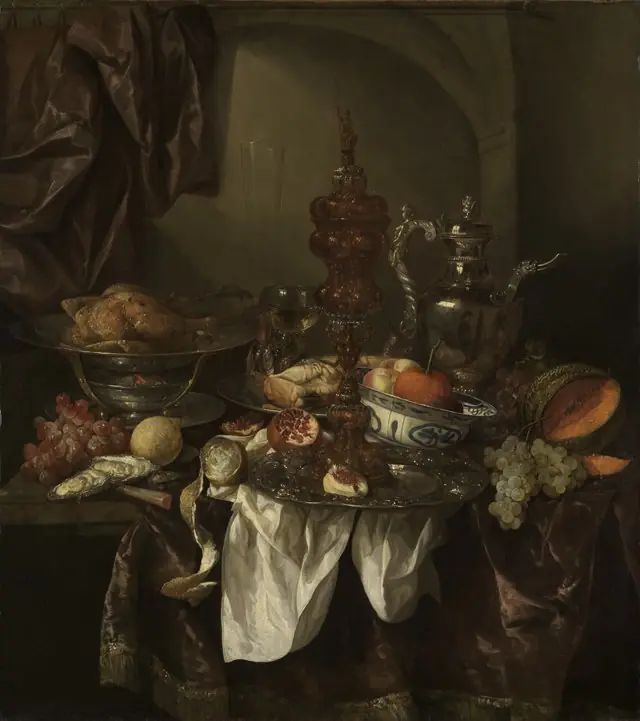 Still life with fruit, roast, silver- and glassware, porcelain and columbine cup on a dark tablecloth with white serviette
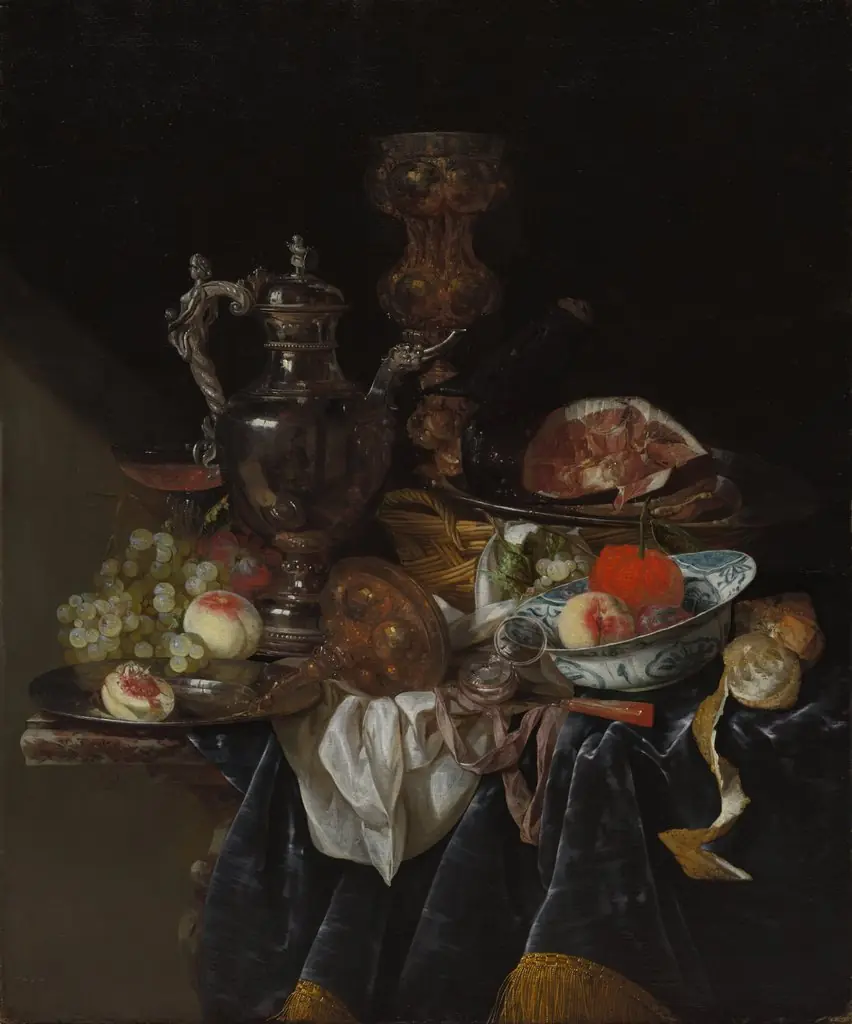 Silver Wine Jug, Ham, and Fruit
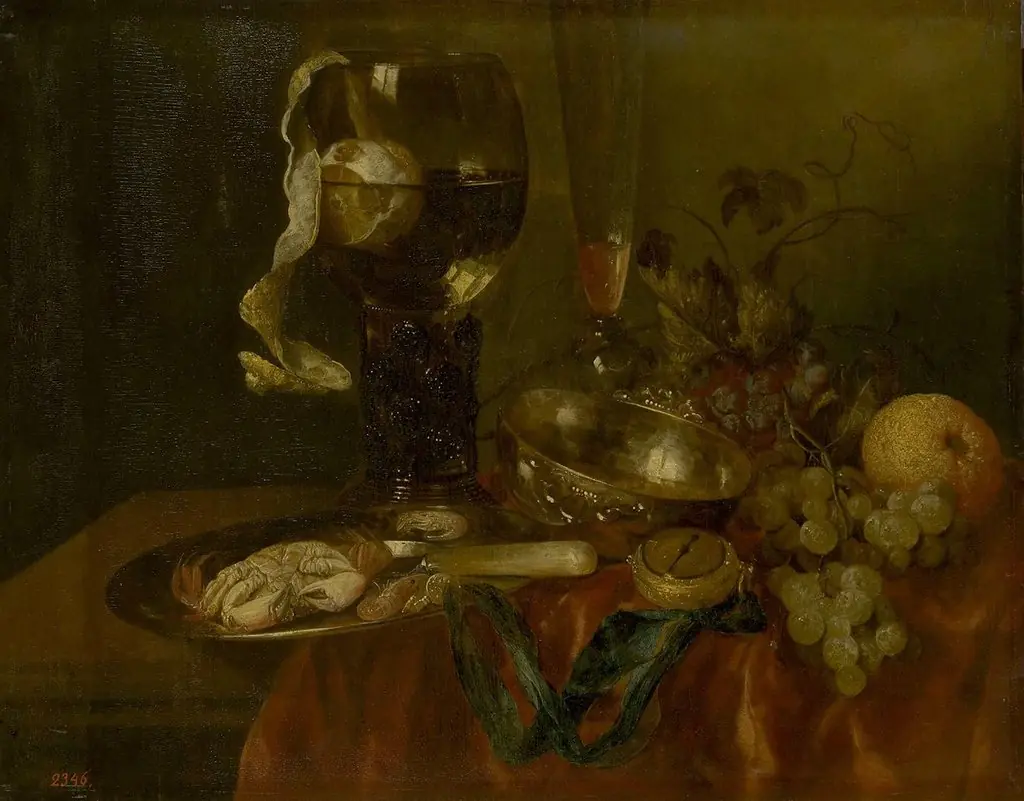 Snack (Still Life with Crab, Fruit and Clock)
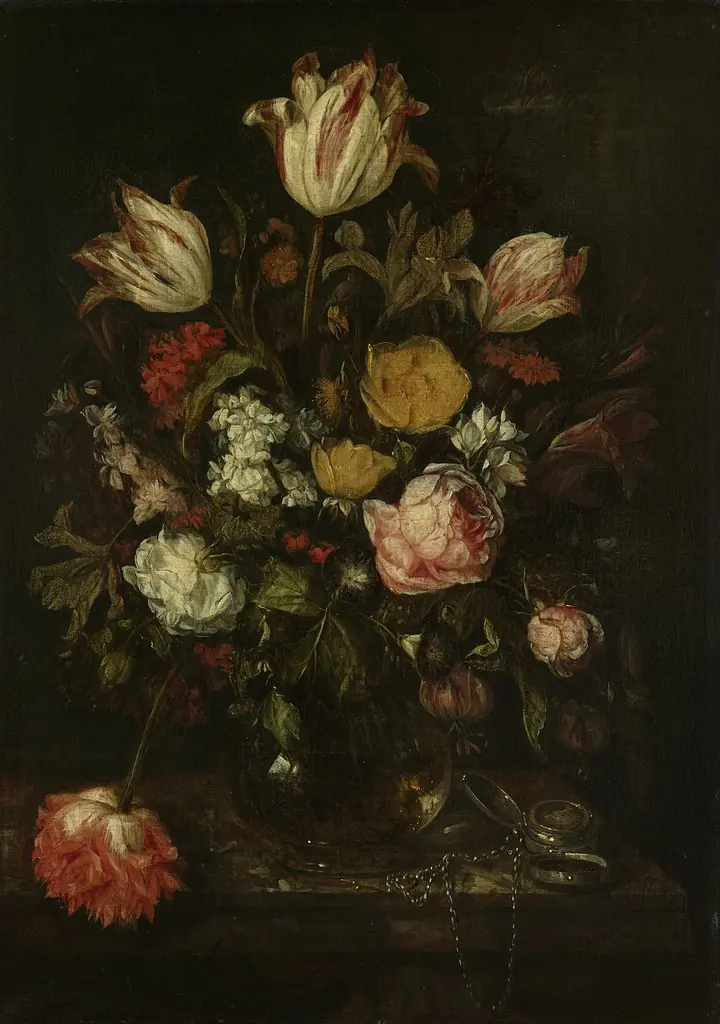 Still life with flowers
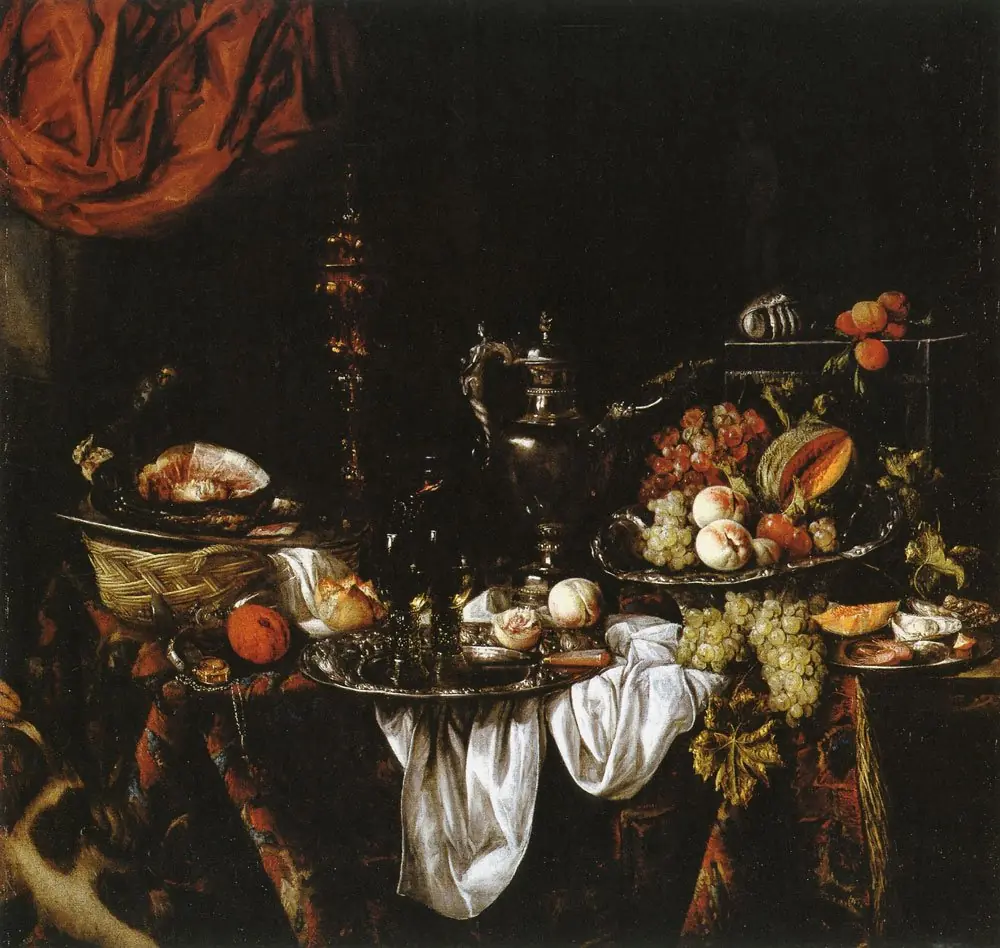 Still life on a draped table with a sculpture of Venus in a niche behind a curtain
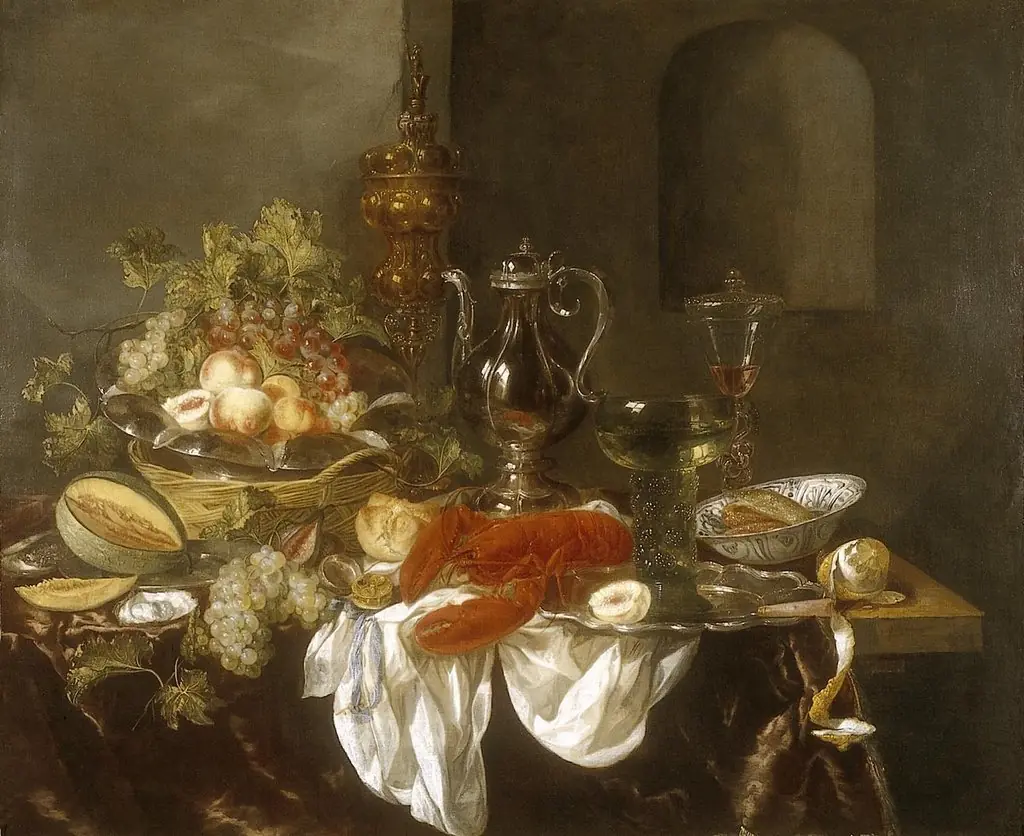 still-life
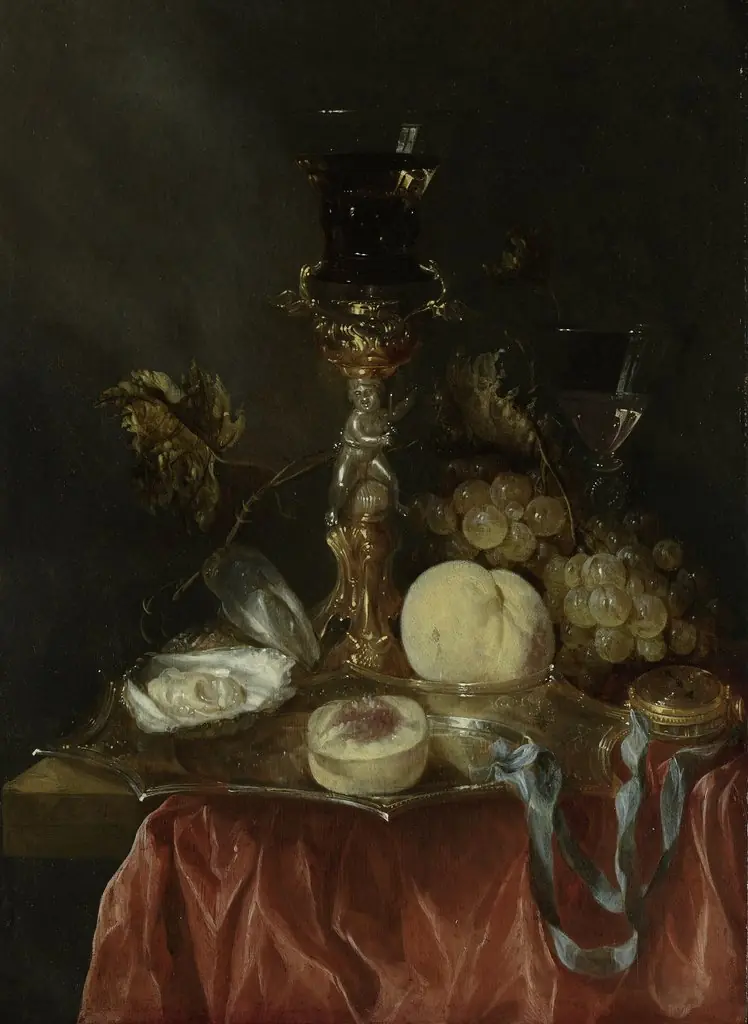 Still Life with Silver-gilt Bekerschroef with Roemer
 Still Life with Fish on a Stone Table
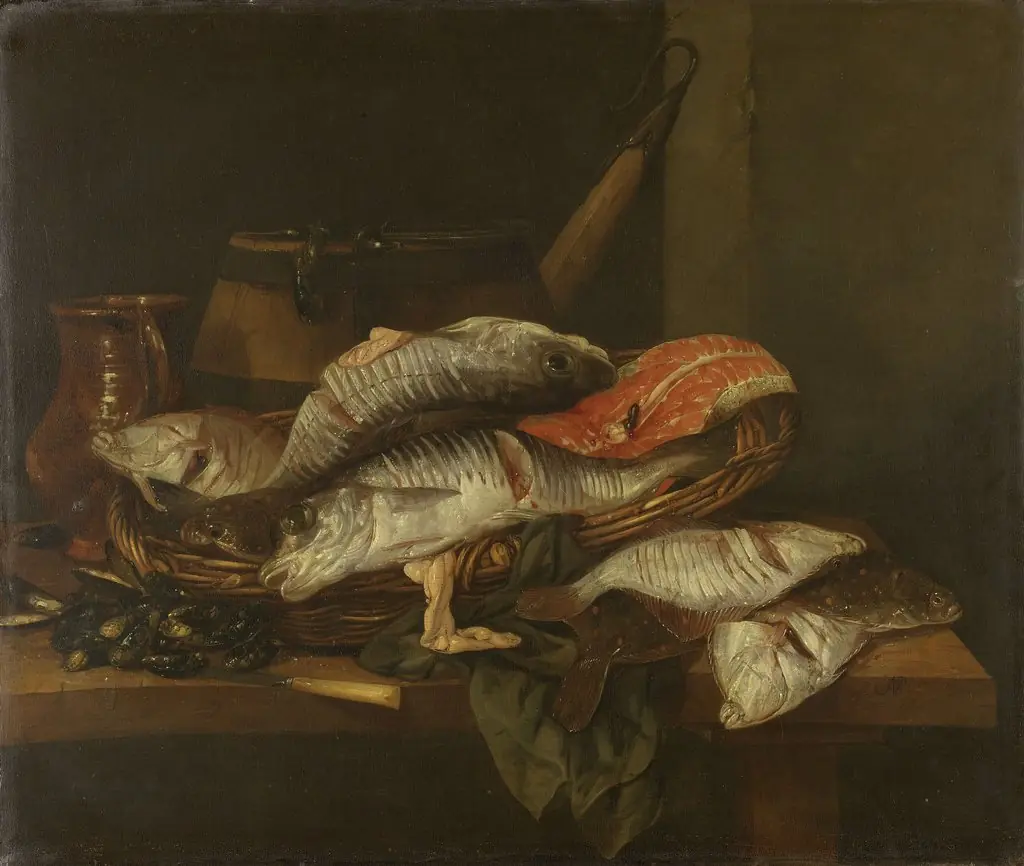 Still life with fish
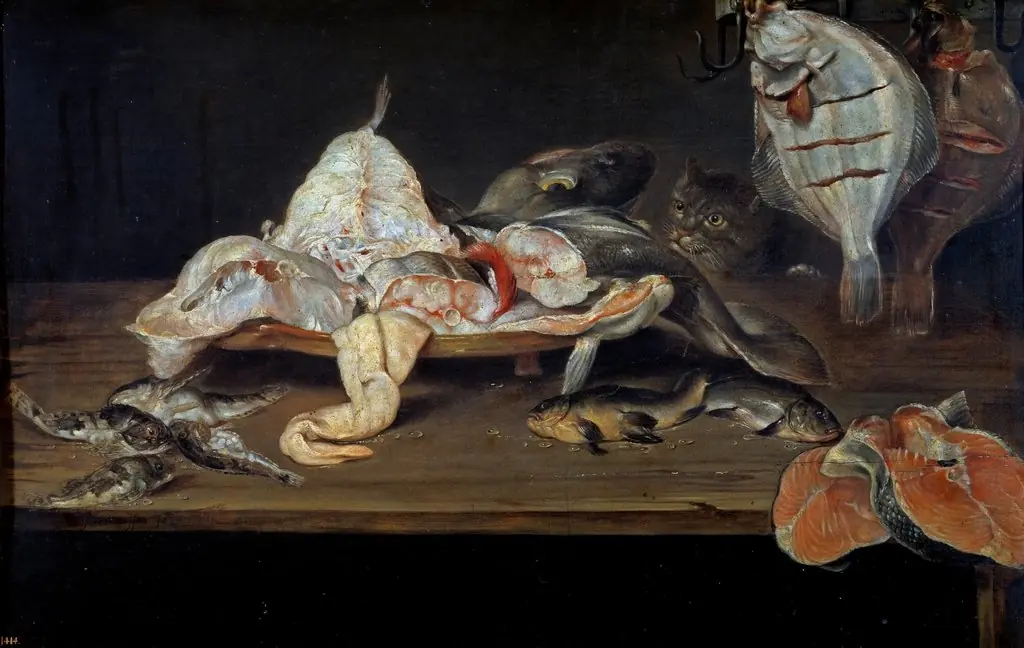 Still life with fish and a cat behind the table
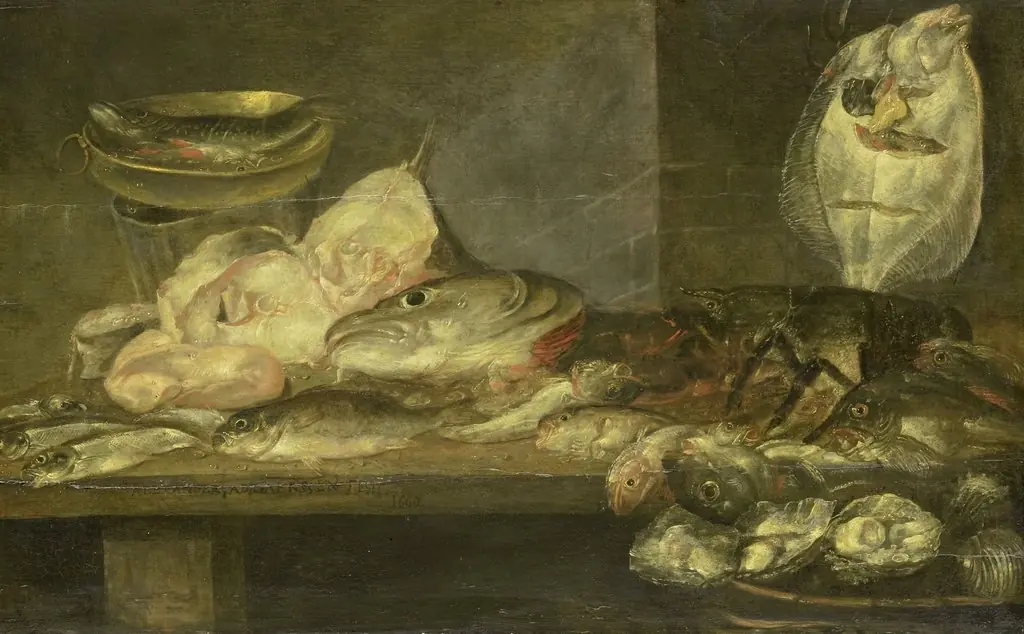 Still life with fish
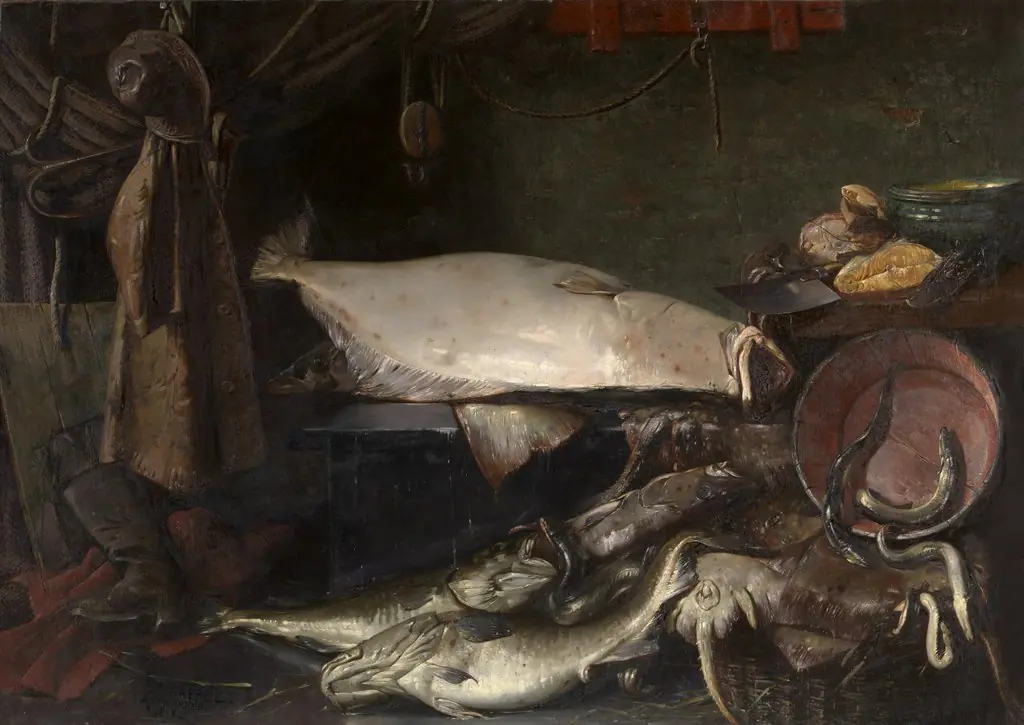 Still Life with Fish
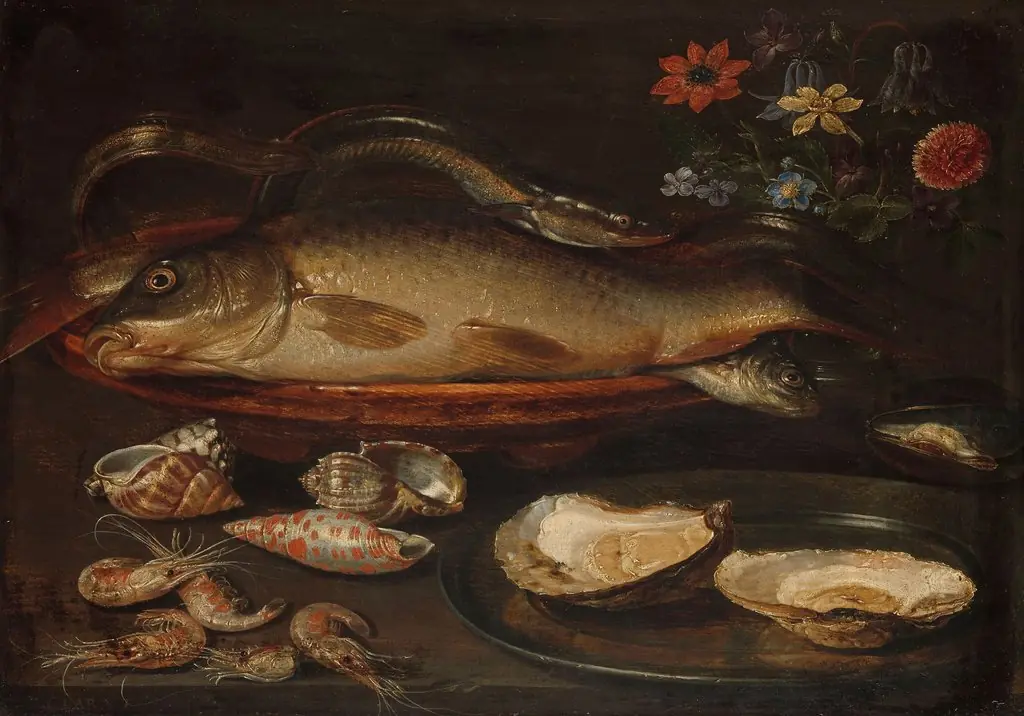 Still life with fish, oysters and shrimps
 Still Life with Fish
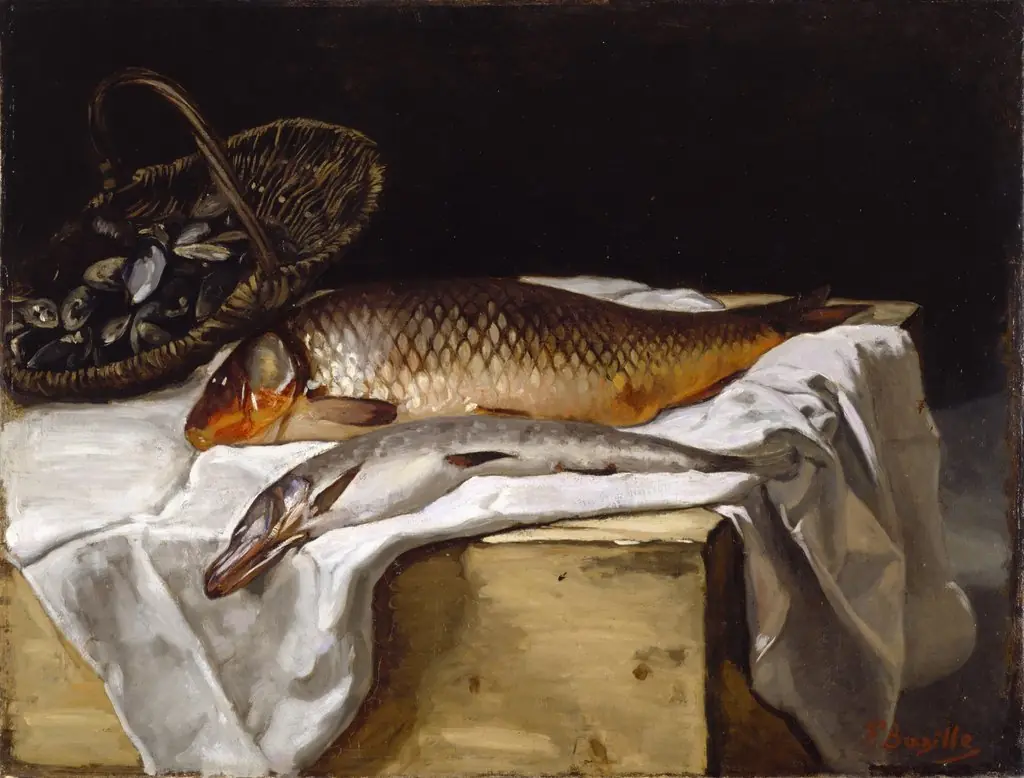 Still Life with Fish
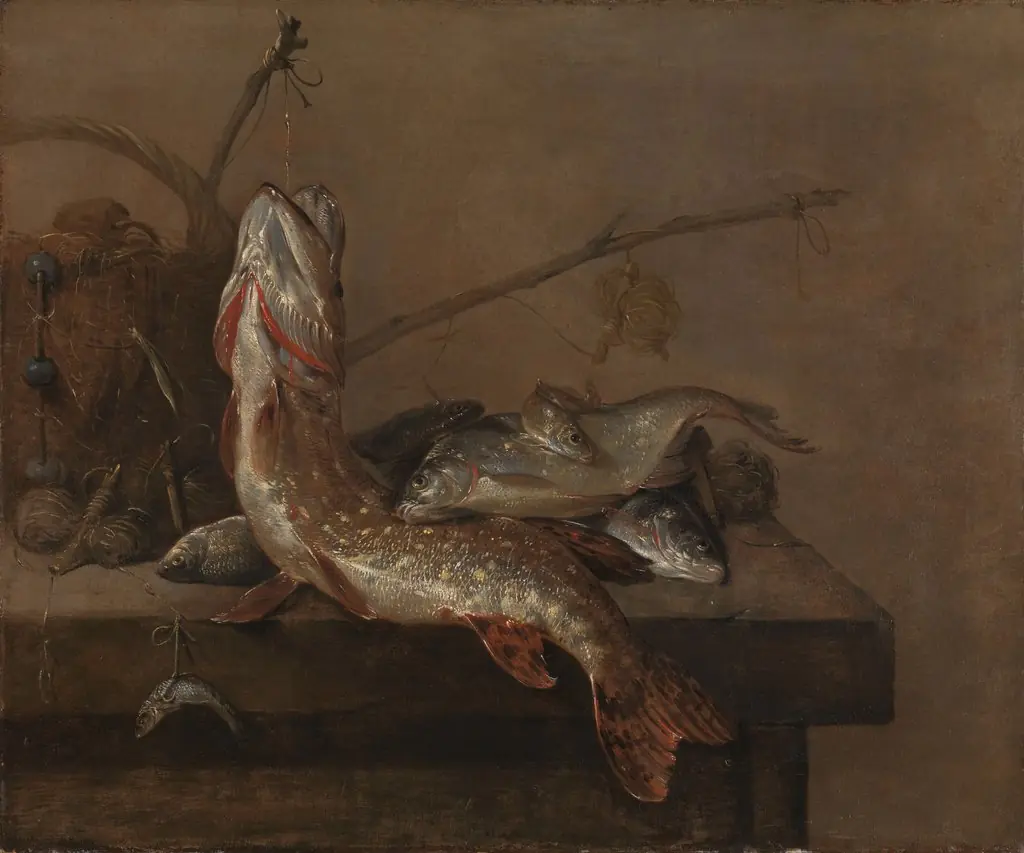 Still life with fish
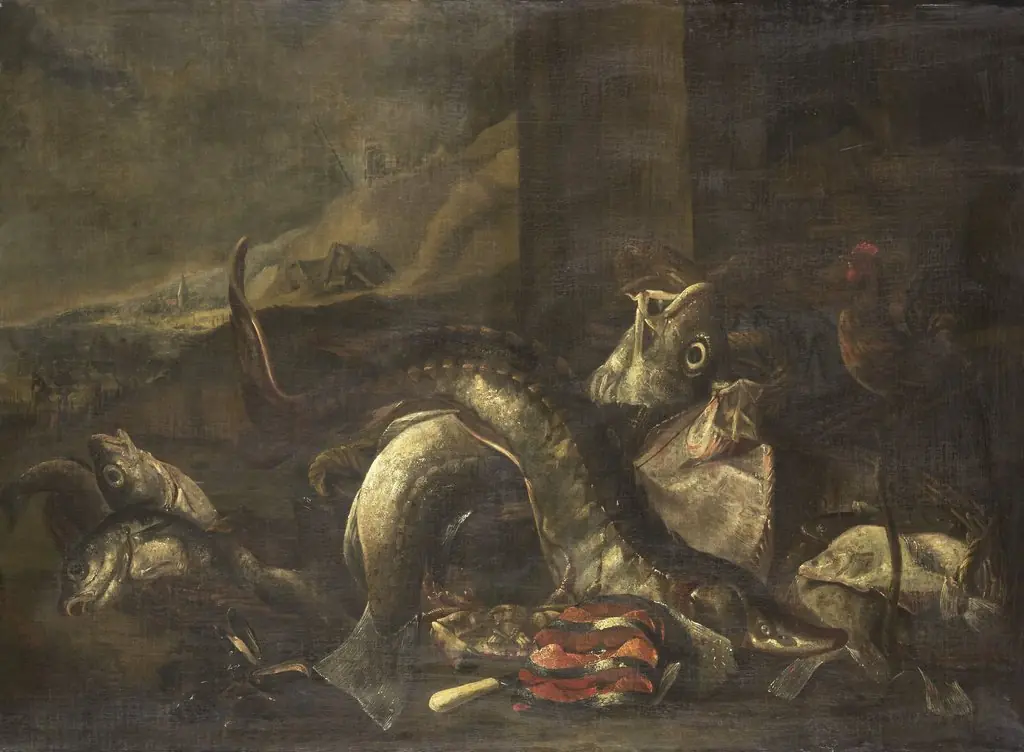 Still Life with Fish
 Still Life with Seafood
 Still Life with Fish