Artwork
Untitled
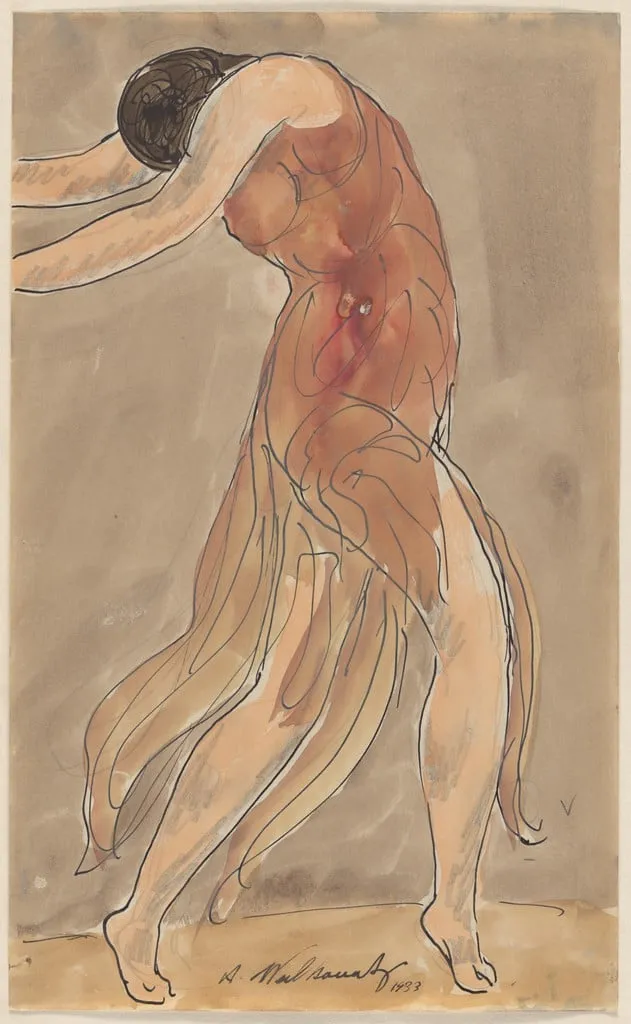
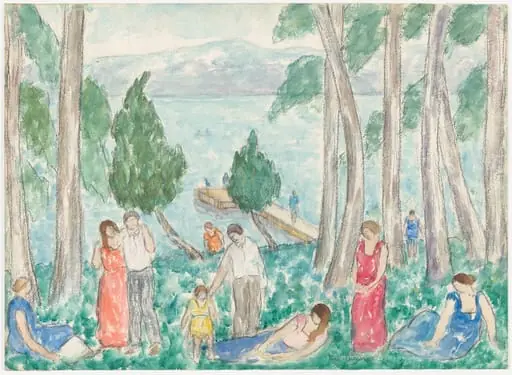
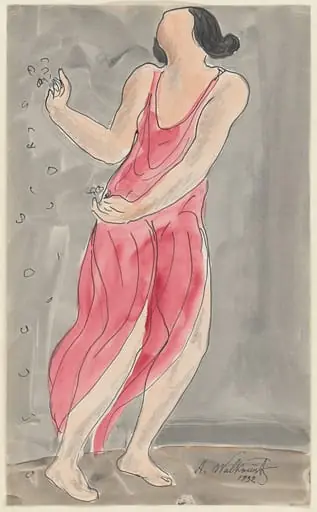
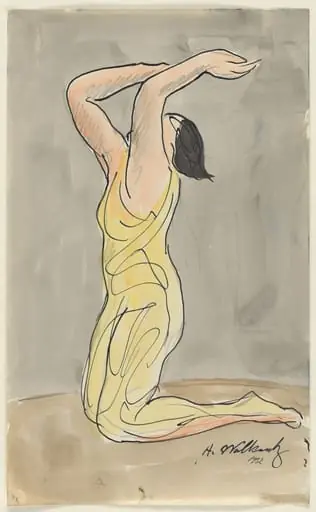
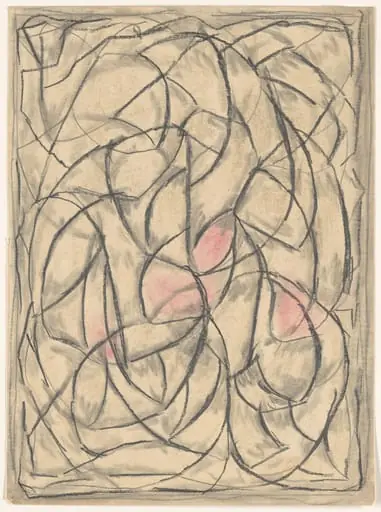
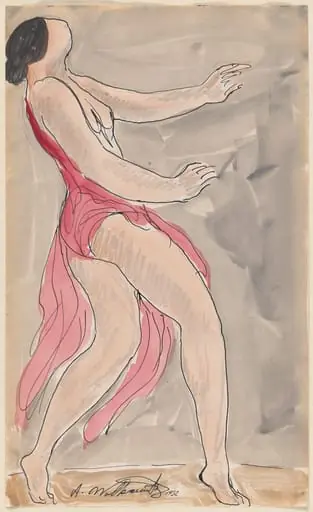
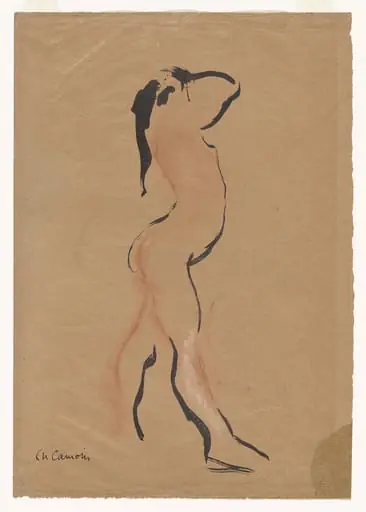
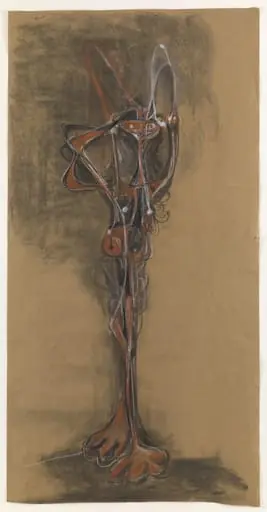
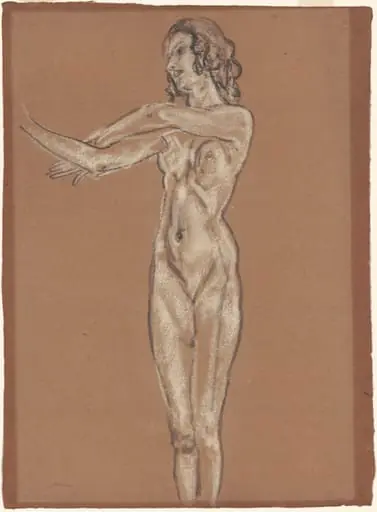
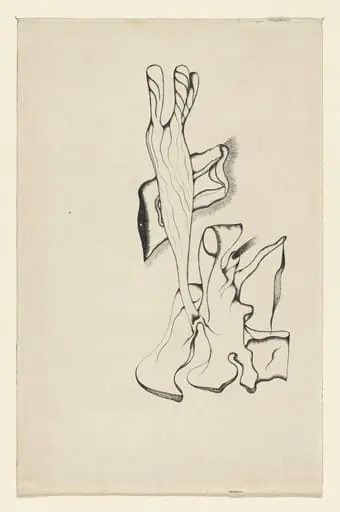
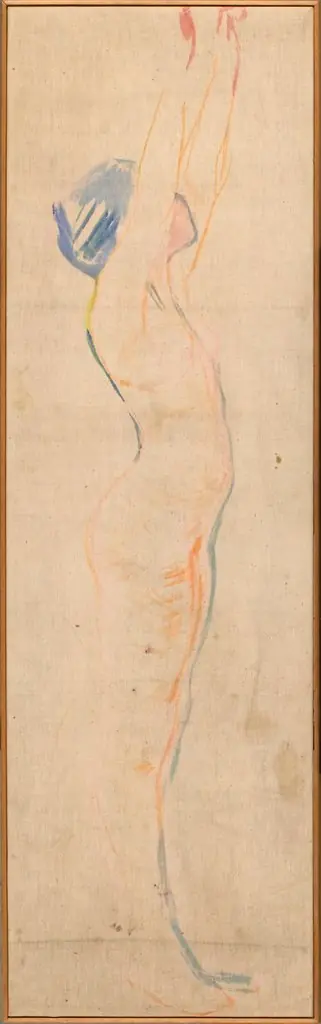
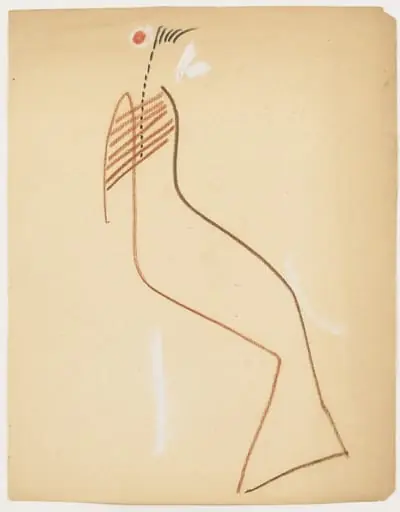
Untitled is a watercolor drawing by Abraham Walkowitz. It dates from 1933 and is held in the collection of the Museum of Modern Art.
About this work
Overview
Created in 1933, this watercolor on paper is a work by Abraham Walkowitz, an American modernist with roots in Russian immigrant culture. It belongs to The Museum of Modern Art’s collection and reflects his sustained interest in the human form as a vehicle for expressive abstraction. The piece exemplifies his shift from representational subjects toward fluid, gestural interpretations.
Subject & Meaning
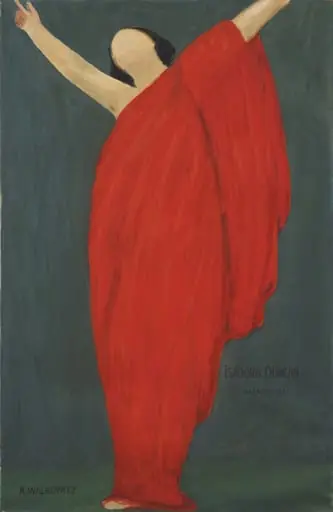
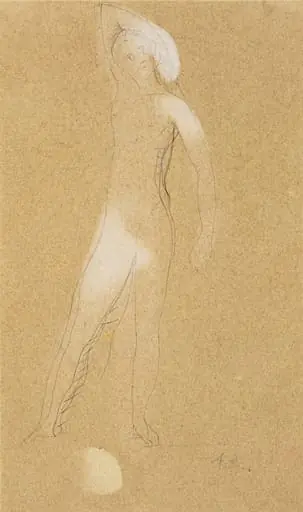
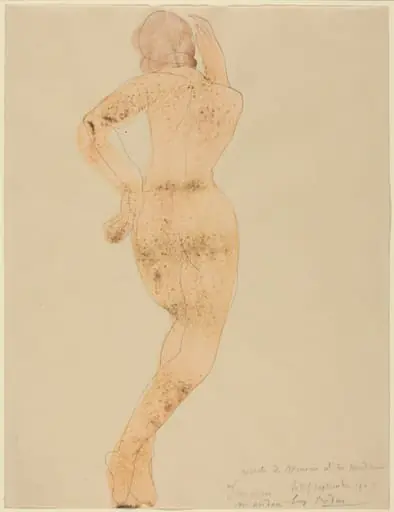
The drawing depicts a nude figure in profile, bent forward with one arm extended backward. The posture suggests motion or a moment of transition, possibly evoking dance. Though unnamed, the figure aligns with Walkowitz’s broader engagement with Isadora Duncan’s movement, capturing physicality not as idealized form but as dynamic energy rendered in simplified contours.
Technique & Style
Walkowitz employed watercolor’s fluidity to define the figure with loose, confident strokes, using warm peach tones for skin and bold black lines to outline form. The medium’s transparency allows underlying washes to suggest volume without heavy modeling. The absence of a background isolates the figure, emphasizing its movement and the economy of line that defines his modernist approach.
History & Provenance
His association with Alfred Stieglitz and the 291 Gallery positioned him among key figures who introduced European avant-garde ideas to U.
The work entered The Museum of Modern Art’s collection as part of a broader recognition of Walkowitz’s role in early American modernism. His association with Alfred Stieglitz and the 291 Gallery positioned him among key figures who introduced European avant-garde ideas to U.S. audiences. This piece, like many of his drawings, was likely made in his New York studio during a period of intense artistic experimentation.
Context
In the early 1930s, American artists were redefining subject matter through abstraction and personal expression. Walkowitz’s focus on the dancing body reflected a wider interest in movement and rhythm, influenced by modern dance and European modernism. His watercolors, often made quickly from life, stood apart from more polished studio works, valuing immediacy and emotional resonance over detail.
Legacy
Walkowitz’s watercolors of the human form contributed to a quieter but persistent strand of American modernism that prioritized gesture over grand narrative. Though less widely known than his contemporaries, his drawings helped expand the possibilities of watercolor as a serious medium for expressive abstraction, influencing later generations interested in the body as a site of movement and feeling.
Artist & collection
Artist
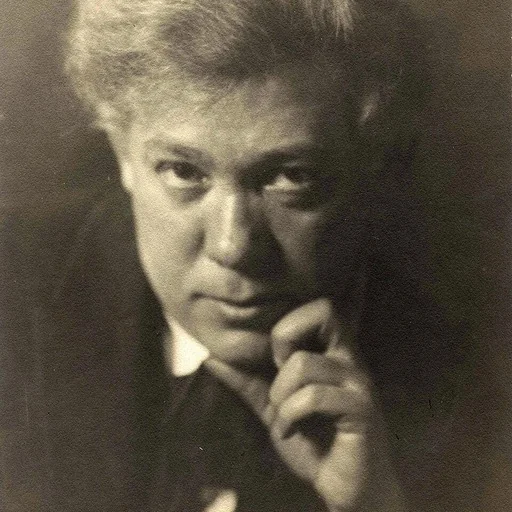
Abraham Walkowitz (March 28, 1878 – January 27, 1965) was a Russian–American painter who was among the first generation of American modernists.