Artwork
Washer Women
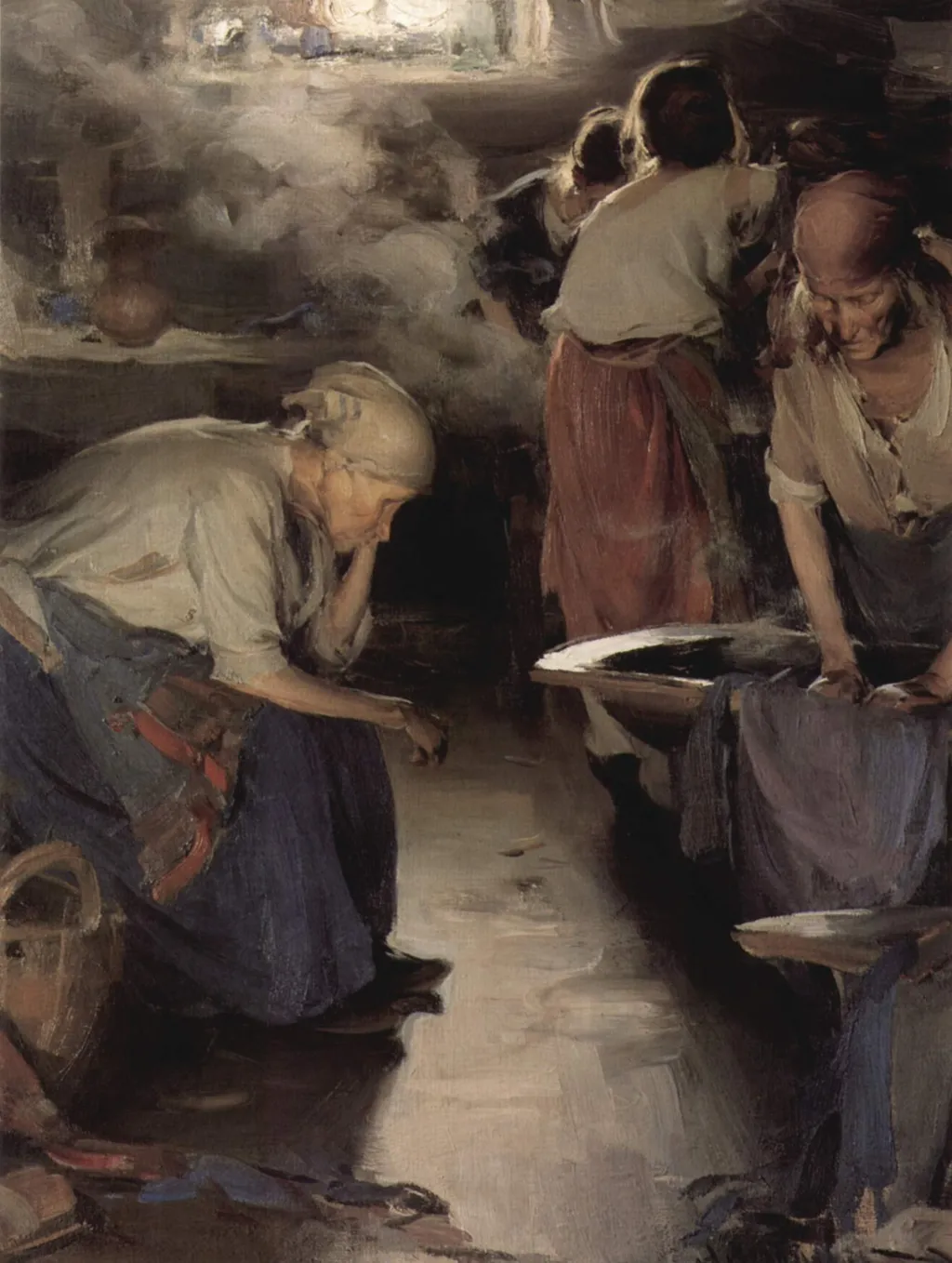
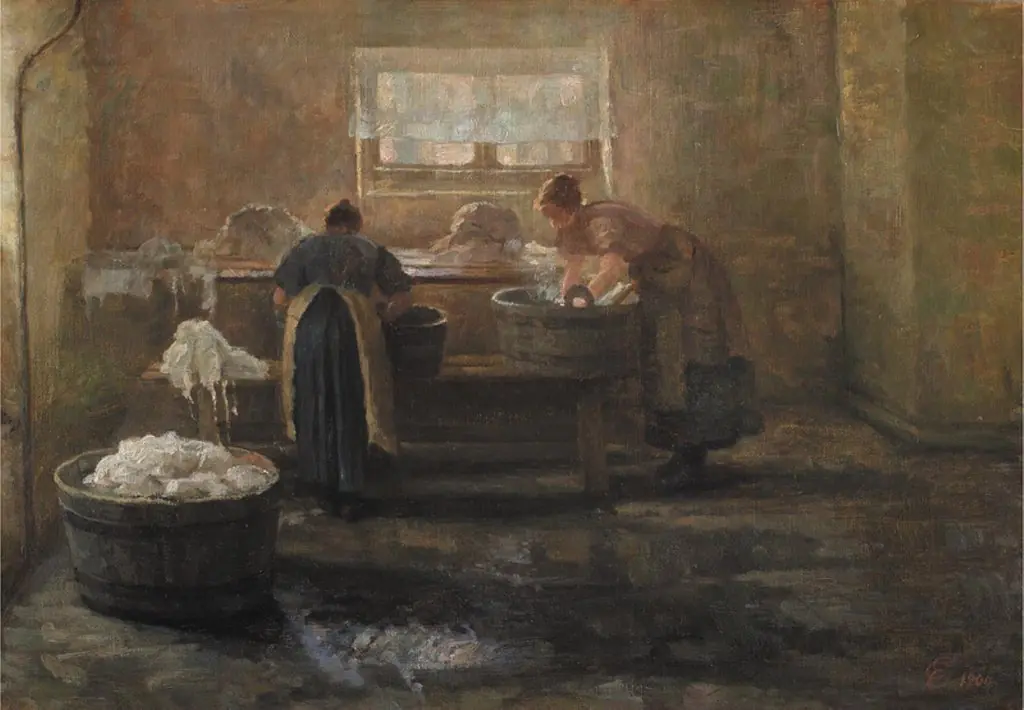
Washer Women is an oil painting by the Impressionist artist Abram Arkhipov. It dates from 1901 and is held in the collection of the Tretyakov Gallery.
About this work
Overview
Painted in 1901 by Abram Arkhipov, *Washer Women* is an oil-on-canvas work that captures laborers engaged in domestic textile cleaning.
Painted in 1901 by Abram Arkhipov, *Washer Women* is an oil-on-canvas work that captures laborers engaged in domestic textile cleaning. Though linked to Russian realist traditions and the Wanderers movement, its handling of light and texture aligns with broader late-nineteenth-century tendencies toward atmospheric realism. The painting resides in the Tretyakov Gallery, Moscow, as part of its collection of socially conscious Russian art.
Subject & Meaning
The painting portrays a group of women bent over large tubs, scrubbing laundry in a dim interior. Their headscarves and long dresses suggest rural or working-class attire, while their focused expressions convey endurance rather than despair. The absence of narrative drama or idealization emphasizes the quiet dignity of repetitive labor, reflecting Arkhipov’s interest in the lives of ordinary people under harsh conditions.
Technique & Style
Arkhipov employed loose, visible brushwork to suggest motion and texture, particularly in the wet fabrics and rippling water. A muted palette of browns, grays, and dull ochres dominates, reinforcing the somber atmosphere. Chiaroscuro is used subtly to model forms and direct attention, with slivers of light cutting through the gloom to highlight shoulders, hands, and the edges of tubs, enhancing spatial depth without theatricality.
History & Provenance
Completed in 1901, the painting was acquired by Pavel Tretyakov for his eponymous gallery, which actively collected works by artists aligned with social realism. Arkhipov, a member of the Union of Russian Artists, was known for depicting laboring women, and this piece was among several that contributed to his reputation for empathetic, unromanticized portrayals of working life in late Tsarist Russia.
Context
In early twentieth-century Russia, urbanization and industrialization intensified scrutiny of labor conditions. Artists like Arkhipov responded by turning to scenes of domestic and manual work, often overlooked by academic traditions. *Washer Women* fits within a broader cultural moment in which realism became a vehicle for acknowledging the invisible labor sustaining daily life, particularly among women in provincial and urban poor communities.
Legacy
The painting remains a reference point in Russian art history for its restrained emotional tone and technical sensitivity to light and form. While not widely exhibited internationally, it continues to inform scholarly discussions on gender, labor, and representation in late Imperial art. Its quiet intensity distinguishes it from more overtly political works of the era, offering a contemplative portrait of resilience.
Own this work as a print
Artist & collection
Artist
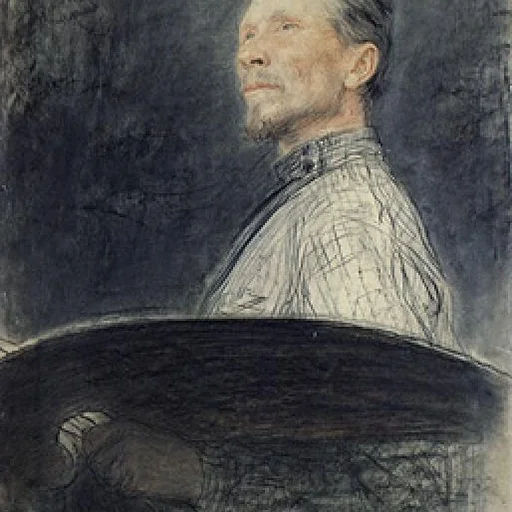
Abram Efimovich Arkhipov (Russian: Абра́м Ефи́мович Архи́пов; 27 August 1862 – 25 September 1930) was a Russian realist artist, who was a member of the art collective The Wanderers as well as the Union of Russian Artists.