Artwork
Cottage Interior
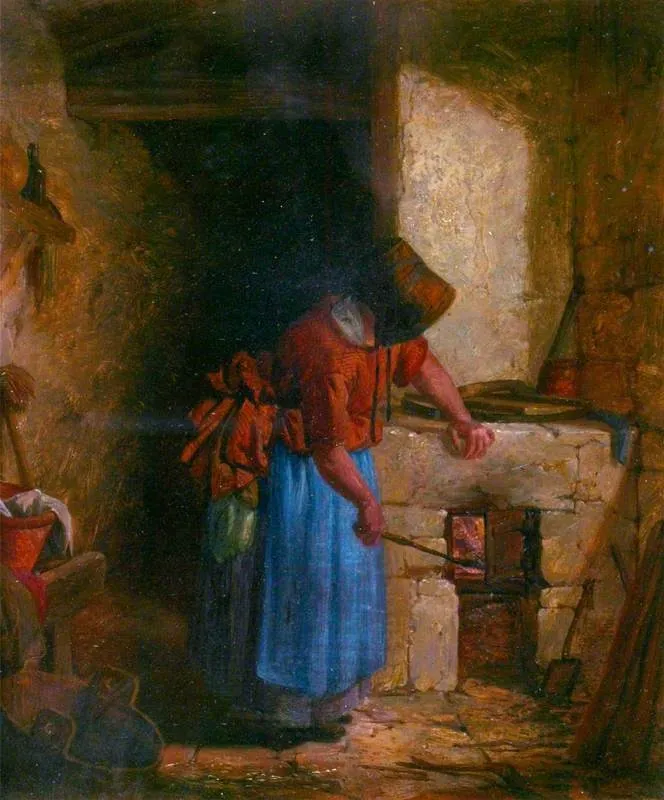
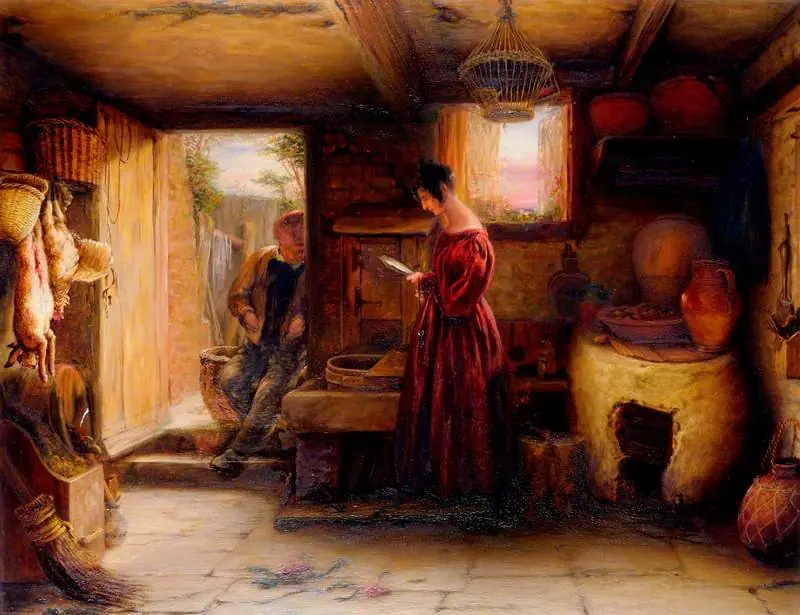
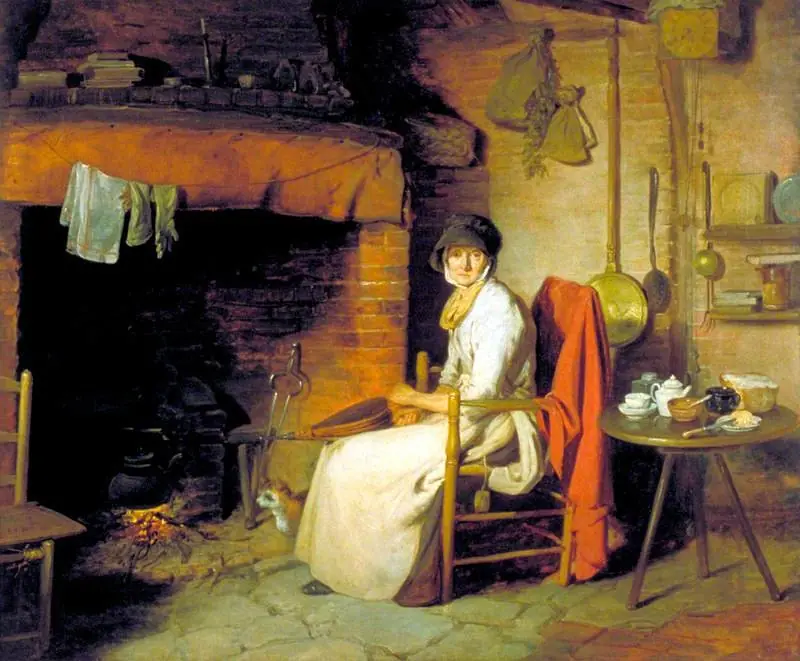
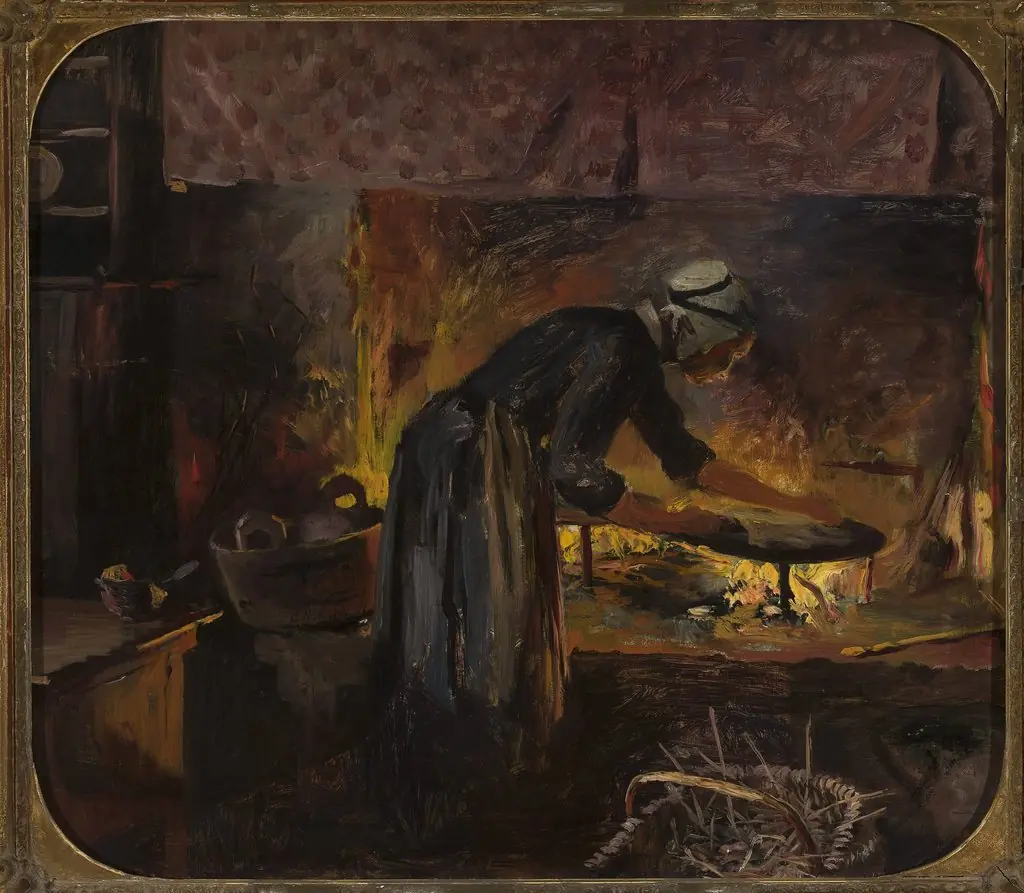
Cottage Interior is an unspecified painting by David Hardy. It is held in the collection of the Victoria and Albert Museum. This painting captures a quiet moment inside a rural cottage, centered on a woman preparing food by the hearth.
About this work
Overview
The composition emphasizes stillness and routine, with minimal detail beyond the essentials of the space and figure.
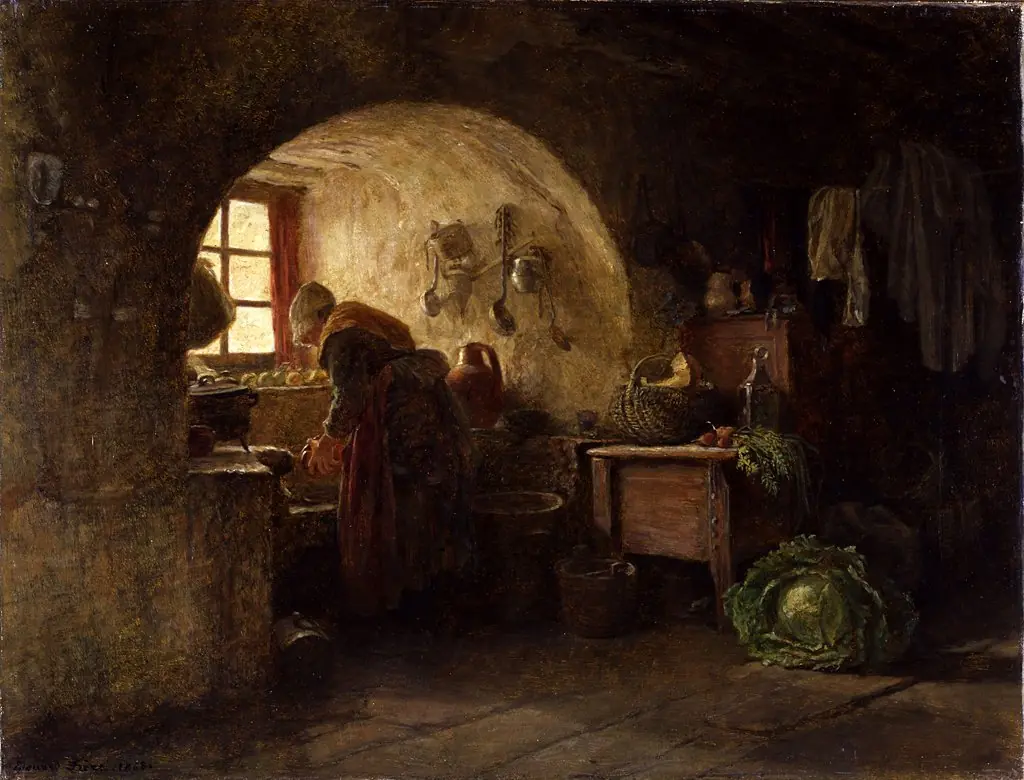
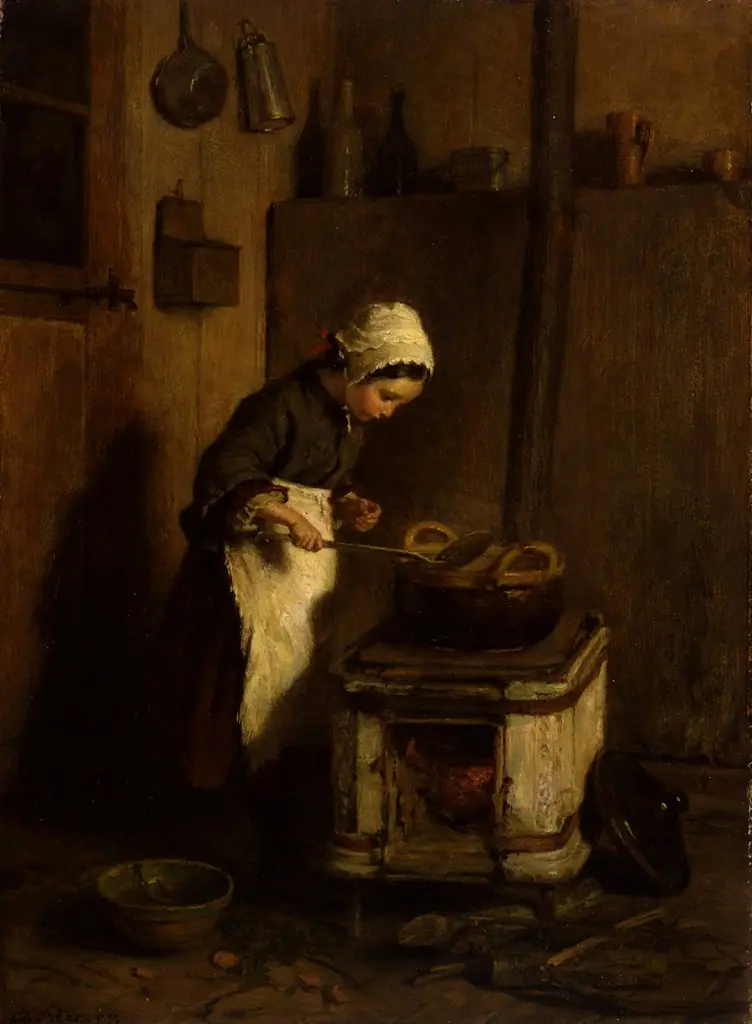
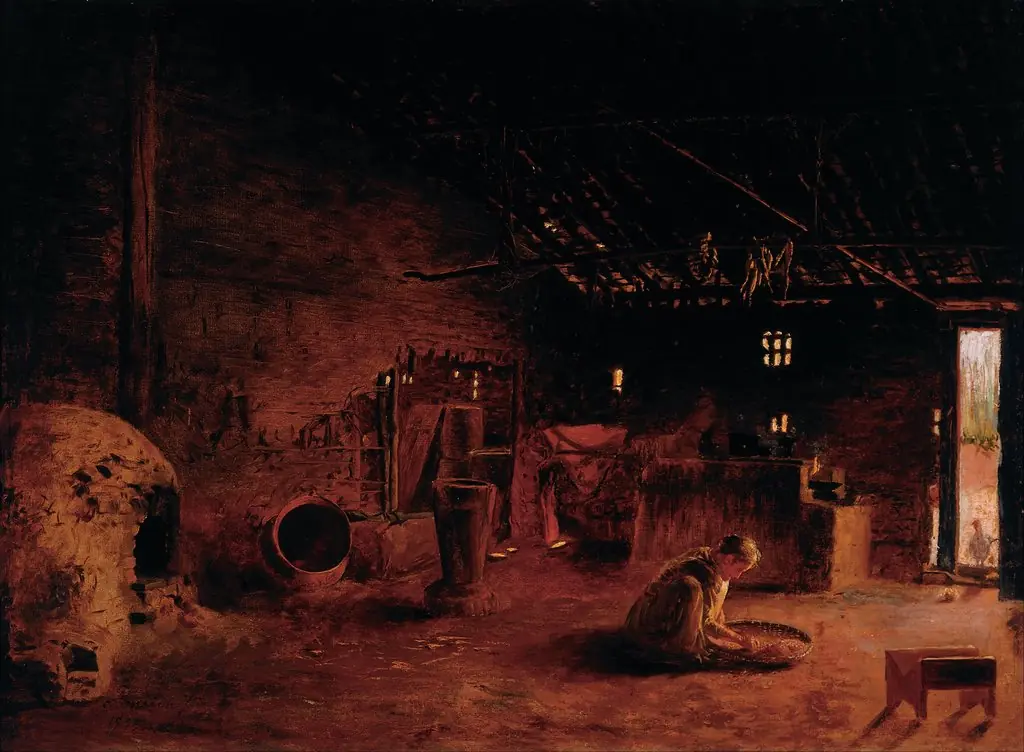
This painting captures a quiet moment inside a rural cottage, centered on a woman preparing food by the hearth. The composition emphasizes stillness and routine, with minimal detail beyond the essentials of the space and figure. The dim interior, illuminated only by the fire, reinforces the intimacy of the scene. The work aligns with 19th-century traditions of domestic realism, focusing on unidealized daily labor.
Subject & Meaning
The woman, dressed in a blue skirt and red bodice with a white head covering, is engaged in the mundane act of cooking. Her focused posture and the absence of other figures suggest solitude and routine. The scene carries no narrative drama, instead conveying the dignity of ordinary work. The setting implies a life of modest means, where survival depends on steady, unseen effort.
Technique & Style
The artist employs muted tones and controlled brushwork to render the interior’s textures—rough stone, worn brick, and the glow of embers. Light is used sparingly, emerging only from the fire to model the woman’s form and the surrounding surfaces. Shadows dominate, enhancing the sense of enclosure and quiet. The style avoids embellishment, favoring observation over theatricality.
History & Provenance
The painting is attributed to David Hardy, known for his depictions of rural English life in the late 19th century. While specific acquisition records are not widely documented, the work fits within a broader corpus of genre scenes produced during a period when domestic interiors became subjects of artistic interest. Its survival suggests it was held in private collections before entering institutional care.
Context
This image reflects a growing 19th-century interest in the lives of working-class households, particularly in Britain. As industrialization reshaped society, artists turned to rural and domestic scenes as counterpoints to urban change. Hardy’s work, like that of contemporaries such as John Everett Millais, sought to portray authenticity in everyday routines, often with quiet reverence.
Legacy
Though not widely exhibited, the painting contributes to a body of work that preserved the visual record of pre-industrial domestic life. Its restrained aesthetic influenced later regional realists who valued understated narrative. Today, it remains a quiet testament to the visibility of labor often overlooked in art history, offering insight into the rhythms of rural existence.
Artist & collection
Artist
David Hardy used to wake up in a rented attic in London with a sketchbook full of half-finished scenes of ordinary cottages and cramped back alleys.