Artwork
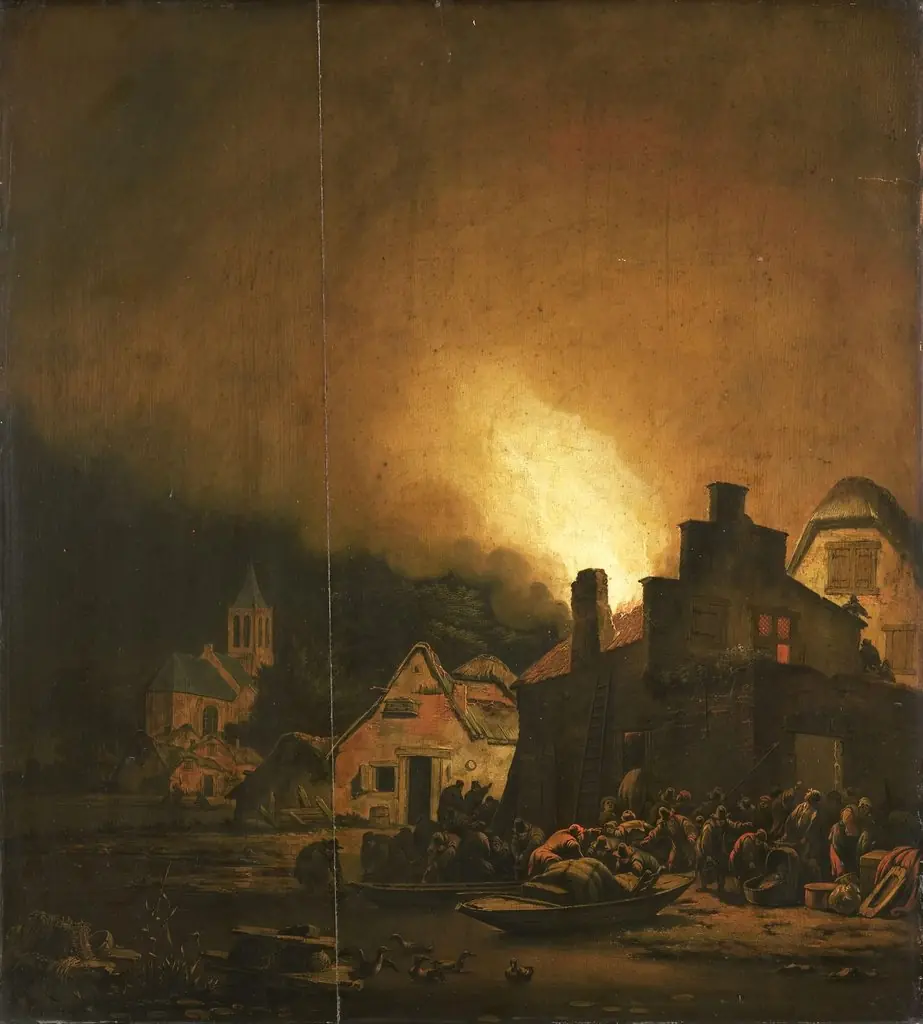
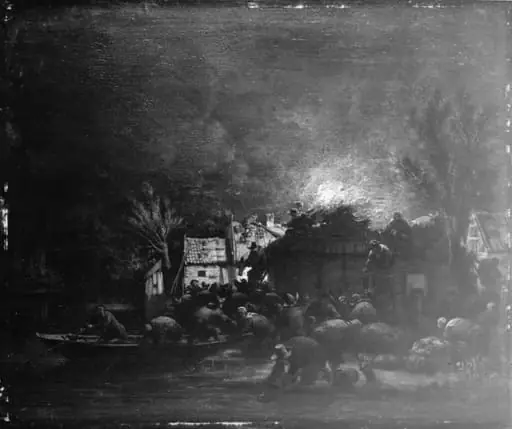
Fire by night in a Village
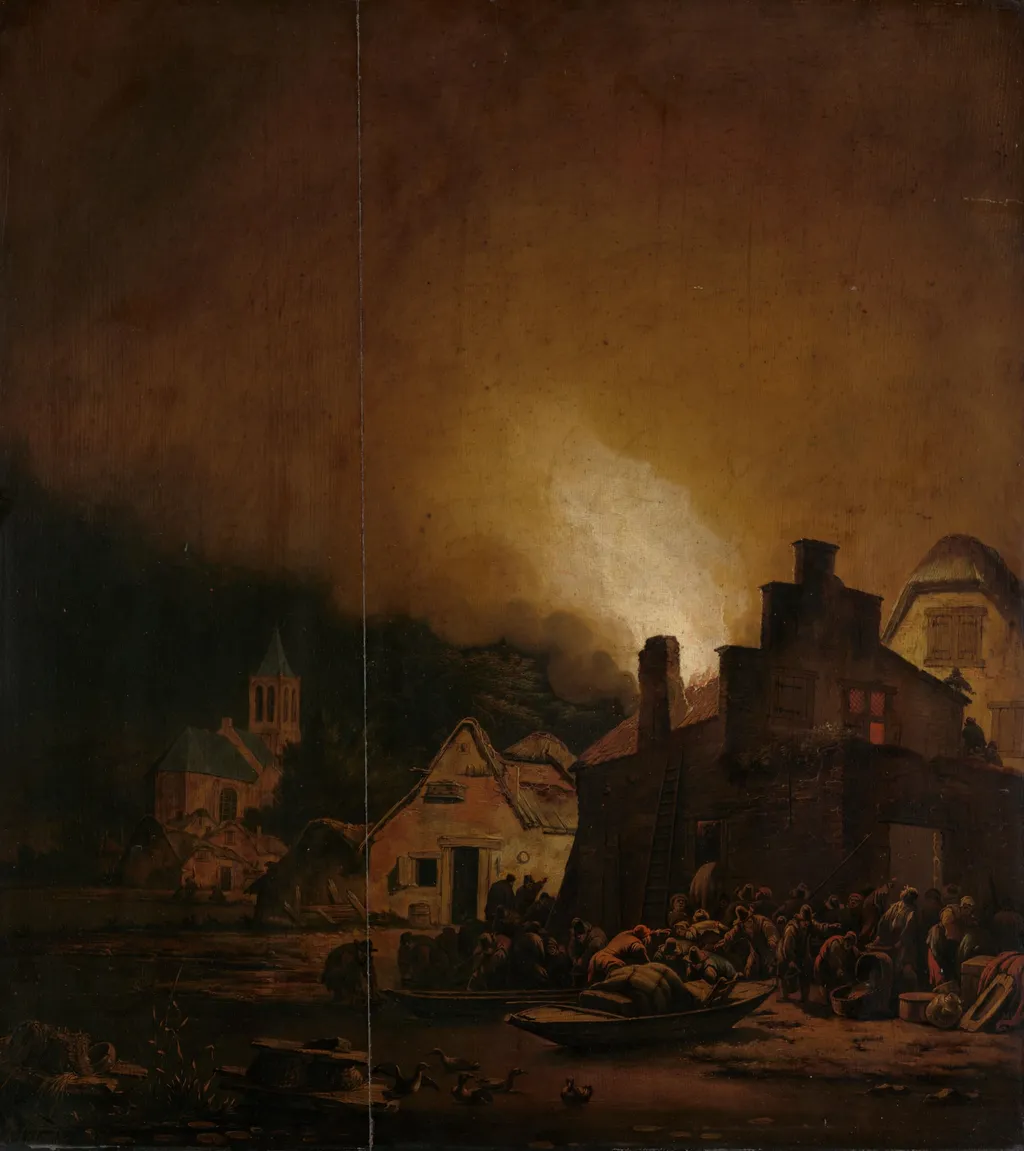
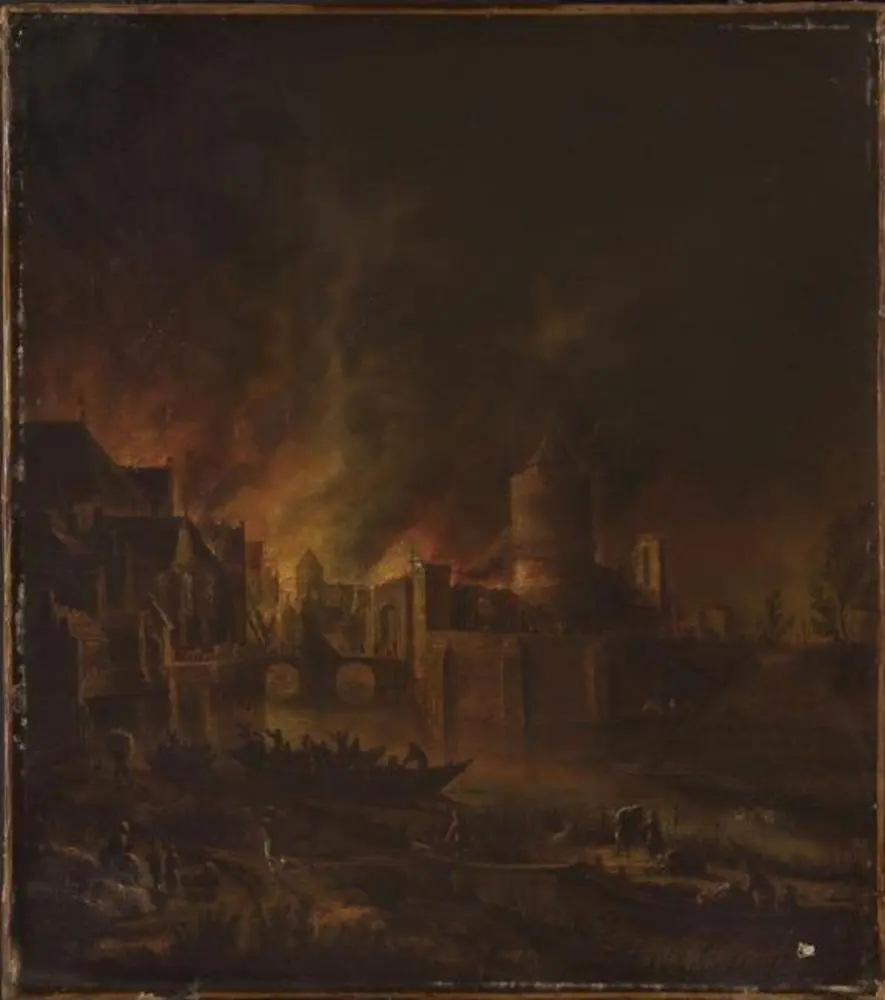
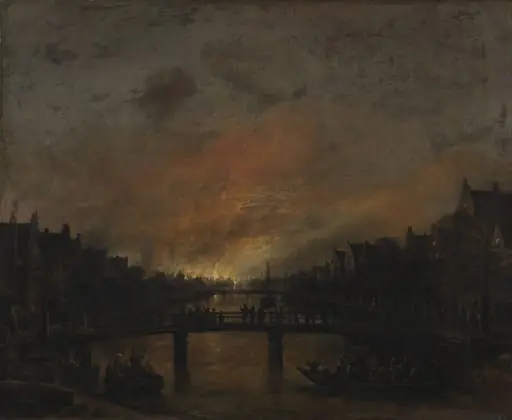
Fire by night in a Village is an unspecified painting by the Dutch Golden Age artist Adam Colonia. It dates from 1668 and is held in the collection of the Rijksmuseum. The painting depicts a nocturnal village scene dominated by a house engulfed in flames.
About this work
Overview
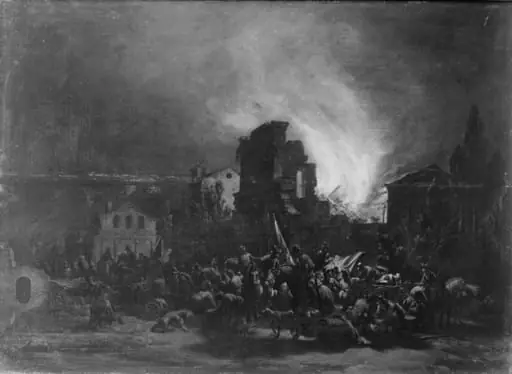
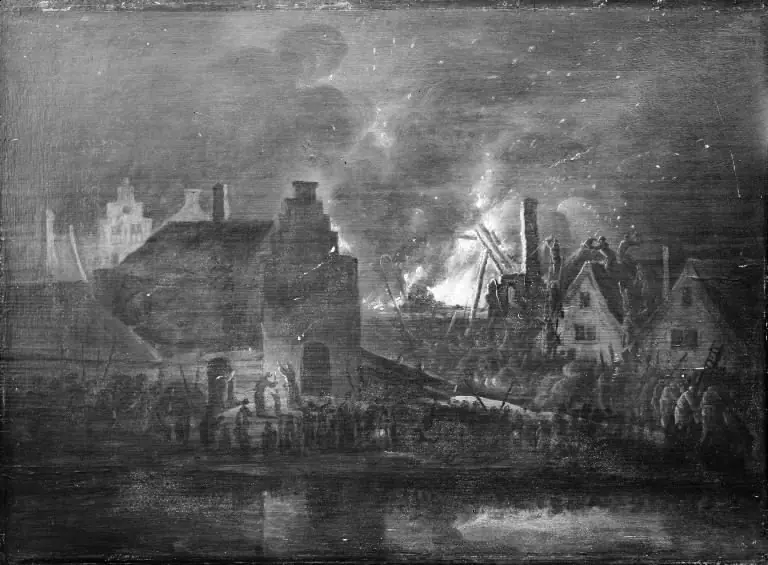
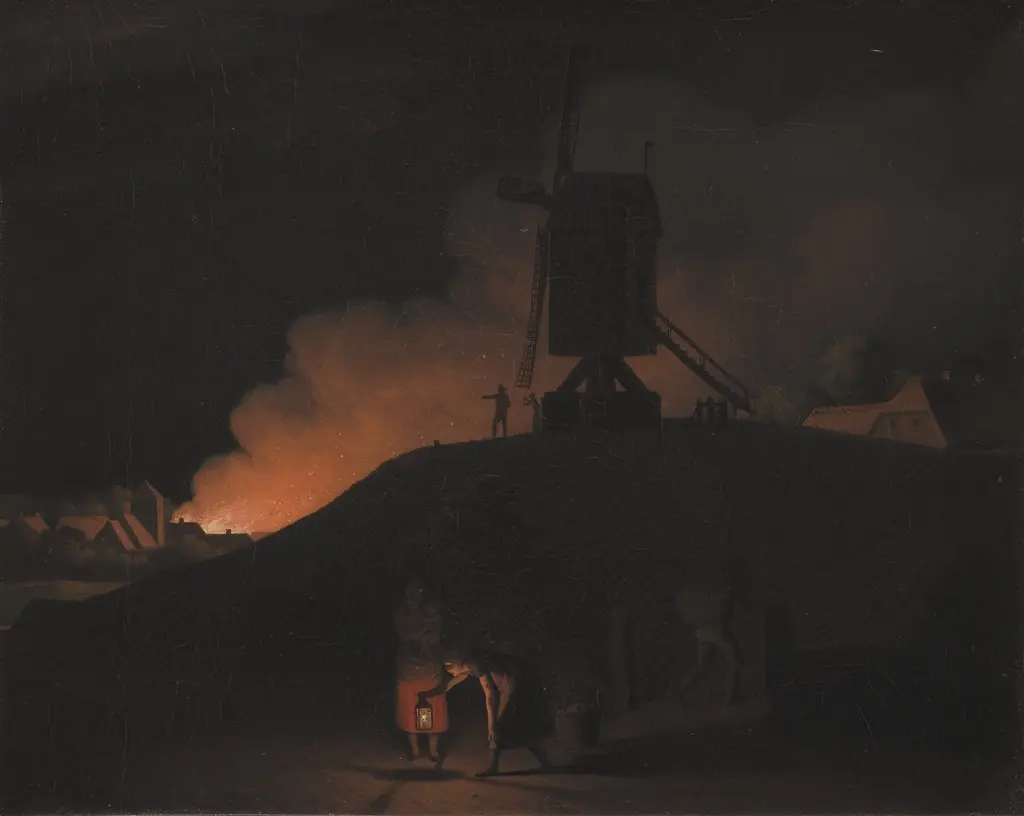
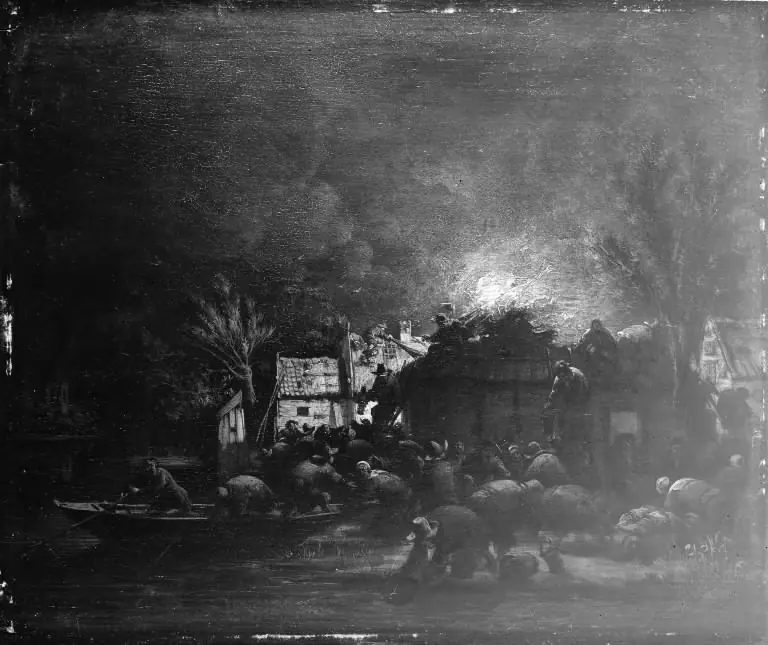
The painting depicts a nocturnal village scene dominated by a house engulfed in flames. The fire casts a vivid orange glow that illuminates surrounding figures and the dark sky, creating a stark contrast between light and shadow. The composition captures a moment of urgent activity as villagers gather around the burning structure.
Subject & Meaning
The work focuses on a communal response to disaster, showing villagers hurriedly removing furniture and belongings from the inferno. The emphasis on immediate, practical action rather than heroic drama suggests an interest in everyday human reactions to crisis, highlighting both vulnerability and collective effort in the face of sudden danger.
Technique & Style
Executed without a signature, the painting relies on a pronounced chiaroscuro effect, juxtaposing the bright, flickering fire against deep, enveloping darkness. The handling of light defines forms and creates a sense of depth, while the loose brushwork around the figures conveys movement and tension, reinforcing the scene’s urgency.
History & Provenance
The artist’s identity remains unknown, as no signature or documented attribution accompanies the canvas. The work’s provenance is limited to its appearance in private collections before entering a public holding, where it has been catalogued as an anonymous example of 19th‑century genre painting.
Artist & collection