Artwork
Fire at Amsterdam by Night
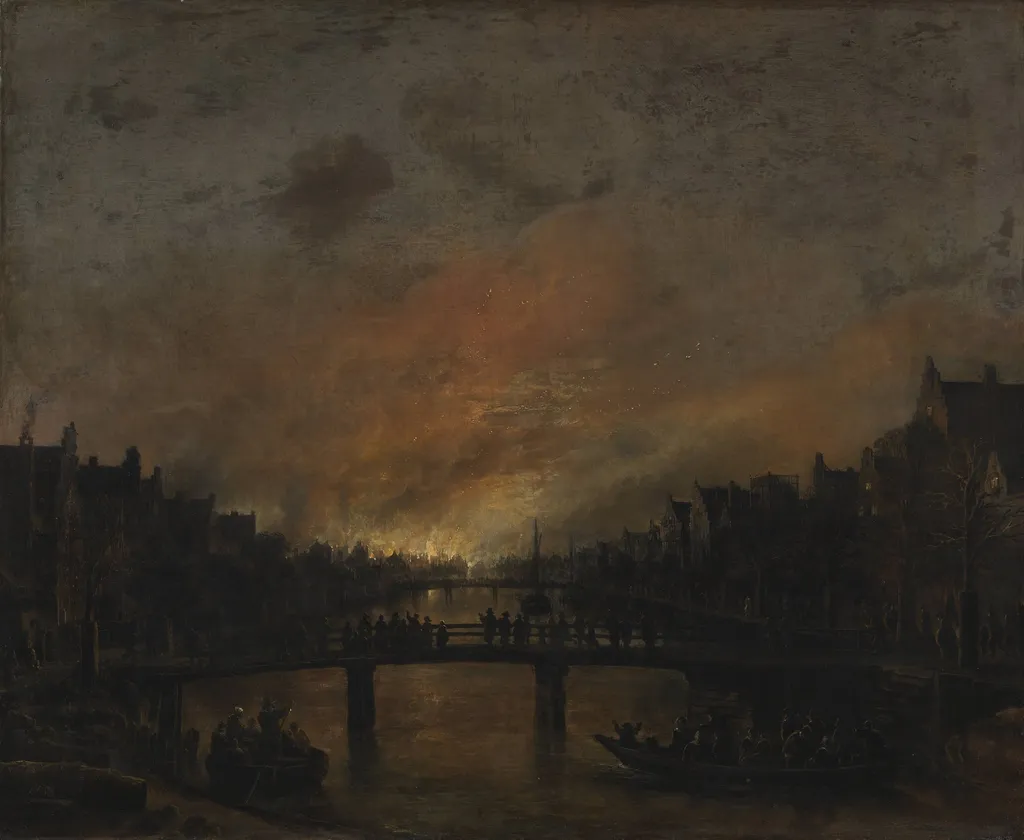
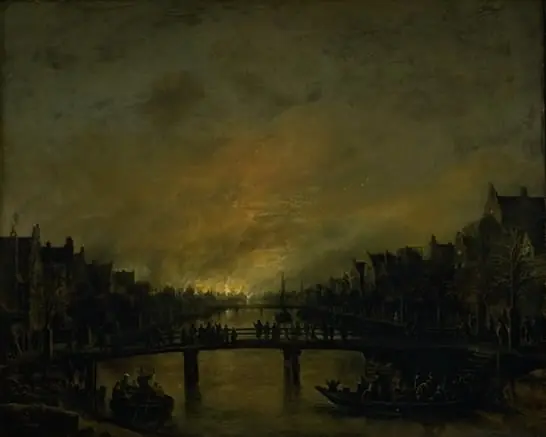
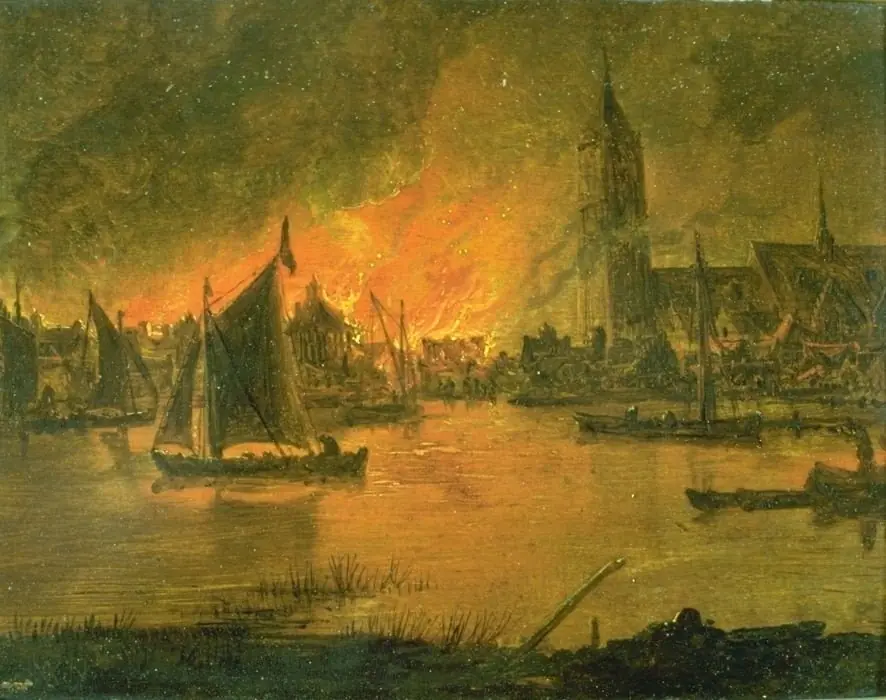
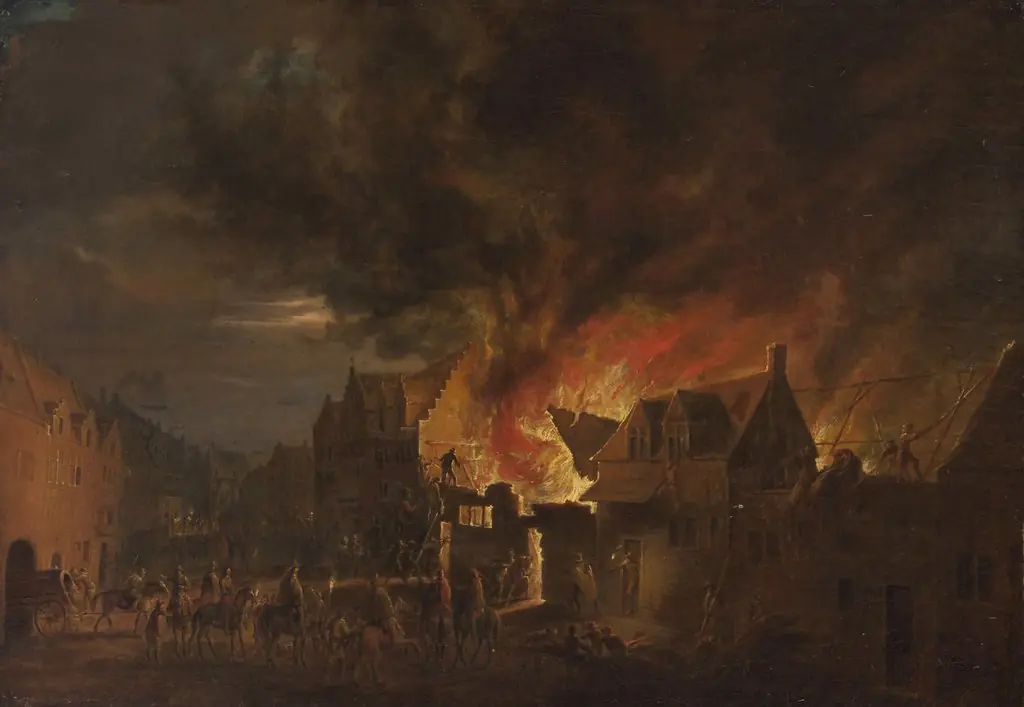
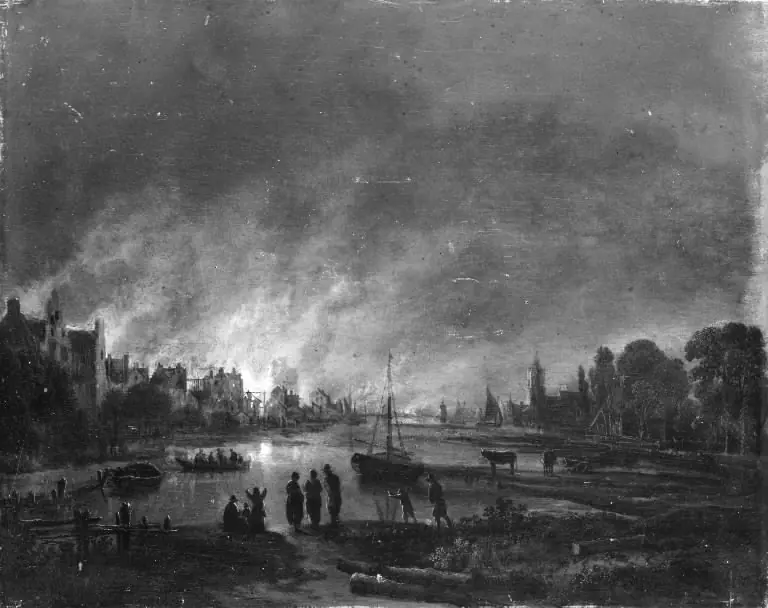
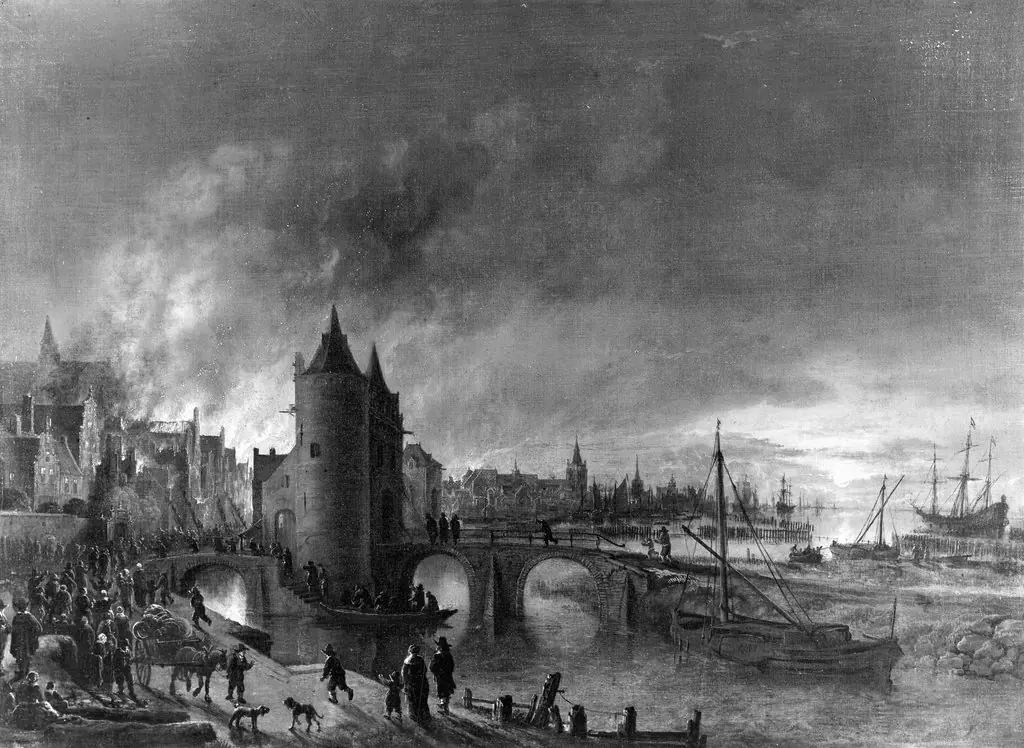
Fire at Amsterdam by Night is a photography by Unknown. It dates from 1650 and is held in the collection of the Statens Museum for Kunst. This nocturnal landscape depicts a major urban fire in Amsterdam, rendered in oil on panel around 1650.
About this work
Overview
The composition emphasizes the contrast between the cold night and the intense heat of the blaze, conveying a sense of sudden, overwhelming destruction.
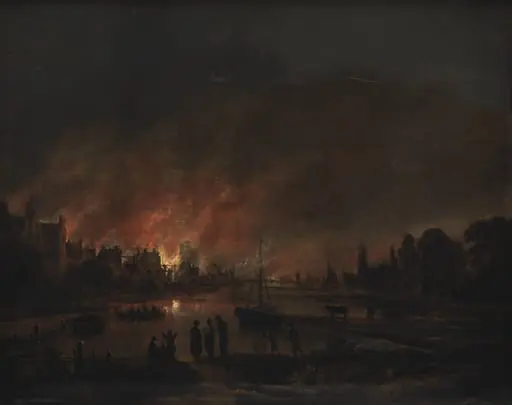
This nocturnal landscape depicts a major urban fire in Amsterdam, rendered in oil on panel around 1650. The scene captures the city engulfed in flames, with the sky dark and the water of a nearby canal reflecting the glow. Figures stand along a quay, observing the disaster in silence. The composition emphasizes the contrast between the cold night and the intense heat of the blaze, conveying a sense of sudden, overwhelming destruction.
Subject & Meaning
The painting portrays a real event: a catastrophic fire that swept through a densely built district of Amsterdam. Rather than dramatizing heroism or rescue, the artist focuses on the collective stillness of onlookers, suggesting awe or helplessness in the face of disaster. The absence of active intervention underscores the scale of the fire and the vulnerability of urban life in the 17th century.
Technique & Style
The artist employs a restrained palette dominated by deep browns, blacks, and muted greens, with selective use of warm ochres and reds to simulate firelight. Brushwork is precise in the silhouetted architecture but looser in the flickering flames, creating a tension between structure and chaos. Light is used not for clarity but to isolate the fire’s reach, enhancing the painting’s somber, atmospheric tone.
History & Provenance
The painting was likely commissioned or acquired by a civic or private collector soon after the fire, as such scenes were sometimes preserved as records of urban calamities. It entered the collection of the Museum of Ethnography in the late 19th century, possibly due to its anthropological value as a depiction of communal response to disaster, rather than as a traditional historical painting.
Context
Amsterdam in the mid-17th century was rapidly expanding, with wooden structures packed closely together, making fires a persistent threat. While the city had organized fire brigades, large conflagrations still occurred with devastating effect. This image reflects a broader European interest in documenting urban disasters, not as spectacle but as sober reminders of fragility in prosperous cities.
Legacy
The work remains one of the few known depictions of a specific Amsterdam fire from this period. Its quiet, observational approach distinguishes it from more theatrical fire scenes of the era. Today, it serves as a historical document of urban vulnerability and public reaction, valued more for its testimony than its artistic innovation.
Artist & collection

 Domestic Scene
 Giacomo and Cardinal Marco, investing Andrea, Abbot of San Zeno, with his Benefice
 The Nymph of Fontainebleau
 Portrait of a Woman
 Madonna and Child with Saints in the Enclosed Garden
 Venus and Minerva
 Family Group of Four on Sofa
 Wall painting from Room H of the Villa of P. Fannius Synistor at Boscoreale