Artwork
View of a submontane village
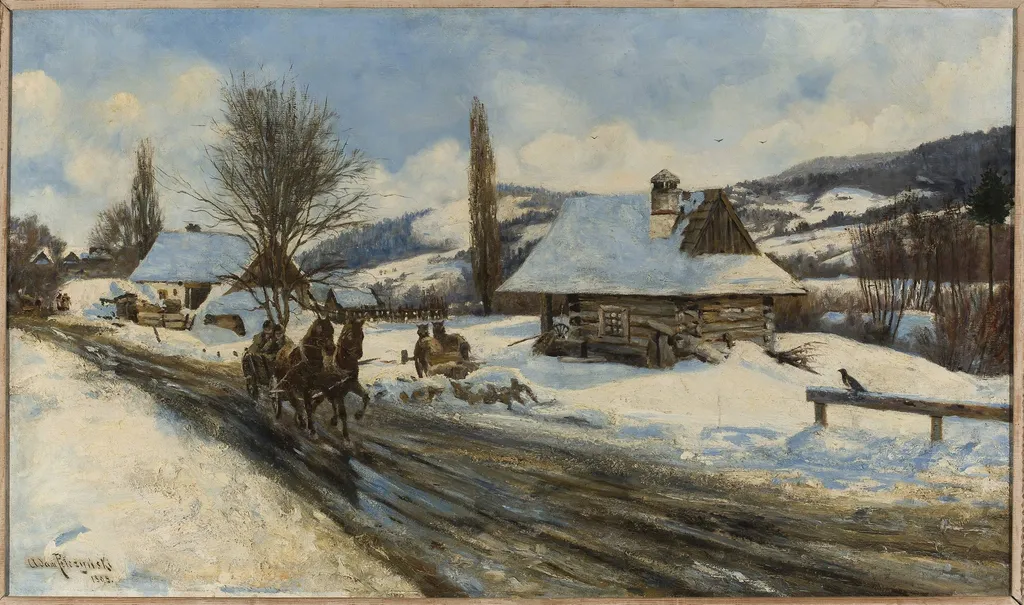
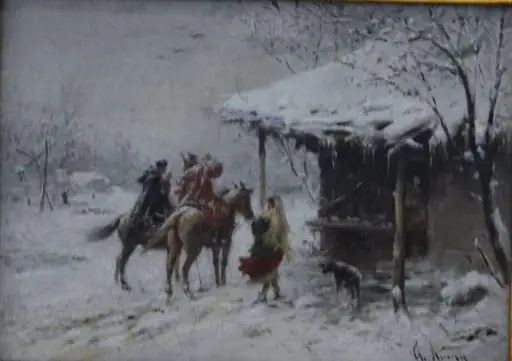
View of a submontane village is an oil painting by the Impressionist artist Adam Pełczyński. It dates from 1898 and is held in the collection of the National Museum in Warsaw.
About this work
Overview
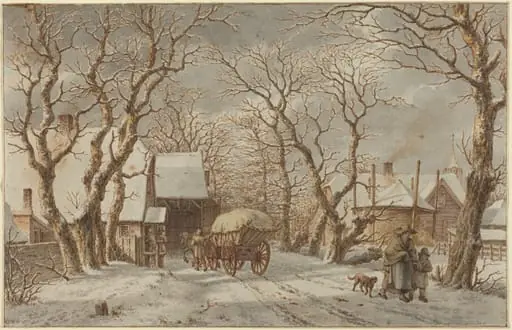
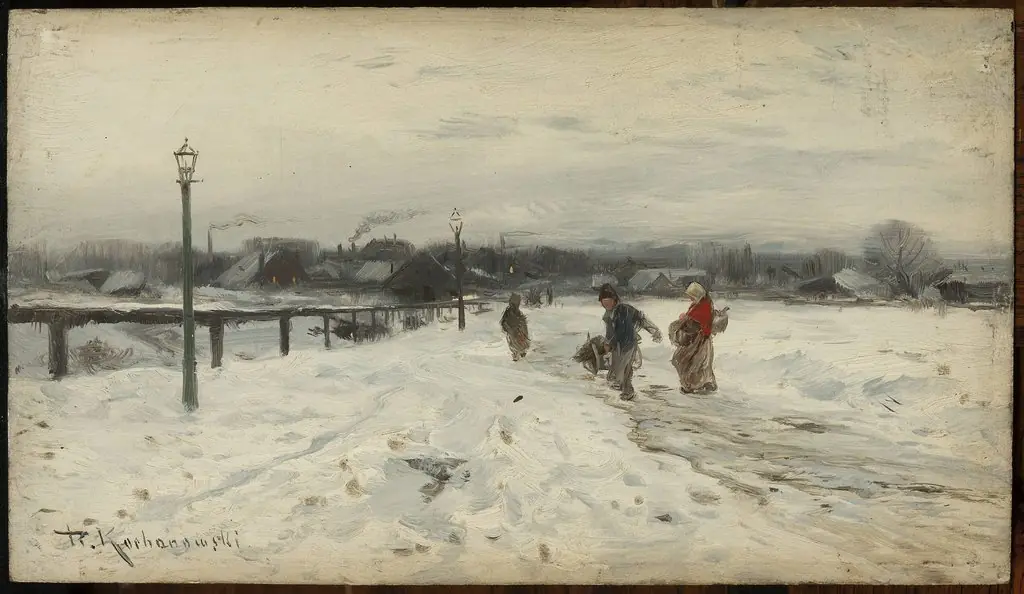
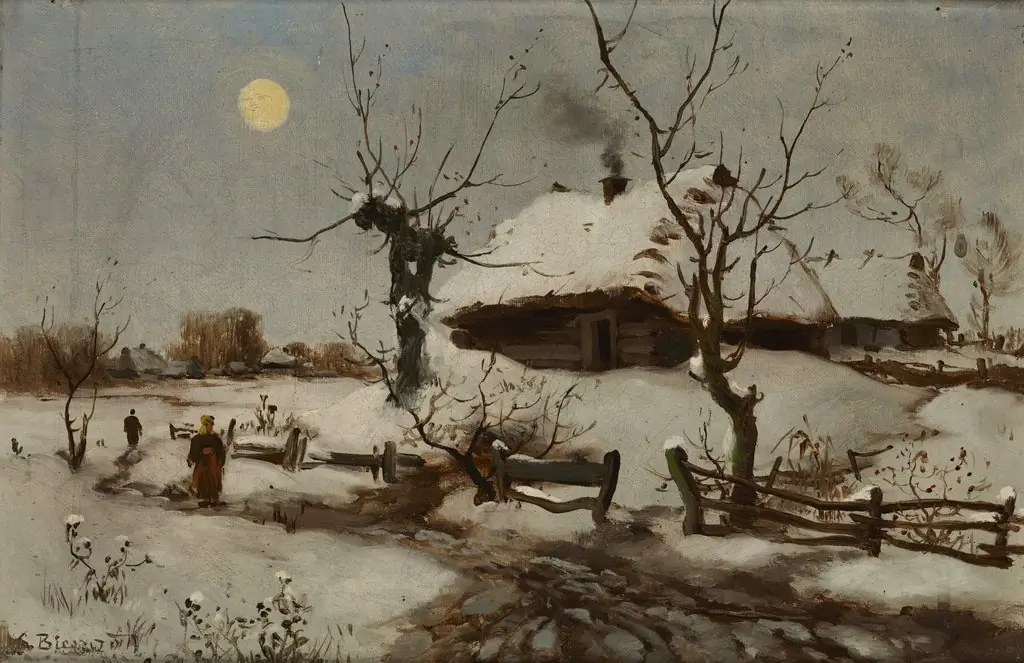
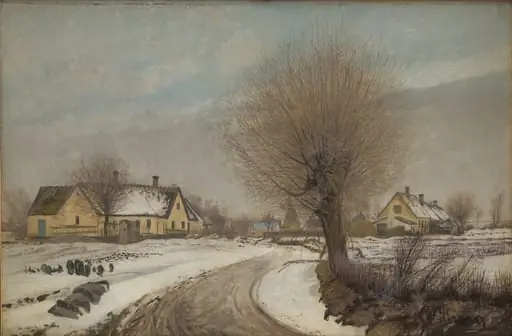
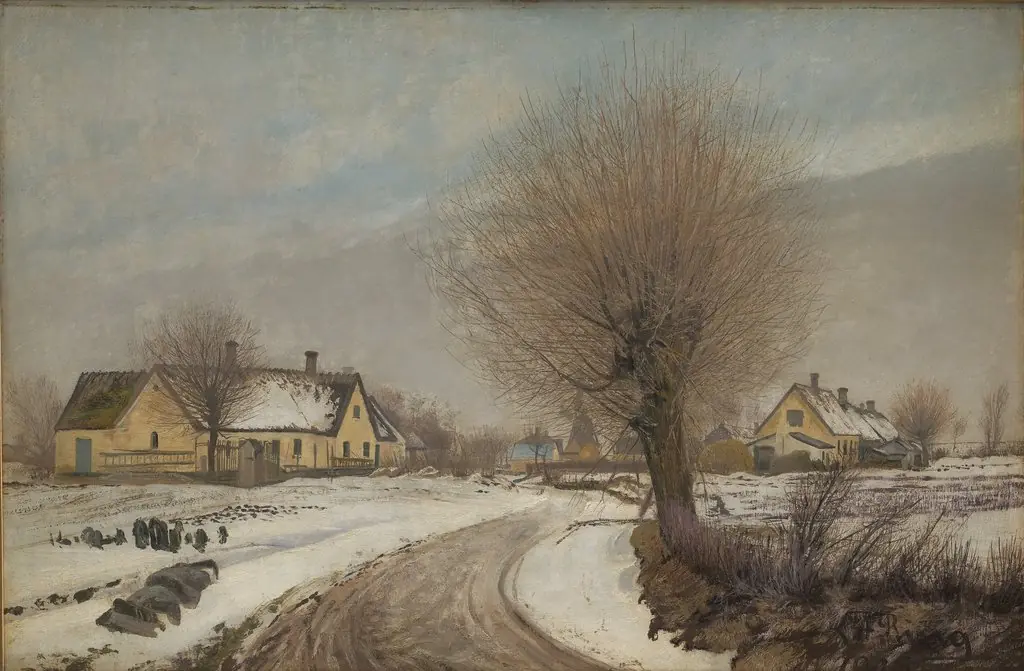
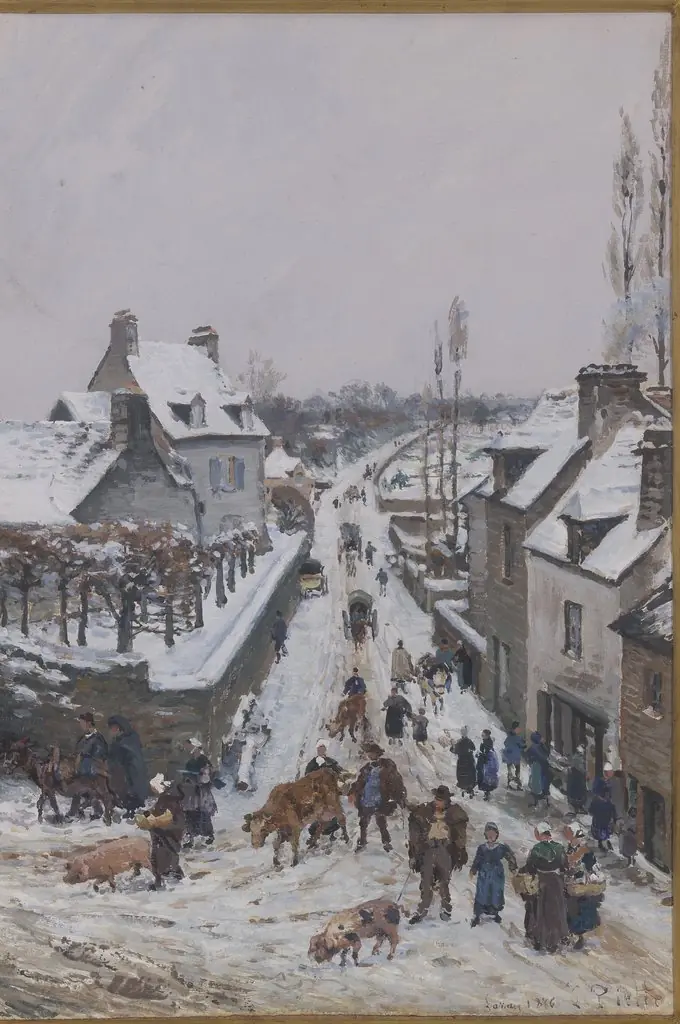
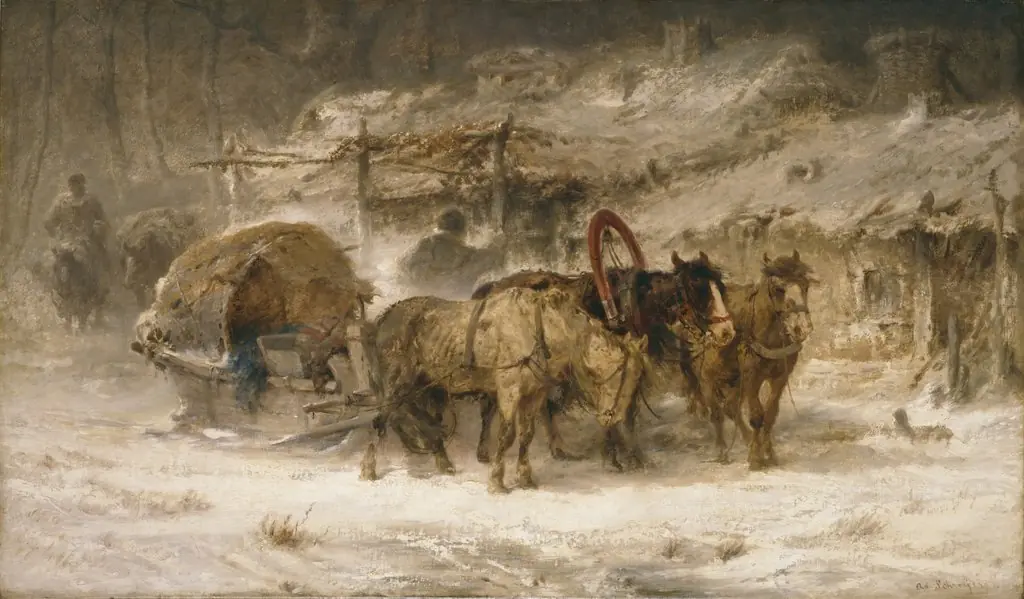
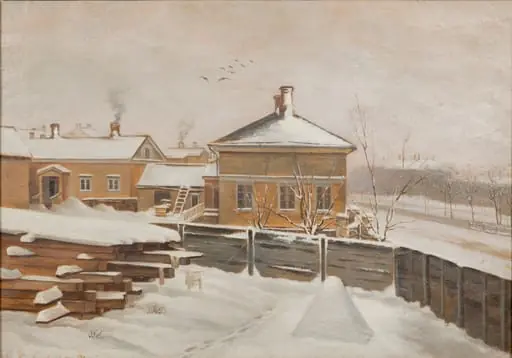
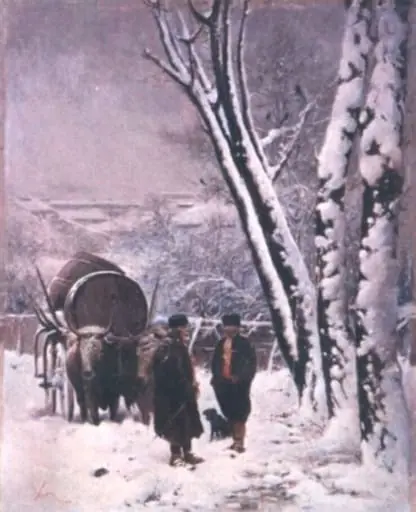
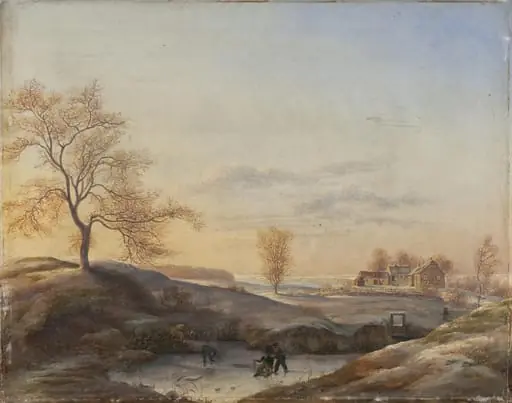
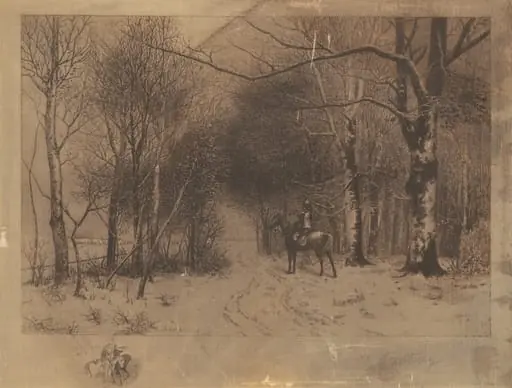
Adam Pełczyński’s oil painting, completed in 1898, depicts a tranquil winter landscape in a low‑lying mountain village. The composition centers on a snow‑blanketed road where a small group of riders on horses passes modest dwellings, while gentle hills and trees frame the scene beneath a pale blue sky mottled with clouds.
Subject & Meaning
The work captures a moment of quiet rural life, emphasizing the harmony between human activity and the surrounding natural environment. The riders, modest in number, suggest a communal journey or daily routine, while the soft lighting and muted palette convey a sense of calm and seasonal repose.
Technique & Style
Executed in oil on canvas, Pełczyński employs a restrained color scheme of cool blues and warm earth tones, allowing the snow’s brightness to contrast with the warm hues of the buildings and clothing. Brushwork is smooth and controlled, rendering the sky and distant hills with atmospheric subtlety, while the foreground figures are rendered with clearer detail.
History & Provenance
Created at the close of the 19th century, the painting entered the collection of the National Museum in Warsaw, where it remains on display. Its acquisition reflects the museum’s commitment to preserving Polish landscape painting from the period and highlights Pełczyński’s role within that artistic tradition.
Context
The piece belongs to a broader trend of late‑19th‑century European artists who turned to rural and pastoral subjects, often idealizing the simplicity of village life. In Poland, such works also resonated with a growing interest in national identity and the depiction of the countryside as a cultural touchstone.
Artist & collection
Artist
Adam Pełczyński painted quiet hills and villages the way you’d sketch a postcard to a friend—no drama, just what he saw.