Artwork
Pauline church and monastery at Skałka, Kraków
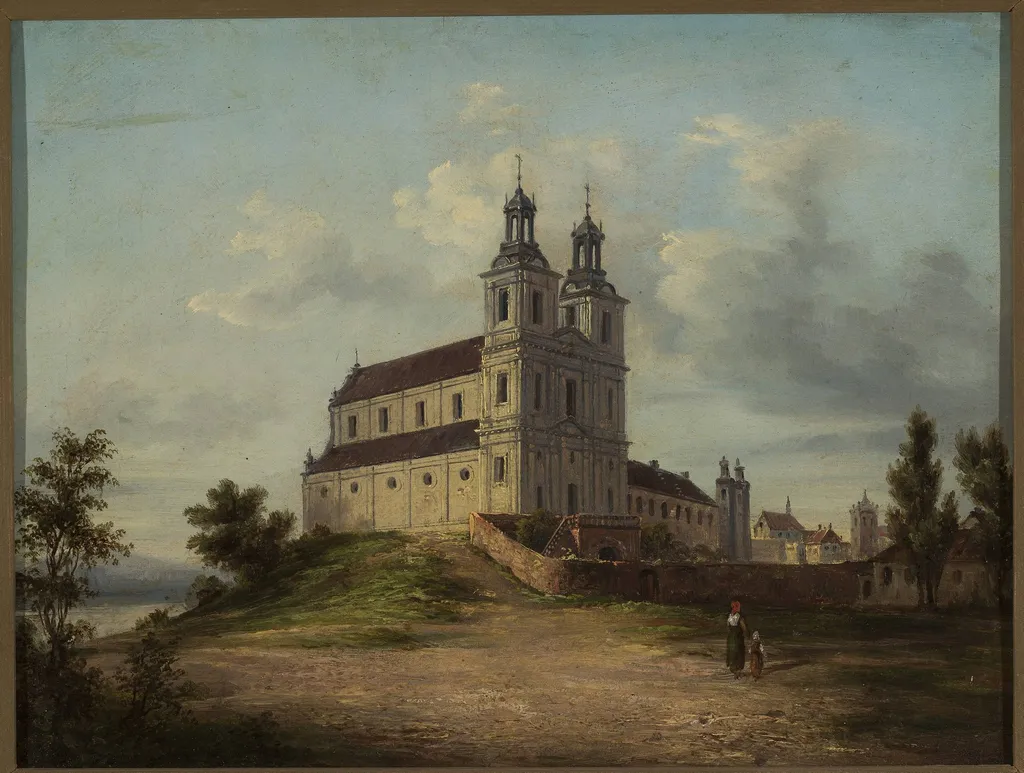
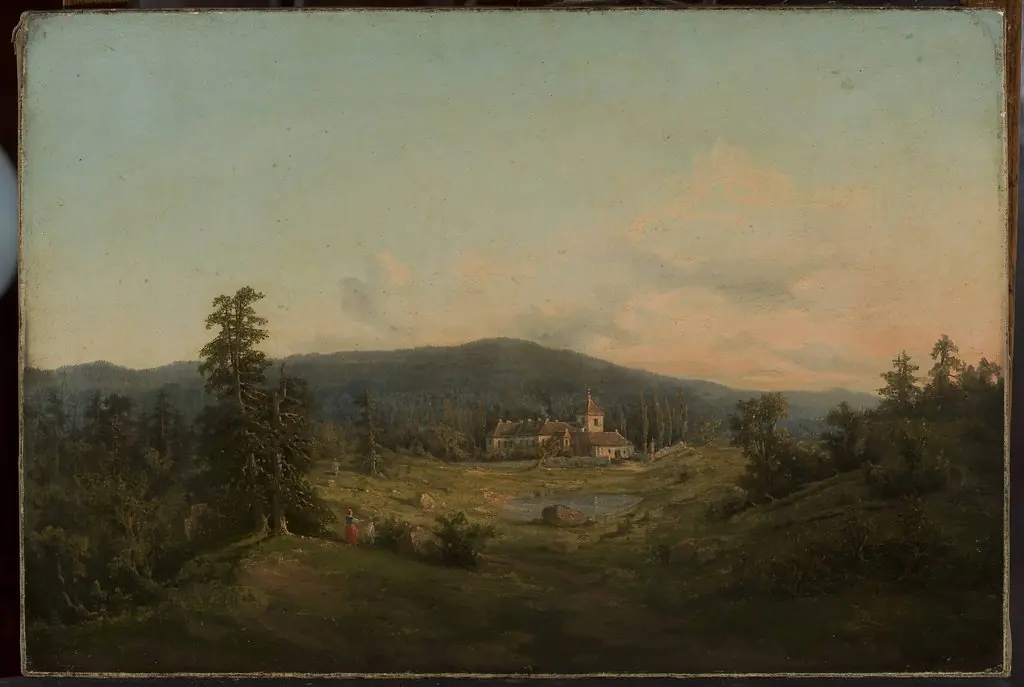
Pauline church and monastery at Skałka, Kraków is an oil painting by Adolf Kozarski. It dates from 1883 and is held in the collection of the National Museum in Warsaw.
About this work
Overview
The composition balances built structure with the organic environment, suggesting a harmony between human devotion and the land.
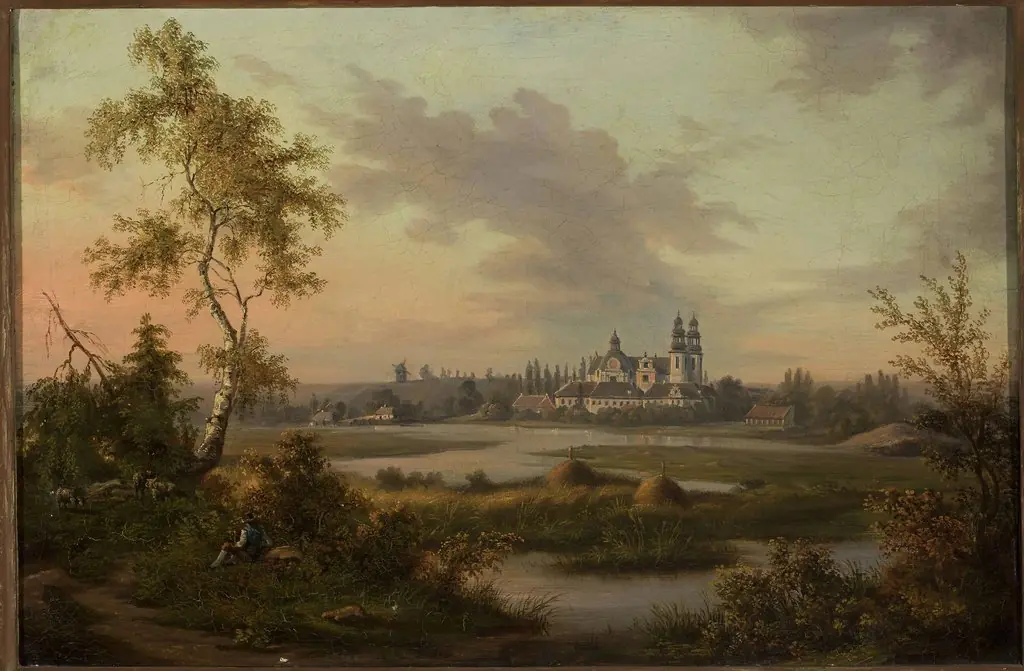
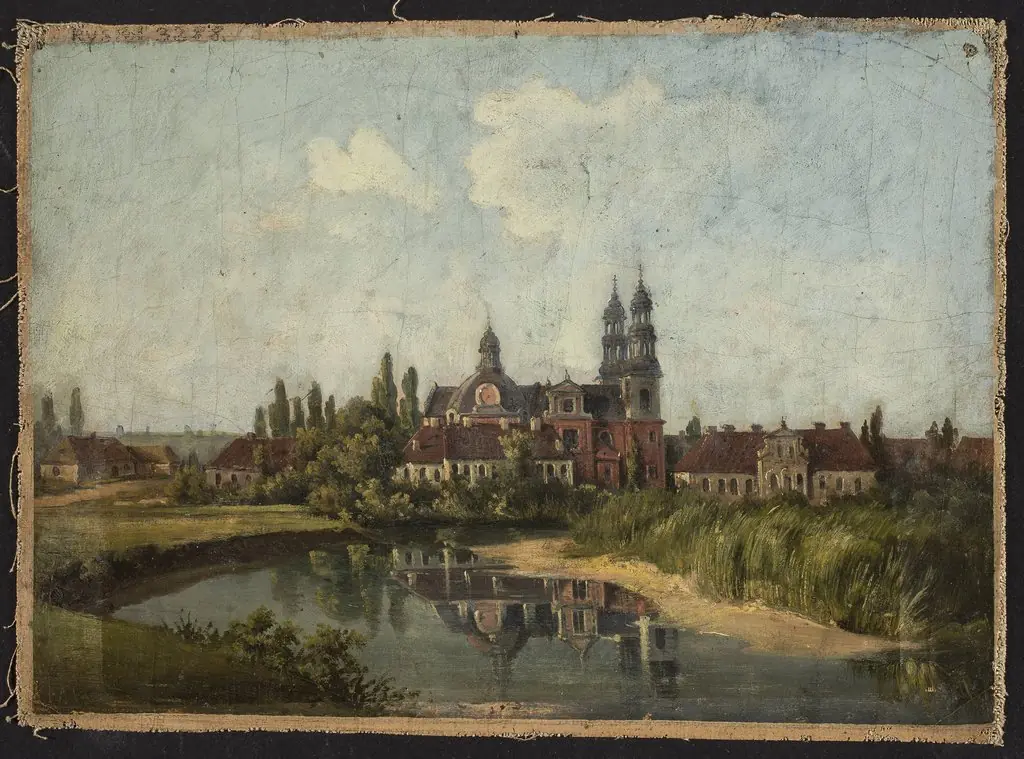
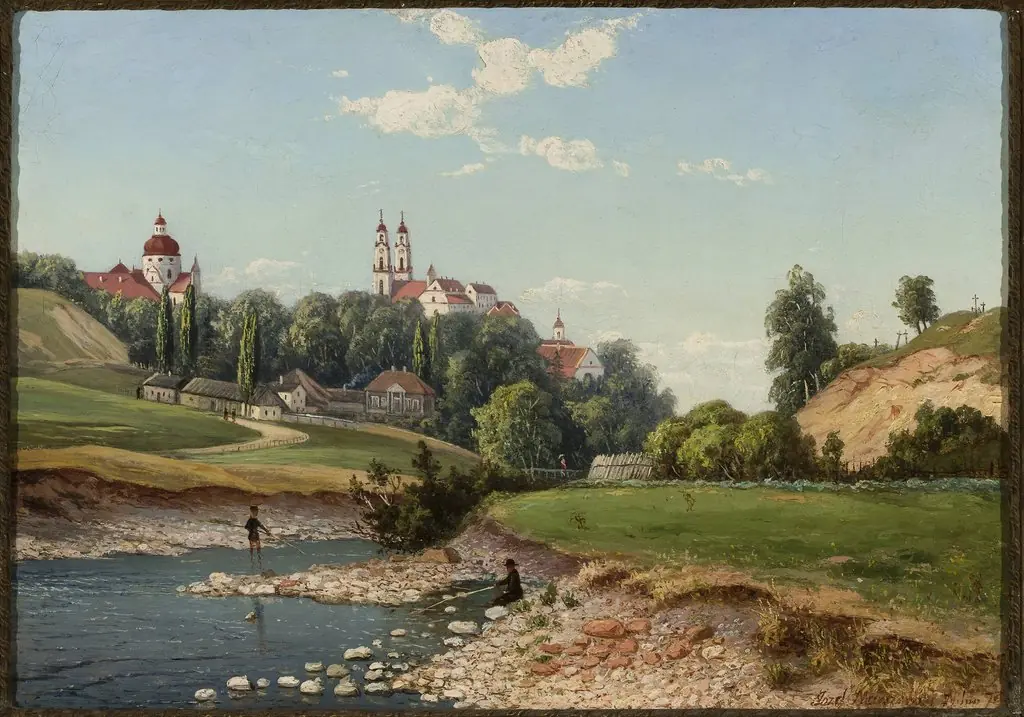
Adolf Kozarski painted the Pauline church and monastery at Skałka around 1883 in oil on canvas. The work is part of the National Museum in Warsaw’s collection. It captures a quiet, elevated religious complex nestled in the Kraków landscape, rendered with careful attention to architectural detail and natural surroundings. The composition balances built structure with the organic environment, suggesting a harmony between human devotion and the land.
Subject & Meaning
The painting portrays the historic Pauline monastery and church on Skałka Hill, a site of pilgrimage and spiritual significance since the Middle Ages. The solitary figure and dog on the path imply quiet contemplation, reinforcing the site’s role as a place of retreat. The serene atmosphere and stable architecture convey endurance and stillness, reflecting the monastic ideal of withdrawal from worldly disturbance.
Technique & Style
Kozarski employed oil paint to build layered textures, particularly in the stone walls and tree foliage. Subtle shifts in light suggest atmospheric depth, with soft transitions between the bright sky and shadowed grounds. The brushwork is precise yet unobtrusive, favoring clarity over dramatic effect. There is no overt use of chiaroscuro or impasto; instead, the style leans toward topographical accuracy with gentle tonal modulation.
History & Provenance
The painting was completed in the late 19th century, during a period of renewed interest in Poland’s religious heritage under foreign partition. It entered the National Museum in Warsaw’s holdings in the early 20th century, likely through acquisition or donation. Its preservation reflects institutional efforts to document regional architecture and cultural identity during a time of political fragmentation.
Context
Kozarski worked during a time when Polish artists increasingly turned to native landscapes and sacred sites as symbols of national continuity. Skałka, long associated with the cult of St. Stanislaus, held deep cultural resonance. This painting aligns with a broader trend of topographical art that sought to affirm local identity through faithful depiction rather than romanticized embellishment.
Legacy
Though not widely exhibited, the painting remains a documented example of late 19th-century Polish landscape painting focused on religious architecture. It contributes to the historical record of Skałka’s physical appearance and offers insight into how artists of the period engaged with heritage sites. Its quiet realism stands in contrast to more dramatic nationalist imagery of the era.
Artist & collection