Artwork
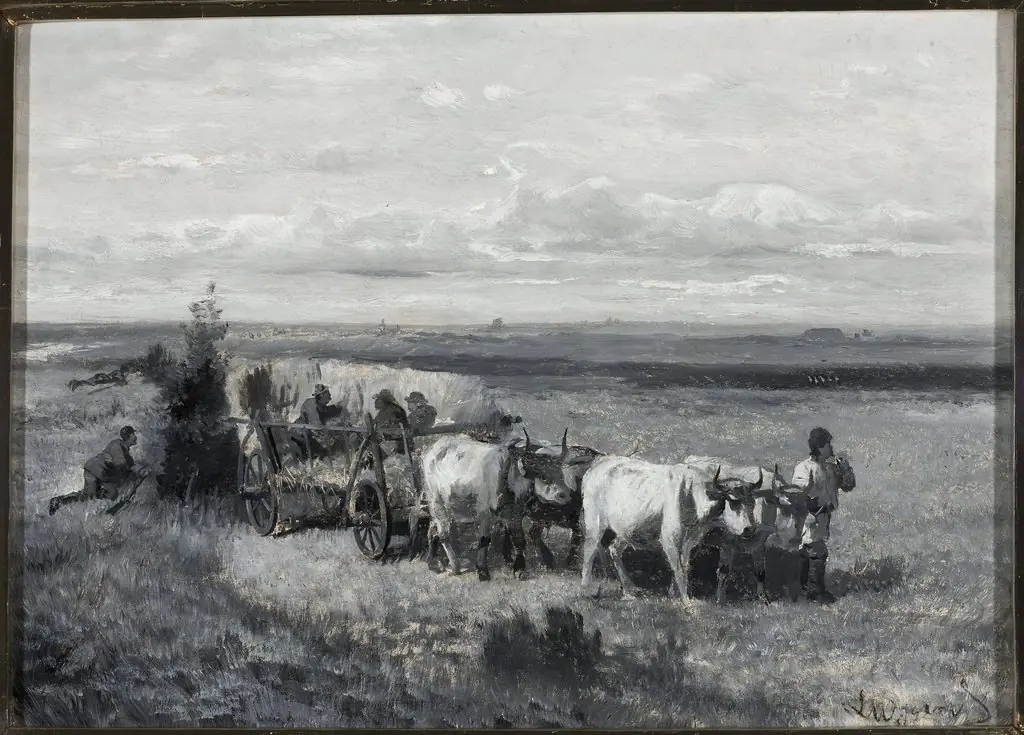
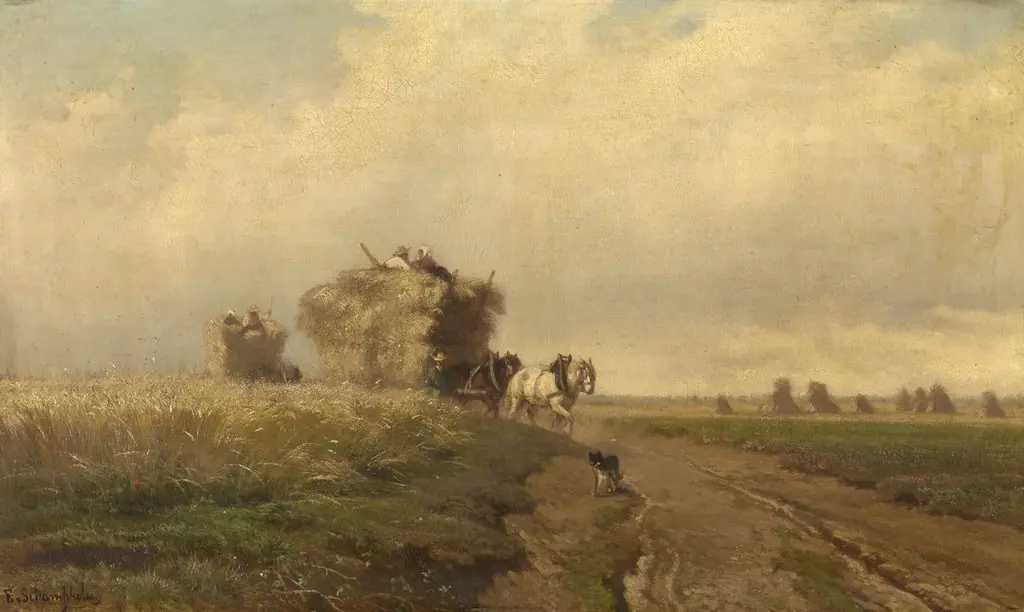
Carting hay with a view of the village and the church
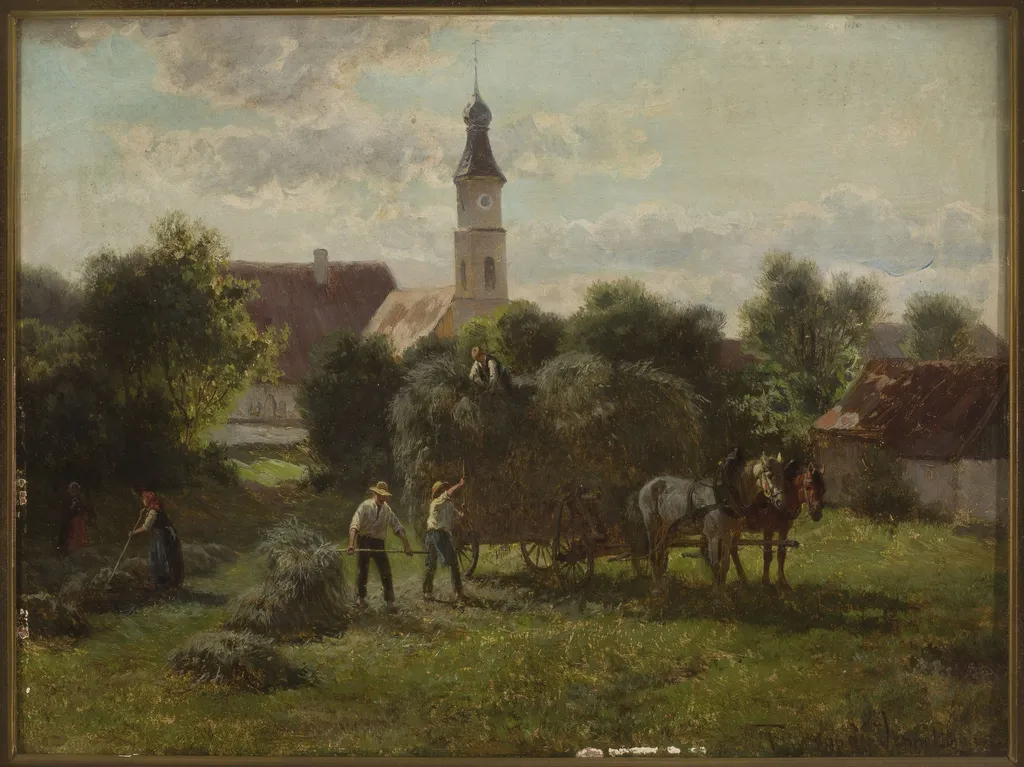
Carting hay with a view of the village and the church is an oil painting by Adolf van der Venne. It dates from 1878 and is held in the collection of the National Museum in Warsaw.
About this work
Overview
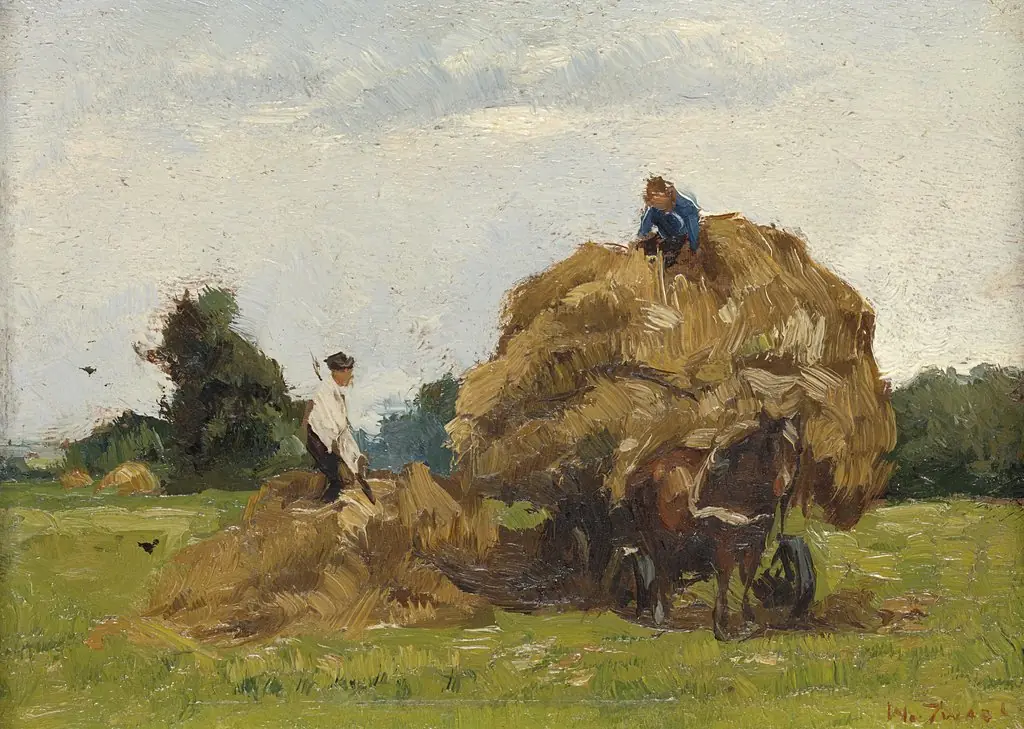
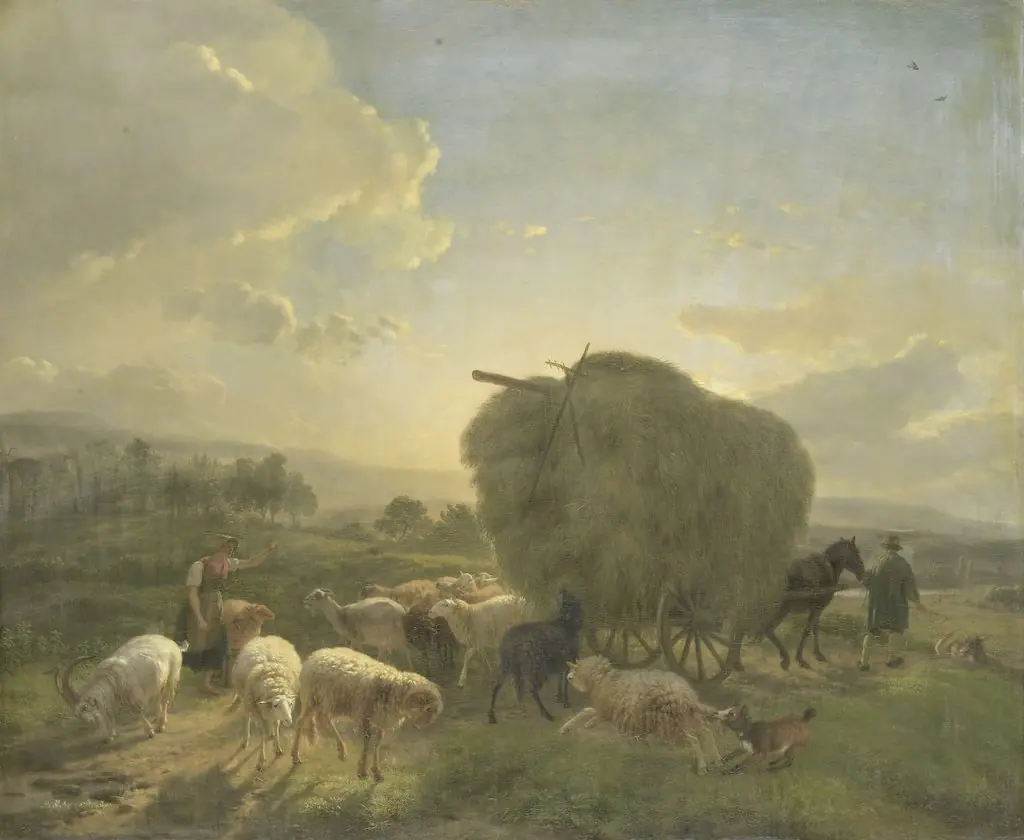
Painted around 1878 by Adolf van der Venne, this oil work depicts a quiet moment of rural labor in the Dutch countryside. It is part of the collection at the National Museum in Warsaw. The composition centers on a horse-drawn cart loaded with hay, surrounded by workers engaged in seasonal tasks. The scene unfolds beneath a soft, diffused light, suggesting late afternoon or early evening.
Subject & Meaning
The painting captures the rhythm of agricultural life, emphasizing collective effort and the harmony between labor and landscape. Rather than dramatizing the work, van der Venne presents it as an unremarkable yet dignified part of daily existence. The distant church steeple subtly anchors the scene in a community context, hinting at the spiritual and social fabric that underpins rural life.
Technique & Style
Van der Venne employs a restrained palette of warm earth tones and muted greens, layered with delicate glazes to achieve subtle shifts in light and texture.
Van der Venne employs a restrained palette of warm earth tones and muted greens, layered with delicate glazes to achieve subtle shifts in light and texture. Brushwork is soft and blended, avoiding sharp definition to enhance the sense of calm. The foreground figures are rendered with modest detail, allowing the broader landscape to dominate, a hallmark of 19th-century genre painting focused on atmosphere over narrative.
History & Provenance
The painting entered the National Museum in Warsaw’s collection in the 20th century, though its earlier ownership remains undocumented. It was likely acquired during a period of increased interest in Dutch genre works among European institutions. No significant alterations or restorations are publicly recorded, and the work retains its original frame and surface integrity.
Context
Created during a time when Dutch artists increasingly turned to rural themes as industrialization reshaped society, the painting reflects a nostalgic gaze toward agrarian life. Van der Venne’s approach aligns with broader 19th-century trends in Northern Europe, where painters sought to preserve the visual memory of vanishing traditions through quiet, observational scenes.
Legacy
Though not widely exhibited outside Poland, the painting contributes to the understanding of lesser-known Dutch genre painters who documented everyday rural existence. It stands as a quiet testament to the persistence of traditional labor patterns and the aesthetic value assigned to unremarkable moments in 19th-century visual culture.
Artist & collection