Artwork
The ill child
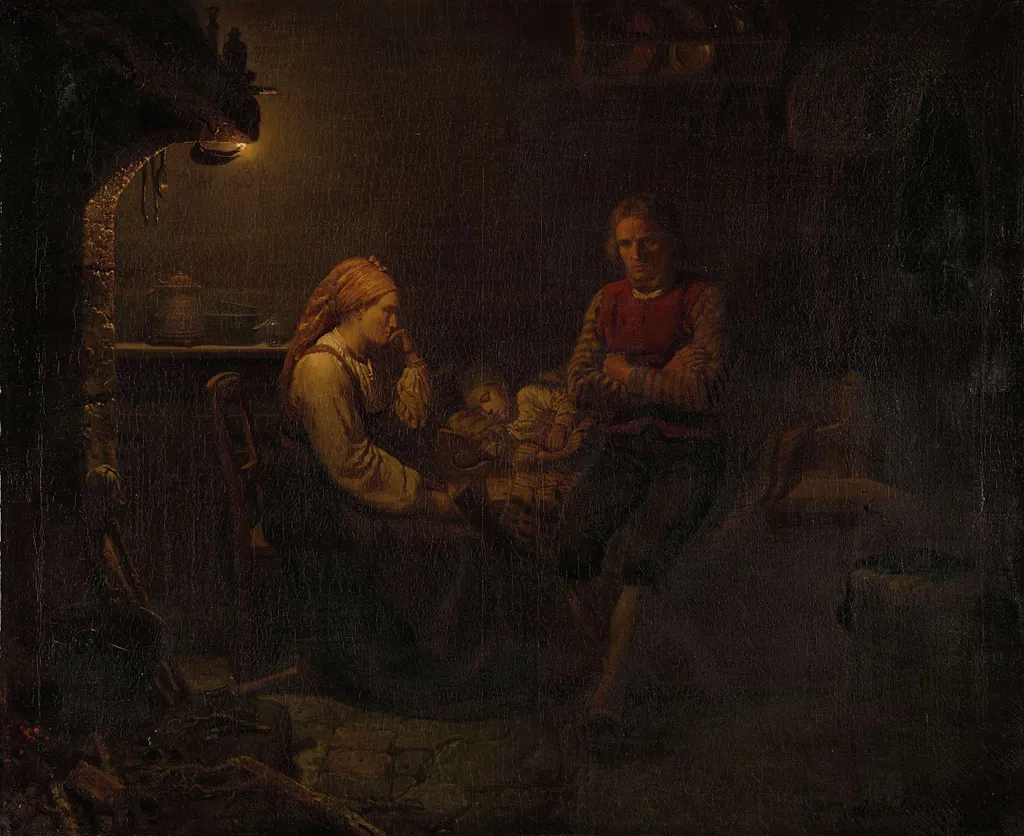
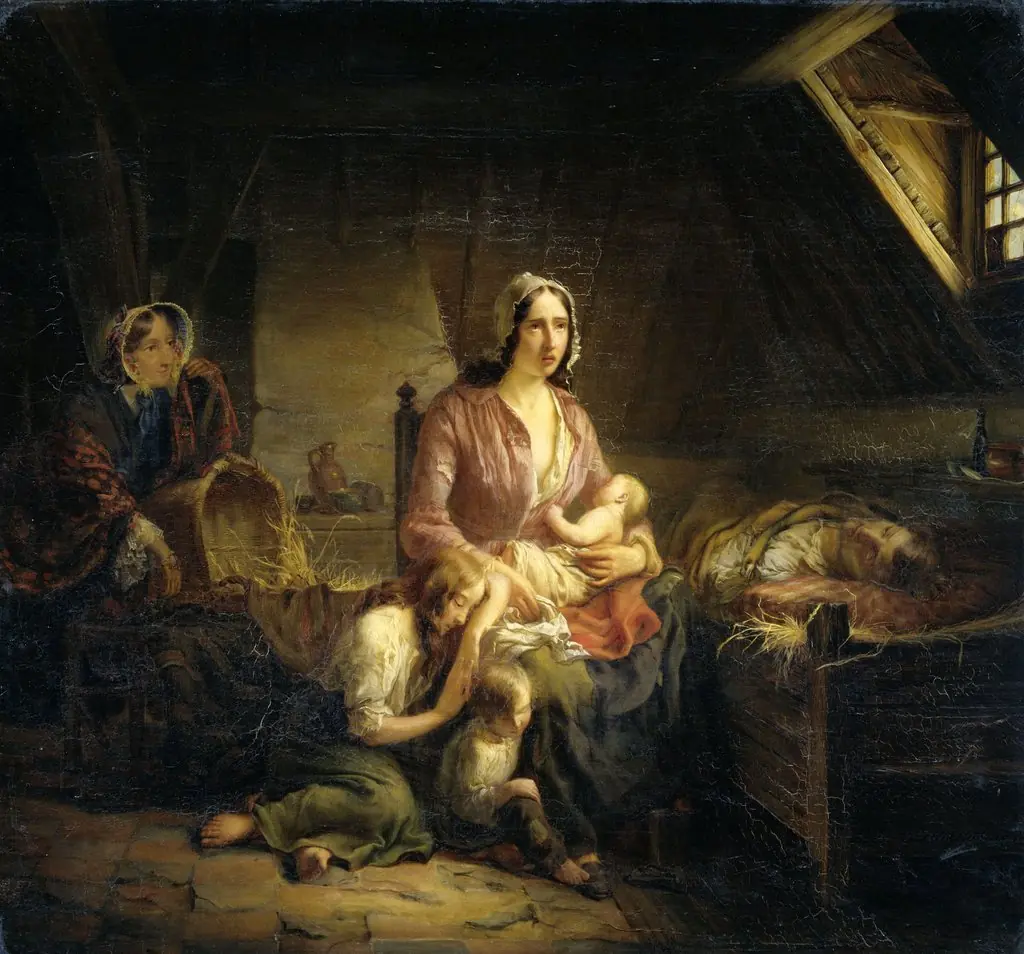
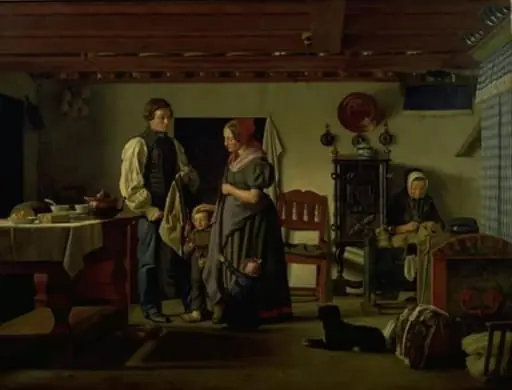
The ill child is an oil painting by the Realist artist Adolph Tidemand. It dates from 1851 and is held in the collection of the Rijksmuseum.
About this work
Overview
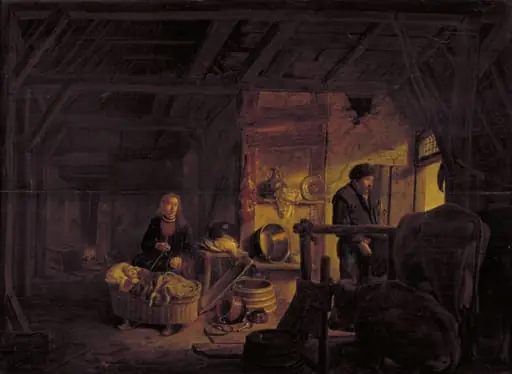
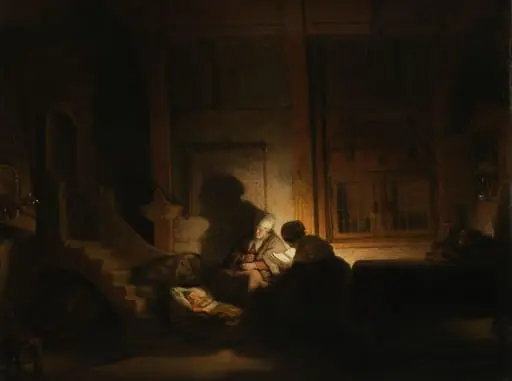
Adolf Tidemand’s 1851 oil painting *The Ill Child* presents an intimate domestic interior in which a sick child lies in bed, attended by two adults. The composition is rendered in muted tones, with a single light source from a nearby fireplace casting soft illumination across the figures. The work exemplifies Tideman’s focus on everyday Norwegian life during the mid‑nineteenth century.
Subject & Meaning
The scene captures a moment of quiet concern: one figure cradles the pale child while the other leans forward, hand extended in a gesture of care. The child’s turned‑away face emphasizes the anonymity of suffering, allowing the viewer to contemplate themes of familial duty, vulnerability, and the emotional weight of illness within a modest household.
Technique & Style
Tidemand employs chiaroscuro to model the figures, using the warm glow of the fireplace against the surrounding darkness to create a somber mood.
Tidemand employs chiaroscuro to model the figures, using the warm glow of the fireplace against the surrounding darkness to create a somber mood. The brushwork is precise yet restrained, highlighting textures such as the child’s linen and the wooden furnishings. The realist approach grounds the composition in a believable, unidealized setting, aligning with the broader realist movement of the era.
History & Provenance
Created in 1851, *The Ill Child* belongs to Tidemand’s series of works that document Norwegian social life. After its early exhibition, the painting entered the collection of the Rijksmuseum in Amsterdam, where it remains on display. Tidemand’s broader oeuvre includes *Haugianerne* (1852) and the collaborative *Bridal Procession in Hardanger* (1848) with Hans Gude.
Own this work as a print
Artist & collection
Artist
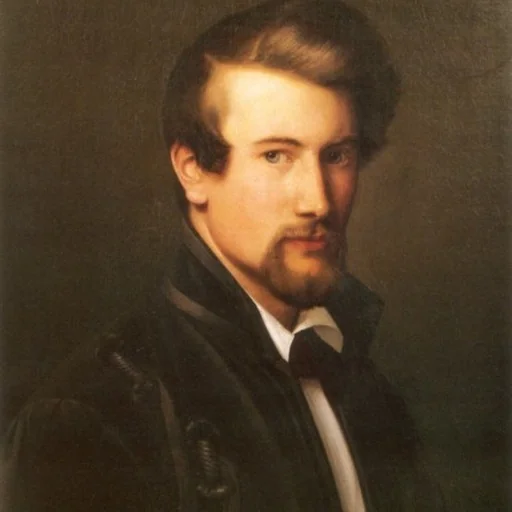
Adolph Tidemand (14 August 1814 – 8 August 1876) was a noted Norwegian romantic nationalism painter.