Artwork
Well at the Side of a Road
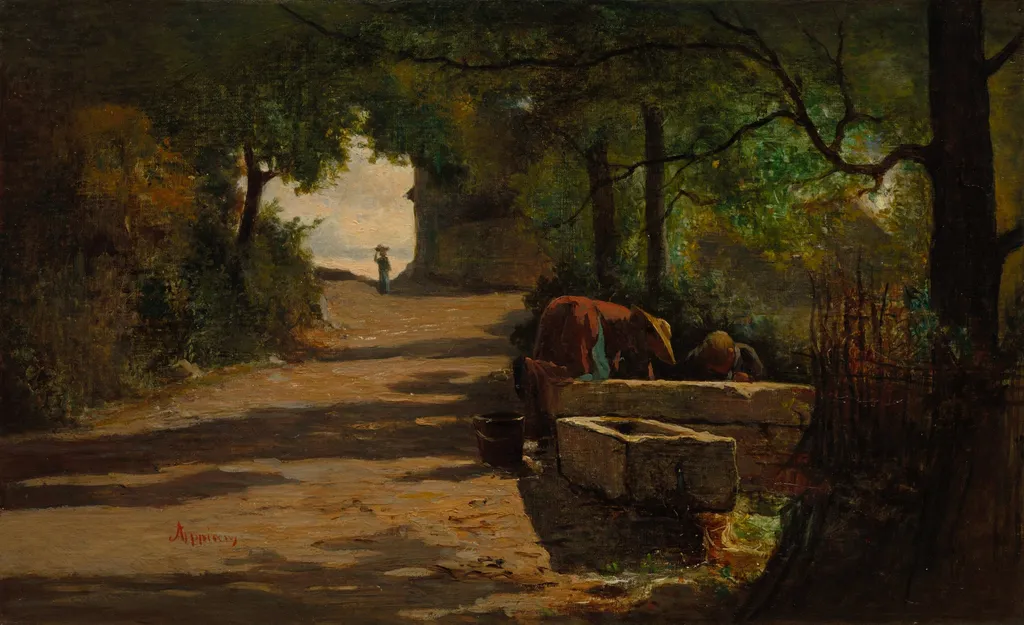
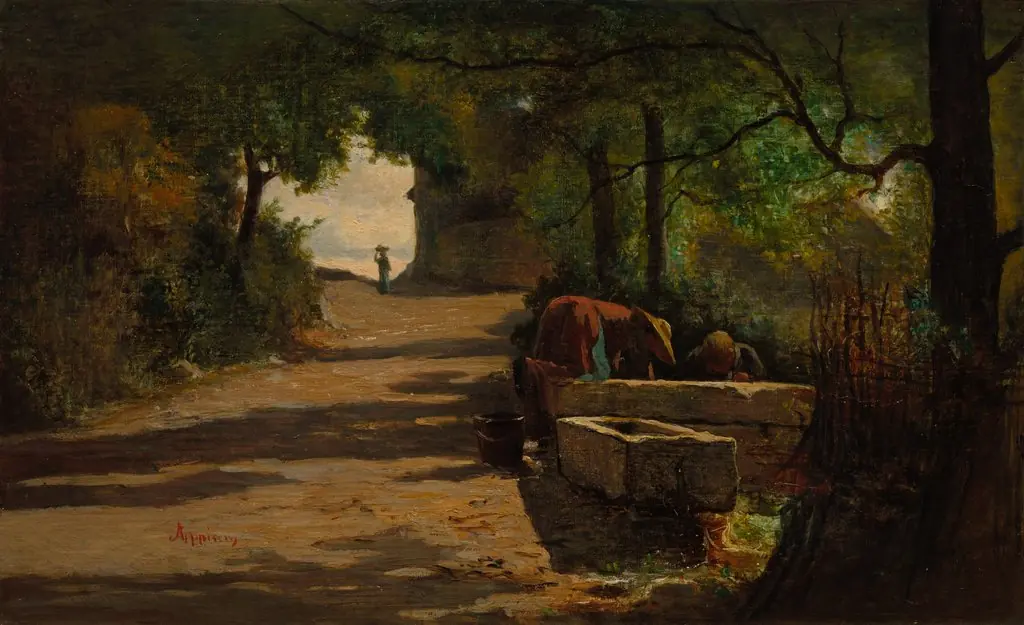
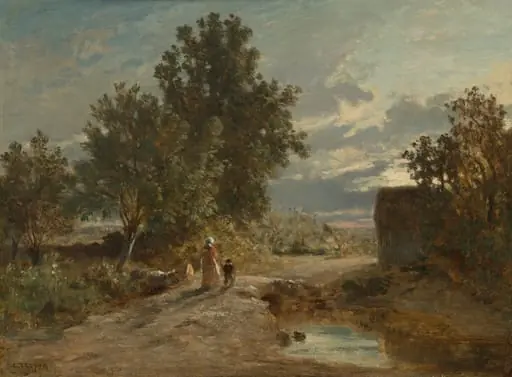
Well at the Side of a Road is an unspecified painting by the Impressionist artist Adolphe Appian. It dates from 1864 and is held in the collection of the Cleveland Museum of Art.
About this work
Overview
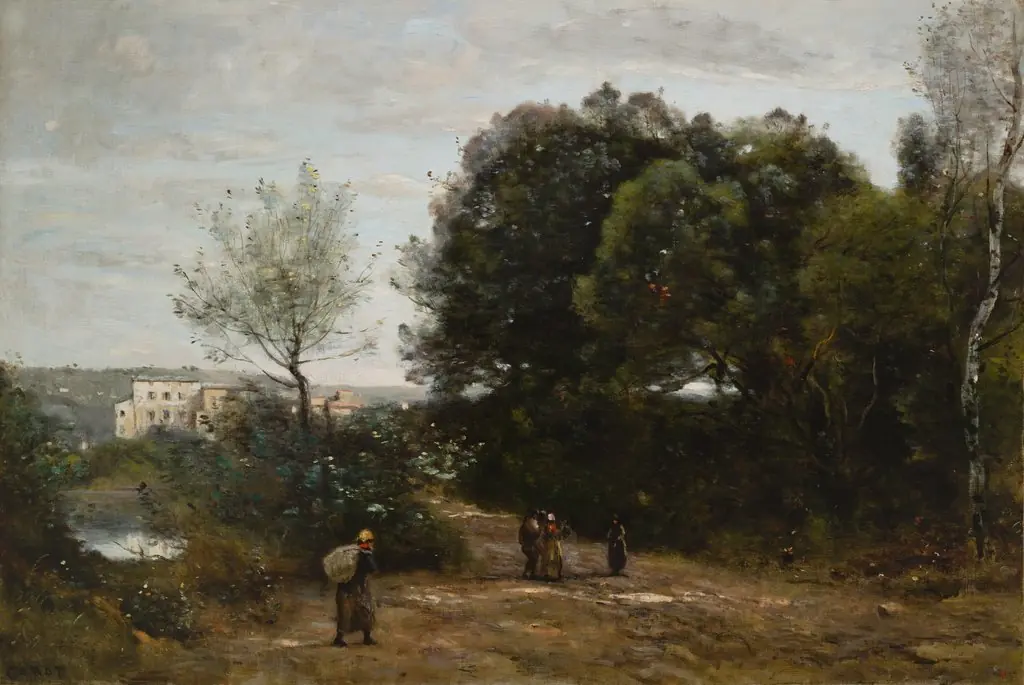
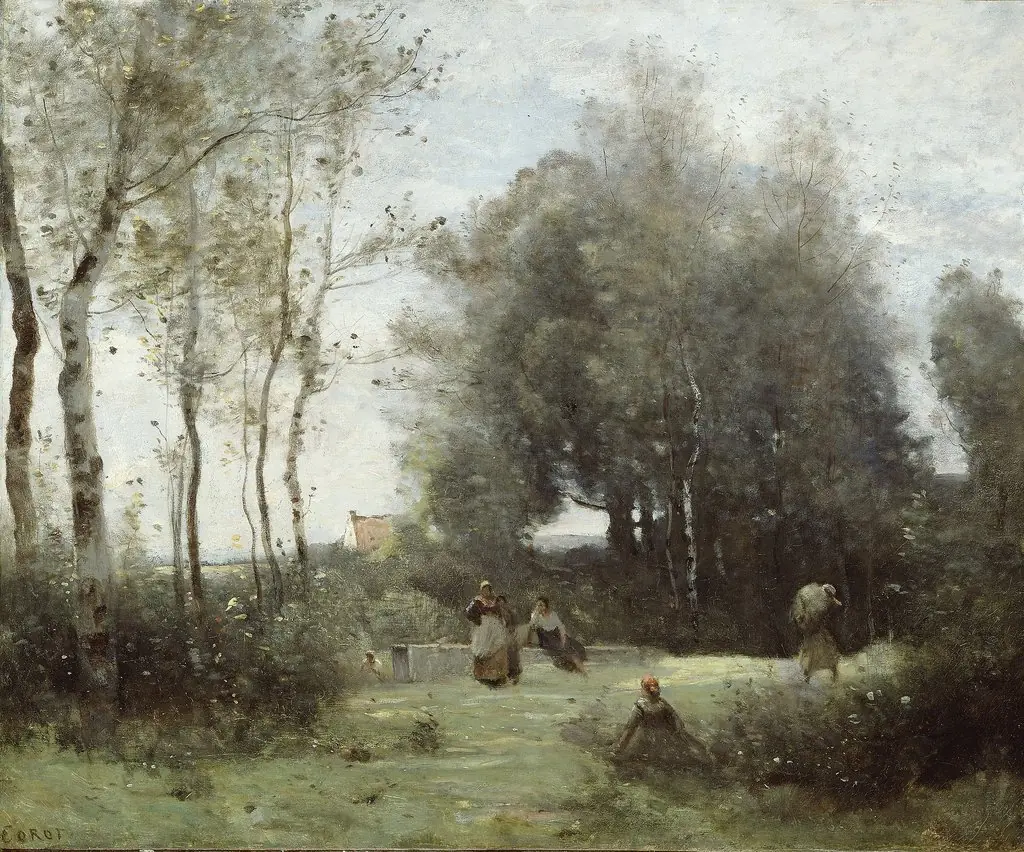
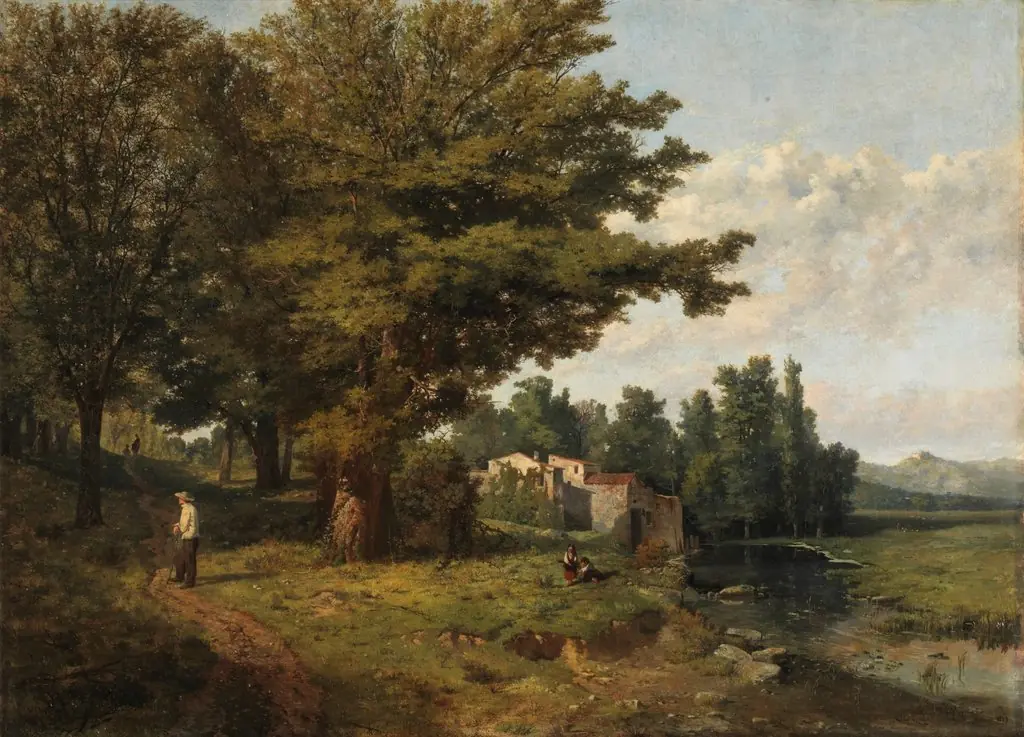
Well at the Side of a Road, painted circa 1864 by French Realist Adolphe Appian, captures a serene rural moment. The composition centers on a stone well alongside a winding road, populated by figures engaged in everyday activities.
Subject & Meaning
The painting portrays a quiet, rustic scene: two individuals tending to a well, one fetching water and the other holding a red cloth, while a third figure walks away down the path with a bundle. The emphasis is on the mundane, highlighting the simplicity of rural life.
Technique & Style
Appian employs chiaroscuro to achieve depth and dimensionality, contrasting dark, richly green foliage with the lighter, sunlit road. This play of shadows and light creates a sense of realism and spatial authenticity.
History & Provenance
Created in the mid-19th century within the Realist movement, the painting is now part of The Cleveland Museum of Art's collection.
Context
As a Realist work, it aligns with the movement's focus on depicting ordinary life and landscapes without romanticization, reflecting the era's artistic shift towards realism.
Legacy
While specific legacy details of *Well at the Side of a Road* are not widely highlighted, it contributes to the broader understanding and appreciation of Realist painting techniques and themes in 19th-century French art.
Own this work as a print
Artist & collection
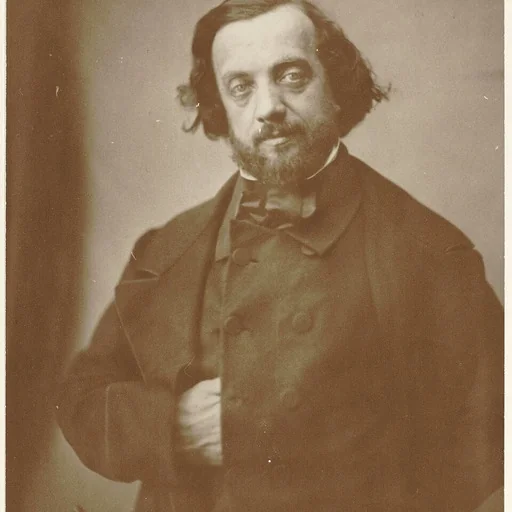
Artist
Adolphe Appian (born as Jacques Barthelemy Adolphe Appian; 28 August 1819 – 29 April 1898) was a French landscape painter and etcher.