Artwork
Switzerland. Grindelwald, Upper Glacier, Source of the Lutschine
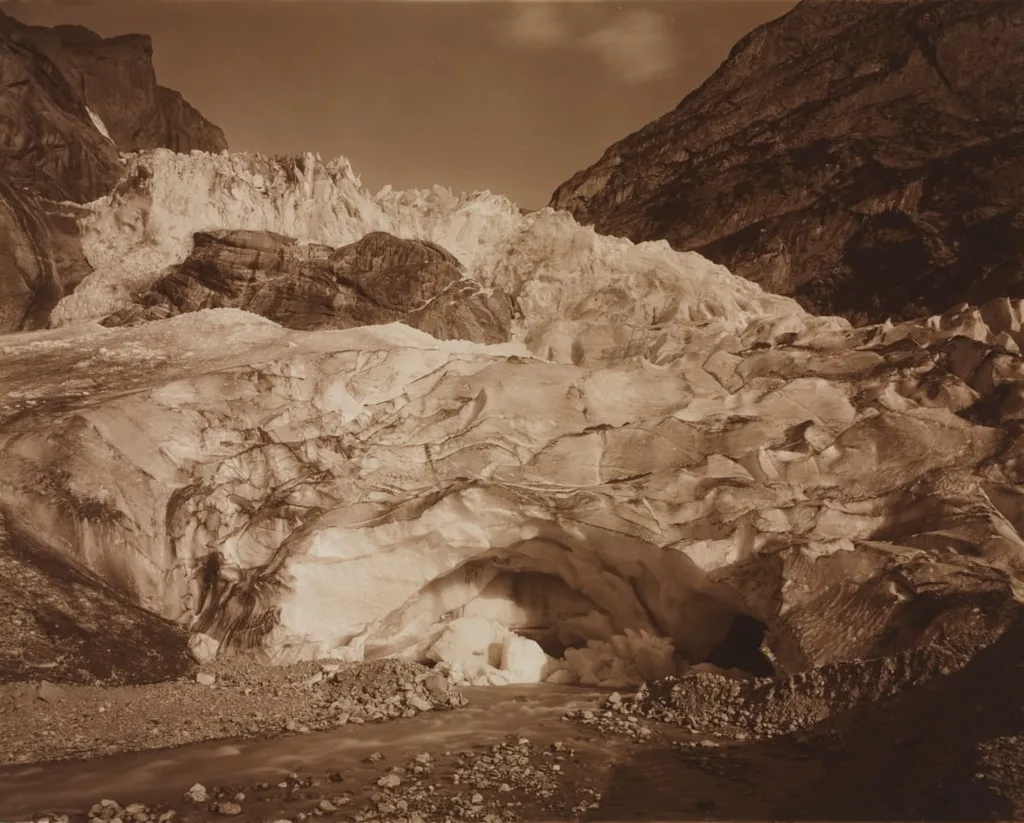
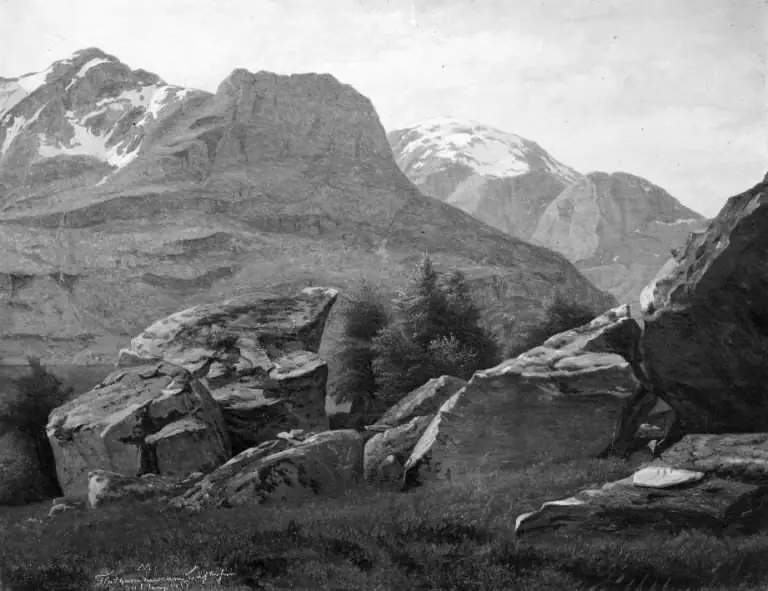
Switzerland. Grindelwald, Upper Glacier, Source of the Lutschine is a photography by the Impressionist artist Adolphe Braun. It dates from 1876 and is held in the collection of the Cleveland Museum of Art. Taken in the 1870s, this photograph by Braun captures the source of the Lutschine River as it emerges from a glacial cave in the Swiss Alps.
About this work
Overview
Taken in the 1870s, this photograph by Braun captures the source of the Lutschine River as it emerges from a glacial cave in the Swiss Alps.
Taken in the 1870s, this photograph by Braun captures the source of the Lutschine River as it emerges from a glacial cave in the Swiss Alps. The image presents nature without embellishment, emphasizing raw geological form and the unmediated flow of meltwater. Its clarity and directness align with emerging photographic practices that sought to document the natural world with fidelity, mirroring the priorities of contemporary realist art.
Subject & Meaning
The photograph depicts the river’s origin as a powerful, unadorned natural phenomenon—water breaking free from ice and rock under the weight of accumulated snow. There is no human presence, no narrative intervention. The focus on the glacier’s edge as a generative force reflects a shift in perception, where nature itself became the subject, not merely a backdrop for human activity or romantic awe.
Technique & Style
Braun employed sharp focus and careful exposure to render textures of ice, rock, and water with precision. The tonal range and detail recall the heavy brushwork and earthy palette of French Realist painters, particularly Courbet. Rather than idealizing the scene, the photograph treats it as a physical entity, using light and shadow to emphasize mass and materiality over atmosphere or sentiment.
History & Provenance
Produced during a period when photography was increasingly accepted as a legitimate medium for artistic and scientific documentation, this image was part of Braun’s broader project to record Alpine landscapes. It likely circulated in illustrated journals or private collections, contributing to a growing visual archive of European natural sites that informed both scientific study and aesthetic trends of the era.
Context
In the 1870s, French Realism, led by Courbet, rejected idealized landscapes in favor of unvarnished depictions of nature’s physical presence. Braun’s photograph resonated with this movement, offering a photographic equivalent to Courbet’s river studies—both emphasized texture, weight, and the autonomy of natural processes. The image thus exists within a transnational dialogue between painting and photography, each medium influencing the other’s approach to truth.
Legacy
Braun’s glacier photograph stands as an early example of photography’s capacity to convey natural grandeur without romanticization. Its influence can be traced in later documentary traditions that valued empirical observation over artistic embellishment. The image helped establish the glacier not just as a scenic feature, but as a dynamic, measurable force within the landscape.
Artist & collection

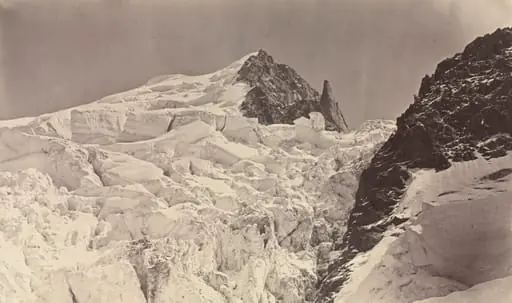 Mount Maudit, Savoy
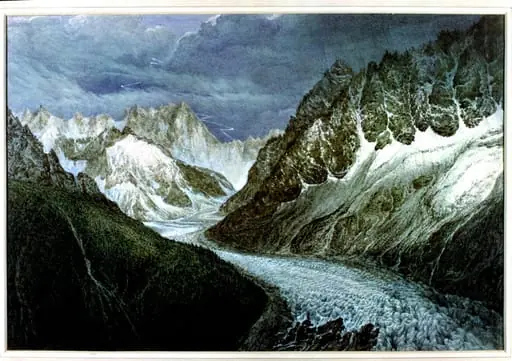 View of the Mer de Glace, with the Aiguille du Moine on the left, and the Grandes Forasses in distance to right
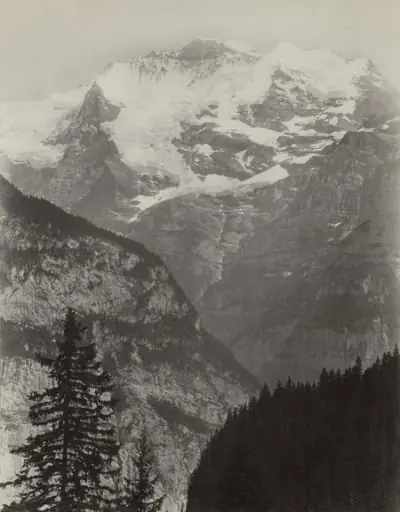 Jungfrau, View from Mürren, Switzerland
 The Upper Himmalayahs. View in the Manga Valley
 Studie zum Rosenlauigletscher
 The Upper Himmalayahs. View of Valley from Fallaldasa with Srikanta Peaks in the Distance
 Untitled
 Bjerglandskab